
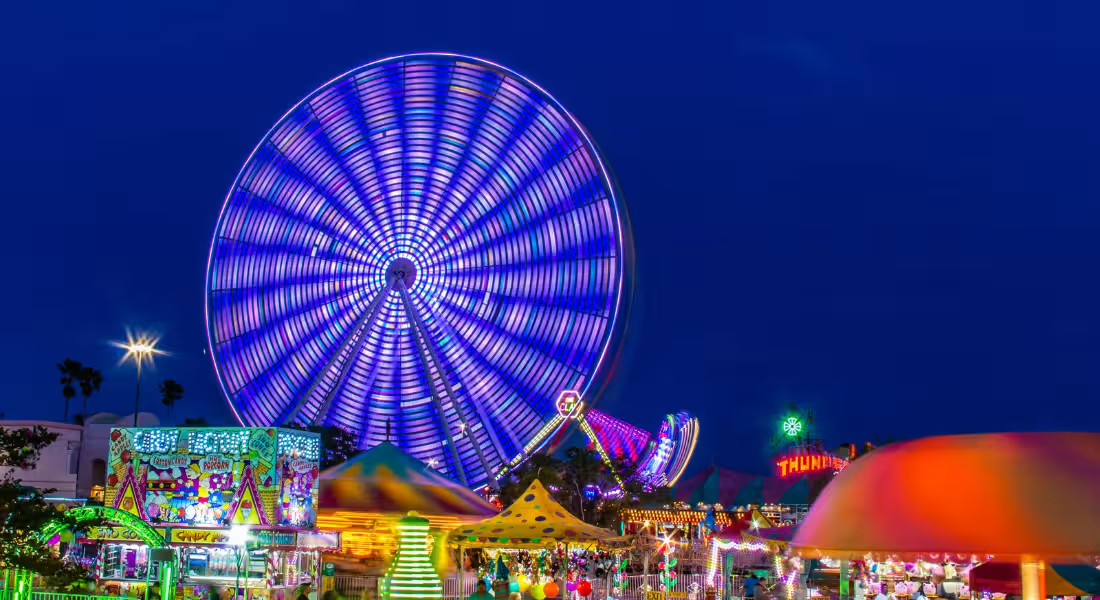
Most amusement park themes get chosen in a design meeting. The ones that actually last get chosen in a feasibility meeting. You see the difference about two years after opening: one venue is still selling out birthday rooms and driving repeat visits, while another is budgeting for a refit because the theme never really fit its audience or its building.
A theme is the operating logic of a park, not a coat of paint. It determines which age groups you attract, which attractions make sense, how guests move through the space, what sells at retail, and how easily you can run a Halloween or summer overlay without touching the floor plan. A theme that fights your footprint or your audience makes every later decision more expensive.
This list is for the people who sign off on budgets: investors, FEC operators, developers, mall landlords, and commercial play equipment buyers. Each of the 50 ideas covers four things:
- where the theme fits
- why it earns its keep
- what you can build under it
- one design or operations point to watch
The ideas are grouped into eight families, from nature and fantasy through sports challenge and seasonal concepts. Use the groups to build a shortlist, not to browse. If you already know your site, your audience, and your rough budget, start with the decision criteria below — they’ll cut 50 options down to the five or six that actually fit your project.
How to Choose the Right Amusement Park Theme for a Commercial Project
Trend-chasing is the most common way to pick a theme and the least reliable. A concept that worked in a 5,000-square-meter destination park can fall flat in a 600-square-meter mall unit. The same theme that thrills eight-year-olds can bore teenagers. Before you get into the list, test each idea against five criteria.
1. Target audience. Define your core age band first, then your secondary one. Toddler venues need soft play, low heights, and clear sightlines for parents. Tween venues need challenge, competition, and something worth filming. Themes that try to serve ages 1 to 16 equally tend to serve none of them well.
2. Venue size and format. Ceiling height, column spacing, and floor load shape your options more than any mood board. Vertical themes like rainforest canopies or mountain climbs need clear height. Zoned concepts like world journeys or time travel need enough floor area to actually separate the zones without crowding them.
3. Budget and build complexity. Some themes live in graphics, color, and structure shapes. Others depend on sculpted centerpieces, animatronics, special lighting, or water features. Price the theme by its hardest element, not its easiest — that element is usually also your highest maintenance cost.
4. Equipment compatibility. The best themes make the equipment be the theme. A pirate ship that’s also a climbing structure earns twice. A pirate mural painted behind a generic play frame doesn’t. Check whether the attractions your audience actually wants can physically carry the concept.
5. Event and refresh flexibility. Your opening theme has to survive years of birthdays, school holidays, and seasonal campaigns. Themes with a neutral core and room for overlays — forest, ocean, city — are far easier to refresh than tightly scripted stories.
Score each shortlisted theme against these five. Anything that fails two of them should come off the list, however good it looks in a render.
Nature and Adventure Themes
Nature themes are the safest starting point for most commercial projects. They need no license, translate across cultures, and suit a wide age range. They also pair well with the core equipment of any play venue: climbing nets, slides, rope bridges, and multi-level structures. The risk is sameness — “jungle” is the default in many markets, so the real work goes into execution. Scale, layering, and a clear centerpiece are what separate one jungle venue from the next.
1. Jungle Expedition
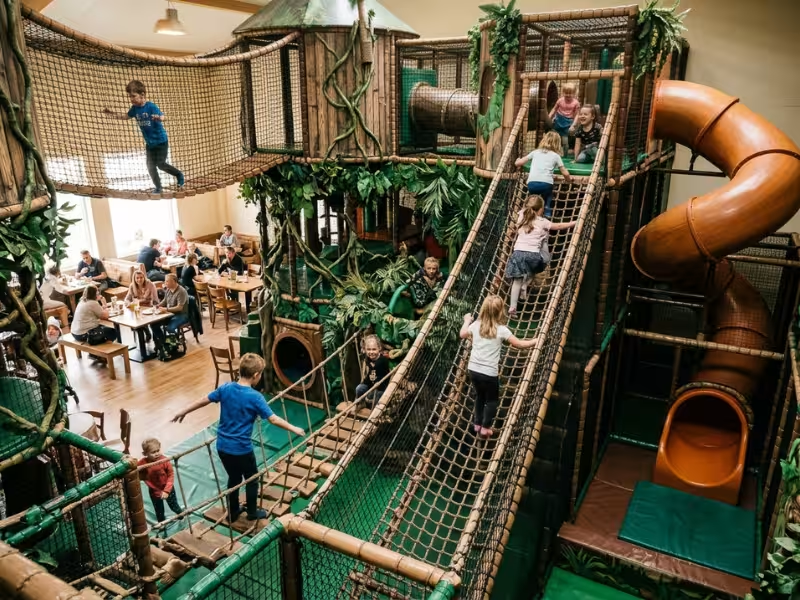
The workhorse theme for mid-size indoor FECs serving ages 3 to 12. Vine-wrapped soft play towers, rope bridges, spiral slides, and net climbs all read as “jungle” without much extra spend, so most of your budget goes into play value rather than props. Birthday treasure hunts fit naturally. Specify fire-rated artificial foliage and plan a cleaning schedule from day one — dense leaves collect dust fast in enclosed spaces.
2. Rainforest Canopy
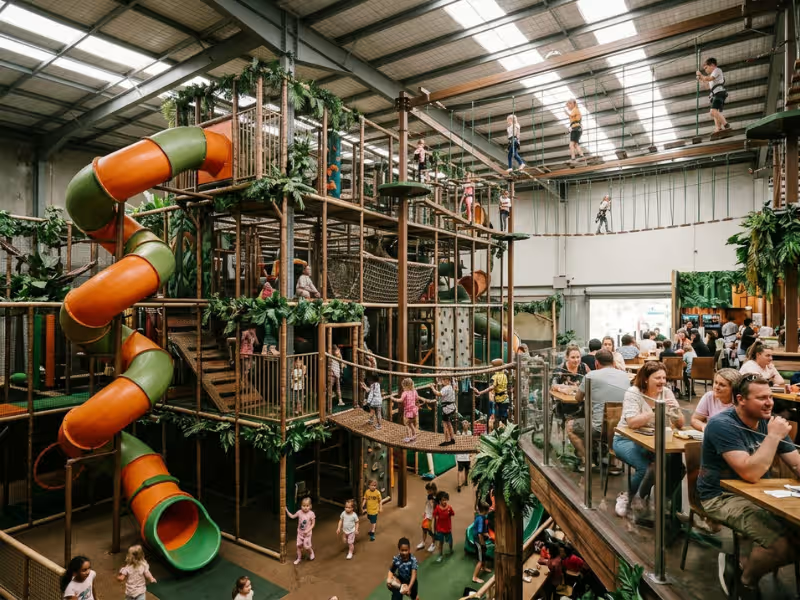
If your site has generous ceiling height, use it. A canopy theme turns vertical space into the attraction itself: elevated walkways, a sky trail ropes course, and long tube slides back to ground level. Older kids get real height; parents get a visual spectacle from the café. The concept only works where the structure can rise three or more levels. On a low ceiling, pick a different concept.
3. Volcano Adventure
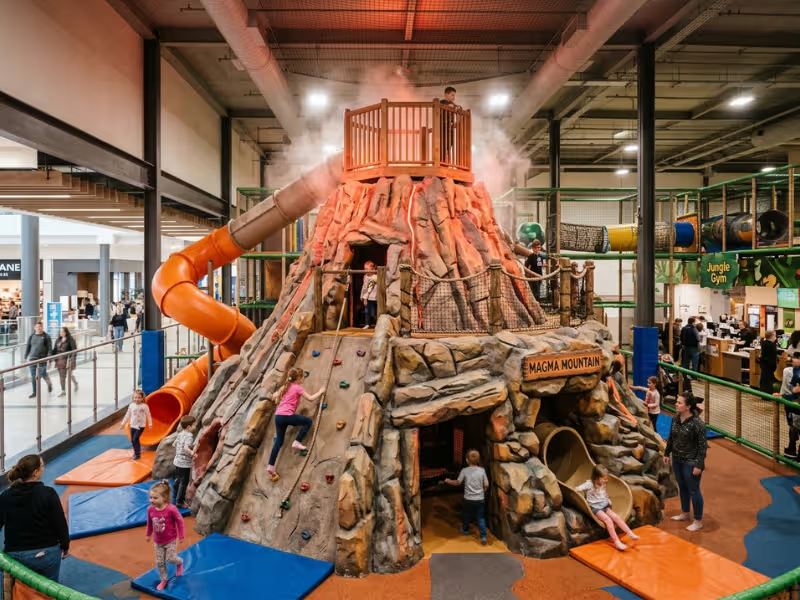
A volcano gives you one landmark that sells the whole venue from the mall atrium or entrance road. Build it as a working structure — climbing wall on the outside, slides inside, viewing platform at the top. It becomes your photo moment and your marketing image. Keep lava lighting and fog effects modest. They add appeal for a few months and maintenance tickets for years.
4. Safari Trek
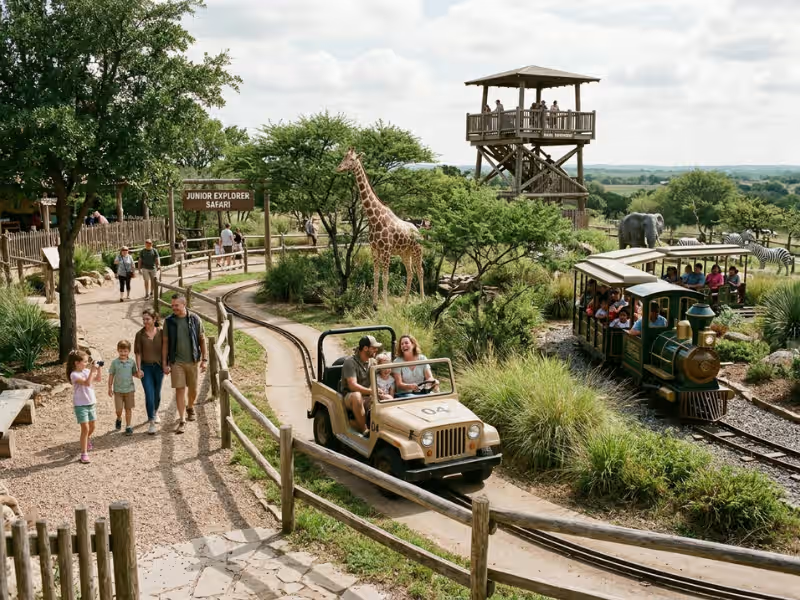
Safari works well for outdoor and hybrid family parks with flat, open land. Track-based jeep rides, a small train loop, animal sculptures, and lookout towers create a gentle, mixed-age day out with no licensing fees. It’s easy to explain in any market. Decide early whether the aesthetic is realistic or cartoon, and hold to it — mixing both makes the whole park feel cheaper than it is.
5. Mountain Quest
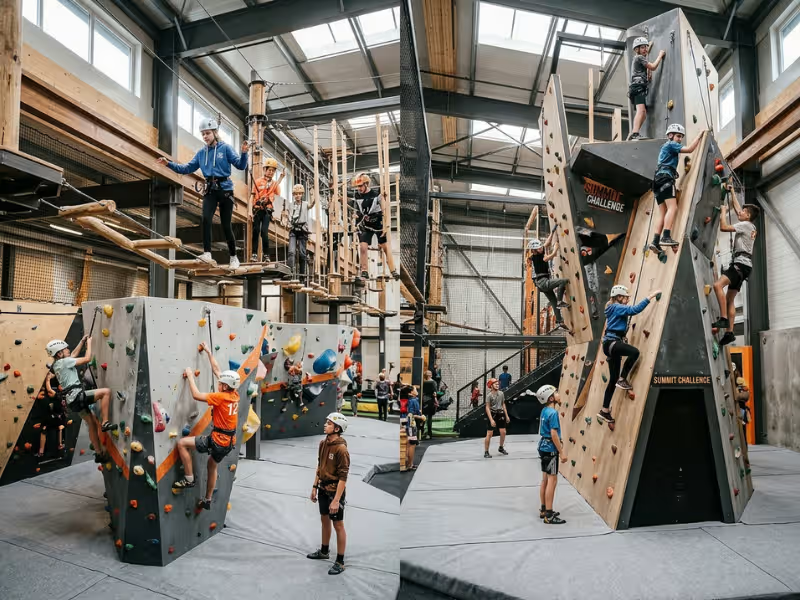
Built for the 8-to-14 bracket that has outgrown soft play. Climbing walls, bouldering zones, a ropes course, and a summit challenge support timed sessions and premium ticket pricing. Progress levels — base camp to summit — give kids a reason to come back and beat their previous time. Auto-belay systems and harness areas need trained staff and documented inspection routines, so price those into your labor model early.
6. Lost Island Explorer
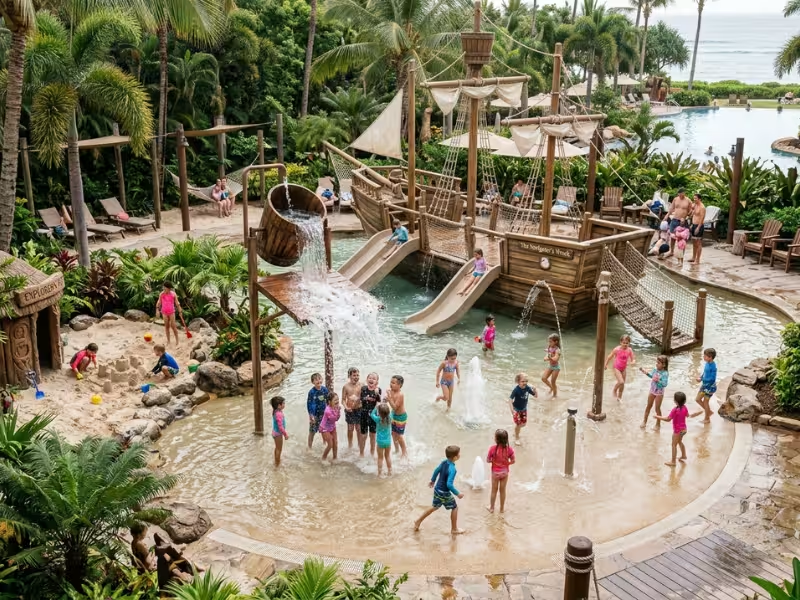
A strong fit for resorts, waterfront sites, and warm-climate parks with water play. Splash pads, tipping buckets, sand play, and a shipwreck climbing structure give you a richer story than a standard pirate theme — and families tend to stay longer when water is involved. Near the coast, specify stainless or marine-grade fittings and UV-stable plastics. Corrosion will show up well before your planned refresh date if you don’t.
Fantasy and Storybook Themes
Fantasy themes earn their place through party revenue, merchandise, and visual identity. Children recognize the world instantly, and parents photograph it. These concepts usually skew younger — roughly ages 2 to 9 — and suit mall-based indoor playgrounds and FECs where birthday parties drive a large share of income. The main discipline is depth. A fantasy theme that stops at the facade starts to feel thin within a few visits.
7. Enchanted Castle
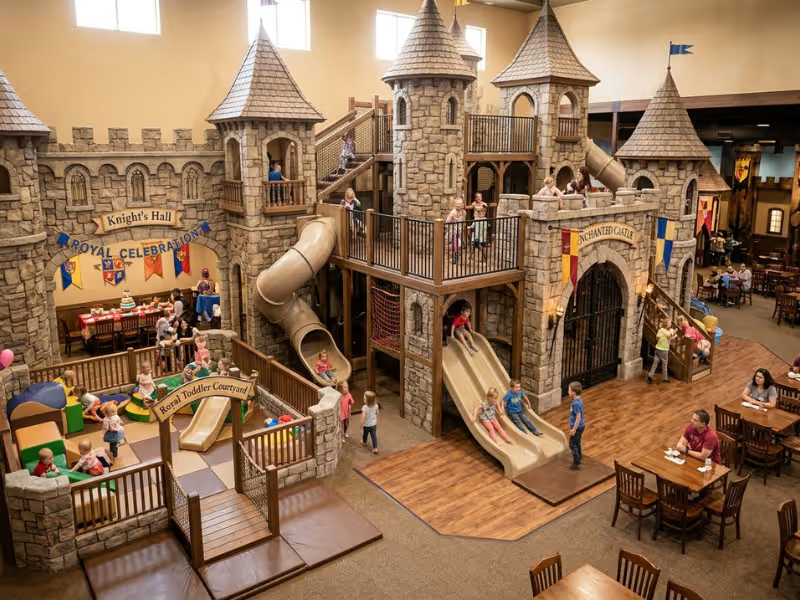
The castle is the most bookable shape in children’s entertainment. Build the party rooms into the castle itself rather than behind it, and your birthday packages sell on photos alone. Inside, a soft play castle with turrets, slides, and a toddler courtyard covers ages 2 to 8. Dress-up retail fits naturally. Just make sure the structure holds real play space — a castle facade over a generic frame disappoints quickly.
8. Dragon Kingdom
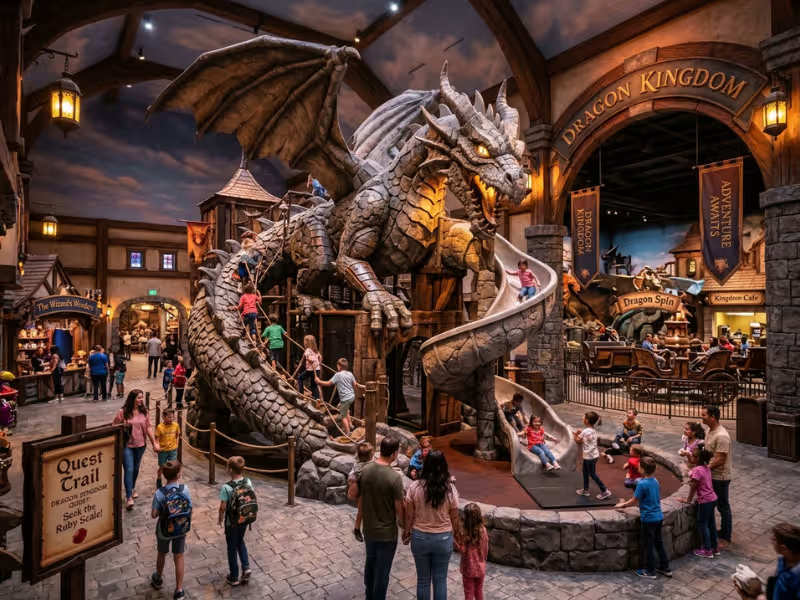
Dragon Kingdom gives you a fantasy theme that older boys and girls will both accept. A large dragon sculpture can double as a slide or climbing feature, supported by quest trails, spinning rides, and token challenges that reward exploration. Collectible scales or badges turn repeat visits into a game. Size the dragon so it reads from the entrance. A small dragon reads as a decoration, not a destination.
9. Fairy Forest
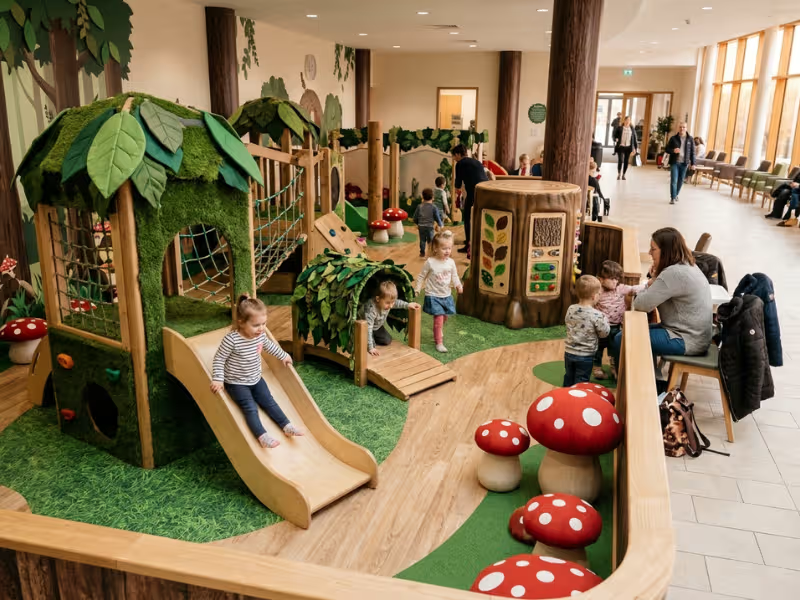
This is a preschool theme first. Low-height play, sensory panels, mushroom seating, and gentle climbing suit under-6s in malls and community centers where parents want calm rather than chaos. Weekday morning traffic from caregivers can offset slower weekends. Soft, warm lighting fits the theme — but don’t let it sacrifice visibility. Parents in the seating area need a clear view of every corner.
10. Pirate Harbor
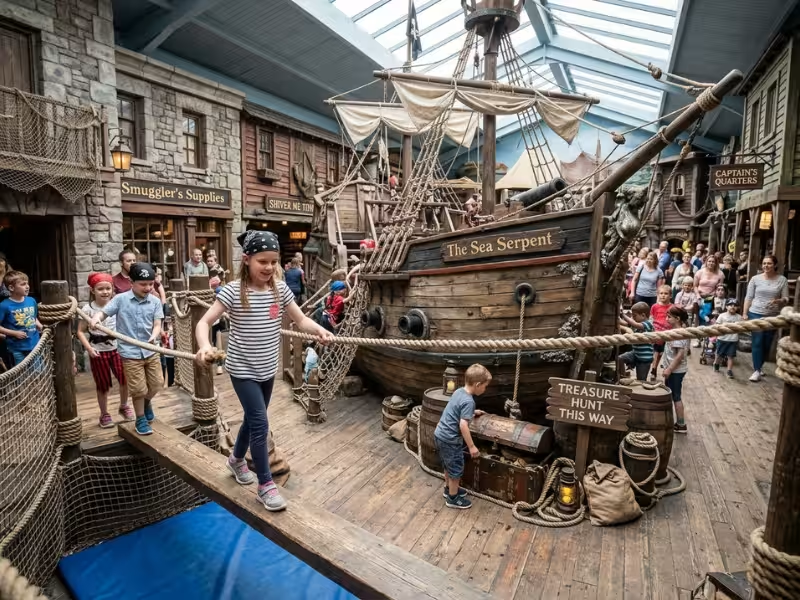
Pirate themes are proven across markets and age groups. A ship-shaped play structure, water cannons in outdoor versions, treasure hunts, and a plank-walk challenge cover toddlers through ten-year-olds — and retail practically writes itself. The weakness is familiarity. Differentiate with a local maritime story, a named ship, or a harbor town around the vessel, so guests remember your park rather than pirates in general.
11. Magic Academy
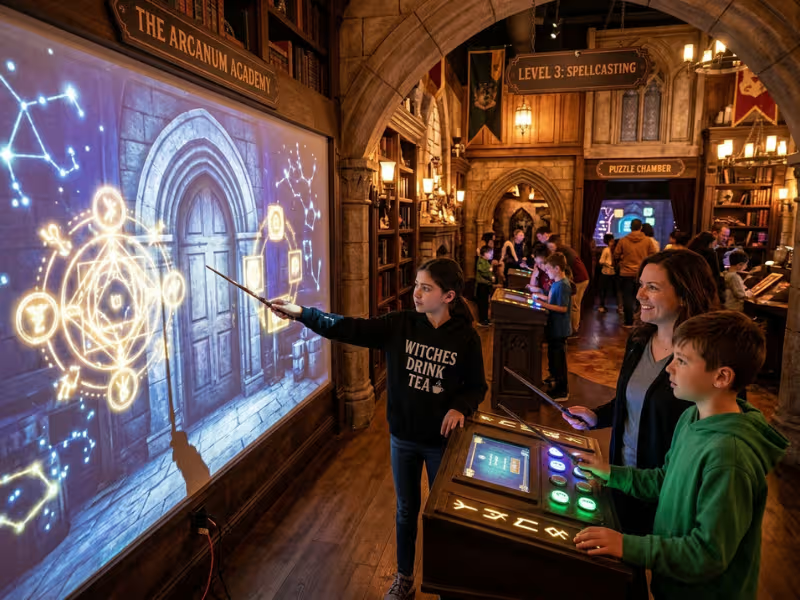
Magic Academy works for tweens and families who want more than climbing. Puzzle rooms, interactive projection walls triggered by “spells,” and wand-activated games create a progression system where guests level up across visits — which supports memberships and repeat ticket sales. The theme leans heavily on technology, so design a fallback. If a sensor fails, the room should still be playable rather than closed.
12. Giant Toy World
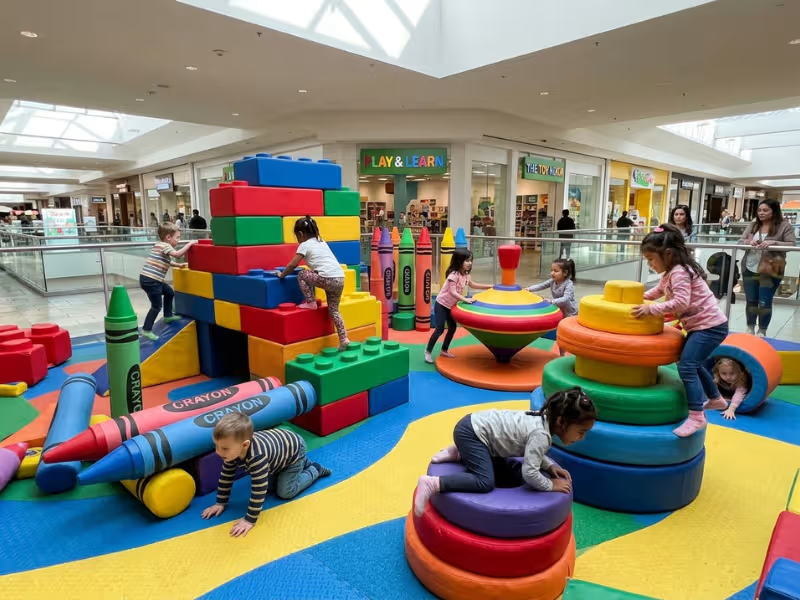
Scale everyday objects up and you get a theme that works in compact spaces. Oversized building blocks, spinning tops, crayons, and stacking rings double as climbing, sliding, and crawling elements, and they photograph well for social posts. It suits mall units where a small footprint has to feel bigger. Every oversized prop at child height must be padded, rounded, and tested for impact — not just appearance.
13. Candy Wonderland
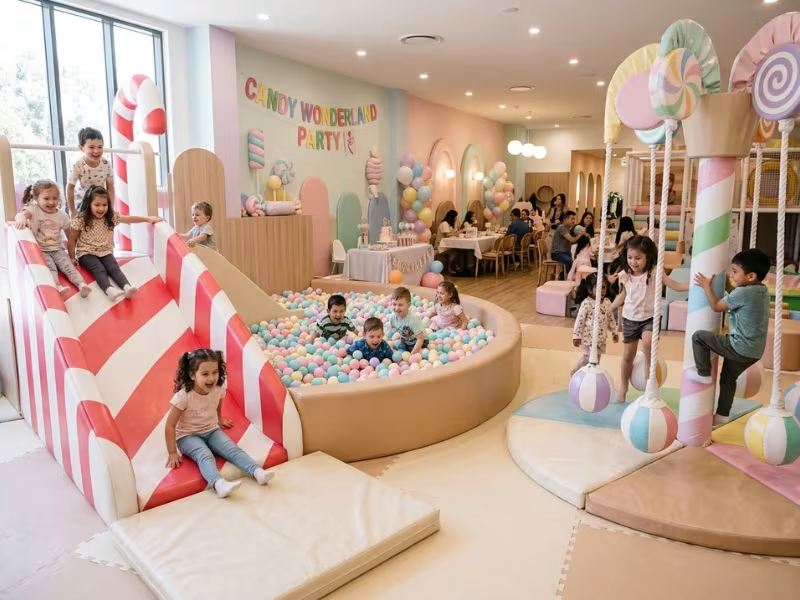
Color-led and party-friendly. Candy-cane slides, gumdrop ball pools, and lollipop climbing posts suit ages 3 to 8, and the theme links naturally to a dessert bar or bakery partner for extra spend. Use the palette with restraint — fully saturated pink and red across every surface tires the eye fast and shows wear. Plan a cleaning routine that keeps the light surfaces fresh. This theme punishes neglect visibly.
Science, Space, and Future Themes
These themes speak to parents as much as children. They signal learning, technology, and progress, which helps with school trips, weekday group bookings, and corporate sponsorship. They also integrate into modern mall interiors more cleanly than rustic themes do. The tradeoff is upkeep: technology-heavy concepts date faster and need a planned refresh budget from the start, not retrofitted in year three.
14. Space Station Adventure
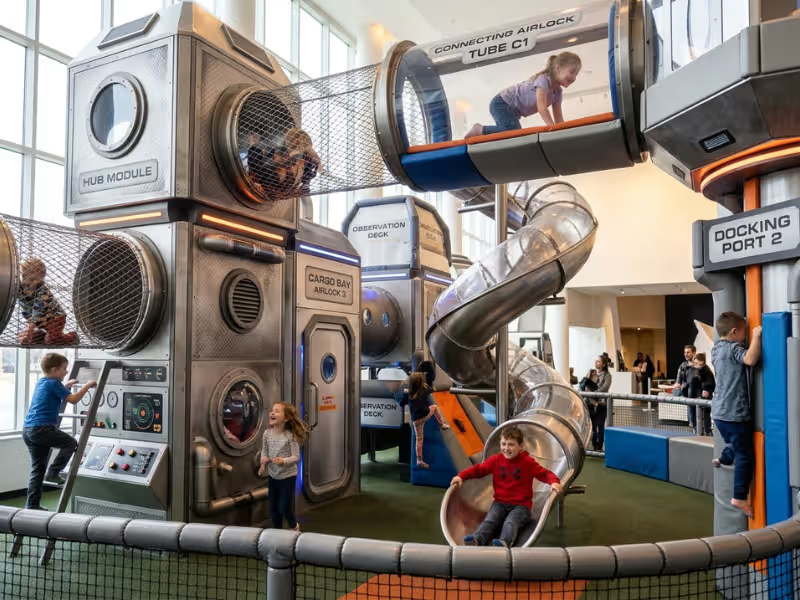
Modular capsules, connecting tube slides, airlock-style tunnels, and projection windows make a space station one of the more flexible themes for compact or irregular floor plans — and you can expand it later by adding modules. It also attracts school groups and science-related sponsors. Hard, smooth surfaces suit the aesthetic but bounce noise, so specify acoustic panels early, before you open.
15. Mars Exploration Base
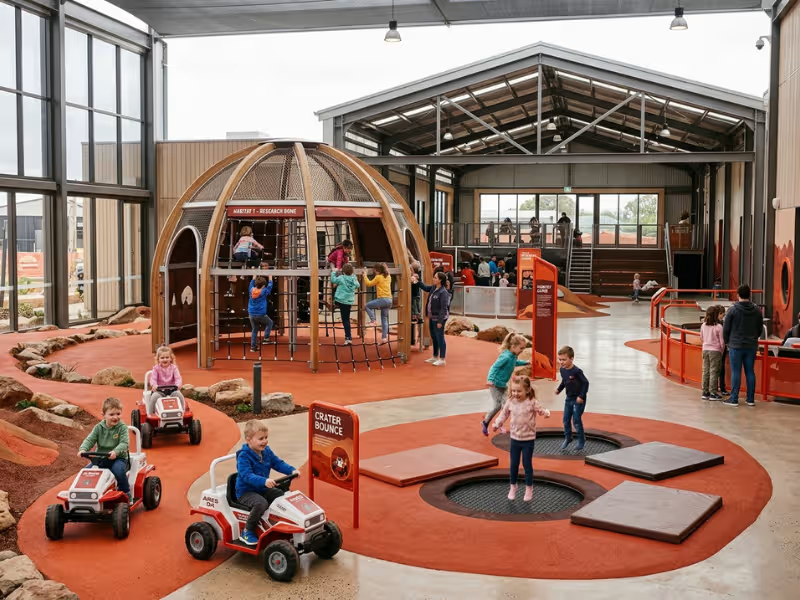
Mars gives you a sharper story than generic “space.” Red terrain, rover ride-ons, crater-shaped trampolines, and a habitat dome climbing structure create a defined mission that makes school programs and themed parties easier to package. It also works outdoors, where sand play stands in naturally for Martian soil. Balance the red palette with neutrals, or the space starts to feel heavy and warm quickly.
16. Robot City
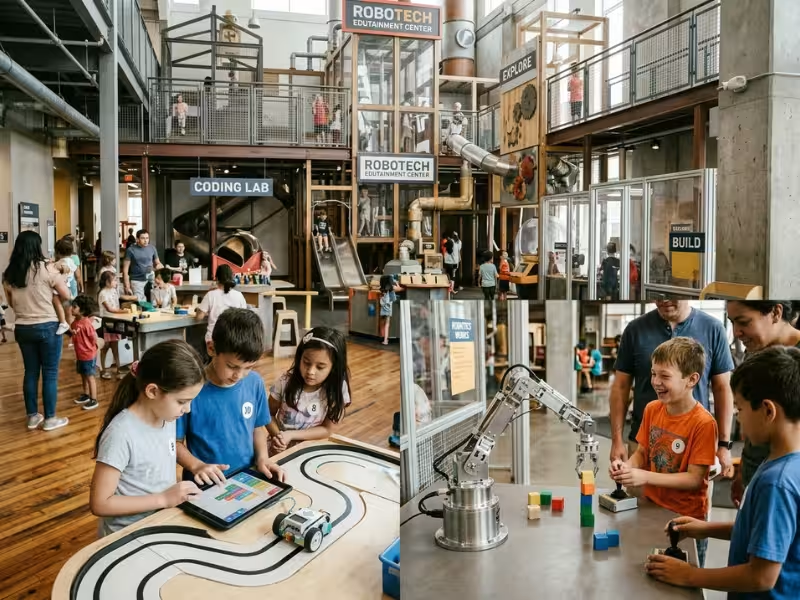
Aimed at parents who want STEM value. Build zones, simple coding stations, interactive robot arms, and a play structure styled as a factory line create a venue that sells weekday workshops alongside weekend tickets. Partnerships with education providers add credibility. The program side — not the hardware — is the real ongoing cost. You need trained facilitators to keep sessions running properly.
17. Time Travel Lab
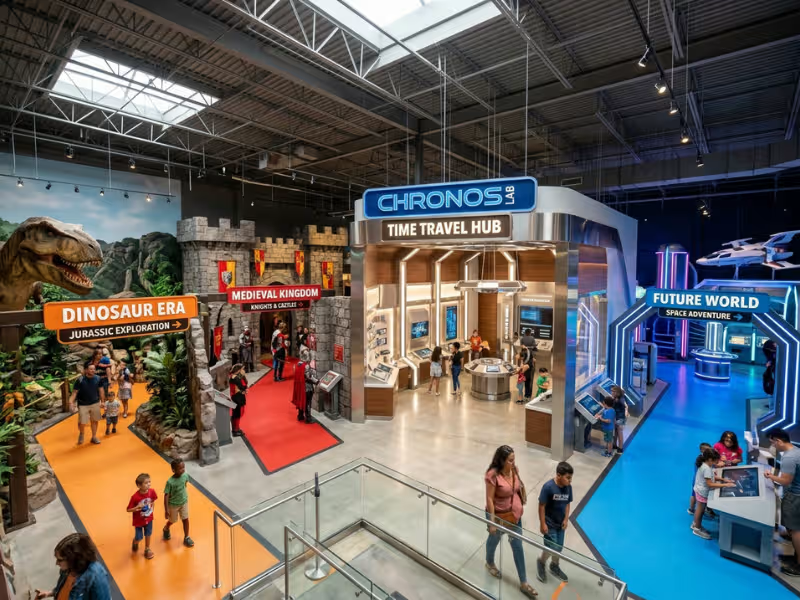
Time travel lets you split one venue into several eras: dinosaurs, medieval, futuristic. Each era runs as its own zone around a central “lab” hub. The commercial advantage is refresh control — you can replace one era at a time instead of rebuilding the whole park. The risk is confusion. Invest in clear wayfinding and color coding so guests always know where they are.
18. Futuristic Metropolis
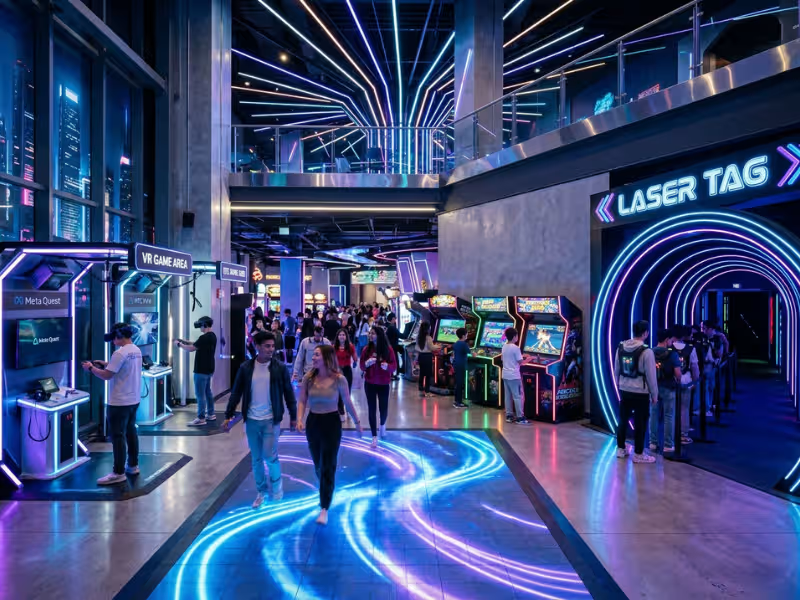
Targets teens and young adults. LED-lit structures, VR stations, arcade games, laser tag, and interactive floors support evening hours and higher per-visit spend than toddler play. It suits urban malls and entertainment complexes with strong night-time traffic. Screens and VR hardware age fast — budget a technology refresh cycle of a few years rather than treating the initial fit-out as permanent.
19. Alien Discovery Zone
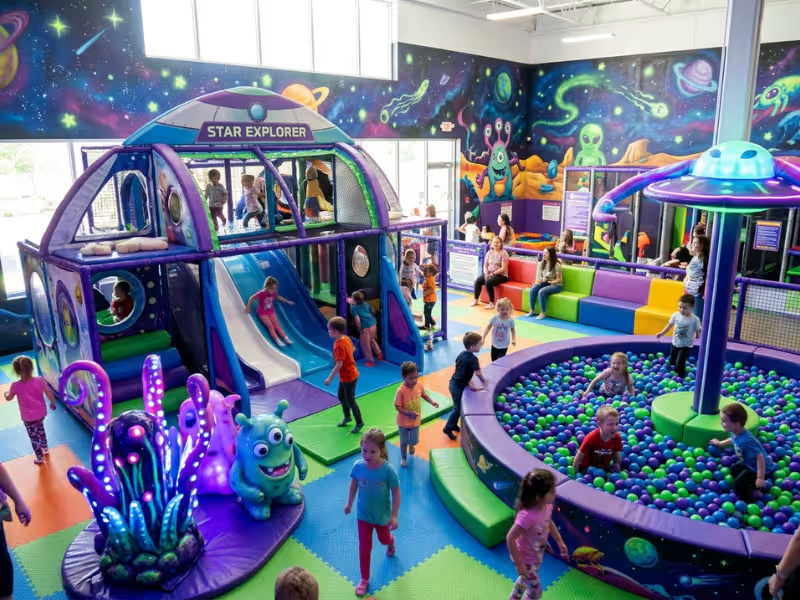
A playful sci-fi theme for ages 4 to 9. Glowing creature sculptures, UV-reactive murals, crater ball pools, and a “spaceship” soft play structure offer a lighter, funnier take on space — and because the characters are your own, there are no licensing fees. Use UV and low lighting only in contained features. Main play areas need full-brightness lighting for supervision and safety.
Animal and Marine Themes
Animal themes are evergreen. Children respond to them early, they need no explanation, and they fit almost every age band and venue type. Easy mascots and merchandise come naturally with the territory. Because they’re so common, the advantage comes from picking a sharper angle — “deep sea” or “Arctic” stands out more than a generic “animals” label on the entrance.
20. Ocean Adventure
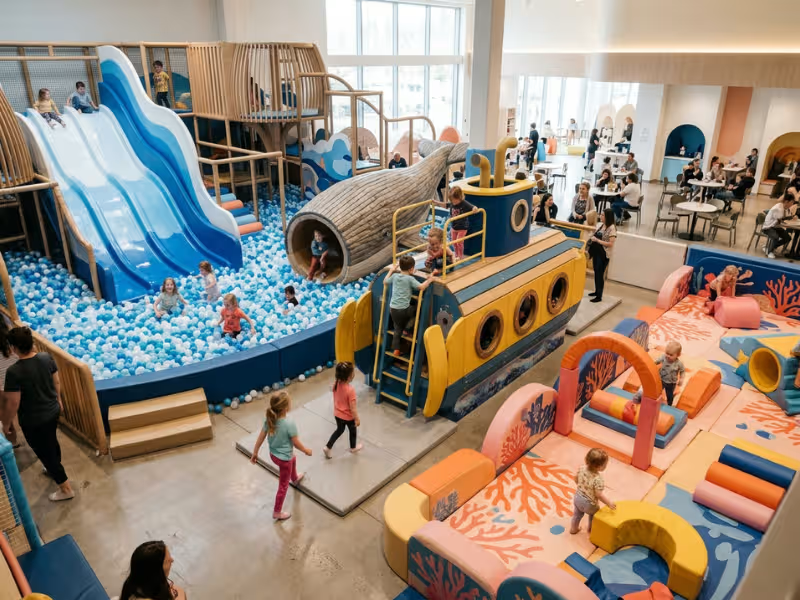
One of the safest themes you can choose for a mixed-age indoor playground. Wave-shaped slides, ball pools styled as water, whale or submarine climbing structures, and coral-pattern soft play translate across every market. Sea creatures make strong mascots and plush stock. Blue-heavy schemes can feel cold, so add coral, yellow, and orange accents to keep the space lively.
21. Deep Sea Discovery
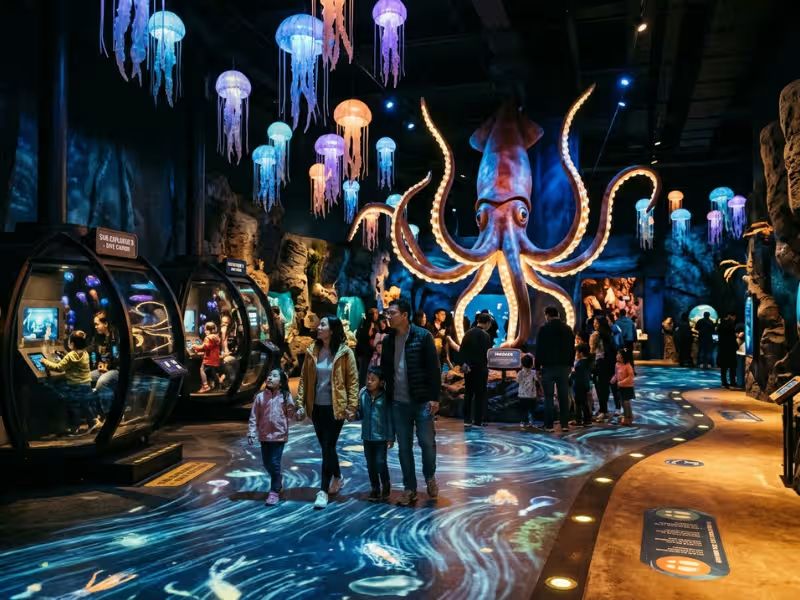
A darker, more dramatic take on the ocean — projection floors, glowing jellyfish features, submarine play pods, and a giant squid sculpture. It suits aquarium-adjacent sites and venues targeting school groups, since marine education is a natural partnership angle. Low light is part of the appeal, but it needs careful design. Use lit edges, clear exits, and bright main circulation paths throughout.
22. Arctic Wildlife World
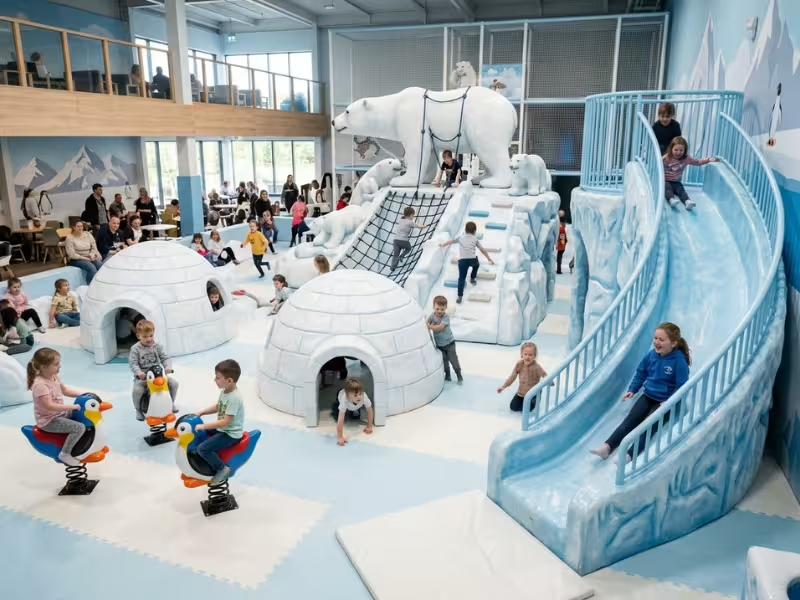
In hot-climate markets, a cool-toned theme sells relief before guests even step inside. Igloo playhouses, hard-plastic “ice” slides, penguin spring riders, and polar bear climbing features give a clean, bright look that stands well apart from the usual jungle-and-ocean lineup. Summer campaigns write themselves. White and pale blue surfaces show scuffs quickly, so specify durable, easy-clean finishes from the start.
23. Dinosaur Park
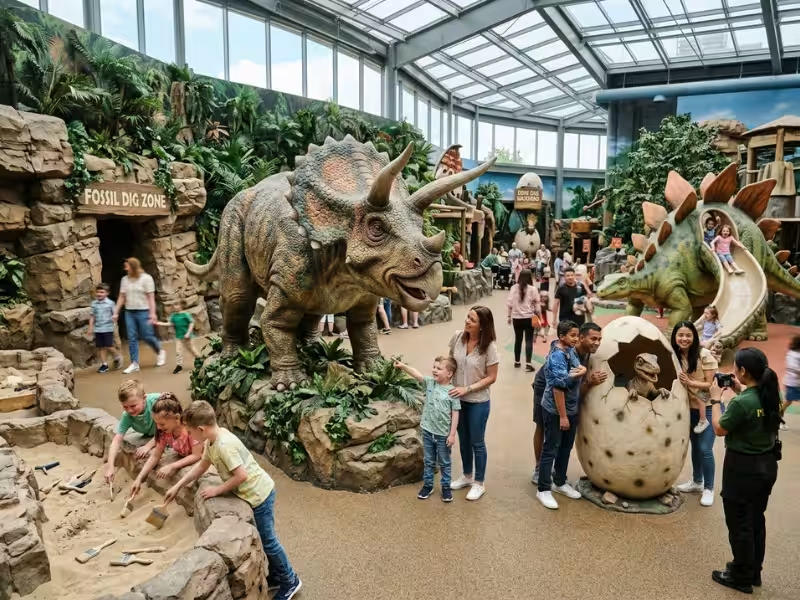
Dinosaurs carry some of the strongest demand in family entertainment and can support premium ticket pricing. Animatronic dinosaurs, fossil digs, dino-shaped slides, and egg-hatch photo points give you a theme kids ask for by name. It scales from a mall corner to a destination park. Animatronics need service contracts and spare parts — budget for them, or broken dinosaurs become your most common complaint.
24. Insect Explorer Zone
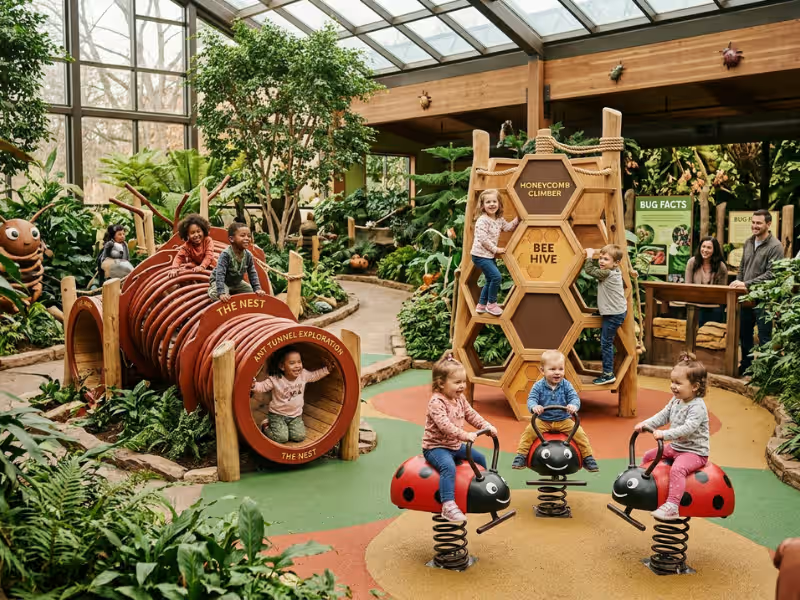
Insects give a small venue a big-scale feel. Children crawl through ant tunnels, climb honeycomb towers, and ride ladybug spring riders — all at bug scale. The theme fits nature centers, botanical gardens, and compact FECs with an educational angle. Keep the characters friendly and stylized. Realistic insects put off a meaningful share of parents and younger children.
25. Farm Adventure Village
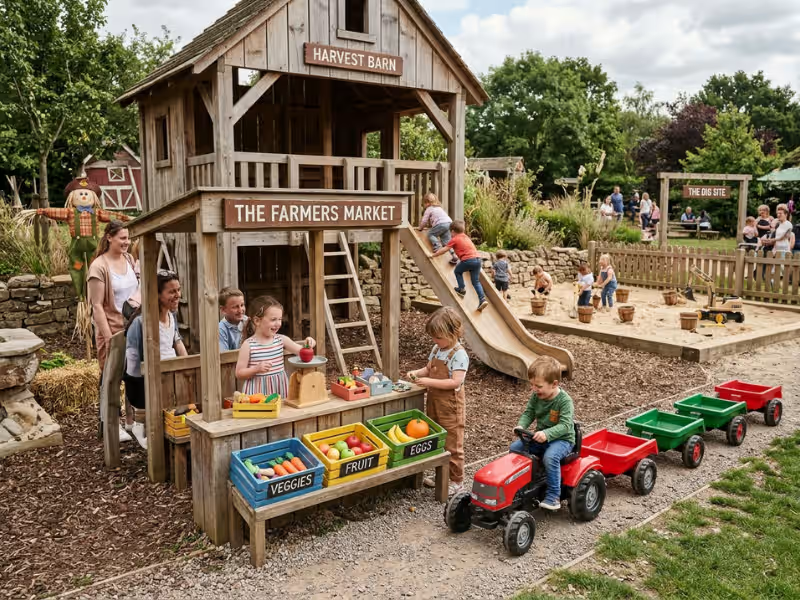
Farm themes suit suburban and rural projects, agritourism sites, and preschool-focused venues. Pretend-play markets, tractor ride-ons, barn climbing structures, and sand or grain play deliver long dwell times for ages 2 to 7. Outdoors, a petting area adds real draw. Live animals bring welfare, hygiene, and permitting responsibilities, so treat them as a separate operation with dedicated staff.
Culture, History, and World Themes
Culture and history themes do two things well: they give a park a story, and they support localization. A theme rooted in local myths or regional heritage is hard for a competitor to copy, and it often attracts tourism or government support. These concepts demand more research and care than nature or fantasy themes. A shallow execution shows quickly — and in some markets, it draws criticism that doesn’t go away.
26. Ancient Egypt Adventure
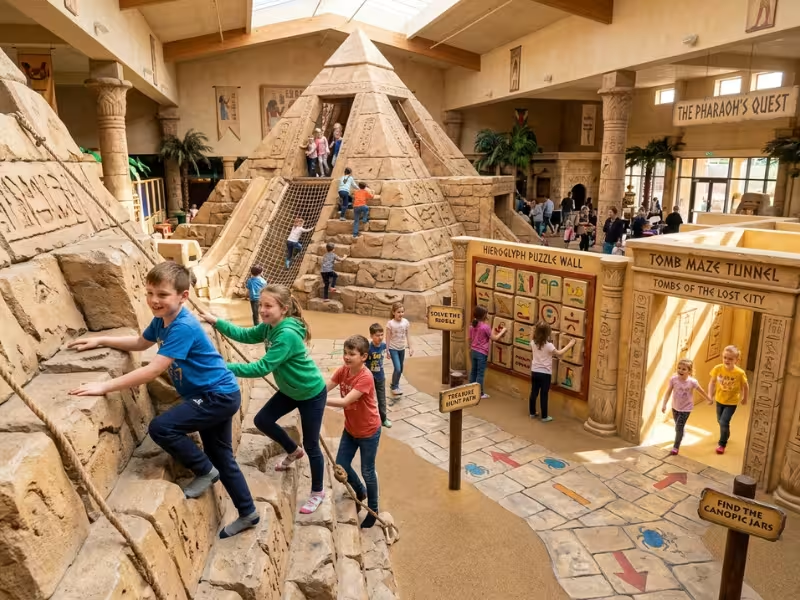
Pyramid climbing structures, hieroglyph puzzle walls, maze-like tomb tunnels, and treasure-hunt trails make Egypt a strong theme for ages 5 to 12. The pyramid shape is also structurally practical — it works naturally as a multi-level play frame. It fits tourist destinations and mid-to-large FECs. Lead with the treasure and exploration angle, and tone down tomb imagery for younger visitors.
27. Medieval Kingdom
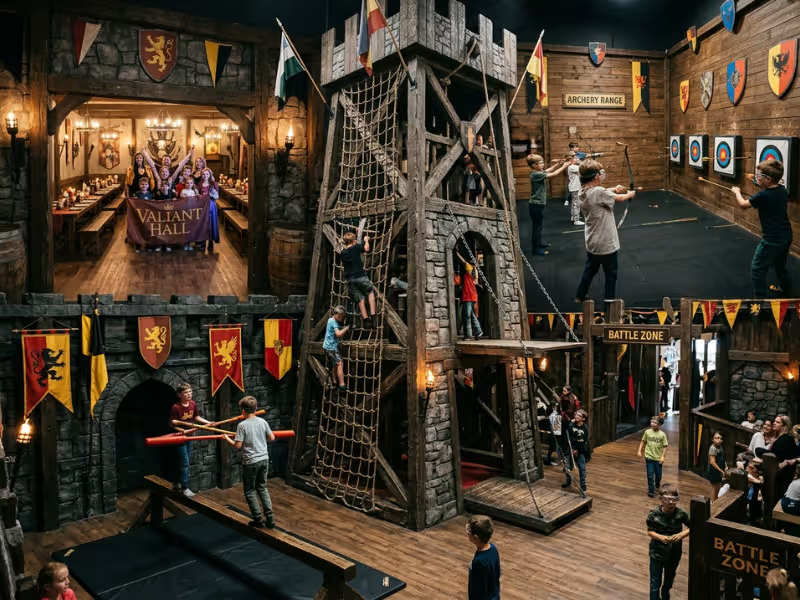
The older sibling of the castle theme. Foam archery, jousting-style balance games, siege-tower climbing, and banquet-hall party rooms aim at ages 7 to 12, and banquet-style events can open up school groups and family functions. Position it clearly away from princess-castle territory — use darker stone tones, heraldry, and challenge-based play so older kids don’t misread it as a younger child’s venue.
28. Wild West Frontier
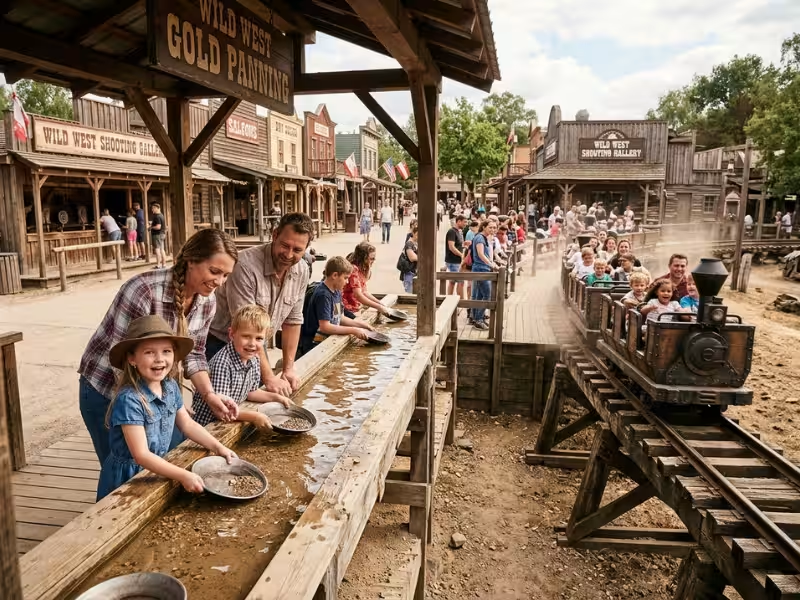
Wild West suits outdoor parks with space for ride systems. A mine train coaster, gold panning stations, a shooting gallery, and a frontier town street create clear per-play revenue points on top of admission. Gold panning has low running costs and high perceived value. Water features need filtration and daily checks, so assign that maintenance responsibility to a named owner before you open.
29. Ancient Civilization Quest
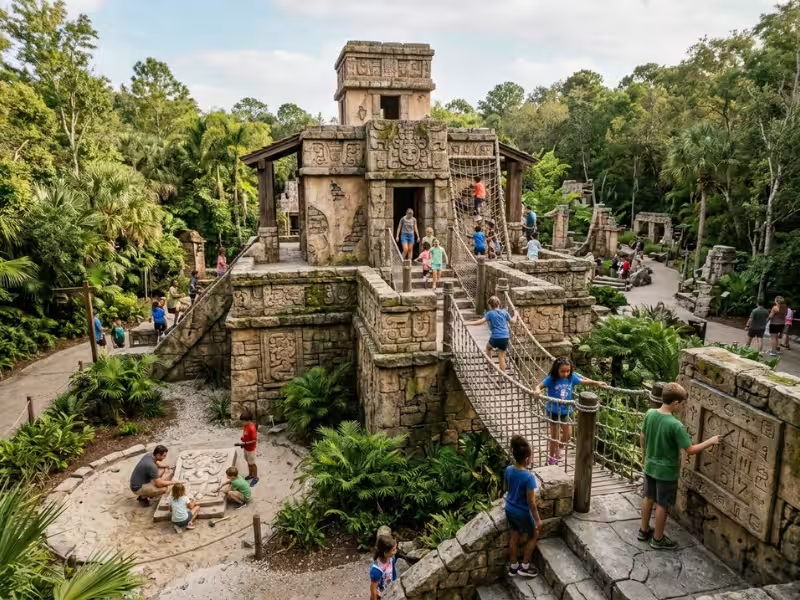
Mayan, Aztec, or Angkor-style temples give you a large central structure that is both landmark and play frame. Children climb, solve puzzle trails, and search for artifacts. It works for destination parks and resort attractions that want adventure with an educational layer. Do the research properly — inaccurate or careless cultural details can generate criticism, particularly in markets with a direct connection to that heritage.
30. Around the World Journey
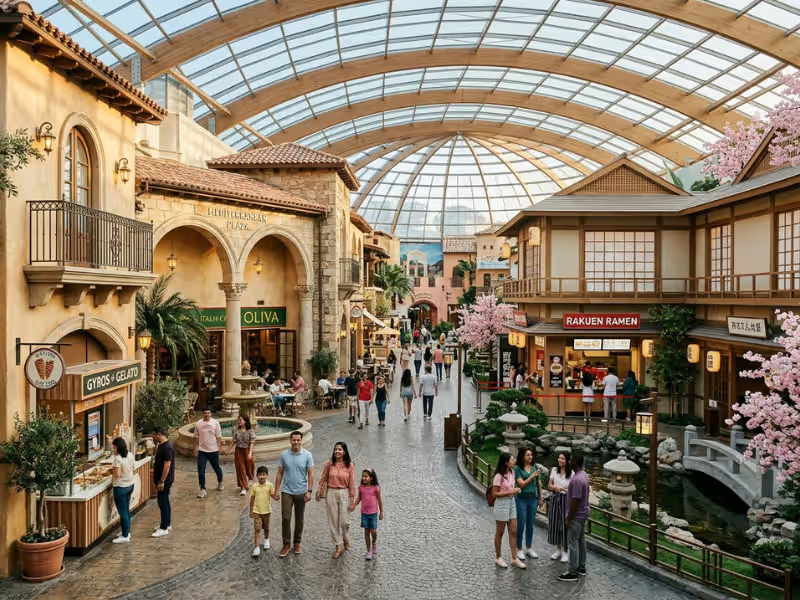
Zone a large site by country or region, each with its own attraction mix, food outlet, and photo point. It suits tourist destinations and mixed-use developments where international food and retail are part of the plan. The risk is cliché. Pick fewer countries and do them well, rather than squeezing in ten flag-and-landmark corners that feel like a souvenir shop.
31. Tropical Island Culture Park
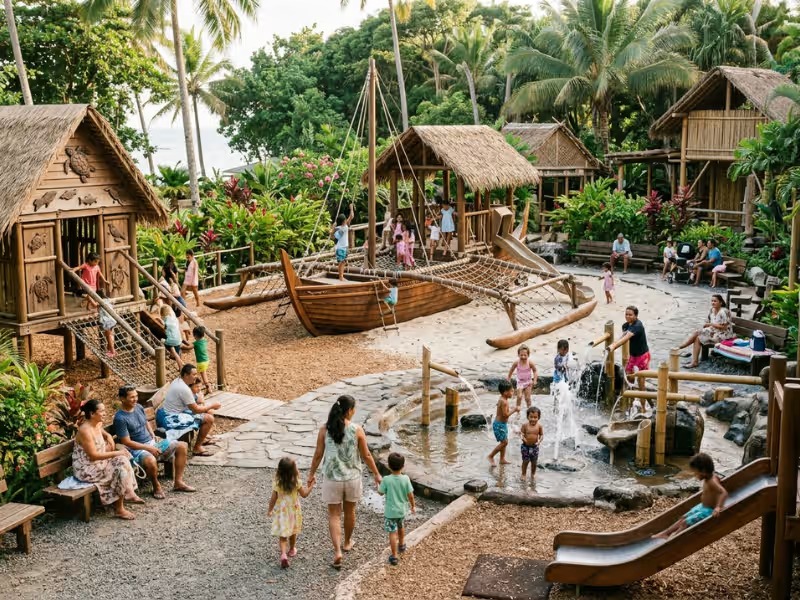
A localization play for Southeast Asian, Pacific, and Caribbean markets. Build around local island culture — traditional boats, village houses, native wildlife, regional patterns — with water play and climbing structures carrying most of the activity. Tourism boards and local governments often favor these projects. Work with local designers or cultural advisors so the result reads as authentic rather than generic “tropical.”
32. Mythology Adventure Land
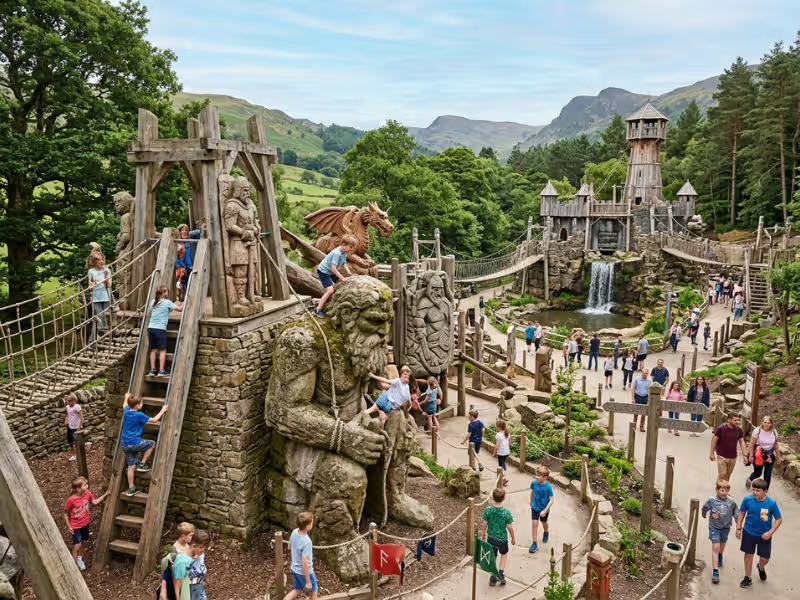
Local myths and legends give you a theme with no license fee and no direct competitor. Turn a regional legend into a quest route — characters as climbing sculptures, story beats as zones, a final challenge at the center. It builds strong regional identity for destination parks. The story has to work visually. If guests need to read panels to follow it, the theme won’t land.
Action, Sports, and Challenge Themes
Once children pass around age 8, soft play stops holding them. Action themes keep that audience — and often their parents — engaged. They suit timed sessions, leaderboards, leagues, and competitions, which all support higher ticket pricing and repeat visits. The operating demand is higher, too: more staff, more matting, more inspections, and stricter session management across the board.
33. Ninja Challenge Zone
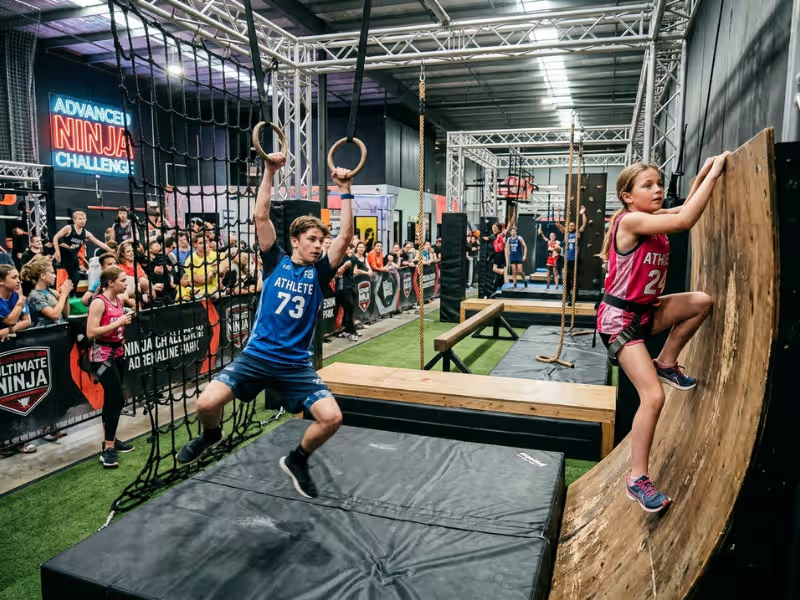
Ninja courses are among the strongest draws for ages 7 to 16. Timed obstacle lanes, warped walls, swinging rings, and balance beams support leaderboards and leagues that bring regulars back regularly. It also suits adult fitness sessions in off-peak hours. Every element needs proper impact matting and trained spotters — build your staffing ratios into the model before you build the course.
34. Extreme Climbing Arena
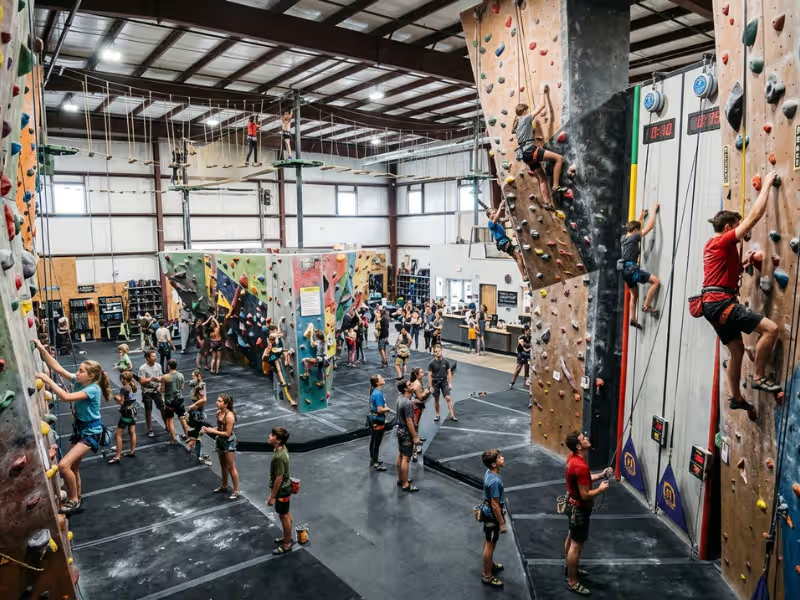
A dedicated climbing theme lets you charge more for a defined session and sell memberships. Auto-belay walls, themed bouldering, speed-climb lanes, and a ropes course serve kids, teens, and adults on the same floor. It suits large-box retail conversions with generous ceiling height. Certified staff and logged inspections aren’t optional — they’re part of the insurance conversation from day one.
35. Adventure Training Camp
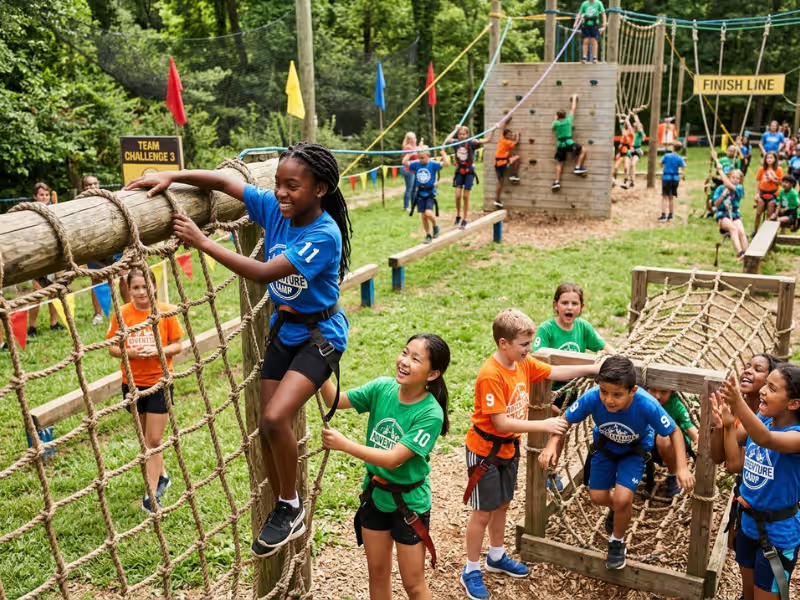
A “training camp” frame turns obstacle courses into missions. Crawl nets, cargo climbs, rope swings, and timed challenge circuits suit school groups, holiday camps, and corporate team-building bookings, giving you weekday revenue that pure family venues struggle to generate. Keep the tone playful and team-based rather than military, which can put off some parents and schools.
36. Racing World
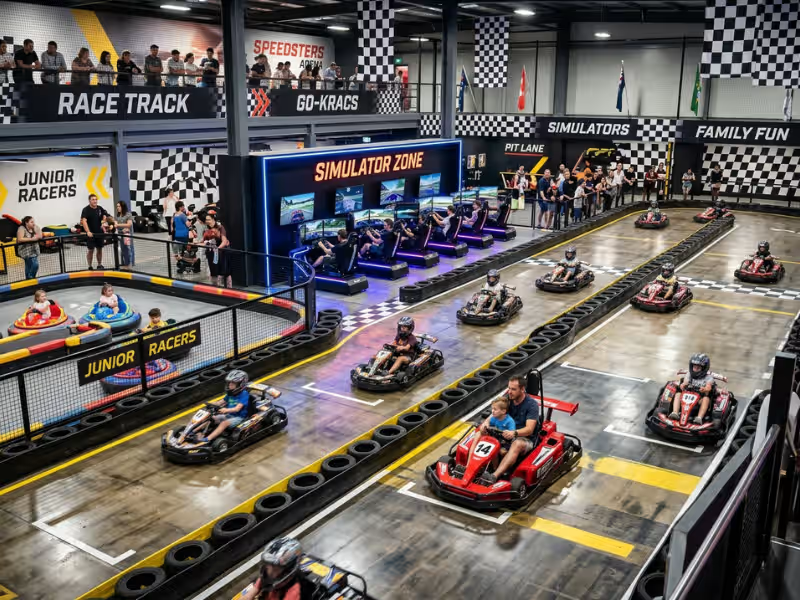
Racing themes earn per-ride revenue on top of entry fees. Electric go-karts, kids’ bumper cars, mini traffic circuits, and racing simulators serve ages 4 to adult depending on vehicle class. Choose electric over petrol indoors to avoid ventilation problems. Plan battery charging rotations so peak hours don’t run short of cars.
37. Urban Obstacle Park
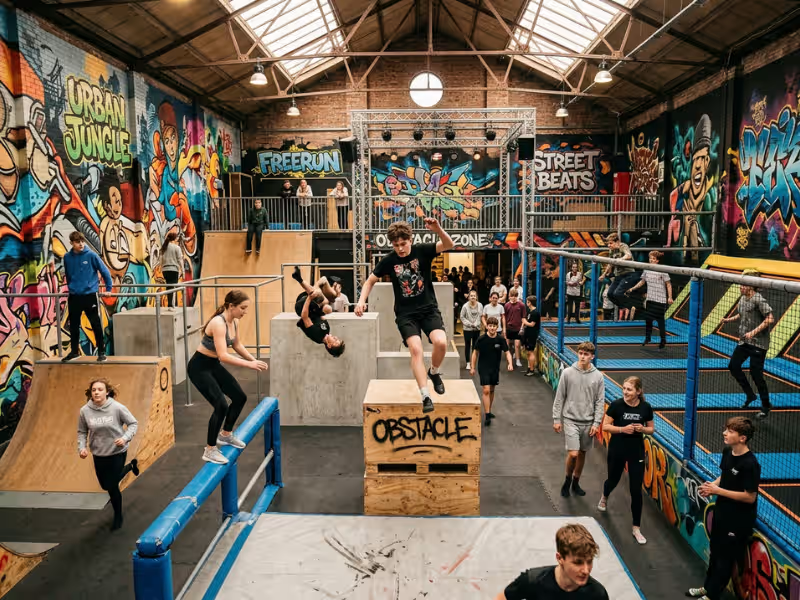
Parkour-style structures, street-art graphics, trampoline lanes, and freestyle zones target teenagers who won’t visit anything that looks like a playground. It’s a strong fit for city-center malls and youth-oriented entertainment centers. Commission real artists for the murals, and avoid stock graffiti designs that look dated within months. This audience notices immediately when a brand is trying too hard.
38. Sports Tournament Zone
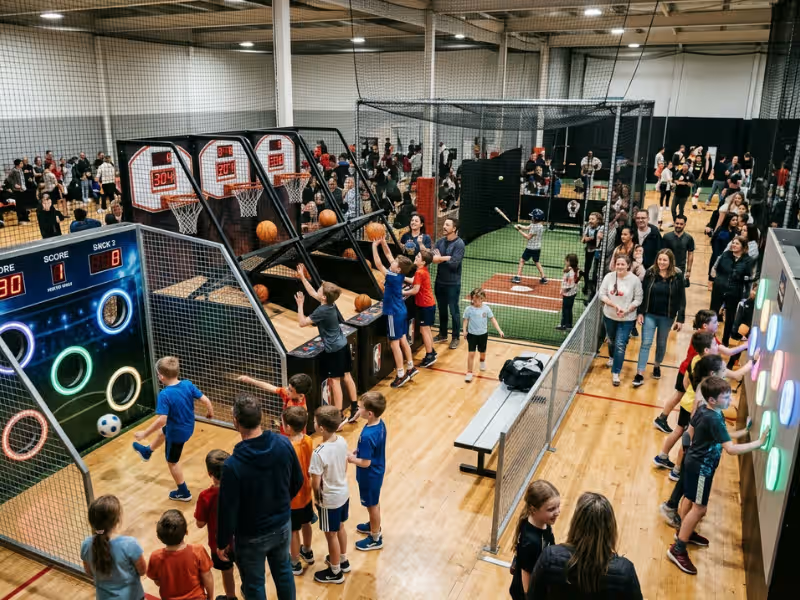
Interactive football walls, basketball shooting lanes, batting cages, and reaction games create a sports venue that runs on scores and tournaments. Weekly leagues, school challenges, and birthday competitions give you scheduled demand rather than relying on walk-in traffic. Noise and ball control are the real operational issues — use netting, zoning, and acoustic treatment to keep sports areas from overwhelming quieter zones.
Creative, Educational, and Role-Play Themes
These themes don’t depend on thrills. They depend on dwell time, repeat play, and parent approval. Role-play towns, maker spaces, and construction zones keep children occupied for hours and give parents a reason to pick you over a screen-based alternative. They suit indoor FECs, mall anchors, and edutainment centers. The tradeoff is labor and consumables, which need honest planning from the beginning.
39. Mini City Role-Play Park
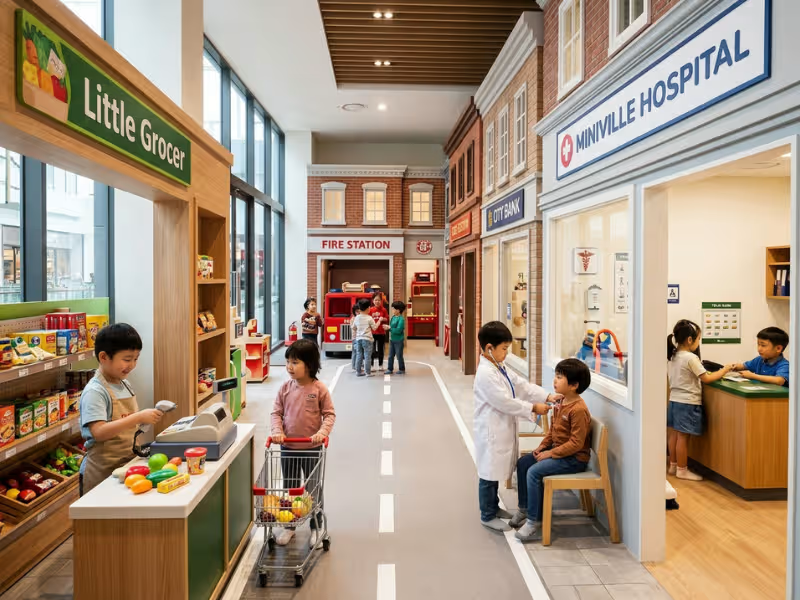
A miniature city with a supermarket, hospital, fire station, bank, and salon delivers some of the longest dwell times in children’s entertainment. Each “shop” can carry a sponsor’s brand, which helps offset build cost. It suits ages 3 to 10 and larger mall units. Role-play props wear out, go missing, and need constant resetting — staff the floor for maintenance as well as supervision.
40. Young Inventors Lab
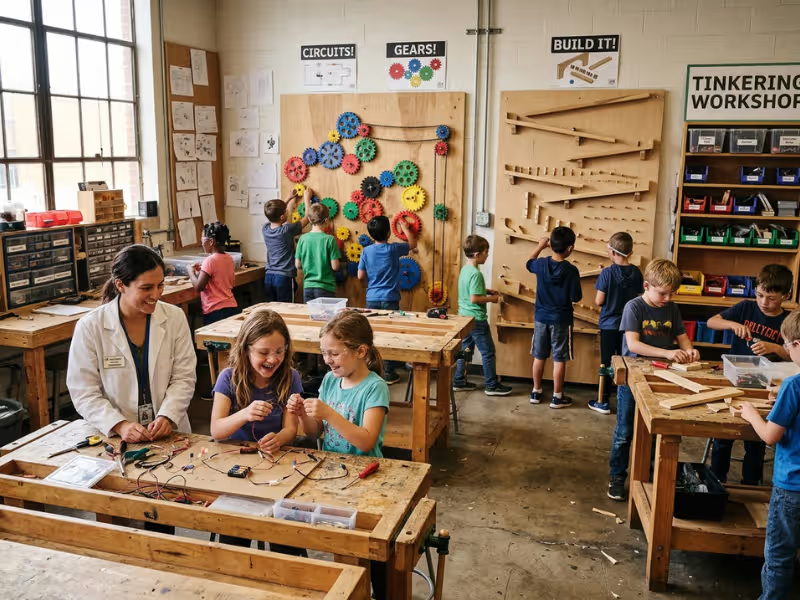
Maker benches, gear walls, simple circuits, ball-run builders, and a tinkering workshop create a venue built around ticketed classes. Weekday workshops, school programs, and holiday camps generate revenue beyond open play. It suits smaller footprints in education-focused neighborhoods. Consumables and facilitator time are your real running costs — price the workshops to cover them rather than burying the cost in general admission.
41. Art and Imagination Studio
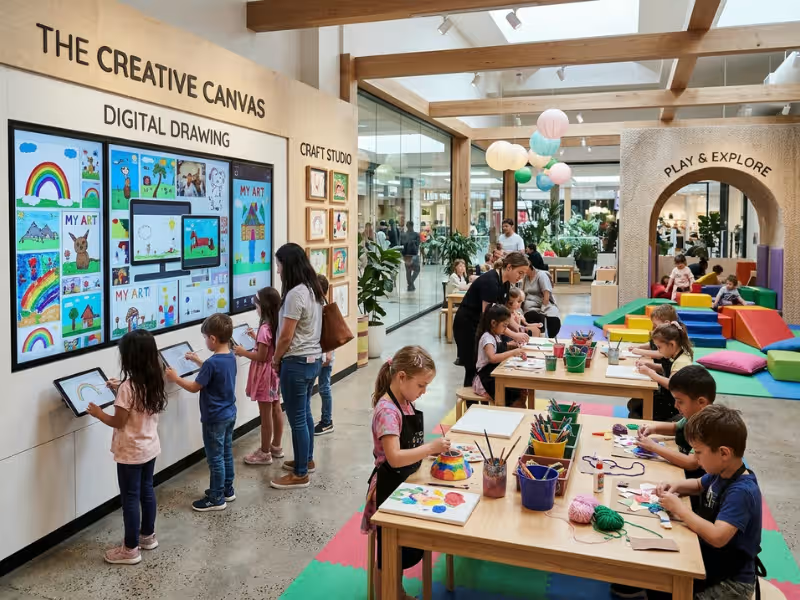
Digital drawing walls — where children’s sketches come alive on screen — paired with physical craft tables and a soft play gallery create a low-footprint creative venue. It suits malls, galleries, and cultural centers, and works well as a birthday party package. Mess control decides whether it holds up long-term. Specify washable surfaces, adequate storage, and a clear reset routine between sessions.
42. Construction Adventure Zone
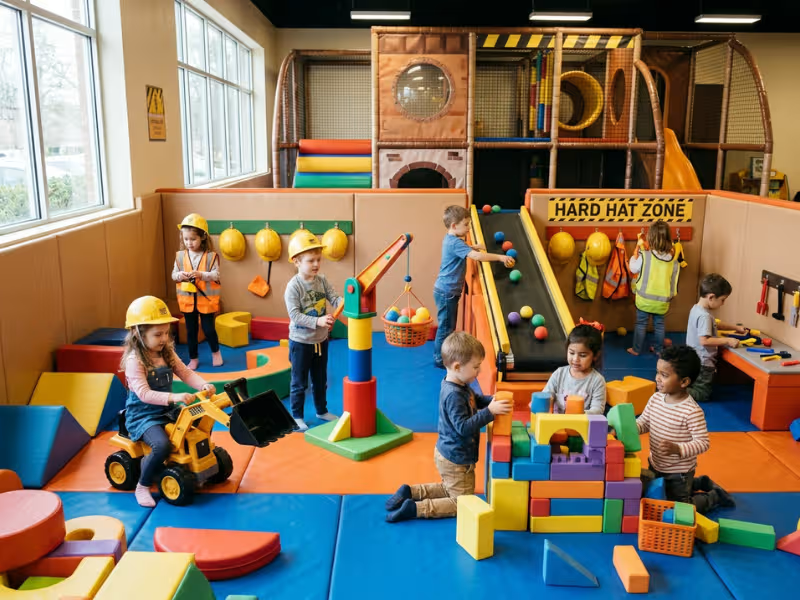
Foam building blocks, ride-on diggers, ball cranes, conveyor belts, and hard-hat role play make this a reliable draw for ages 2 to 7. It’s easy to understand, easy to market, and strong on repeat visits. It also slots well into a corner of a larger FEC as a toddler zone. Loose parts need counting, cleaning, and replacing on a schedule — the zone runs down noticeably within months without it.
43. Transportation Discovery Park
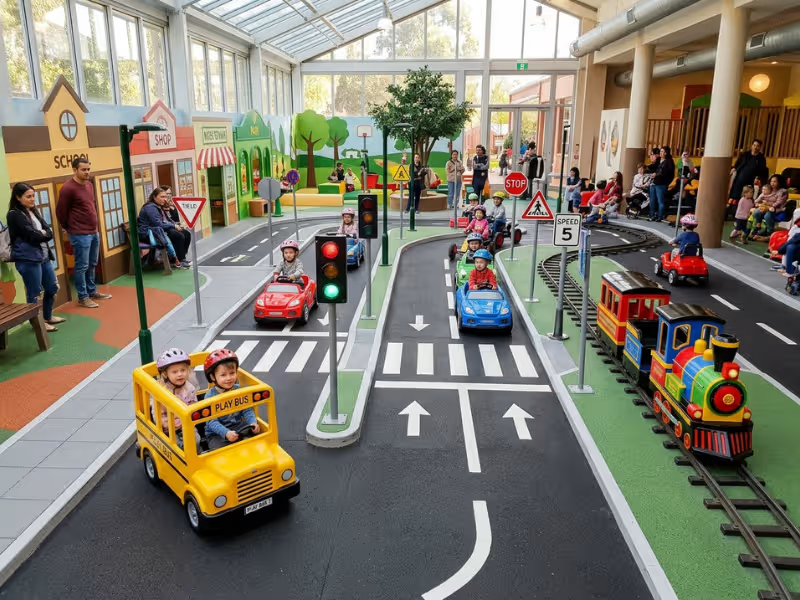
Trains, buses, traffic lights, and ride-on cars laid out as a working mini road network suit preschool and early primary audiences. “Traffic school” sessions add an educational hook for parents and schools. It works both indoors and in outdoor family parks. Plan the track or road layout before anything else — poor circulation creates queues and collisions that undermine the whole concept.
44. Junior Rescue Academy
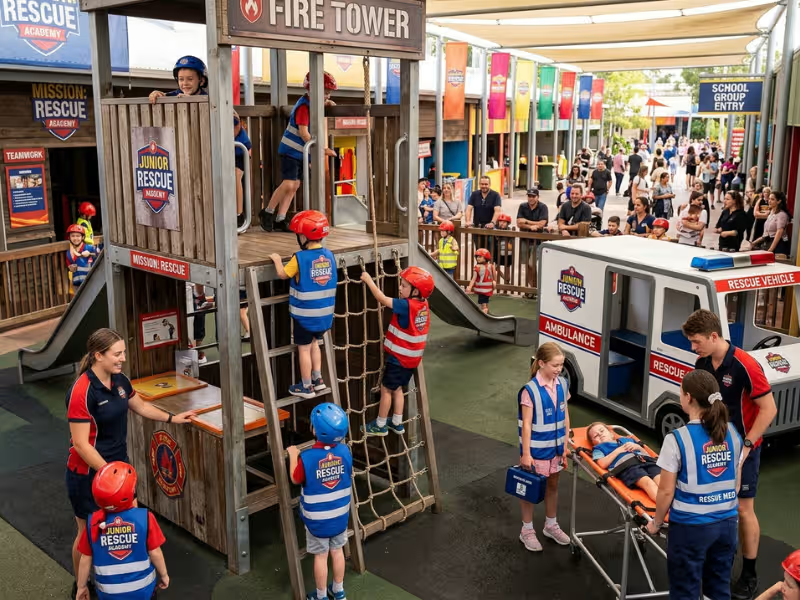
Firefighter, police, and paramedic role play suits school trips, birthday parties, and community partnerships with local emergency services. A climbing fire tower, rescue vehicle play structures, and mission-based activities give the theme structure and purpose. It’s popular with parents who want play that comes with a lesson. Missions work best with trained facilitators running scheduled sessions rather than free-roam play.
Seasonal, Event-Driven, and Hybrid Commercial Themes
Not every theme has to be permanent. Seasonal and event-led concepts let you run short campaigns, test demand, or turn a mall atrium into a temporary attraction. They also reveal how a permanent theme should be designed: with a neutral core that can take overlays. Most of these ideas work best as layers on top of a flexible base rather than as standalone builds.
45. Halloween Adventure Park
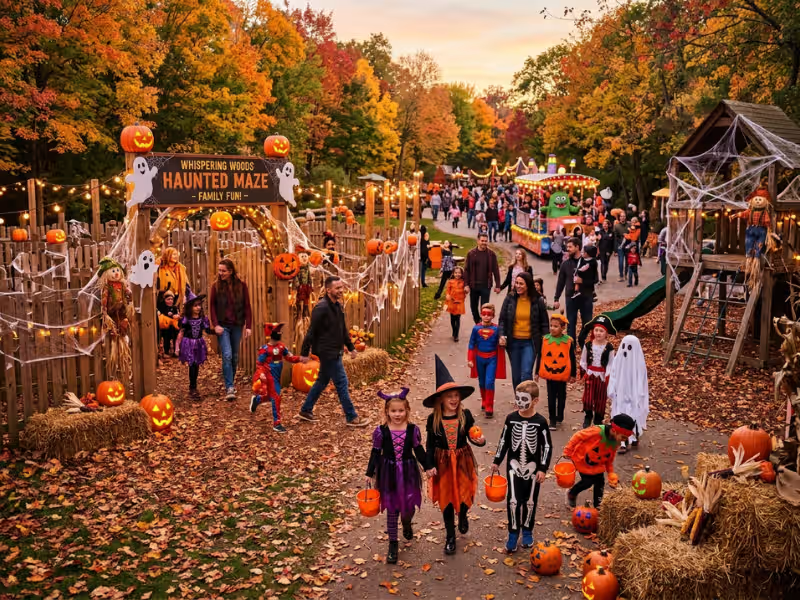
Halloween is one of the highest-traffic seasonal windows in markets that celebrate it. A family-friendly haunted maze, costume parades, pumpkin hunts, and themed overlays on existing play structures can lift October revenue sharply. The lesson for permanent design is clear — keep base structures neutral enough to dress up. Bright, character-specific colors are hard to turn spooky for a few weeks each year.
46. Winter Festival World
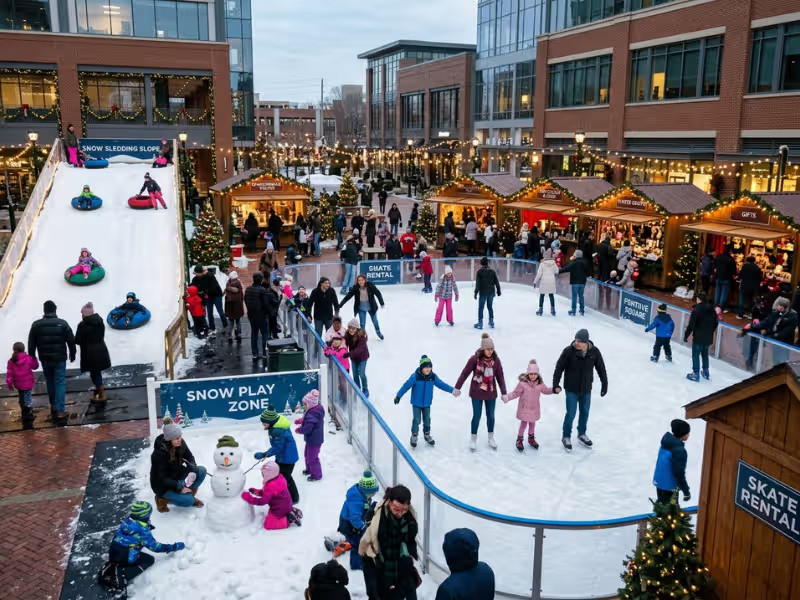
Synthetic ice rinks, snow play areas, sledding slopes, and holiday market stalls create a strong winter attraction for malls and outdoor plazas, drawing footfall that benefits surrounding retail. In warm climates, the novelty is even stronger. Synthetic ice needs regular surface care, and real snow machines carry heavy water and power demands — check both before committing.
47. Summer Splash Adventure
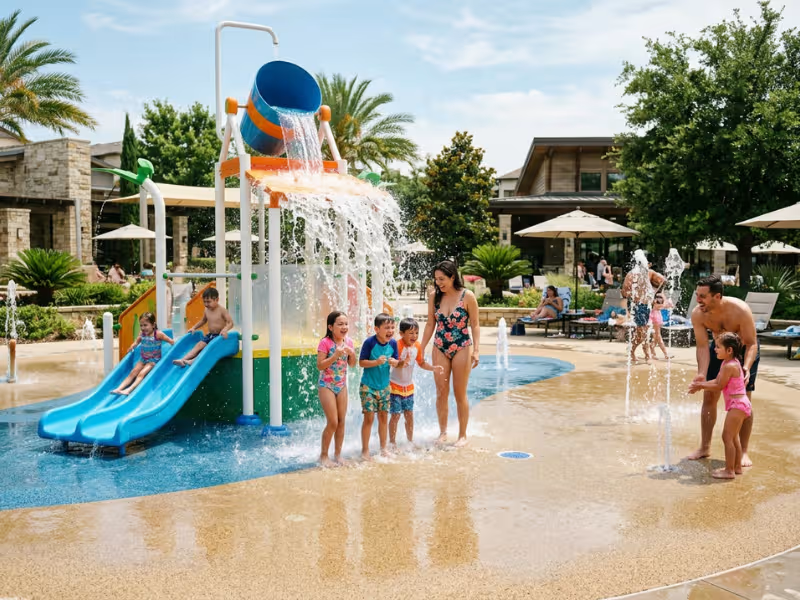
Splash pads, water play structures, tipping buckets, and small slides turn an outdoor site into a summer anchor. Families stay longer, and food and beverage sales rise with temperature. It also pairs well with resorts and residential developments as a managed amenity. Water treatment, drainage, and slip-resistant surfacing are the critical specs — sign those off before you choose anything decorative.
48. Carnival Midway Theme
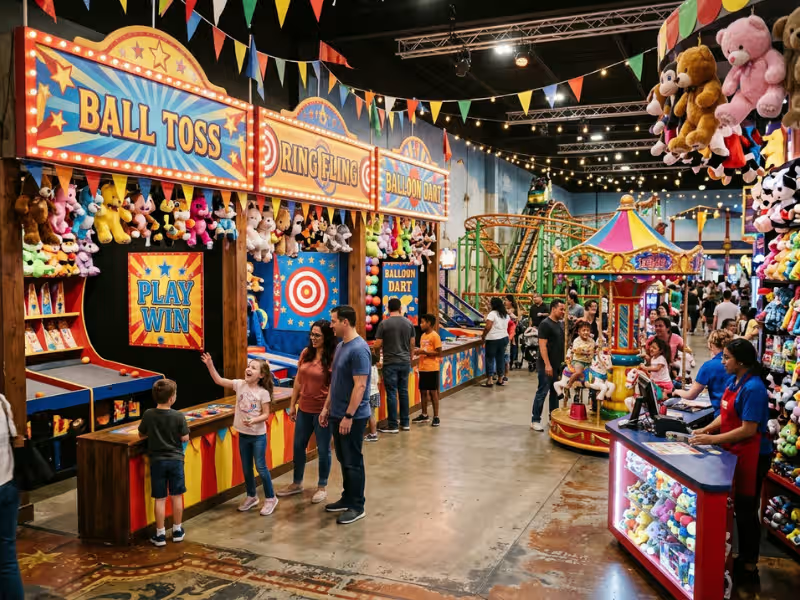
Game booths, redemption counters, small rides, and fairground graphics create a venue with high spend per guest. Players pay per game rather than once at the door, which suits FECs, outdoor fairs, and mall pop-ups. Prize stock is the hidden cost here — manage redemption ratios and inventory tightly, or margins disappear into prize spending faster than you’d expect.
49. Holiday Lights Experience
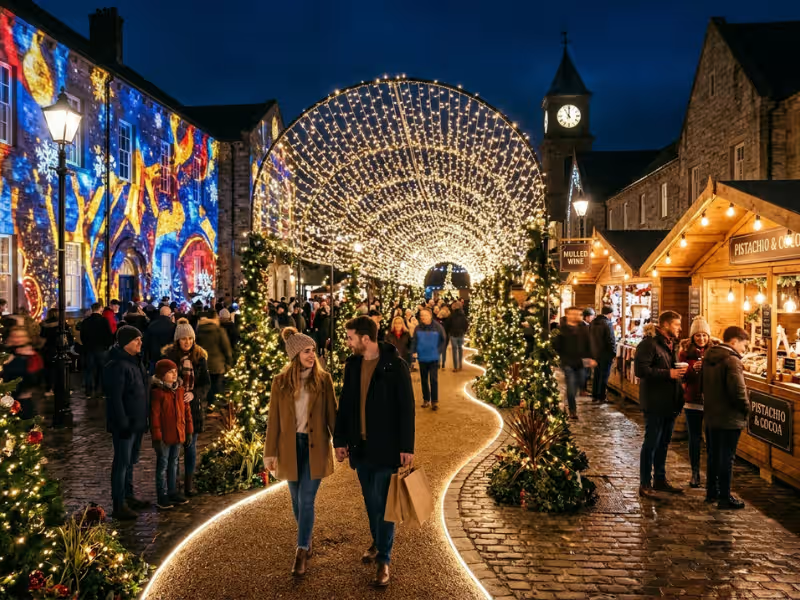
Light trails, illuminated tunnels, projection shows, and night markets turn a park or plaza into an evening destination during holiday seasons. It extends operating hours and attracts adults and couples alongside families, and it can run on an existing park site after regular hours close. The season is short and power demand is high — check electrical capacity and permits well before installation begins.
50. Mixed-IP Family Festival Park
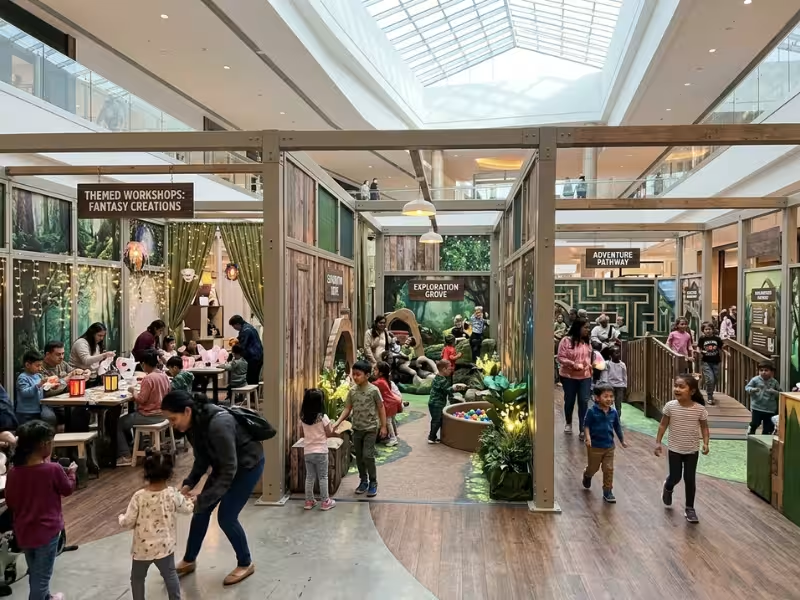
Instead of one licensed IP, build modular zones that rotate between different licensed characters or campaigns each season. This gives you fresh marketing hooks without a full rebuild, and suits malls and large FECs with strong marketing teams. License agreements carry fees, approval cycles, and timing limits. Design the base zones so branded elements can be swapped quickly, and negotiate terms before you lock in the layout.
How to Turn a Theme Idea Into a Commercially Viable Park Concept
Choosing a theme is the easy part. Turning it into a park that actually performs is where most projects either gain or lose value.
Treat the theme as a system, not a layer. A theme applied after the layout is fixed becomes decoration: wall graphics, a few props, a logo on the entrance. A theme set before the layout shapes the attractions themselves — the ship is the climbing frame, the volcano is the slide tower, the city streets are the circulation. That integration is what guests actually notice, and it costs little more if you plan it from the start.
Match the theme to who pays and who plays. Children choose where to go, but parents pay and decide whether to come back. A theme that excites children but gives parents nowhere comfortable to sit, watch, and eat will struggle with repeat visits. Map your core age band, your secondary band, and the adult experience before you finalize zones.
Let equipment and circulation carry the story. Guests should understand the theme by walking through it, not by reading signs. Put your landmark structure where it’s visible from the entrance. Sequence zones so the story builds as people move deeper in. Keep toddler areas near parent seating, and push high-energy zones to the edges where noise and speed can be managed.
Plan operations before you sign off the design. Every theme carries running costs: animatronic servicing, foliage cleaning, prop replacement, lighting, water treatment, staffing for facilitated zones. Ask your design team for a maintenance profile alongside the render. A cheaper build with heavy upkeep often costs more over five years than a stronger build that’s simple to maintain.
Design for refresh from day one. The strongest themes have a stable core — structures, layout, main color scheme — plus swappable layers: graphics, props, event decor, themed experiences. That lets you run seasonal campaigns and partial refreshes without closing the venue. Ask how each zone can be updated in two or three years, and build in the fixings and modular elements that make it possible.
Balance originality with recognition. An original theme protects you from license fees and direct copies. A familiar theme — dinosaurs, pirates, space — sells faster at launch. Many successful parks land somewhere between both: a recognizable category executed with a distinctive local story, named characters, or a signature landmark that only their park has.
Common Mistakes When Choosing an Amusement Park Theme
Most themes don’t fail because the idea was bad. They fail because it was the wrong fit for the site, the audience, or the operating model. These five patterns show up again and again.
- Choosing for visual novelty. A theme that looks striking in a render can feel shallow in practice. If the play value doesn’t match the visuals, guests visit once, post a photo, and don’t return.
- Ignoring the real age range. A fairy forest won’t hold a ten-year-old, and a ninja course won’t serve a toddler. Build the theme around your core age band and add a clearly separated secondary zone, rather than stretching one concept across everyone.
- Mismatching theme and equipment. A space theme on top of a standard jungle-style play frame is a reskin, and it looks like one. If the equipment can’t physically express the theme, either change the equipment or change the theme.
- Underestimating maintenance. Animatronics, water effects, special lighting, dense foliage, and loose props all carry ongoing costs. Projects that budget only for the build often end up with broken features dragging down reviews within the first year.
- Locking out future refresh. Highly specific storylines, character-heavy graphics, and fixed props make updates expensive. Without a clear refresh path, the venue starts to feel dated just as competitors open nearby.
Frequently Asked Questions
What makes a strong amusement park theme commercially viable?
A viable theme does three things at once. It attracts a clearly defined audience. It shapes the attractions, not just the decor. And it supports repeat revenue through parties, events, memberships, or merchandise. It also has to fit the site’s physical limits and the operating budget. A theme that looks impressive but needs constant repair — or only appeals to one narrow age group — rarely pays back its build cost.
How do I choose the right theme for different age groups?
Start with your core age band. Under-5s need soft, low, calm environments: fairy forests, farms, construction zones, ocean play. Ages 5 to 9 respond to story-led themes — pirates, castles, dinosaurs, space. Over-9s want challenge and competition: ninja courses, climbing, racing, sports. For mixed-age venues, keep one umbrella theme and design clearly separated sub-zones for each age band within it.
Should I use a licensed IP theme or create an original concept?
Licensed IP gives you instant recognition and faster launch marketing. It also brings fees, approval cycles, design restrictions, and contract end dates. Original themes cost nothing to license and can’t be copied by a competitor holding the same rights, but they need stronger design execution to stand out. Many operators land in the middle: an original permanent theme with licensed content rotated in for seasonal campaigns.
How closely should theme and equipment selection be linked?
Very closely. In the best venues, the equipment carries the theme — the play structure is shaped as a ship, a castle, or a rocket, and the slides, nets, and climbs follow from that. Choosing equipment first and applying a theme afterwards usually produces a generic venue with themed wallpaper on the walls. Brief your equipment supplier on the theme at concept stage, not after the layout is already fixed. If you’re sourcing custom commercial play equipment, that conversation is worth having before any drawings are finalized.
Which types of themes are easiest to update seasonally?
Themes with a neutral, flexible base are the easiest to refresh. Forest, ocean, city, and adventure frameworks can carry Halloween, winter, or summer overlays without clashing. Tightly scripted themes with specific characters or strong single-color palettes are harder to adapt. If seasonal events are part of your revenue plan, choose a base theme that can be redressed in days rather than weeks.
What themes work best for indoor family entertainment centers?
Indoor FECs perform well with themes that use height and modularity: jungle, rainforest canopy, space station, ocean, mini city. These suit multi-level play structures and zoned layouts, and they adapt to irregular floor plans in malls and retail boxes. For FECs targeting older kids, add a challenge zone — ninja course, climbing, or trampolines — under the same umbrella theme.
Conclusion: Choose a Theme That Supports Both Experience and Business Performance
The themes on this list don’t succeed because they are clever. They succeed when concept, audience, attractions, and operations point in the same direction. A jungle theme that turns a high ceiling into a three-level adventure will outperform a futuristic concept squeezed into a low mall unit. A familiar pirate theme with a local harbor story will often beat an original idea that nobody understands at first glance.
Use the five decision criteria to cut this list to a shortlist. Then test each finalist against your site plan, your core age band, your maintenance budget, and your event calendar. The theme that survives those tests is the one worth building, even if it isn’t the most striking render on the table.
From there, the next step is practical: turning the theme into a layout and an equipment mix. Bring your floor plan, ceiling heights, and target audience to an experienced commercial play equipment manufacturer early. That way, the theme is built into the structures themselves rather than added at the end.