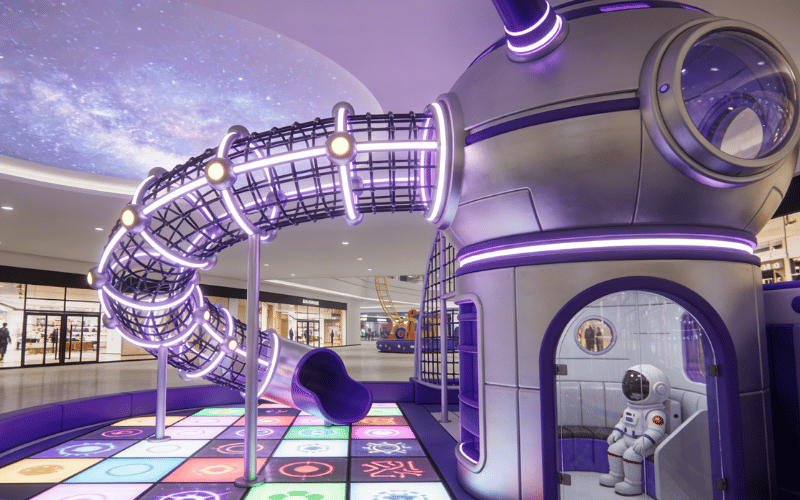
Designing a mall playground is about much more than just filling an empty corner with slides and climbing frames. It is a strategic architectural decision that can transform a shopping center into a family destination. A well-designed playground serves as an anchor, increasing dwell time for families, driving foot traffic to nearby stores, and offering parents a much-needed respite while their children burn off energy. The goal is to create a space that is not only safe and engaging for children but also visually cohesive with the mall’s overall aesthetic.
To succeed, developers must balance functionality with creativity. The playground needs to be a haven that meets rigorous safety standards while providing an immersive experience that captures a child’s imagination. It must also cater to the practical needs of parents, offering clear sightlines and comfortable seating. In this guide, we will explore the critical elements of mall playground design, from branding and themes to traffic flow and technology integration, to help ensure your facility becomes a beloved community hub.
Branding
When designing your mall playground, branding should be at the forefront of every decision. Your playground is an extension of the mall’s identity and serves as a tangible representation of your commitment to family-friendly experiences. A strong brand presence builds trust with parents and makes your facility stand out in a competitive retail landscape. Whether you are aiming for a luxury aesthetic or a whimsical, cartoon-inspired vibe, consistency is key.
Target Audience
Your branding strategy must begin with a clear understanding of your target audience. Are you catering to toddlers, school-aged children, or both? A playground designed for toddlers will require softer materials, lower structures, and a calmer atmosphere, while one for older kids needs physical challenges and dynamic features. Additionally, consider the parents. If your mall targets high-end shoppers, the playground design should reflect a sophisticated, clean look that aligns with luxury brands. Tailoring the design to your shoppers’ specific demographics ensures the space feels relevant and welcoming.
Colors and Aesthetics
The colors you choose play a significant psychological role in how children interact with the space. Bright, primary colors like red and yellow are known to stimulate energy and excitement, making them ideal for high-activity zones. Conversely, pastels, greens, and blues promote calmness and are better suited for sensory or quiet play areas. The aesthetic should not clash with the mall’s interior; instead, it should complement it. For example, a modern mall with sleek lines and neutral tones might benefit from a playground with a nature-inspired palette rather than neon plastic, creating a harmonious visual experience for passersby.
Theme
A cohesive theme is the glue that holds the playground experience together. It transforms a collection of equipment into an immersive world where children can role-play and explore. A well-executed theme can turn a generic play area into a destination that children repeatedly ask to visit. Whether it’s an “Under the Sea” adventure, a “Space Exploration” station, or an “Enchanted Forest,” the theme should resonate with the local culture or the shopping center’s specific branding.
When selecting a theme, consider longevity and maintenance. Trendy characters might be popular today, but could look dated in a few years. Timeless themes such as nature, transportation, or animals tend to have a broader, lasting appeal. The theme should extend beyond just the equipment to the flooring patterns, murals, and even the seating areas. For instance, a jungle theme might feature leaf-shaped benches and green soft-fall flooring to mimic grass. This attention to detail enhances the storytelling aspect of play, making the experience memorable for children and visually appealing for parents sharing photos on social media.
Layout and Traffic Flow
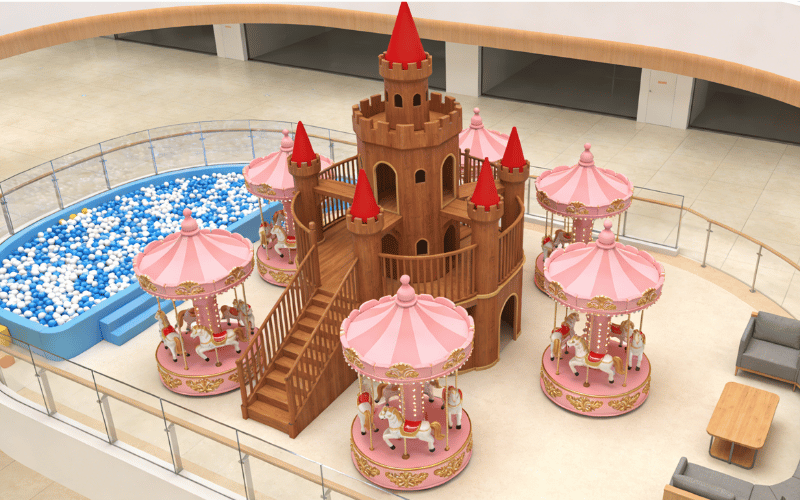
The layout of your mall playground should be designed to maximize the space’s utility without creating congestion. An efficient layout ensures that children can move freely between activities without colliding, and parents can navigate the perimeter comfortably. It must be flexible enough to handle peak weekend crowds while still feeling intimate during quieter weekday mornings. There are two primary approaches: an open-concept flow that encourages free roaming, or a zoned layout that guides children through specific activity circuits.
Activity Zones
To manage energy levels and safety, it is essential to divide the playground into distinct activity zones based on age and play intensity. A “Toddler Zone” should be separated from the main play structure to protect younger children from the boisterous play of older kids. This area typically features soft foam shapes, low slides, and sensory panels. The “Active Zone” for older children can house the larger climbing structures and obstacle courses. By grouping similar activities, you allow children to engage at their own skill level while minimizing the risk of accidents caused by size disparities.
Storage Solutions
A cluttered playground is a safety hazard and an eyesore. Don’t forget the importance of clever storage solutions when designing your layout. You need designated spaces for shoes, strollers, and personal belongings. Cubby holes or lockers integrated into the perimeter seating walls are excellent for keeping shoes off the floor. Stroller parking is another critical consideration; without a dedicated zone, strollers can block walkways and emergency exits. Designing recessed areas or marked bays for strollers ensures the traffic flow around the playground remains unobstructed and accessible for all visitors.
Equipment Selection
A significant factor in the success of your mall playground is the type and quality of the equipment you select. Parents expect safe, durable, and engaging structures that justify the trip to the mall. The equipment must be commercial-grade, capable of withstanding heavy daily use, and compliant with all relevant safety standards (such as ASTM or EN). When selecting pieces, consider the “play value”—how many different ways a child can interact with a single item.
Standard Equipment
Every playground needs a foundation of standard equipment that children recognize and love. This includes slides, which offer instant gratification and thrill; climbing structures like cargo nets or rock walls to build strength and coordination; and tunnels for exploration. Soft play elements are essential for younger demographics, providing safe environments for tumbling and crawling. Determine the space required by each piece, including the necessary “fall zones” (safety perimeters), to ensure you aren’t overcrowding the floor plan. A balanced mix of active (climbing/sliding) and passive (sensory panels/role-play houses) equipment caters to different play styles.
Unique Features
If you want your playground to serve as a genuine attraction, include unique features that set it apart from a typical park. This could be a multi-story spiral slide that serves as a visual centerpiece, a bespoke climbing sculpture that doubles as art, or an interactive ballistics arena where kids can shoot soft foam balls. Unique equipment options require careful spatial planning but offer high rewards in terms of engagement. For example, installing a “musical garden” with oversized outdoor instruments enables creative auditory play rarely found in standard setups, adding a unique auditory layer to the sensory experience.
Safety and Accessibility
Keeping your visitors safe should be your design’s absolute priority. A mall playground sees high traffic, so wear and tear can quickly lead to hazards if not managed properly. Safety starts at the design phase, not just in operation. From the equipment’s height to the visibility from the seating area, every element must be scrutinized to minimize risk. Furthermore, the space must be welcoming to everyone, ensuring that children of all abilities can play together.
Safety Features
Essential safety measures include choosing the right impact-absorbing flooring to cushion falls. Materials like poured-in-place rubber or high-density foam tiles are industry standards. Equipment should feature rounded edges, tamper-proof hardware, and no entrapment hazards (spaces where a head or finger could get stuck). Emergency exits must be clearly marked and unobstructed. Additionally, the design should eliminate blind spots, allowing parents to maintain visual contact with their children at all times. Gates with child-proof latches at the entrance/exit help prevent toddlers from wandering off into the busy mall concourse.
Accessibility for All
When designing your mall playground, you’ll need your finished product to be ADA-compliant and inclusive. This goes beyond just wheelchair ramps. It means designing transfer stations that allow children to move from a wheelchair onto a slide or climber. It involves including sensory-rich play panels at accessible heights and ensuring pathways are wide enough for mobility devices. Inclusive swings and ground-level merry-go-rounds allow children with physical disabilities to experience the thrill of motion alongside their peers. Creating an inclusive environment signals to the community that your mall values every family.
Technology Integration
While physical play is paramount, integrating technology can modernize the playground experience and keep older children engaged longer. Technology should not replace active play but enhance it, creating a “phygital” experience that blends physical movement with digital interaction. This approach appeals to tech-savvy generations and keeps the playground competitive with home entertainment options.
Interactive Play Features
Interactive technology, such as projection mapping on floors or walls, turns passive surfaces into dynamic games. Children can stomp on virtual bugs or kick virtual soccer balls projected onto the floor, encouraging high-energy movement. Touch-sensitive light panels can be installed on climbing walls to create “speed challenges” in which kids race to tap the lights as they climb. Virtual reality (VR) pods or augmented reality (AR) scavenger hunts can add a layer of narrative depth to the theme, transporting kids to different worlds without them leaving the safety of the play area.
Operational Technology
Automation can not only make things more convenient for your customers but also save you money and improve safety. Motion-sensor lighting can reduce energy costs during off-hours. Automated counting systems at the entrance can track capacity in real-time and alert staff if the playground is becoming overcrowded. For paid play areas, online booking systems and self-service kiosks streamline entry, reducing lines and friction for parents. Digital signage can be used to display safety rules, cleaning schedules, or promotions for nearby stores, keeping communication dynamic and up-to-date.
Materials and Finishes
Choosing the right materials for your mall playground is a balancing act between aesthetics, durability, and hygiene. The materials must withstand thousands of interactions daily while remaining visually appealing and easy to clean. Inferior materials will degrade quickly, posing safety hazards and creating a shabby appearance that reflects poorly on the mall’s brand.
Flooring Options
Your flooring serves a dual purpose: as safety surfacing and as a thematic canvas. Poured-in-place (PIP) rubber is a top choice because it is seamless, durable, and highly customizable with colors and patterns to match your theme. It provides excellent shock absorption, reducing the risk of head injuries. Carpet-bonded foam is another option for toddler areas, offering a softer feel. Avoid loose-fill materials such as wood chips or sand, which are messy and complicated to maintain in an indoor retail environment. The flooring should be skid-resistant and easy to sanitize.
Wall and Surface Finishes
There are many options for materials for your walls and equipment surfaces. Vinyl-wrapped foam is standard for soft play structures because it is smooth to the touch and easy to wipe down. For structural walls, durable materials such as high-pressure laminates or fiberglass-reinforced panels (FRP) resist scuffs and impacts. Murals can be protected with transparent acrylic sheets or printed on durable vinyl. All finishes should be non-porous and resistant to microbial growth to maintain a hygienic environment, which is a top concern for post-pandemic parents.
Luxury Features for Premium Playgrounds
If your budget allows and it aligns with your target clientele, adding luxury features can elevate your playground from a simple amenity to a destination anchor. These features signal quality and exclusivity. Consider adding a dedicated “parents’ lounge” with comfortable soft seating, USB charging ports, and a direct view of the play area. A mini-café or juice bar integrated into the playground perimeter adds convenience and revenue.
For the children, luxury might mean bespoke, artist-designed play sculptures rather than off-the-shelf plastic components. An integrated sound system playing ambient sounds that match the theme (e.g., jungle noises or ocean waves) enhances immersion. Private party rooms with high-end finishes and customizable lighting allow the mall to host premium birthday events. Some high-end malls even incorporate “edutainment” zones, such as robotics labs or art studios, adjacent to the physical play area, offering a holistic developmental experience. These premium touches create a VIP feeling that encourages families to linger longer and spend more.