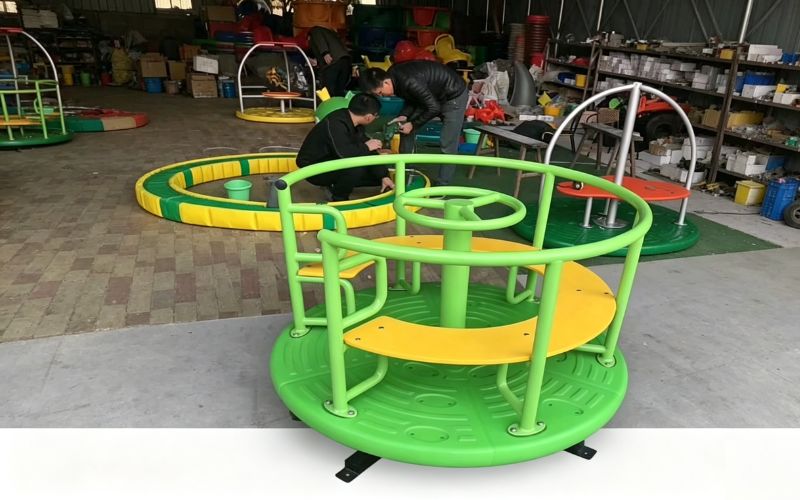
Discover how freestanding playground equipment transforms recreational spaces, explore the surging commercial play market, and learn why you should add these versatile structures to your community or business projects.
In the highly competitive commercial recreation market, modular and independent play structures are experiencing remarkable growth. Among them, freestanding playground equipment stands out for its seamless integration of physical activity, inclusive design, and community engagement—filling a unique niche that modular systems often cannot match.
These versatile structures have captivated park planners, school administrators, and everyday families alike. By enabling children to develop fine and gross motor skills, engage in imaginative play, and socialize in safe, supervised environments, they have become indispensable additions for modern parks, schools, and recreational areas. Unlike large, interconnected play systems, freestanding equipment offers flexibility that adapts to diverse space constraints and budget needs.
Whether your end-users are toddlers (ages 2–5) or active pre-teens (ages 6–12), freestanding playground equipment offers engaging, open-ended experiences that help foster community loyalty—keeping families returning to your space. More importantly, they represent a highly profitable product segment with steadily growing market demand. They also provide businesses with opportunities to explore new revenue streams, expand their product lines, and tap into untapped architectural markets, such as small community parks, daycare centers, and HOA (Homeowner Association) playgrounds.
In this comprehensive guide, you will learn how freestanding playground equipment works, discover why now is the ideal time to invest in it, and gain insight into why these independent structures are worth adding to your recreational catalog.
What Is Freestanding Playground Equipment?
Freestanding playground equipment refers to a collection of independent play structures designed and manufactured to stand alone, rather than being physically connected to a larger, multi-deck play system. It is widely used in community parks, schoolyards, daycare centers, and commercial play areas to provide focused activities while maximizing available space—even in small or irregularly shaped lots.
Examples of freestanding playground equipment include single spring riders, standalone swing sets, climbing nets, balance beams, standalone slides, sensory play panels, and musical play structures. Installing these items helps complete your recreational area—often with remarkable cost-effectiveness, as you can purchase and install only what you need, rather than investing in a full, interconnected system.
These independent structures rely on their own dedicated safety surfacing (e.g., rubber mulch, poured-in-place rubber) and clearly defined use zones, eliminating the need for complex attachments to other components. You do not have to purchase a massive, interconnected mega-structure for them to function; instead, they anchor securely into their designated space via concrete footings or ground anchors. As playground designs evolve, a wide variety of standalone items are available globally, making them accessible to any community with available land—from urban pocket parks to rural schoolyards.
Freestanding equipment is part of a broader framework known as commercial play systems, which also includes categories such as modular composite structures, natural play elements (e.g., boulders, log climbers), and custom-themed environments. Each category has its own strengths, and modern playground designs often combine them to create dynamic, inclusive spaces. Let us take a closer look at what sets these systems apart.
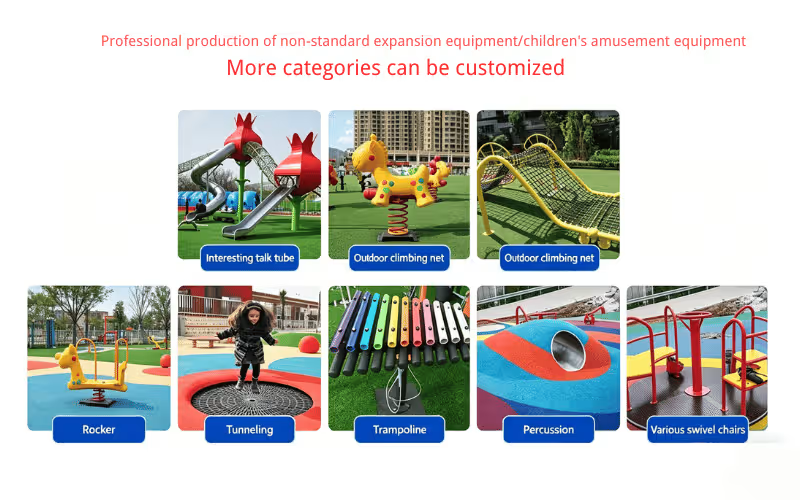
Key Differences Between Freestanding and Modular Playground Equipment
| Feature | Freestanding Equipment | Modular Play Systems | Natural Play Elements | Custom Themed Environments |
|---|---|---|---|---|
| Design Structure | Independent, standalone pieces that operate without connecting to other structures | Interconnected decks, platforms, and components that form a single, integrated play system | Integrated with the natural landscape (e.g., boulders, logs, native plants) | Highly stylized, bespoke designs tailored to a specific theme (e.g., space, nature, fairy tales) |
| Installation Space | Highly flexible; fits small, narrow, or awkwardly shaped spaces (e.g., urban pocket parks, schoolyard corners) | Requires large, unified, and level footprints to accommodate interconnected components | Adaptable to existing hills, trees, and natural terrain—no need for level ground | Typically requires expansive, dedicated zones to fully realize the themed design |
| Cost and Budget | Highly scalable; starting from very low price points (e.g., $500 for a basic spring rider) to mid-range (e.g., $5,000 for a climbing net) | Higher initial investment (often $10,000–$50,000+) for complete systems, as they require multiple interconnected components | Varies widely based on material sourcing (e.g., natural boulders vs. faux rock) and site preparation | Premium pricing (often $20,000+) due to custom engineering, specialized materials, and design work |
| Strengths | Can be phased in over time as budgets allow; easily replaces outdated pieces without dismantling an entire park; excellent for adding specific play values (e.g., spinning, swinging) to existing spaces; low installation and maintenance costs. | Provides high play capacity in a centralized footprint; creates a clear focal point for the park; streamlines safety surfacing into one large zone; offers diverse play experiences in a single structure. | Blends beautifully with the environment; encourages unstructured, imaginative play with organic textures and shapes; low-maintenance (for natural materials); appeals to nature-focused communities. | Creates landmark destinations; highly memorable; excellent for branding or storytelling (e.g., a school mascot-themed play area); boosts community engagement and recognition. |
Each of these systems operates independently, but modern park designs—such as municipal playgrounds, schoolyards, and commercial play spaces—often integrate multiple systems simultaneously to enhance play value and accessibility. For example, a community park may combine a modular system (for centralized play), freestanding swings (for additional activity), natural boulders (for climbing), and custom themes (for branding) to create a dynamic, inclusive environment—especially useful for irregularly shaped plots of land or spaces with budget constraints.
How Freestanding Playground Equipment Works
Over the past two decades, advancements in playground engineering and materials have steadily improved, allowing high-quality structures to be seamlessly integrated into both urban and rural environments. This progress has paved the way for innovative freestanding playground equipment, making advanced physical development features accessible to local parks, schools, and communities of all sizes.
At its core, freestanding equipment relies on a foundation of robust, durable materials anchored securely into the earth. A standalone play structure serves as a compact physical development hub, engineered to withstand dynamic forces (e.g., the weight of children climbing, the kinetic energy of swinging or spinning). Each component—from swing chains to climbing net ropes—is specifically designed to distribute weight and force evenly, ensuring total stability and safety during use.
By using independent concrete footings and precise use zones (as defined by safety standards such as ASTM F1487 and CPSC guidelines), freestanding equipment can safely accommodate multiple children at once. These use zones also help planners determine optimal placement—ensuring structures are spaced far enough apart to prevent collisions while maximizing available space. As children play, the structure continuously absorbs shifting weights and dynamic movements, maintaining a safe and reliable experience in real time.
To enhance play capabilities and inclusivity, many freestanding structures integrate accessible technologies, such as wheelchair-accessible ramps and ground-level interactive panels (e.g., sensory buttons, counting games). Additionally, most modern equipment uses durable materials such as UV-stabilized plastics (to resist sun damage), galvanized steel (to prevent rust), and commercial-grade ropes (to withstand heavy use), thereby further refining safety standards.
The latest freestanding structures from Inqilaplay go a step further, offering not only physical challenges but also sensory engagement elements—such as tactile surfaces (e.g., textured handholds) and auditory feedback (e.g., musical chimes). These features help users stay engaged and adapt seamlessly to their physical environment, making play accessible to children with diverse abilities.
Top Features of Freestanding Playground Equipment
Freestanding playground equipment is designed to support diverse physical, cognitive, and social development, with features tailored to different age groups and abilities. Common features include balancing, swinging, climbing, and spinning—each offering precise developmental benefits, such as improved spatial awareness, core strength, and social cooperation. Below are the top features that make freestanding equipment a valuable addition to any recreational space:
Dynamic Motion Play
Most freestanding equipment allows children to experience dynamic movement, whether on a spinner, swing, or seesaw. This feature supports sensory development and improves vestibular balance (the body’s ability to sense movement and position), which is critical for coordination and spatial awareness—especially in young children (ages 2–6).
Physical Strength Building
Freestanding climbers (e.g., climbing domes, rope walls, and rock walls) are essential for building upper-body and core strength. By challenging children to navigate varying heights and angles, these structures help improve agility, hand-eye coordination, and grip strength. Interacting with overhead rings or climbing nets also builds physical confidence, as children master new skills and overcome challenges.
Inclusive and Accessible Elements
Many freestanding items feature ground-level play panels, transfer stations (for children with mobility aids), or wheelchair-accessible components—allowing children of all abilities to play together. For example, a freestanding sensory panel with large, easy-to-press buttons can be used by children with fine-motor challenges, while a swing with a harness can accommodate children with mobility impairments.
Sensory and Musical Play
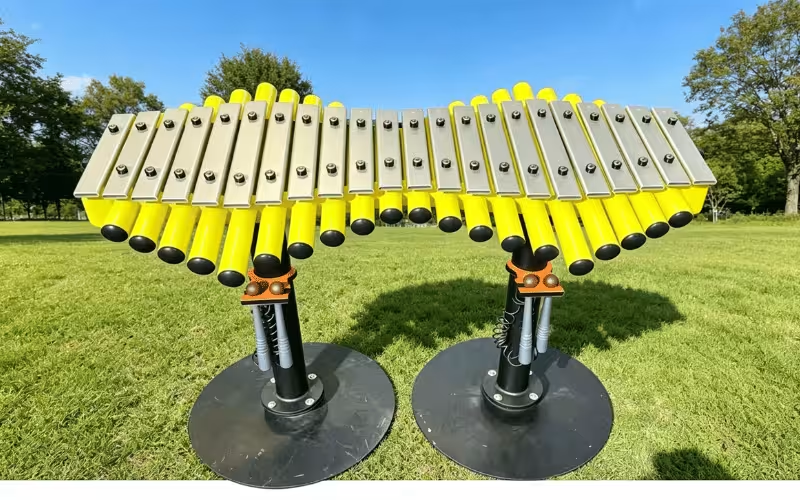
For younger children (ages 2–5), freestanding musical instruments (e.g., xylophones, chime walls, drum panels) provide creative auditory feedback, supporting cognitive development and sensory integration. These features also encourage self-expression and creativity, as children experiment with sounds and rhythms.
Social Interaction Zones
Some freestanding equipment—such as double swings, group spinners, or collaborative play panels—allows groups of children to interact cooperatively. This feature helps teach teamwork, communication, and sharing skills, as children work together to achieve a common goal (e.g., spinning a group spinner or solving a puzzle on a play panel).
Imaginative Play Structures
Certain standalone items combine physical play with thematic designs (e.g., a spring rider shaped like an animal, a climbing structure designed as a castle) to encourage pretend play—which is critical for early childhood development. These elements also assist with emotional regulation, as children use imaginative play to process feelings and experiences.
Spatial Boundary Definition
Some freestanding pieces (e.g., low balance beams, small playhouses) help define specific activity zones—such as a dedicated toddler area or a quiet sensory play zone. This is useful for parents or caregivers monitoring children of different age groups, as it helps prevent younger children from accessing equipment designed for older kids.
Nature-Inspired Designs
Many freestanding items feature nature-inspired aesthetics—like faux logs, rock climbers, or leaf-shaped play panels—tailored to natural environments and organic park themes. These designs blend seamlessly with outdoor spaces, creating a more immersive play experience and encouraging a connection to nature.
Each of these features enhances the functionality of a recreational space, appealing to growing children, community planners, and safety-conscious parents alike.
Market Trends in Freestanding Playground Equipment
As designs and capabilities evolve, freestanding playground structures have become indispensable components for comprehensive community planning, schoolyard renovations, and commercial play space development. This integration enhances the outdoor play experience, appealing to child development experts, landscape architects, and civic leaders—driving significant growth in the commercial playground market.
High Demand
The surge in outdoor recreation and community wellness initiatives (post-pandemic) has led to a sharp rise in demand for freestanding equipment. These structures provide immediate play value, helping parks modernize quickly, stay relevant, and meet community satisfaction goals—without the high cost of full modular systems.
Key Users: Municipalities, school districts, and park departments use freestanding equipment to upgrade facilities, maximize small spaces, and phase in playground improvements—especially where budgets are constrained. Daycare centers and HOAs also prioritize freestanding equipment for its affordability and flexibility.
Advanced Features
Modern freestanding equipment offers more than just physical activity; it now includes features like sensory panels, inclusive seating, and interactive games—enabling children to develop cognitively and stay engaged longer. This shift reflects a growing focus on holistic child development, rather than just physical fitness.
Key Users: Educators and child development professionals prioritize these features, as they support inclusive environments and provide varied sensory, motor, and cognitive challenges for children of all abilities.
Health & Safety
Strict compliance with international safety standards (e.g., ASTM F1487, EN 1176) and compatibility with modern safety surfacing have made freestanding equipment a must-have for organizations prioritizing child safety. Manufacturers now use heavy-duty materials and rigorous testing to ensure structures can withstand heavy use and extreme weather.
Key Users: Safety-conscious organizations—such as daycares, HOAs, and facility managers—value freestanding equipment for its proven compliance, durability, and low maintenance requirements, ensuring peace of mind for parents and administrators.
Why Investing in Freestanding Playground Equipment Is a Smart Business Move
As of 2024, freestanding playground structures hold a significant share of the commercial recreation market, with industry reports projecting steady growth over the next decade. Leading manufacturers, like Inqilaplay, are innovating rapidly to dominate the industry, offering high-quality, customizable solutions that meet the diverse needs of communities and businesses.
Inqilaplay, known for its powerful manufacturing capabilities and commitment to safety, is trusted by landscape architects and community planners worldwide. Popular models—such as independent climbing nets, sensory spinners, and inclusive swing sets—are highly regarded for their durability, compliance, and play value.
The commercial playground industry has established a strong presence with inclusive-focused devices, appealing to civic-minded organizations and safety-conscious buyers. For businesses looking to enter or expand in this market, freestanding equipment offers unique advantages:
Capitalizing on High Demand
The convergence of community wellness initiatives, urban renewal projects, and inclusive design standards has created a thriving market for freestanding equipment. Its versatility appeals to diverse demographics—from small HOAs to large municipalities—offering significant growth potential for businesses.
Profit Potential
- Cost-Effective Scalability: Independent features such as swings, spinners, and climbers enable phased purchasing, leading to steady, manageable sales cycles and strong profit margins. Businesses can offer entry-level products (e.g., basic spring riders) to attract budget-conscious buyers, while upselling premium options (e.g., custom sensory structures) for higher returns.
- Recurring Revenue Streams: Integration with ongoing park maintenance, safety surfacing upgrades, and phased installations provides recurring revenue opportunities. For example, businesses can offer annual maintenance contracts to ensure equipment remains safe and functional.
Loyal Customer Base
Passionate communities of parents, educators, and park planners appreciate high-quality, durable structures that prioritize safety and inclusivity. This fosters brand loyalty, encouraging repeat purchases for future park phases (e.g., adding more freestanding equipment as a community grows) and word-of-mouth referrals.
Versatile Applications
Freestanding equipment serves multiple needs—from physical fitness and sensory play to socialization and inclusive access—broadening its appeal across various institutional markets (e.g., schools, daycares, municipalities, HOAs). This versatility reduces business risk by catering to a wide range of customers.
Differentiation and Growth Opportunities
- Competitive Advantage:Offering innovative, standalone play structures with unique features (e.g., sensory elements, custom designs) sets your recreation business apart from competitors who focus solely on modular systems.
- Cross-Selling Potential: Freestanding equipment pairs well with site amenities like safety surfacing, shade structures, and seating—enabling businesses to offer bundled packages and diverse revenue streams.
Sustainable Growth
With growing interest in outdoor play, community health, and inclusive design, freestanding equipment caters to long-term civic trends. This ensures a reliable and expanding market, as communities continue to invest in outdoor recreational spaces.
By combining physical development, inclusive design, and modular flexibility, freestanding playground equipment caters to a wide range of needs, making it an indispensable asset for modern communities. This convergence of functionality drives growing demand and creates substantial opportunities for businesses to thrive in the commercial recreation market. How do you think this aligns with your municipal or commercial goals?
Factors That Affect the Performance and Longevity of Freestanding Playground Equipment
Reliable structural integrity is essential for playground equipment—regardless of whether it is installed in a small daycare or a massive municipal park. However, several variables can influence equipment performance, safety, and lifespan. Understanding these factors helps businesses and communities make informed purchasing and maintenance decisions:
- Material Quality: Better manufacturing materials directly improve durability. For public use, equipment must be made of at least commercial-grade steel (for frames) and high-density polyethylene (HDPE) plastics (for seats, panels, and platforms). Powder-coated finishes add an extra layer of protection, preventing rust and fading, while UV-stabilized plastics resist sun damage and discoloration.
- Environmental Conditions: The local climate at the installation site affects longevity. Equipment installed near salt water (e.g., coastal areas) is prone to corrosion, while that in regions with harsh sun (e.g., deserts) may experience faster plastic fading. The ideal setup uses galvanized steel (for corrosion resistance) and UV-stabilized plastics to mitigate these issues.
- Installation Surface: Uneven ground, poor drainage, or inadequate footings can weaken structural stability, reducing safety and lifespan. Proper concrete footings (depth and width vary by equipment type) and approved safety surfacing (e.g., rubber mulch, poured-in-place rubber) prevent premature wear and ensure stability. This is especially critical in poorly prepped park areas or regions with heavy rainfall.
- High-Traffic Wear: Public equipment can experience constant use by hundreds of children daily, leading to faster wear on moving parts (e.g., swing chains, spinner bearings). Routine maintenance checks (e.g., lubricating moving parts, tightening bolts) are essential to prevent breakdowns and extend lifespan.
- Vandalism and Misuse: Older adolescents, severe weather (e.g., hurricanes, heavy snow), or intentional damage (e.g., graffiti, tampering) can impose unexpected stress on structures, reducing their lifespan. Choosing durable materials (e.g., tamper-resistant bolts, shatterproof plastics) and installing security cameras can help mitigate these risks.
- Maintenance Practices: Regular maintenance—such as cleaning, inspecting for damage, and replacing worn parts—can prevent or delay equipment degradation. Well-funded parks often have dedicated maintenance teams, ensuring equipment remains safe and functional for years. In contrast, neglecting maintenance can lead to premature failure and safety hazards.
- User Practices: Ensuring clear use zones (marked by signage), preventing improper use by adults (e.g., climbing on equipment not designed for adult weight), and periodically inspecting hardware (e.g., bolts, chains) help maintain the structure’s safety and integrity. Educating users (e.g., parents, children) about proper equipment use also reduces wear and tear.
Customization and Branding Opportunities
Many communities and businesses want to create a unique playground aesthetic—one that reflects their identity, brand, or values. Generic, one-size-fits-all park equipment often fails to meet this need, which is why Inqilaplay offers a comprehensive range of design and customization options to bring your vision to life. Whether you want a fully customized park layout, a unique touch to an existing design, or custom branding, our dedicated manufacturing solutions are tailored to your needs.
Here’s what we offer:
- Custom Color Palettes: Add your school colors, civic branding, or personalized themes (e.g., team colors, community logos) for a professional, cohesive look. We offer a wide range of powder-coated and plastic colors to match any brand or aesthetic.
- Tailored Designs: Choose from specific standalone components (e.g., custom-shaped climbers, themed spring riders), custom layout planning, and inclusive adaptations (e.g., wheelchair-accessible swings) — perfect for municipal, educational, or commercial markets.
- Advanced Materials: Access cutting-edge manufacturing, including specialized anti-corrosion coatings (for coastal areas), UV-resistant plastics (for sunny regions), and durable ropes (for high-traffic climbers), to cater to diverse climates and use cases.
- Exclusive Features: Integrate unique features such as multi-generational fitness pieces (e.g., adult-friendly balance beams), sensory-rich music panels, inclusive spinners, and more to meet your community’s specific needs.
- Stand Out: Design a play space that reflects your neighborhood’s identity, setting you apart from generic, one-size-fits-all models. Custom themes (e.g., local history, nature) create a memorable experience for users and boost community pride.
- Full Support: From 3D design renderings (to visualize your project) to final installation, our team guides you every step of the way to ensure your freestanding equipment exceeds expectations.
- Scalable Production: Flexible manufacturing to handle orders of any size—whether you’re a small HOA (needing 1–2 pieces) or an established city parks department (needing dozens of structures).
- Timely Shipment: Enjoy fast, reliable delivery—even during peak construction seasons—to keep your project on schedule and meet deadlines.
Why Choose Inqilaplay?
Established as a trusted leader in the commercial recreation industry, Inqilaplay boasts years of experience in R&D, structural design, and high-quality manufacturing. Our dedicated team includes playground designers, safety compliance experts, engineers, and project managers—all committed to delivering safe, durable, and engaging play equipment.
We are fully certified and have passed rigorous safety standard audits (ASTM F1487, EN 1176), ensuring the highest standards in both quality and play value. Our products are installed in numerous parks, schools, and commercial spaces worldwide, and we maintain partnerships with top landscape architects and municipal buyers.
Our Highlights:
- Extensive commercial playground manufacturing expertise
- One-stop customization services tailored to your community space
- Products installed in numerous parks and schools worldwide
- Partnerships with top landscape architects and municipal buyers
- Fast, reliable delivery with efficient logistics
- Fully compliant with international safety and quality standards
Conclusion
From basic standalone swings to comprehensive inclusive play hubs, freestanding playground equipment is revolutionizing the commercial recreation industry. These innovative structures not only cater to community demands for better, more accessible outdoor play but also create significant opportunities for commercial and municipal growth.
As the market expands, businesses and civic leaders can seize this golden opportunity to thrive—while children benefit from innovative spaces that promote healthier, more active lifestyles, and inclusive social interaction. By gaining a deeper understanding of freestanding equipment, its diverse applications, and the key drivers of its growth, you can harness the potential of independent play to stay ahead in the competitive commercial recreation market.