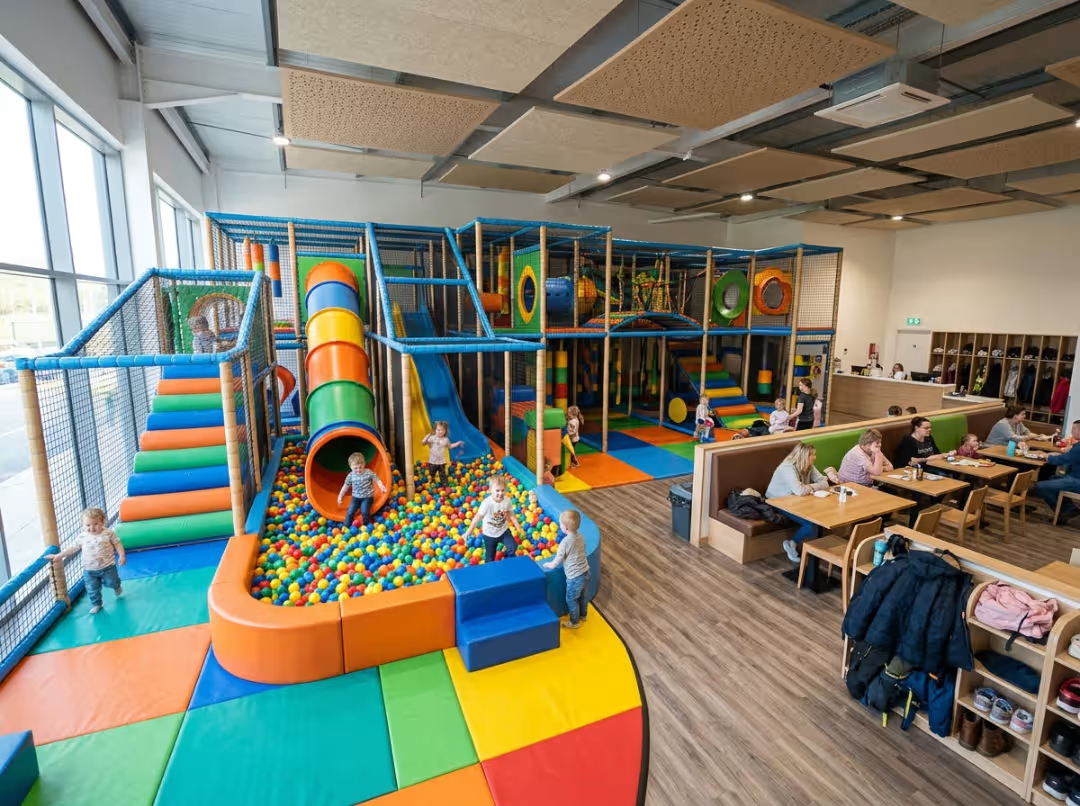
The question gets asked a lot, and the answers online tend to be either enthusiastic or vaguely cautionary — without the substance to help someone actually make a decision. That’s not useful when you’re weighing whether to commit $200,000 or more to a lease and a fit-out.
This article examines the revenue structure, real cost pressures, and margin killers that consistently catch operators off guard. The goal is a grounded picture of when indoor play areas work financially and when they don’t — not encouragement, and not unnecessary pessimism.
The Short Answer: Yes, But Only Under the Right Model
Indoor play areas generate real profit. Plenty of them do. But the ones that work aren’t simply “play venues” — they’re businesses with layered revenue, disciplined cost structures, and a clear enough concept to build repeat customers rather than one-time visitors.
The operators who struggle tend to make the same identifiable mistakes: they open with admission pricing too low to support a viable revenue model, underestimate fixed costs — particularly rent and insurance — and choose a location that looks reasonable on a map but doesn’t generate the repeat visit frequency the model depends on.
Four variables drive whether an indoor play area is profitable:
- Revenue mix — admissions bring people through the door, but admissions alone rarely cover fixed costs
- Cost structure — rent and payroll are the two biggest levers, and both must be modeled from real figures before a lease is signed
- Location — a venue in the wrong catchment area underperforms regardless of how well it’s run
- Concept clarity — venues that try to serve every age group and demographic rarely execute well for any of them
The sections that follow work through each of these in detail. The goal isn’t to encourage or discourage — it’s to help you determine whether the model works for your specific situation before you commit capital to it.
Where Indoor Play Areas Actually Make Money
Most people picture walk-in admissions as the core of the revenue model. Admissions matter, but they’re also the least reliable line in the business. The operators who make consistent money understand how all the revenue streams interact — and which ones actually carry the week.
Admissions — Walk-In vs. Timed Sessions
Walk-in admission is the most flexible model for customers and the hardest to manage financially. A venue doing strong weekend numbers can look healthy on paper while quietly losing money through idle Monday and Tuesday mornings.
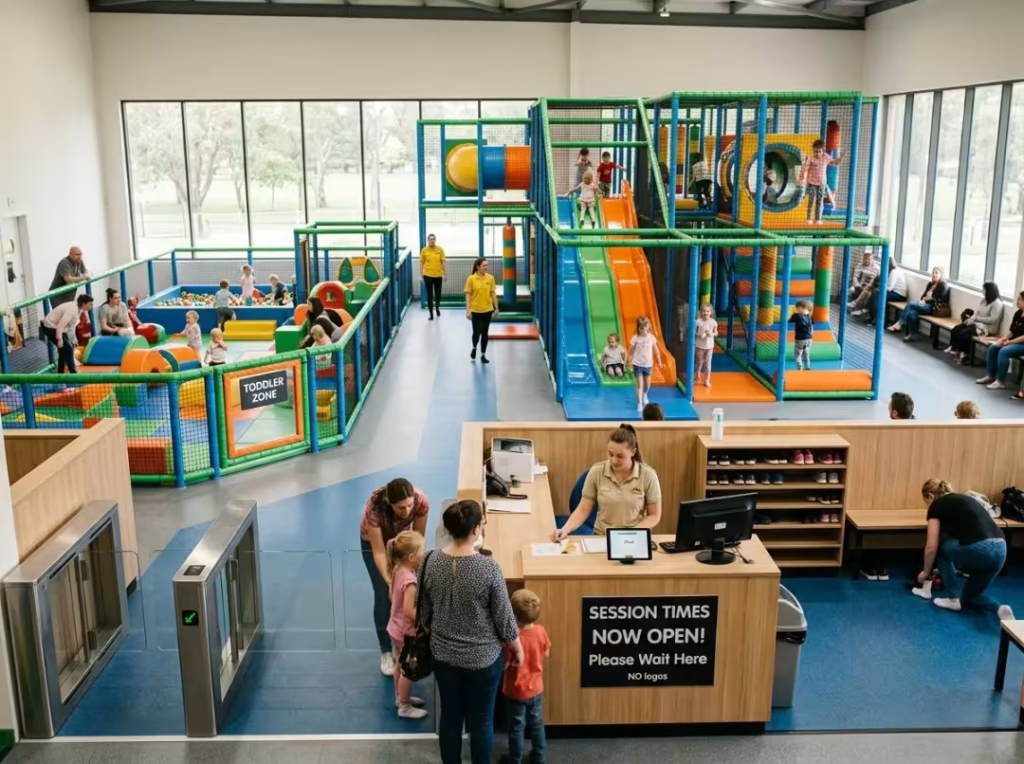
Timed sessions — fixed play blocks of 90 minutes or two hours — give operators meaningful control. They make staffing more predictable, reduce overcrowding, and create enough structure to justify premium pricing. Venues running timed sessions typically achieve higher average spend per visit and convert more visitors into advance bookings, which is the first step toward a manageable revenue forecast.
The floor reality: outside school holidays, most venues operate at 20–35% capacity on weekday mornings and early afternoons. The revenue from those sessions rarely covers the fixed cost allocated to those hours. Admissions are primarily a weekend-and-holiday business. Everything else in the model exists, in part, to carry the rest of the week.
Memberships — The Revenue Floor
A venue with 200 active memberships at $50 per month starts every month with $10,000 in committed revenue before a single drop-in customer arrives. That baseline matters enormously when rent, payroll, and insurance are fixed regardless of daily traffic.
Membership pricing requires care. Set it too low, and it cannibalizes full-price admissions — members who would otherwise pay per visit stop generating that revenue. Set it too high and conversion stalls. The approach that tends to work is that a family visiting twice per month pays marginally less than two full admissions, while a family visiting four times per month pays nothing extra. The objective is frequency, not margin per visit. Members who visit often also spend more on food, beverages, and party packages — the membership creates the relationship that drives other revenue.
Birthday Parties — The Highest-Margin Stream
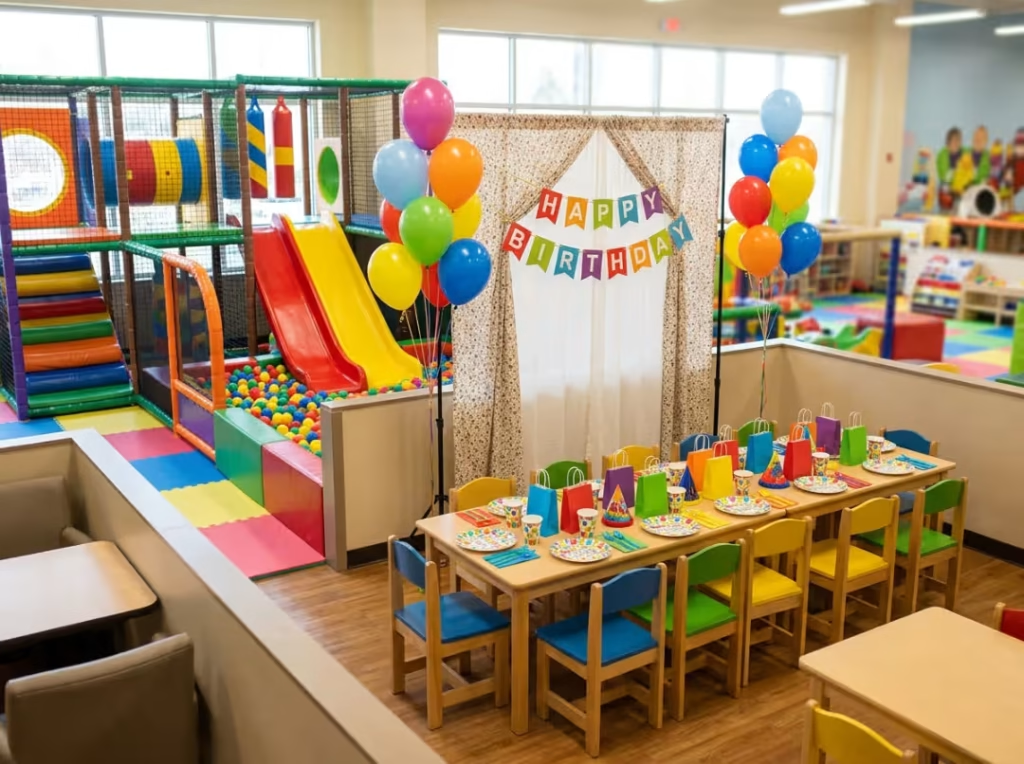
For most well-run indoor play areas, birthday parties are the single most profitable revenue line. Revenue is booked weeks in advance, margins are higher than for admissions, and a single weekend with six booked parties can outperform an entire slow weekday stretch.
A mid-range party package — two hours of space, food, a party host, basic decorations — typically sells for $400–$800 depending on location and inclusions. Direct costs, when managed well, account for 30–40% of the package price. That’s a 60–70% gross margin on the revenue line that’s most within the operator’s control.
What makes parties work operationally is standardization. Operators who offer extensive customization end up with labor-intensive execution that grinds down their margins fast. The most profitable venues run two or three defined packages with controlled add-ons. Delivery is consistent, labor cost is predictable, and the customer experience is reliable enough to generate referrals.
The demand is real. Parents pay a meaningful premium for a venue that handles the logistics — space, entertainment, food — so they don’t have to. The question isn’t whether demand exists. It’s whether the operator can execute consistently at volume.
Food and Beverage — Keep It Proportionate
F&B can add meaningful revenue. It can also add operational complexity that the revenue doesn’t justify.
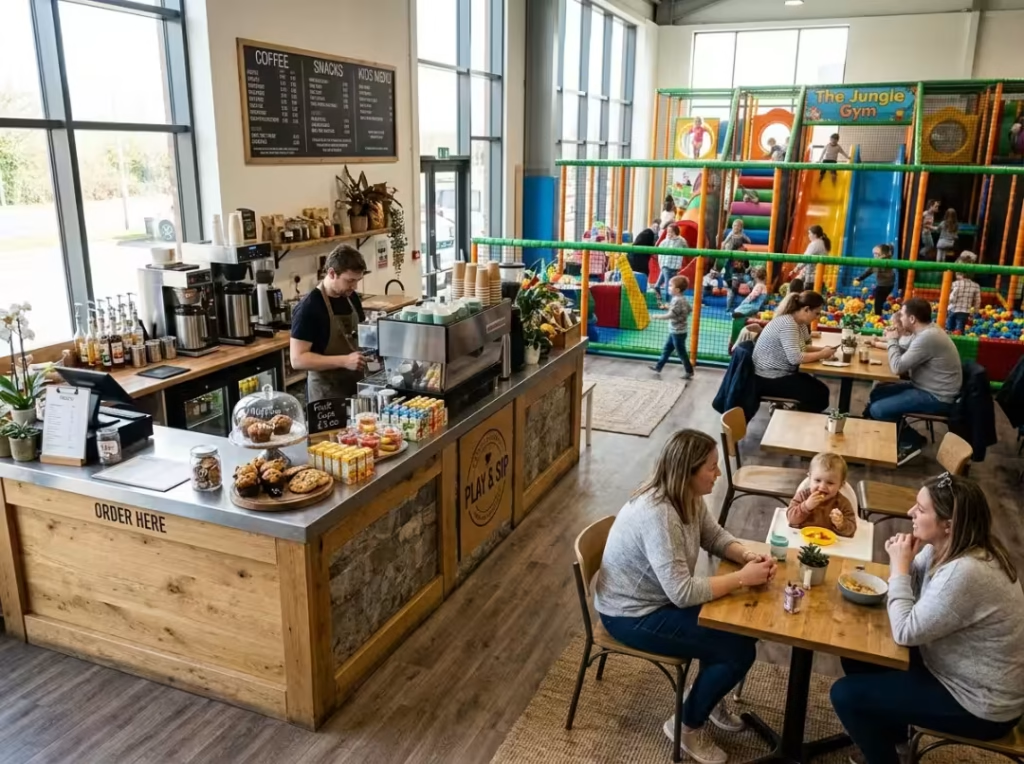
Gross margins on café-style F&B typically sit at 60–70% before labor. The problem: labor cost in a small café is relatively fixed, so on quiet weekdays the economics deteriorate quickly. A venue spending $15 per hour on a staff member generating $30 in F&B revenue per hour isn’t running a café — it’s running an expensive waiting area.
The operators who make F&B work keep it simple: coffee, drinks, packaged snacks, one or two hot items. The struggling venues try to run a full kitchen. The added equipment cost, compliance requirements, and operational load rarely produce proportionate revenue.
The case for some F&B is strong — it increases average spend per visit and gives parents a reason to stay longer. The case for an ambitious F&B program is much harder to make. Scale the offering to your realistic transaction volume, not to your vision of what the venue could eventually become.
Event and Private Hire — Underutilized Revenue
A venue that closes at 6pm has a clean, equipped, and insured space that generates nothing from 6pm until the next morning. Evening private hire — corporate team events, children’s fitness classes, exclusive group bookings — adds revenue at very low marginal cost. The setup is already done. The insurance is already in place. The only incremental cost is staff hours for supervision and cleaning.
Venues charging $300–$600 for a two-hour evening hire are generating near-pure margin on time that would otherwise sit idle. Most operators underuse this. Those who build it into their operating rhythm — with consistent marketing and a straightforward booking process — typically generate 5–10% of monthly revenue from it.
|
Revenue Type |
Typical Gross Margin |
Operational Complexity |
Notes |
|---|---|---|---|
|
Admissions (walk-in) |
50–65% |
Low |
Highly variable; weekend-dependent |
|
Admissions (timed sessions) |
55–70% |
Medium |
Better for staffing and capacity management |
|
Memberships |
75–85% |
Low (once set up) |
Stabilizes cash flow; drives repeat visits |
|
Birthday party packages |
60–70% |
Medium–High |
Highest-margin stream; requires standardization |
|
Food and beverage |
40–60% after labor |
High |
Labor-intensive; keep the offering proportionate to traffic |
|
Event and private hire |
70–85% |
Low |
Under-utilized by most operators |
What Costs Decide Whether the Business Works
Revenue potential indicates the ceiling. Cost structure determines whether you can reach it. The operators who get the cost side wrong usually do so because they planned from estimates rather than real quotes — and the gaps between the two are consistently larger than expected.
Rent — The Number That Decides Everything Else
Rent is fixed. It escalates. It must be paid whether the venue is full or empty. It’s also the single cost that most often determines whether an indoor play area survives in the long term.
Experienced operators apply a consistent test before signing: rent should not exceed 15–20% of projected annual revenue. If the math doesn’t hold at that ratio — if the space requires more rent than the catchment area can realistically generate — no level of operational efficiency corrects it. Either the location isn’t right, or the revenue model isn’t sufficiently developed to support that site yet.
The stress test is essential. Take the projected annual revenue, reduce it by 25–30%, and check whether the rent still falls within a viable range. If it doesn’t, the plan depends on optimistic projections rather than realistic ones. That’s a risk worth understanding clearly before a lease is signed, not after.
Lease terms beyond the headline rent number also carry meaningful risk. Annual escalation clauses at 4–5% compound a workable Year 1 rent into a constraining Year 4 cost, with no triggering event to draw attention. Short initial terms give landlords disproportionate leverage at renewal — operators who’ve invested in a full fit-out can’t credibly walk away. Restoration obligations at lease end can represent $50,000–$150,000 in costs that typically appear nowhere in the business plan. Read the full lease with a commercial property solicitor before signing. The advice is inexpensive. The risk of missing a clause is not.
Payroll — There’s a Floor, and It Doesn’t Move Much
Payroll is typically the second-largest cost after rent. The structural problem: a minimum staffing level is required to operate safely and meet any applicable regulatory requirements for supervised children’s environments, and that minimum stays largely fixed regardless of whether five or fifty families come through the door.
Cutting below the minimum to reduce costs is a false economy with compounding consequences. Understaffed venues produce slower service, lower-quality supervision, a degraded experience, and the reviews that follow. For experience-based businesses where repeat visits drive the model, that review trail is expensive to overcome.
The real payroll challenge isn’t busy weekends — it’s quiet weekday hours. A venue open Monday through Friday, 9am to 5pm, carries 40 hours of staff cost per week. If weekday sessions run at 20% of weekend capacity, the revenue from those hours rarely covers the allocated labor. Weekday revenue streams — memberships, school group sessions, structured classes — exist partly to make those hours commercially viable.
Insurance — Get Real Quotes Before Planning
Public liability insurance for a children’s play facility sits in a specific, higher-cost category. The activity type — children running, climbing, and jumping in proximity — creates meaningful liability exposure that insurers price accordingly. Operators who budget from generic business insurance estimates are consistently surprised by the actual cost.
Minimum indemnity requirements, specific exclusions, and coverage mandated by landlords or local authorities all vary by jurisdiction. Get accurate quotes from insurers who know this category before the business plan is finalized. Estimating is not sufficient — the variance between an estimate and a real quote for this category can be substantial.
Equipment Maintenance — The Cost of Deferral
Commercial soft play equipment degrades under high-traffic use faster than most operators anticipate at the planning stage. Foam compresses. Fabric surfaces wear at contact points — slide entries, climbing edges, step corners. Hardware loosens. Ball pit components crack and fade. Under genuine commercial intensity, this happens faster than manufacturer specifications or casual observation suggest.
Operators who treat maintenance reactively consistently pay more over time. Small issues compound into larger repairs. Emergency replacements cost more than scheduled ones. And visible equipment wear — in a category where parents are making active judgments about safety — creates customer perception damage disproportionate to the equipment’s actual physical condition.
A proactive schedule — monthly inspections, quarterly deep cleans, annual replacement budgets for high-wear items — turns maintenance from a surprise cost into a managed line item. The indoor playground equipment selected at opening also directly affects this math: commercial-grade structures built for high-traffic environments degrade more slowly, reducing both the frequency and the cumulative cost of maintenance over the venue’s operating life.
Marketing — The Cost That Shouldn’t Be Cut
Marketing is the line that struggling venues reduce when cash is tight. It’s also the reduction that tends to worsen the cash situation.
An indoor play area depends on families knowing it exists, having reasons to return, and choosing it over competing options. None of that happens passively. Local digital marketing, social media, email communication to existing customers, and periodic promotional activity all require consistent, deliberate spending.
For a venue in its first two years, a realistic marketing budget sits at 5–8% of revenue. That number shouldn’t compress when margins tighten — it’s exactly when margins are tight that maintaining customer acquisition and retention matters most. Venues that cut marketing to protect short-term cash typically see acquisition slow, and churn rise simultaneously, creating a deteriorating cycle that’s harder to reverse than the original cash pressure was.
|
Cost Category |
Fixed or Variable |
Typical Range (% of Revenue) |
Notes |
|---|---|---|---|
|
Rent |
Fixed |
15–25% |
Must be stress-tested against reduced revenue projections before signing |
|
Payroll |
Semi-fixed |
25–35% |
Has a minimum floor regardless of session traffic |
|
Insurance |
Fixed |
3–6% |
Category-specific rates; get real quotes before planning |
|
Equipment maintenance |
Variable |
2–5% |
Increases with traffic volume and equipment age |
|
Marketing |
Variable |
5–8% |
First cut in a downturn; almost always the wrong decision |
|
Utilities |
Semi-variable |
3–6% |
Climate control for large, densely occupied spaces adds up |
|
Consumables and F&B cost |
Variable |
Depends on F&B model |
Scales with revenue |
Why One Indoor Play Concept Makes Money, and Another Does Not
Two operators. Similar footprints — both around 4,500 square feet. Similar suburban locations with comparable family demographics. After twelve months, one is profitable and one isn’t. The difference isn’t location or luck. It’s pricing discipline, revenue architecture, and concept clarity.
Operator A opens a general soft play venue for children aged 1–10. Admission is $12 per child — set low to attract price-sensitive families at launch. There are no memberships. Party packages exist but weren’t actively promoted in year one. The café sells coffee and packaged snacks. Weekday traffic is thin.
After twelve months, Operator A covers costs on busy weekends and loses money through the week. Revenue is almost entirely admission-dependent. Cash reserves are depleting.
Operator B opens in a comparable space with a more defined concept: structured play for children aged 2–8, running timed sessions at $18 per child. Memberships are offered at $55 per month and convert roughly 15% of regular visitors. Party packages are standardized across three tiers, actively sold, and typically booked four to six weeks out by the time the venue hits six months of operation. The café is deliberately simple — coffee, juice, two snack items — generating consistent incremental spend without adding operational complexity.
After twelve months, Operator B is profitable. The membership base generates $12,000–$15,000 in monthly revenue before the first drop-in customer walks through the door. Party bookings fill weekend slots that would otherwise generate only admission revenue. The revenue mix is stable. The cash position is manageable.
The separation between these two operators runs through every element of the model. Operator A’s $12 admission created a price anchor that made memberships and party packages feel overpriced relative to the entry point — even at rates the market would otherwise have supported. Every subsequent upsell was working against the low-price signal established at the door.
Operator B’s tighter age range also produced a sharper concept. The equipment, the programming, and the marketing were all aligned around a specific customer. Families with children in that age range recognized immediately that the venue was designed for them. Operator A’s broader positioning sought to serve every family but offered little appeal to any particular segment.
Pricing discipline and concept clarity aren’t refinements to bolt on later. They’re foundational decisions that either support or undermine every other part of the business model.
The Location Test: How to Judge a Site Before You Sign
Location decisions are where the most expensive mistakes in this industry get made — usually in the gap between what a site appears to offer and what the catchment area actually supports.
Repeat visit radius, not just footfall. Most indoor play area customers come from within a 15–20 minute drive. Beyond that threshold, a visit requires a destination-level draw that most venues don’t have. The relevant question isn’t how many people pass by — it’s how many families with children under ten live within that radius, at what income level, with what access to competing venues. Population density matters less than family density when it comes to viable discretionary spend.
Income matters for the specific model. A venue charging $15–20 per child admission, $55 per month for membership, and $500+ for birthday parties requires a catchment area where families can absorb those costs without meaningful financial strain. Areas where that spend level creates real pressure for the target demographic consistently underperform revenue projections — not because families dislike the venue, but because the price points don’t align with household economics.
Competing venues — assess quality, not just count. Spotting two or three existing play venues in a market and concluding it’s saturated is the wrong analysis. The right question is whether those venues are actually running at capacity. If they’re consistently full on weekends, demand exceeds supply. If they’re half-empty on Saturdays, the market may genuinely be oversupplied.
Visit competitor venues as a paying customer. Observe execution quality, cleanliness, and pricing. A market with existing venues that are poorly maintained or operationally mediocre is not a saturated market — it’s a market with unmet demand for a better operator.
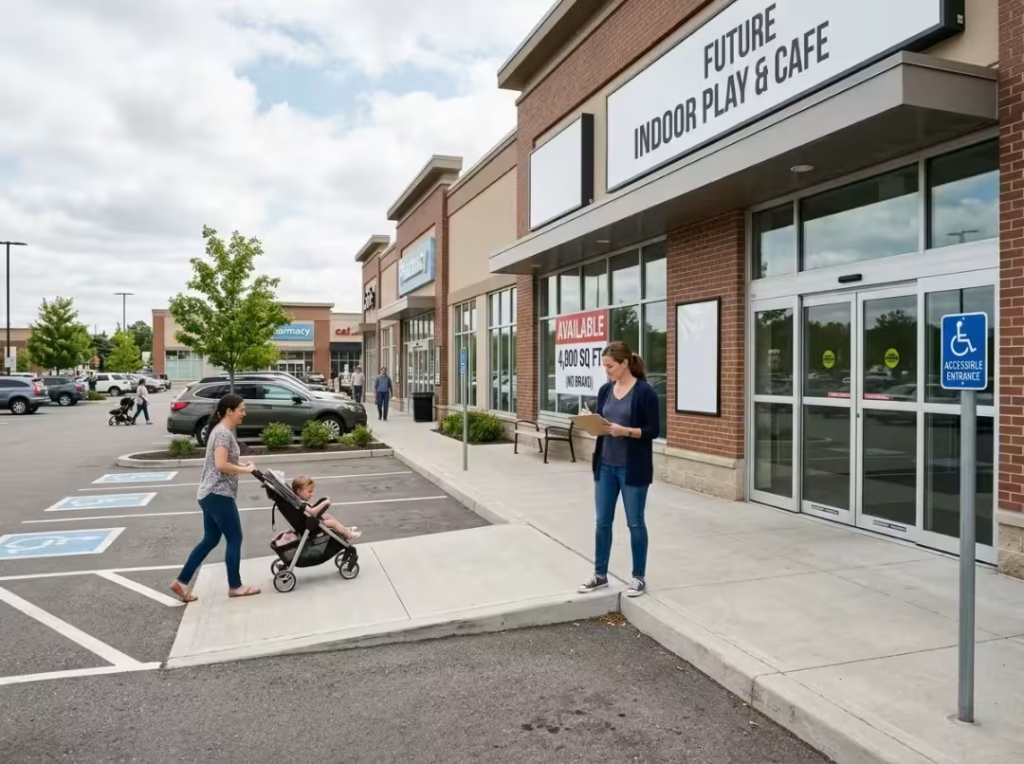
Visibility and physical access are competitive factors. A venue that’s hard to find, has inadequate parking, or requires navigating a confusing entry loses customers to easier alternatives even when the play experience is superior. Parents with young children making a semi-planned visit decision will consistently choose the accessible option. Visibility from a main road, clear external signage, and adequate parking are requirements, not preferences.
Lease terms create risk the headline number doesn’t reveal. Escalation clauses at 4–5% per year compound a workable Year 1 rent into a constraining Year 4 cost with no visible triggering event. Short initial terms give landlords leverage at renewal that operators who’ve invested in a full fit-out can’t easily match. Restoration obligations at lease end — returning the space to its original condition — can represent $50,000–$150,000 in costs that rarely appear in the business plan. Read the full lease with a commercial property solicitor before signing.
Hidden Costs and Revenue Leaks That Shrink Margins
Idle Weekday Hours — The Drag Most Models Underestimate
A venue open Monday through Friday, 9am to 5pm, carries 40 hours of operating cost per week before the weekend starts. If weekday sessions average 20% of weekend capacity, those 40 hours generate roughly 20% of the revenue that 40 weekend hours would produce — while carrying nearly the same fixed costs in rent, utilities, and minimum staffing.
Business plans built on “steady weekday traffic” rather than realistic Monday and Tuesday numbers consistently overstate annual revenue. A plan projecting 60% weekday capacity that delivers 20–25% isn’t just off on revenue — it’s off on cash flow, payroll ratios, and break-even timing at the same time. That combined gap is where many early-stage venues exhaust their reserves before the model has time to stabilize.
Commercial Cleaning — Not a Minor Line Item
A children’s play facility used by hundreds of children per week has cleaning requirements unlike those of standard commercial premises. Ball pits require scheduled sanitization. Soft play surfaces need regular deep cleaning. Bathrooms used by young children require attention multiple times a day.
Many operators treat cleaning as minor overhead. At commercial scale and frequency, it’s not. Specialist cleaning services, or the in-house labor hours required to meet appropriate standards, represent a real, recurring cost — and underestimating it creates a year-long budget surprise that quietly compounds.
Equipment Wear Cycles Move Faster Than Expected
Foam density reduces. Fabric surfaces wear through at high-contact points. Ball pit balls crack and lose their surface finish. Under genuine commercial use, this happens faster than manufacturer specifications or casual inspection suggests.
Deferring replacements to protect short-term cash produces two costs: higher eventual repair costs as small issues develop into larger ones, and visible quality decline that affects customer perception before the operator fully registers it as a problem. Parents notice worn equipment. They don’t always say anything — they simply don’t rebook the party or renew the membership.
Quiet Sessions Have Worse Economics Than They Appear
A session with four families requires nearly the same minimum staffing as a session with twenty-five. On quiet weekday mornings, labor cost can represent 60–80% of direct session revenue. Those sessions lose money marginally and rely on other revenue streams — membership fees, party deposits, evening hire — to cover their share of fixed overhead.
Closing on slow days isn’t necessarily the answer. Regular availability conditions habitual behavior in member families, and closing creates attendance gaps that are hard to reopen. But the real economics of those sessions need to be understood and built into the model from the start, not assumed to be covered by weekend performance.
Underpricing That Compounds Over Time
The most persistent margin problem across indoor play businesses isn’t cost — it’s revenue that was priced too low at launch and never corrected.
An operator who opens at $12 per child in Year 1 and stays at $12 per child in Year 4 has absorbed three to four years of cost inflation with flat per-visit revenue. The reluctance to raise prices is understandable — it feels risky when the customer relationship is still developing. But the evidence from experience-based children’s activity businesses consistently shows that modest, clearly communicated price increases cause far less churn than operators anticipate. A $2 increase on a $12 admission is a 16% revenue uplift on that line. Party packages and memberships set at launch carry the same risk. Review pricing at least annually, and index it to cost inflation from the start rather than treating it as a phase-two adjustment.
Marketing Neglect Accelerates Churn
Families with young children have many competing demands on discretionary time and spending. Without regular, deliberate contact — email, social content, well-timed offers — they stop coming. Not because of a bad experience, but because the venue fades from active consideration.
A venue that acquires 50 new families per month while losing 40 to inactivity is growing its customer base at a high acquisition cost and with minimal net gain. Retention-focused marketing — member communications, birthday follow-ups, re-engagement offers for lapsed visitors — is structurally cheaper than continuous acquisition. Operators who underinvest in retention end up running customer acquisition as a treadmill rather than a growth engine.
How to Validate the Opportunity Before You Open
What Primary Market Research Actually Looks Like
Demographic reports tell you what the market looks like in aggregate. They don’t tell you whether families in a specific catchment area will actually show up, at what price point, with what frequency.
Direct engagement does. Conversations with parents at school pickup, surveys through local Facebook groups or community apps, and — where feasible — pop-up events that generate real customer contact before any permanent commitment all produce more actionable information than any secondary source.
The questions that generate useful answers are specific: How often do you currently visit indoor play venues? What would make you go more frequently? What would a membership need to include to be worth paying for? What do you dislike about venues you currently use?
Those answers surface real demand signals, pricing tolerance, and competitive gaps. They also surface warning signs. If parents in the target area consistently report that they rarely visit indoor play venues, regardless of quality — and that library programs and free outdoor spaces feel like adequate substitutes — that’s material information that directly changes the business case.
Building a Break-Even Model That Can Be Stress-Tested
A break-even model built from industry averages is not analysis — it’s assumptions in a spreadsheet. The inputs need to come from real sources: actual lease quotes, insurance estimates from insurers who know this category, payroll modeled across a full operating week at realistic traffic levels, and membership and party revenue projected at conservative conversion rates.
Once the base model is built, stress-test it. What does the business look like if weekday traffic comes in at 40% of projection? If party bookings run at three per weekend instead of five? If membership conversion takes eighteen months to reach target? A model that remains viable under those conditions has genuine margin of safety. A model that only works at optimistic projections is a fragile business that will face its first real test during the ramp-up period — exactly when it can least afford to fail.
Evaluating Competing Venues Without Drawing the Wrong Conclusions
The existence of competitors is not evidence of saturation. The condition of those competitors is the relevant variable.
Visit existing venues as a paying customer, on both busy and quiet days. Observe staffing levels, equipment condition, cleanliness, and the team’s handling of peak periods. Read reviews over a two-year window rather than just recent ones — a venue that launched well and has visibly declined tells you something about both the market and the operator. A market with multiple mediocre venues and clear unmet demand for a better experience is not a closed market.
What a Soft Launch Can and Cannot Tell You
A soft launch — a pop-up event or a short-run trial in a partner venue — can provide genuine signals before a long-term commitment: whether families respond to the concept, what pricing they accept without friction, whether the operational model holds up in practice.
What it cannot tell you is whether those same families will return habitually over twelve to eighteen months. Pop-up attendance is novelty-driven. Sustained repeat-visit behavior is something different. Use soft launch results as directional evidence alongside market research and break-even modeling — not as proof of concept on its own.
Common Reasons Indoor Play Areas Fail
Most failures in this category follow recognizable patterns, and most are set in motion before the venue opens.
Underpricing at launch, compounded by inaction. Low opening prices feel like a customer-friendly strategy. In practice, they set a revenue ceiling and establish a customer expectation that makes correction difficult later. Operators who open at prices that won’t support a viable margin and never adjust find themselves in Year 3 running a business that structurally cannot reach profitability — not because the model is wrong, but because the price point was fixed below what the model requires.
Opening without enough cash to survive the ramp-up. Most indoor play areas take six to twelve months to build a customer base sufficient to cover fixed costs. Operators who open with fewer than three to four months of operating cost in reserve start cutting — marketing, staffing, maintenance — at exactly the moment when those investments matter most. The ramp-up period is when the business is most fragile, and undercapitalization does its most permanent damage there.
Admission dependency without a retention strategy. A venue that generates visitors but doesn’t convert them into members, party bookers, or habitual returners is effectively restarting customer acquisition from zero every month. Walk-in traffic is a starting point, not a sustainable business model. Systematic retention — capturing contact details, communicating regularly, giving families specific reasons to return — is what converts one-time visitors into the recurring revenue base the model depends on.
Allowing safety and cleanliness to slip under cost pressure. These are the two areas operators most often compromise when margins compress, and the two that parents notice most sharply. A venue with visibly worn equipment or poor cleanliness doesn’t generate neutral reactions — it generates reviews that disqualify it from consideration entirely. In a category where the core purchase is a safe environment for children, negative signals about safety or hygiene are more damaging than in almost any other consumer business.
Signing the lease before validating the location. The moment when the most expensive irreversible decisions get made is usually the moment the space becomes available and the vision feels tangible. The validation work — market research, competitive assessment, demographic analysis, break-even modeling — should happen before that moment, not after it.
Ways to Improve Profit Without Simply Raising Prices
Price increases have a role and are often underused. But structural changes to the revenue model and cost base typically produce more reliable and sustainable margin improvement.
Activate the idle hours. Early mornings and evenings represent committed fixed costs with no revenue attached. Adult fitness programs, structured toddler classes, after-school programs, and corporate team events each address different customer segments at different times — and all generate revenue at low marginal cost relative to overhead already in place. Operators who build these programs consistently add 10–15% to monthly revenue from hours that would otherwise contribute nothing.
Build a tiered membership structure. A single membership tier leaves value on the table. A two-tier structure — standard access at one price, premium access with party discounts and F&B credits at a higher price — captures a broader segment of the existing customer base while delivering higher average monthly revenue. The conversion targets are visitors who already come regularly; the barrier to upgrading is low when the incremental benefits are visible and relevant.
Standardize and optimize party packages. The instinct to customize or discount party bookings to close them erodes the margin that makes parties valuable. Defined packages with structured add-ons — additional guests, upgraded food, extended host time — generate higher average booking values without proportionate increases in labor. Operators who streamline party execution also reduce staff hours per event, compressing cost without affecting the customer experience.
Apply flexible staffing to low-traffic sessions. Minimum viable staffing during genuinely quiet weekday periods — with additional staff called in as bookings grow — reduces payroll cost on the sessions that currently generate the weakest staff-to-revenue ratios. Where health and safety regulations permit the minimum, this is a straightforward cost reduction that doesn’t affect the quality of high-traffic sessions.
Shift from reactive to scheduled maintenance. A proactive maintenance program that identifies wear before failure costs less than reactive replacement and keeps the venue consistently well-maintained — which directly affects repeat-visit rates and party rebooking. The choice of commercial-grade indoor playground equipment at opening also matters: structures built for high-traffic commercial environments carry longer replacement cycles, reducing the cumulative maintenance burden across the venue’s operating life. For operators designing a custom or themed installation from the outset, working with a manufacturer who offers custom playground equipment built to commercial specifications can reduce long-term maintenance costs that off-the-shelf alternatives may not support at equivalent durability.
Frequently Asked Questions
What profit margin should an indoor play area aim for?
A well-run indoor play area should target a net profit margin of 10–20% of revenue. Venues achieving margins above 20% typically have strong membership bases, high party booking volumes, and disciplined control over rent and payroll. Margins below 10% generally indicate that one or more cost categories — most often rent or payroll — is absorbing too large a share of revenue to leave a viable return.
How much does it cost to open an indoor play area?
Startup costs depend significantly on venue size, location, and fit-out standard. A mid-size venue of 3,000–5,000 square feet with commercial-grade soft play equipment, a café fit-out, and professional interior design typically requires $150,000–$400,000 in initial capital — covering equipment, fit-out, lease deposit, initial marketing, and working capital to fund the ramp-up period. Custom or large-format installations exceed this range materially.
How long does it take to reach profitability?
Most indoor play areas reach operational break-even — monthly revenue covering monthly costs — within six to twelve months, assuming realistic projections. Full return of initial capital typically takes two to four years. Venues that reach profitability faster tend to have launched with active membership programs and party booking pipelines already in motion, rather than treating those as phase-two initiatives.
Is weekday business viable for an indoor play area?
School-hour weekday traffic is the hardest part of the model to make financially viable. The approaches that work focus on segments with consistent weekday availability: under-4 children whose caregivers are actively seeking structured activity, structured toddler and parent-child classes that build regular weekly attendance, and marketing to childminders and nannies with predictable weekday schedules. School holiday periods shift the equation significantly — venues that operate at low weekday capacity during term time often run near-capacity during the holidays.
What venue size is required for a viable indoor play area?
A minimum of 2,500–3,000 square feet is typically needed to create a play environment that justifies commercial admission pricing and supports a sufficiently varied array of equipment. Most commercially sustainable standalone venues operate in the 4,000–8,000-square-foot range. Larger spaces offer more programming flexibility and higher capacity ceilings, but carry proportionally higher fixed costs. The viable size is the one the catchment area’s realistic revenue can support — not the largest space the landlord has available.
How many birthday parties per week does viability require?
As a working benchmark: four to six parties per weekend, at an average package value of $500–$600, generate $8,000–$14,400 per month from parties alone. For most venues in the 3,000–6,000-square-foot range, that level of party revenue — combined with a functioning membership base and admission revenue — provides a viable contribution to fixed costs. Venues running one or two parties per weekend are unlikely to reach sustainable profitability on that revenue mix alone.
Validate the Model, Then Commit
Indoor play areas work financially. The evidence is consistent across venues that operate strong membership bases, fill their party calendars most weekends, and maintain disciplined cost structures with fixed and variable expenses.
The conditions for that profitability are also consistent: a revenue model that doesn’t depend on admissions to carry the week, fixed costs — especially rent — within a ratio the catchment area’s realistic revenue can support, a location with genuine family density and repeat visit potential, and a concept executed clearly enough that the target customer immediately recognizes the venue as right for them.
The due diligence done before opening determines more of the outcome than almost anything done afterward. Build the break-even model from real numbers. Validate the location before signing. Evaluate the competitive landscape through actual visits rather than map searches. And build the retention and conversion mechanisms — memberships, party pipelines, event hire — into the model from day one rather than treating them as future improvements.
The equipment decisions made at opening carry long-term cost consequences that rarely appear in the initial business plan at full weight. Commercial-grade play structures designed for high-traffic use maintain the visual standard that drives repeat visits and reduce the