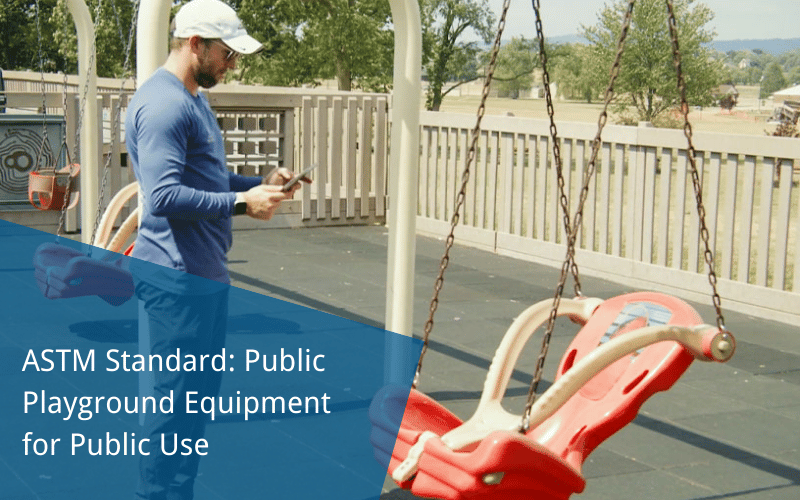
I’ve spent years around public playgrounds, and here’s something that surprises many buyers: the colorful structure kids climb on is governed by a dense, detailed safety standard most people never see. That standard is ASTM F1487, and if you’re buying equipment for a school, park, or childcare center, it’s the document that quietly decides whether your project is a smart investment or a liability waiting to happen.
When you’re signing off on a purchase order, you’re not just buying slides and climbers. You’re taking on responsibility for every child who uses that equipment. F1487 is your roadmap for getting it right.
This guide breaks the standard down in plain language, written for the people actually making the buying decisions. You’ll learn what F1487 covers, how to spot compliant equipment, what to demand from vendors, and how to protect your organization for the long haul. Let’s get into it.
What ASTM F1487 Is and Why It Matters
ASTM F1487 is the primary safety standard for public playground equipment in the United States. Its full name is the “Standard Consumer Safety Performance Specification for Playground Equipment for Public Use.” In practice, it’s the rulebook for how public play structures should be designed, built, and installed.
The standard is voluntary on paper. In the real world, it’s anything but optional. Many states write it directly into law, and insurers, manufacturers, and inspectors all treat it as the baseline. If you’re procuring equipment with public money, your specifications should reference it by name.
Who This Applies To
If your playground serves the public, F1487 applies to you. That covers:
- Schools and preschools
- Public parks and municipalities
- Daycare and childcare centers
- Churches, apartment complexes, and HOAs with play areas
Basically, any play space open to a group of children rather than to a single family falls under this standard.
Why It Matters to Your Budget and Your Liability
Two reasons, and they’re tightly connected.
First, kids stay safer. Every line in this standard traces back to a real injury that shaped it. Compliant equipment dramatically lowers the odds of a serious accident on your site.
Second, compliance protects your organization. If a child gets hurt on equipment that didn’t meet F1487, you’re exposed, and a single claim can dwarf the cost of the playground itself. Specifying and documenting compliance shows you did your due diligence. That paper trail matters enormously if anything ever ends up in front of a lawyer or an insurer.
For a buyer, the takeaway is simple: insist on written F1487 compliance before you sign anything.
Public-Use vs. Residential Equipment
Here’s a distinction that trips up a lot of first-time buyers, and it can sink a project.
The backyard swing set sold at a big-box store follows a different, lighter standard called ASTM F1148. It’s built for one family and occasional use. The materials are thinner, the hardware is lighter, and the safety margins are smaller.
Public-use equipment is a different animal. It’s heavier-duty, engineered for constant daily traffic, and held to far stricter rules under F1487. You cannot drop a residential set into a public park or schoolyard and call it compliant. The two aren’t interchangeable, no matter how similar they look in a catalog.
If a vendor offers you a deal that seems too good to be true, check which standard the equipment meets. A “playground” priced like a backyard set is usually a backyard set, and installing it on public property is a liability you don’t want.
Age Appropriateness and User Groups
A two-year-old and a ten-year-old don’t play the same way, and they shouldn’t share the same equipment. F1487 takes this seriously by splitting playgrounds into three distinct age groups. As a buyer, knowing which group you’re serving shapes everything you purchase.
The Three Age Groups
- 6 to 23 months: Infants and early walkers are still developing balance and grip.
- 2 to 5 years: Preschoolers with growing coordination but limited judgment.
- 5 to 12 years: School-age kids who climb higher, move faster, and take bigger risks.
How Design Changes by Age
Equipment is sized to the body and skills of its intended group. For the youngest kids, you’ll see low platforms, ramps, crawl spaces, and plenty of support for unsteady hands.
The 2-to-5 group gets short slides, smaller climbers, and steps sized for little legs. The 5-to-12 group can handle taller structures, tougher climbers, and components that demand real strength and coordination.
When you order, be clear about the age range you serve. A daycare and an elementary school need very different structures, and ordering the wrong fit means either bored older kids or an unsafe setup for the little ones.
Signage Requirements
Every play structure needs clear signage stating its intended age range. This isn’t a nice-to-have. It tells parents and caregivers at a glance whether a structure suits their child, and it’s part of compliance.
Make sure signage is included in your purchase and installed where people actually see it, usually at the entrance to the play area or on the equipment itself.
Separating the Age Zones
Keep the little ones away from the big kids. F1487 calls for separating play areas by age group, and for good reason. A fast-moving eight-year-old can knock over a wobbly toddler without meaning to.
When you plan a site that serves a wide age range, budget for that separation, whether by distance, pathways, or layout. It’s one of the simplest, smartest design moves you can make, and it prevents a huge share of accidental collisions.
Critical Design Requirements to Demand
This is where the standard gets granular. F1487 spells out requirements down to the millimeter, all aimed at preventing the injuries that send kids to the ER. You don’t need to memorize the numbers, but you should know what to ask your vendor to confirm.
Hardware and Entanglement Prevention
Loose or protruding hardware is a real danger. A bolt that sticks out can catch a drawstring, a backpack strap, or bare skin.
The standard requires hardware to sit flush or be covered, with no sharp edges or points that could cut. The goal is simple: nothing should snag clothing or break skin. On quality equipment, you’ll see capped bolts and rounded edges. If you spot exposed hardware during installation, flag it before sign-off.
Handrails and Rungs
Kids need a secure grip, and small hands can only wrap around so much. F1487 sets specific diameter ranges for handrails, rungs, and grasping components so children can actually hold on.
Grasping bars fall in a narrow diameter range that fits a child’s hand. Too thick and they can’t grip it; too thin and it fails strength requirements. The shapes are kept simple and round for the same reason. A compliant manufacturer builds this in automatically, which is one more reason to buy from a reputable source.
Openings and Entrapment
This one is critical. Any opening on a playground must be either small enough that a child’s body can’t enter or large enough that a head can pass through freely.
The danger zone is the middle: an opening that lets a small body slip through but traps the head. F1487 uses test probes to check this, and the rule covers railings, barriers, ladder rungs, and any other gaps. Head and neck entrapment is one of the most serious playground hazards, so these dimensions aren’t negotiable. Confirm your equipment was tested for it.
Slide Transition Platforms
The top of a slide needs a transition platform. This is a flat surface that allows a child to sit down and get into a safe position before sliding.
Without it, kids end up going down headfirst or off-balance. The platform gives them a moment to settle, sit, and descend feet-first the way slides are meant to be used. It’s a small detail that can prevent many injuries, so make sure it’s part of any slide you buy.
Use Zones and Surfacing Standards
You can install perfect equipment and still have a dangerous, non-compliant playground if the space and surfacing are wrong. F1487 covers both, and surfacing in particular is where many budgets quietly fall short.
Use Zones
Every piece of equipment needs a use zone, the clear area around it where a child might land or exit. This space must remain free of obstacles such as equipment, fences, or trees.
Swings need especially large use zones because kids fly off them with momentum. When you plan your site, account for these zones early. Cramming too much equipment into a small footprint is a common and costly mistake that can force you to remove pieces later.
Fall Height and Surfacing Depth
Here’s the core safety relationship every buyer should understand. Every structure has a fall height, the distance from its highest standing surface to the ground. Your surfacing has to be rated to cushion a fall from that exact height.
The taller the equipment, the more cushioning you need. Get this match wrong, and a fall that should bruise becomes a fall that breaks bones. Always tie your surfacing spec to the fall height of your tallest piece of equipment.
Comparing Surfacing Materials
Three common choices, each with trade-offs worth weighing against your budget:
- Engineered wood fiber (EWF): Affordable up front and effective at the right depth. The catch is upkeep, since it compacts and scatters and needs regular topping off. Cheap to install, more expensive to maintain.
- Poured-in-place rubber: A seamless, low-maintenance, highly accessible surface. It costs more at install but lasts, looks great, and asks little of your maintenance crew.
- Rubber tiles: Durable and easy to repair one tile at a time, with seams that need proper installation to stay tight.
For procurement, think in terms of total cost over 10 years, not just the installation quote. The cheapest surface today is often the most expensive one over a decade.
Maintaining Loose-Fill Surfacing
Loose fill is the one that fails quietly. Kids kick it out from under swings and at slide exits, exactly where falls most often happen.
If you go with EWF, budget for the labor to walk the site, rake the material back to level, and top it off so it never drops below the safe depth. A surface that was compliant on opening day can fail within months without this routine.
Prohibited Equipment and Hazard Types
Some equipment simply doesn’t belong in public parks anymore, and some hazards are built right into poor design. Knowing both helps you avoid buying something you’ll have to rip out.
Equipment No Longer Allowed
Years of injury data pushed certain classics off public playgrounds. You won’t find these on a compliant modern site:
- Traditional heavy animal swings that can strike a child
- Free-swinging gates and exercise rings that create entanglement and fall risks
- Multiple-occupancy swings (except for tot seats and certain designs) are prone to collisions
- Trampolines and rope swings in public play settings
If a vendor tries to sell you any of these for a public site, treat it as a red flag about the whole catalog.
Common Hazards That Fail Testing
Three culprits show up again and again:
- Crush points, where moving parts can pinch a body part
- Shear points, where two parts pass close enough to scissor a finger
- Protrusions, anything sticking out that can snag, impale, or cut
Inspectors and manufacturers use test tools that simulate a child’s finger or limb, inserting a probe into any gap or moving joint to see if it could catch and injure a child. Seesaws and rotating pieces get the most scrutiny here, since their moving parts create the highest pinch risk. Ask your vendor whether their equipment passed these tests.
Installation and Inspection
A compliant design only stays compliant if it’s installed right and maintained for life. This is where many well-meaning organizations slip up, and where buyers can protect themselves with a few smart requirements.
Use a Certified Installer
Don’t treat playground installation as a weekend project for the maintenance crew. Equipment must be installed according to the manufacturer’s instructions, and a Certified Playground Safety Inspector (CPSI) should be involved to verify the work.
A bad install can undo even the best equipment. Footings, spacing, and anchoring must all be exact. Build professional installation into your contract from the start, and clarify who’s responsible if the install fails inspection.
The Post-Installation Inspection
Once everything’s built, get an inspection before kids ever set foot on it. This verifies that the installation actually matches the manufacturer’s specs and meets F1487.
Think of it as your compliance baseline. It confirms the playground is safe and gives you a documented starting point. Make this inspection a condition of final payment, so the vendor has every incentive to get it right.
Inspection Frequency
Playgrounds need two layers of ongoing checks:
- High-frequency inspections: Quick, routine checks done often, daily to weekly on busy sites. You’re looking for trash, vandalism, broken parts, and surfacing kicked out of place.
- Low-frequency inspections: Thorough, detailed audits done a few times a year, ideally by a CPSI. These dig into hardware, wear, structural integrity, and full compliance.
Match the schedule to your traffic. A packed school playground needs more frequent eyes than a quiet neighborhood lot.
Documentation
Write it all down. Every inspection, repair, and replacement should be recorded in a permanent record.
This documentation does two things. It keeps your maintenance organized and on schedule, and it creates a safety record that proves your diligence if an incident is ever questioned. For a public organization, that log is one of your strongest legal protections. Treat it as seriously as the equipment itself.
Frequently Asked Questions
Does ASTM F1487 apply to backyard swing sets?
No. Residential backyard equipment follows ASTM F1148, a separate, lighter standard for home use. F1487 governs public-use equipment, which is subject to heavier traffic and stricter rules. If your play area serves a group rather than a single family, F1487 is the applicable standard, and a residential set won’t meet it.
How often should a public playground be inspected by a certified professional?
Plan for a thorough CPSI-led inspection at least once or twice a year, with more frequent routine checks in between. High-traffic sites, such as schools, may warrant quarterly professional reviews. Daily or weekly quick checks by your own staff fill the gaps, catching obvious hazards before they cause harm.
What is the difference between ASTM F1487 and CPSC guidelines?
The CPSC’s Public Playground Safety Handbook offers federal guidelines and recommendations, while ASTM F1487 is the detailed technical standard with specific, measurable requirements. They work together and largely align. Think of CPSC as the broad guidance and F1487 as the precise specifications that back it up. Good procurement references both.
Are older playgrounds grandfathered into the new ASTM standard updates?
Generally, equipment installed under an earlier version isn’t automatically illegal when the standard updates. But “grandfathered” doesn’t mean “safe forever.” Best practice is to evaluate older equipment against current standards and prioritize fixing serious hazards, especially entrapment and fall-height issues, regardless of install date.
What are the surfacing requirements for a 10-foot fall height?
A 10-foot fall height demands serious cushioning. With loose fill like engineered wood fiber, you’re typically looking at around 12 inches of properly maintained material, sometimes more. Unitary surfaces, such as poured-in-place rubber, must be tested and rated for the specific height. Always confirm the material’s certified rating matches your tallest equipment before you buy.
Do these standards apply to indoor soft play structures?
Not directly. Indoor soft contained play equipment falls under a different standard, ASTM F1918 and related specs, built for padded, enclosed environments. F1487 targets outdoor and public composite playgrounds. If you operate an indoor soft play space, look to the soft play standards rather than F1487.
Make Your Next Purchase a Compliant One
After years in this field, here’s the bottom line for any buyer: ASTM F1487 exists to make playgrounds predictable and safe. It turns a thousand small design decisions into a consistent set of rules, so the equipment you purchase has been thought through carefully before it ever reaches your site.
But the standard only protects you if you put it to work. Write F1487 compliance into your specifications. Demand documented test results from vendors. Require professional installation and a post-install inspection as a condition of payment. And keep a clean inspection log for the life of the equipment.
Here’s your next step. Before your next purchase, or if you’ve inherited equipment you’re unsure about, bring in a Certified Playground Safety Inspector for a full audit of your site. A CPSI will catch what an untrained eye misses and hand you a clear, prioritized plan.
For a school, park, or childcare center, that single audit is the smartest money you can spend. It protects the children in your care and shields your organization from a risk no budget wants to absorb. Make that call this week.