I’ve spent years in the play equipment world, and the first question every aspiring owner asks me is always the same: “What’s this going to cost me?” It’s the right question, and it deserves a straight answer, not a vague “well, it depends.”
So here’s the honest version. Opening an indoor playground in 2026 can run anywhere from about $50,000 for a small, scrappy setup to well over $500,000 for a premium, franchise-style center. That’s a wide spread, and where you land depends on your space, your equipment, and how much you build out.
This guide walks through every cost bucket with real numbers, so you can plan instead of guessing. Here’s what you’ll know by the end:
- What each facility size actually costs in 2026
- Where your money goes, line by line
- How to trim costs without cutting corners on safety
- What it takes to stay open after the doors swing wide
Let’s get into the numbers.
What It Costs to Open an Indoor Playground in 2026
Indoor playgrounds fall into three rough tiers. Treat these as starting points, then adjust for your local market.
- Small play café (1,500–3,000 sq ft): roughly $50,000–$150,000. One play structure, a toddler zone, a simple lobby, maybe a small café.
- Standard playground (3,000–8,000 sq ft): roughly $150,000–$400,000. A larger multi-level structure, party rooms, a snack bar, and more attractions.
- Large or premium center (8,000+ sq ft): $400,000–$500,000+. Multi-level structures, ninja courses, a full kitchen, and high-end finishes.
Your spending splits into a handful of primary buckets: real estate and buildout, play equipment and safety surfacing, licensing and insurance, technology, marketing, and working capital. Equipment and buildout almost always account for the largest share.
Keep that framework in mind. The rest of this guide just fills in each bucket.
Why 2026 Costs Run Higher
Costs in 2026 are higher than they were a few years ago, and there are real reasons for it.
Labor is the big one. Skilled installation crews, electricians, and general contractors all charge more now, and good help is harder to book. Labor shortages push both your timeline and your bill up.
Materials add to it. Supply chains have calmed down compared to the chaos of the early 2020s, but steel, foam, and rubber surfacing still cost more than before. Pile on general inflation in rent and utilities, and your 2026 budget needs more cushion than older guides suggest.
The gap between a basement-budget build and a premium center comes down to finish and scale. A bare-bones setup reuses equipment and skips the frills. A premium, franchise-style center invests in custom structures, themed design, and a polished guest experience that justifies higher ticket prices.
Real Estate and Leasehold Improvements
Your space is usually your second-biggest cost after equipment, and the buildout often catches first-timers off guard.
Square footage drives the tier. A small center needs 1,500 to 3,000 square feet. A standard center wants 3,000 to 8,000. A large facility starts around 8,000 and climbs from there once you add parties, food, and multiple zones.
Before you pay a dime of regular rent, you’ll face move-in costs:
- Security deposit: often one to three months’ rent up front
- First month’s rent
- Common area maintenance (CAM) fees: These cover shared upkeep in a complex and can add several dollars per square foot per year
Buildout and Renovation Costs
Most spaces don’t come ready for kids. Plan to pay for:
- HVAC upgrades. A room packed with running children needs serious heating and cooling. Undersized HVAC is a common and expensive mistake.
- Plumbing. A snack bar or kitchen means new water lines, drains, and grease handling.
- ADA-compliant bathrooms. These are required, not optional, and retrofitting them isn’t cheap.
Don’t forget flooring in the non-play areas. Lobbies, party rooms, and snack zones need durable, easy-to-clean surfaces like commercial vinyl or polished concrete. Budget a few dollars per square foot for these spaces alone.
Equipment and Safety Surfacing
This is where the magic happens, and where the biggest chunk of your money goes.
Here’s a rough breakdown of the major equipment:
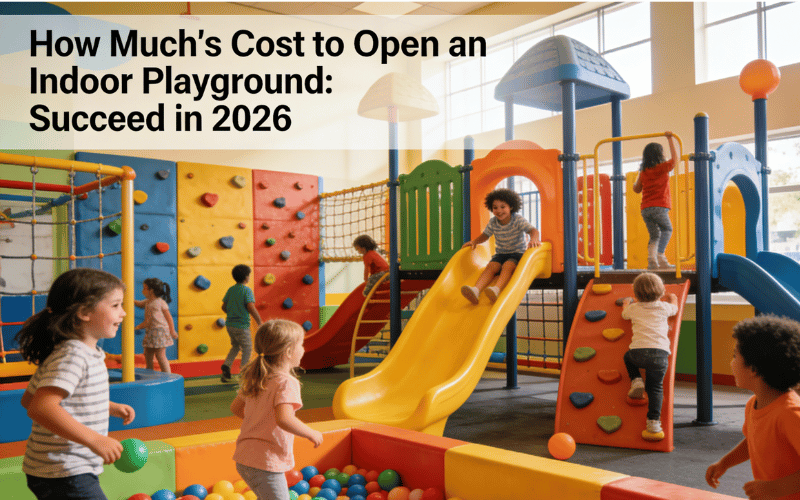
- Multi-level play structure: the centerpiece, often $30,000–$150,000+ depending on size and design
- Slides: built into the structure or standalone, adding several thousand each
- Ball pits: a few thousand dollars, more for large or themed pits
- Toddler zones: smaller, softer equipment, often $10,000–$30,000
- Ninja warrior courses: popular add-ons that can run $20,000–$60,000+
Foam Padding vs. Pour-in-Place Rubber
Your choice of safety surfacing affects both budget and durability.
Standard foam padding is cheaper up front and works well under and around play structures. It’s the common starting choice.
Pour-in-place rubber costs more but lasts longer, drains better, and gives a seamless, premium look. It earns its price in high-traffic zones and entry areas where foam wears down fast.
One rule I never bend: buy certified equipment. Insurers want gear that meets recognized safety standards like ASTM and CPSC guidelines. Uncertified equipment can void your coverage or block it altogether, so that “deal” you found online may end up costing you everything.
Licensing, Permits, and Insurance
This bucket is less fun, but it’s non-negotiable. Skip a step here, and you simply don’t open.
You’ll need standard business licenses to operate, plus extras if you serve food. A snack bar or kitchen requires local health department permits, which include inspections of your prep and storage areas.
Insurance is the heavy hitter. General liability insurance for a high-activity center costs far more than for a typical retail shop, because kids climbing and jumping is, frankly, a higher-risk operation. Expect a meaningful annual premium, and shop around with several insurers that actually understand play facilities.
Two more pre-opening line items catch people off guard:
- Building permits and fire marshal inspections. Occupancy limits, exits, and fire systems all get reviewed before you open.
- Legal fees. You’ll want a lawyer to draft solid liability waivers and employment contracts. A strong waiver protects your business for years, so don’t cheap out here.
Technology and Operational Systems
Modern playgrounds run on systems that keep lines moving and parents happy.
- Point-of-sale (POS) system: handles walk-in admissions and party bookings. Plan for hardware plus monthly software fees.
- Digital waiver stations: tablets where parents sign before kids play, typically integrated with your guest software.
- Entry turnstiles or gates: control access and track headcounts.
You’ll also carry recurring monthly costs. Guest management software for memberships, bookings, and check-ins runs on a monthly subscription. Security camera cloud storage adds another monthly fee, and it’s worth every penny when an incident comes under scrutiny.
Don’t skimp on high-speed guest Wi-Fi and a clean sound system. Parents expect to work or relax while their kids play, and good background music sets the mood without overwhelming the room.
Marketing and Branding Before Launch
You can build the best playground in town, but if nobody knows about it, you’ll be opening it to an empty room.
Start with the foundation:
- Professional logo design: a few hundred to a couple thousand dollars
- Website with booking integration: budget a few thousand for a site that takes party reservations and sells passes online
Before you open, spend on social media ads to build a waitlist and an email list. Pre-launch buzz means paying customers on day one, not week six.
Physical presence matters too. Budget for exterior building signage and local directional signs, which can run a few thousand dollars depending on size and permits.
Finally, fund a real grand opening event. Promotional giveaways, discounted opening-week passes, and partnerships with local family influencers turn first-time visitors into regulars. This is some of the best money you’ll spend.
Monthly Operating Expenses and Cash Reserves
Opening is one thing. Staying open through the slow months is another, and it’s where undercapitalized owners get crushed.
Keep a six-month cash runway. Indoor playgrounds have busy seasons and dead ones. Rainy months and school breaks pack the house, while stretches of gorgeous weather empty it out. Six months of reserves carry you through the lulls.
Here’s what hits your books every month:
- Payroll. Play monitors, cleaning staff, and a manager. This is usually your largest recurring expense.
- Rent and CAM fees.
- Utilities. Climate control for a busy space means high electricity bills, often higher than new owners expect.
- Cleaning supplies. Sanitizing play areas daily burns through supplies fast, and clean facilities drive the repeat visits that keep you alive.
Money-Saving Strategies for New Owners
You don’t have to spend top dollar everywhere. Smart owners cut costs in the right places.
- Consider used equipment. Quality used structures can save you tens of thousands. The catch: inspect carefully and confirm the gear still meets safety certifications. A worn-out or uncertified bargain isn’t a bargain at all.
- Choose a flex-space or warehouse location. Industrial and warehouse spaces rent for far less than retail mall spots, often saving you several dollars per square foot. As long as parking and zoning work out, your guests won’t mind the address.
- Put in sweat equity. You can handle the non-specialized tasks yourself, like painting, assembly, and simple decor. Leave the electrical, structural, and equipment installation to the pros, but save labor dollars where you safely can.
- Phase in attractions. Open with a strong core, then add the ninja course or extra zone once revenue is flowing. A tiered rollout spreads out your spending and lets the business help fund its own growth.
Funding Options for Your Indoor Playground
Most owners don’t pay for everything out of pocket. A few common paths can close the gap.
- SBA and small business loans. Loans backed by the Small Business Administration offer favorable rates and long repayment terms, which makes them a popular choice for big-ticket items like equipment and buildout. You’ll need a solid business plan, decent credit, and usually some of your own money in the deal.
- Equipment financing or leasing. Instead of buying your play structure outright, you can finance it or lease it. That lowers your upfront cost, though leasing usually costs more over time. It’s a good fit for new owners who are short on startup capital.
- Investors and partnerships. A private investor or a strategic partner can inject a chunk of cash. Look for people who understand family entertainment or know the local market. Lock in a clean legal structure, such as an LLC, before you take on outside money.
- Pre-sale memberships. Selling discounted founding memberships before you open does double duty. It brings in early revenue to cover startup costs, and it proves there’s real demand in your area before you’re fully committed.
Common Indoor Playground Financial FAQs
What is the average profit margin for an indoor playground?
A well-run indoor playground often sees net profit margins in the 15% to 30% range. Parties and memberships carry the best margins, while admissions cover your base. Tight cost control and strong party bookings push you toward the high end.
How long does it take for a new playground to become profitable?
Most centers reach break-even somewhere between 12 and 24 months. Location, marketing, and party volume make the biggest difference. A strong grand opening and steady repeat traffic can shorten that timeline.
Should I buy a franchise or start an independent brand to save money?
A franchise costs more up front through fees and royalties, but you get a proven model, brand recognition, and support. Going independent saves money and gives you full control, but you build everything from scratch. If you’re new to business, a franchise lowers your risk. If you’re experienced and budget-conscious, being independent can pay off.
Do I need a kitchen to make a profit, or can I just sell pre-packaged snacks?
You can profit from pre-packaged snacks and drinks, and it keeps your permits and buildout simpler. A full kitchen costs much more but opens up higher-margin food sales and better party packages. Start simple, then add a kitchen later if demand supports it.
How much should I budget for annual equipment maintenance and repairs?
Set aside roughly 3% to 5% of your equipment value each year for maintenance and repairs. Play structures take a beating, and proactive upkeep prevents costly shutdowns and safety issues. Skipping maintenance always costs more down the road.
Can I get a small business loan for an indoor playground?
Yes. Many owners fund their build with an SBA loan, which offers favorable terms for small businesses. You’ll need a solid business plan, decent credit, and usually some money of your own in the deal. Banks want to see that you understand the numbers before they lend.
Building a Sustainable Financial Plan
Here’s the bottom line after years in this industry: the owners who succeed are the ones who plan the money before they fall in love with the equipment.
Start with a detailed business plan. It’s your tool for securing funding and your roadmap for spending. Lenders won’t take you seriously without one, and honestly, neither should you.
Do your local market research. Check the population of young families, nearby competition, and what people will actually pay. Your price points need to match your area, not a guide written for a different city.
Build diversified revenue streams. Don’t lean on walk-in admissions alone. Birthday parties, memberships, and classes like toddler gym time smooth out your income and lift your margins.
And before you sign any lease, check local zoning laws. Confirm the space is approved for an indoor play use before you commit a dollar. I’ve watched owners lose deposits over a zoning problem they could have caught with one phone call.
Your next step: build a simple spreadsheet with these cost buckets, plug in real quotes from your area, and add a six-month reserve. That single document tells you whether your dream pencils out, before you risk a penny.