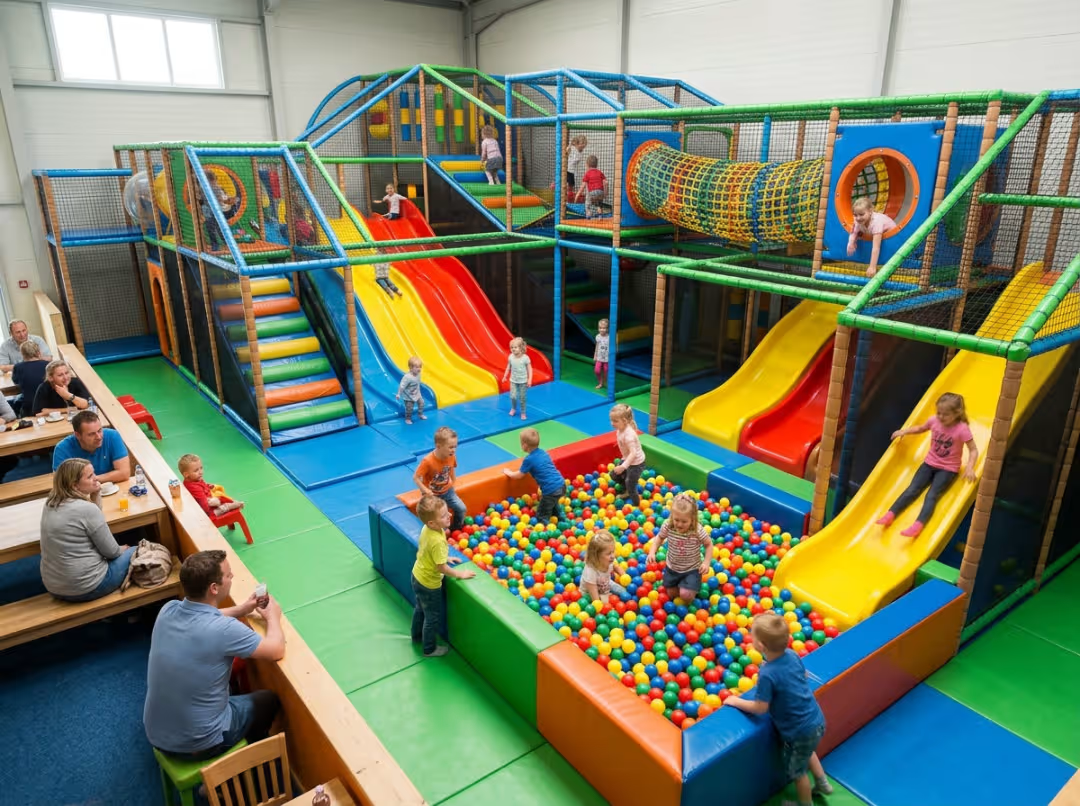
Startup costs for an indoor play center run anywhere from $150,000 to well over $800,000. That’s not a vague estimate — it reflects the genuine distance between a lean 3,000 sq ft play room in a secondary market and a 10,000 sq ft destination center with a café, themed environments, and four party rooms. Same industry. Entirely different businesses.
This guide helps you figure out where your concept falls within that range, which variables move the number the most, what you need to budget for before opening day, and how to model a credible path to break-even before you sign a lease.
Indoor Play Center Startup Cost: What Most Owners Actually Spend
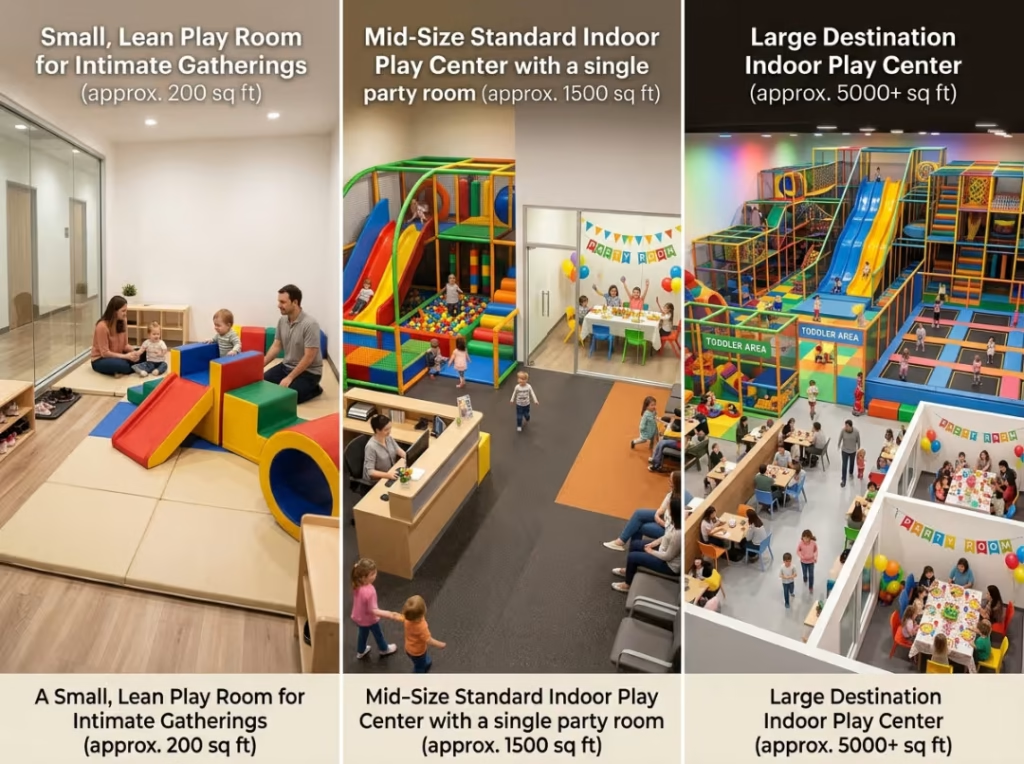
Most operators fall into one of three investment models. The model you choose — whether by design or by default — shapes every major financial decision that follows.
|
Investment Model |
Typical Size |
Startup Cost Range |
Key Features |
|---|---|---|---|
|
Small / Lean |
Under 3,500 sq ft |
$150,000–$280,000 |
Basic play structure, limited party capacity, secondary market |
|
Mid-Size Standard |
3,500–8,000 sq ft |
$280,000–$500,000 |
Party rooms, structured service mix, primary suburban market |
|
Large Destination |
8,000–12,000+ sq ft |
$500,000–$800,000+ |
Café, multiple party rooms, themed environment, high-traffic location |
Even within a single tier, the range stays wide. A mid-size center in a secondary suburban market with modest finishes might open near $280,000. The same footprint in a high-rent primary market with full theming and a café can push past $500,000. Location, finish level, and service mix drive most of that gap — not equipment choices alone.
All figures above reflect total startup investment: facility build-out, play equipment, permits, insurance, working capital reserve, and launch marketing.
What Moves Your Budget the Most
Two operators can open in the same city, in similarly sized spaces, and end up $300,000 apart in startup costs. Understanding which variables drive the total is more useful than any single industry benchmark.
Size changes the whole business model
A 3,000 sq ft center and a 10,000 sq ft center aren’t different versions of the same business. Guest capacity, staffing ratios, party room volume, revenue ceiling, and fixed cost base all change with square footage — and not proportionally.
A 3,000 sq ft operation can run lean: one floor monitor, a front desk attendant, a single party room. Fixed costs stay manageable, and break-even is achievable at a relatively modest monthly revenue threshold. The trade-off is a hard ceiling on total revenue, regardless of how well the business is run.
Scale to 10,000 sq ft and that ceiling rises — but so does the floor. Rent, payroll, HVAC, and cleaning costs all scale up. The fixed cost base is larger, break-even takes longer to reach, and the margin for error in the early months shrinks considerably. Operators choosing larger footprints need stronger capitalization and a more diversified revenue strategy from day one, not as an afterthought once the lease is signed.
New build vs. retrofit
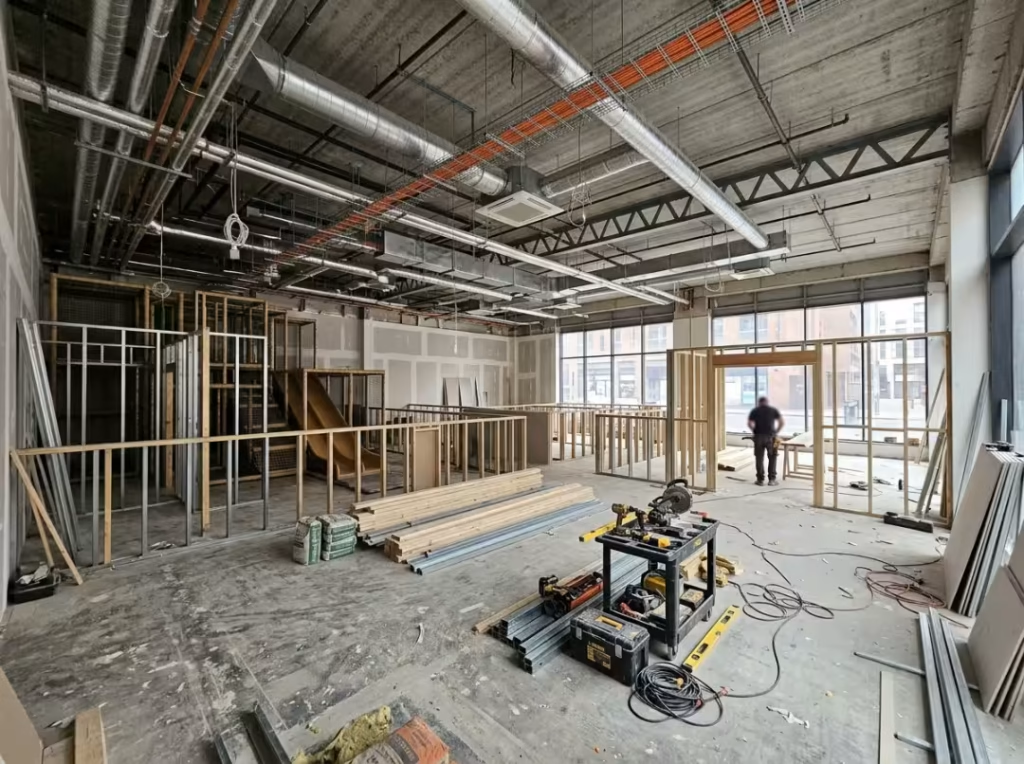
Retrofitting an existing commercial space is almost always cheaper than ground-up construction — right up until the hidden costs surface. And they usually do.
The most common retrofit surprises: floor load ratings inadequate for heavy equipment, ceilings below the 14–16 feet needed for multi-level climbing structures, outdated plumbing that can’t handle new restroom requirements, and environmental remediation for asbestos or mold in older buildings. None of these show up in a basic walkthrough. Each can add $20,000–$80,000 once demolition starts.
Commission a qualified commercial inspector before signing a retrofit lease. The cost is a few hundred dollars. The potential savings are in the tens of thousands.
Lease type and location
Most commercial leases for retail or flex-industrial space are triple-net (NNN), meaning the tenant pays base rent plus property taxes, building insurance, and common area maintenance (CAM) charges — which together typically add 20–35% to the base rent. First-time operators who budget only for base rent encounter that reality at the worst possible time: after the lease is signed.
Per-square-foot rates vary sharply by market. Secondary markets generally run $12–$18/sq ft NNN. Primary suburban markets often land between $22–$40/sq ft. On a 6,000 sq ft space, the difference between a $14 and a $28 market is $84,000 per year in rent alone. Location isn’t just a real estate decision — it’s a structural decision about what revenue the business needs to survive.
Service mix: play-only, party-led, or add-on heavy
Revenue configuration matters as much as location. Three common models:
Play-only centers rely on daily admissions and memberships. Operationally simpler, but heavily seasonal and weather-sensitive. Revenue is harder to forecast and harder to smooth.
Party-led centers are anchored by birthday party revenue. Parties are higher-margin, booked well in advance, and far less vulnerable to weather and school calendars than walk-in traffic. For most first-time operators, this is the right foundation.
Add-on-heavy centers layer in a café, arcade, retail, or specialty programming. Each addition lifts per-guest spend and revenue ceiling — but also introduces new permitting requirements, staffing complexity, and operational overhead. A café specifically requires food service permits, commercial kitchen equipment, inventory management, and dedicated staff. Most experienced operators treat café and arcade as phase-two additions rather than opening-day commitments.
Franchise vs. independent
A franchise provides a proven operating system, brand recognition, preferred vendor pricing, and training infrastructure. The cost: $30,000–$75,000 in upfront fees, plus ongoing royalties of 5–8% of gross revenue.
Going independent preserves long-term margin but demands higher execution capability. There’s no proven playbook, no existing vendor relationships, and no brand awareness to lean on at launch.
This isn’t fundamentally a cost decision — it’s a capability decision. First-time operators with limited industry experience often find the franchise structure worth the premium. Experienced operators with a clear local concept frequently find that independence serves them better. Either way, run the 5-year royalty math before deciding: at $600,000 in annual revenue and a 7% royalty, that’s $42,000 per year — or $210,000 over five years that stays with a franchisor instead of the business.
Theming and finish level
Build-out cost per square foot swings dramatically based on how the space looks and feels. A functional environment with painted walls, standard flooring, and basic signage runs $60–$80/sq ft. A fully themed space with custom murals, specialty lighting, branded millwork, and an integrated café concept runs $150–$200/sq ft.
In competitive primary markets, a visually distinctive environment drives social sharing, word-of-mouth, and the ability to charge premium party rates. A well-designed custom indoor play environment can become a meaningful marketing asset in a crowded market. In a secondary market with limited competition, a clean, functional space at $70/sq ft will often outperform a heavily themed one at $180/sq ft. Choose your finish level based on your competitive context, not your mood board.
Your Startup Budget: The Costs You Need Before Opening
Facility and build-out
Build-out typically consumes 35–50% of total startup investment — making it the single largest line item for most operators, and the one most likely to run over.
Base lease costs in secondary markets run $12–$18/sq ft NNN; primary suburban markets, $28–$40/sq ft. Build-out costs add $40–$80/sq ft for modest finishes, and $100–$150+/sq ft for fully themed or café-inclusive environments. On a 6,000 sq ft space, the gap between those two scenarios is roughly $420,000 — before a single piece of equipment is ordered.
What consistently goes missing from early contractor bids: mechanical upgrades. HVAC systems sized for standard retail occupancy aren’t built for spaces packed with active children. Upgrading to adequate capacity typically adds $15,000–$40,000. Electrical panel upgrades for commercial-grade equipment run another $8,000–$20,000. ADA-compliant restroom modifications — required in most jurisdictions — can add $10,000–$30,000 depending on existing plumbing.
One lever most first-time operators underuse: tenant improvement (TI) allowances. In soft retail markets, landlords routinely offer $20–$40/sq ft in TI on a 5-year lease to attract creditworthy tenants. On a 6,000 sq ft space, that’s $120,000–$240,000 in landlord-funded build-out. The TI negotiation is one of the highest-leverage conversations in the entire deal — and it costs nothing to ask.
Play equipment and safety surfacing
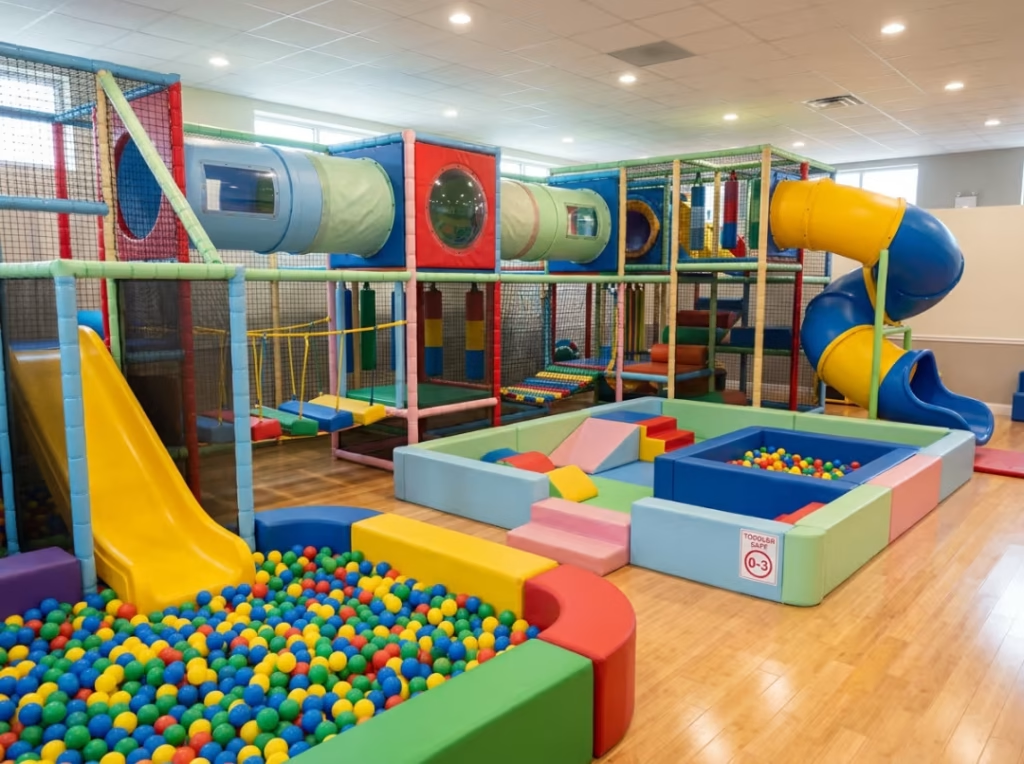
Play equipment is the second-largest startup cost for most operators. For a 5,000 sq ft play floor, budget $80,000–$180,000 depending on manufacturer, configuration, and whether you’re buying new or sourcing secondhand. The range of available indoor playground equipment — from soft play structures and toddler zones to multi-level climbing systems and ball pits — affects both cost and the guest experience you can deliver.
Used equipment can cut costs by 30–50%, which looks appealing on a constrained budget. The real risk is compliance documentation. ASTM certification is difficult or impossible to obtain for secondhand structures, and most commercial insurers require it before they’ll bind coverage. Before committing to used equipment, confirm in writing that your insurer will accept it, along with the available documentation. If they won’t, the savings disappear fast — and the liability exposure doesn’t.
ASTM-compliant safety surfacing is another line item that reliably surprises. Material costs run $8–$18/sq ft depending on whether you select poured rubber, rubber tiles, or engineered wood fiber. On a 3,000 sq ft play zone, that’s $24,000–$54,000 for surfacing alone — before a single piece of equipment is installed.
Permits, licensing, and inspections
A typical indoor play center requires a business license, a building permit, a certificate of occupancy, a fire marshal inspection, and — if food is served — a health department permit. Plan review fees generally range from $1,500 to $8,000. Fire suppression upgrades in older buildings add another $15,000–$40,000 to that.
Total permitting and inspection costs typically land in the $5,000–$20,000 range. Budget 4–10 weeks for the process to complete. Model this into your schedule before signing a lease, not after — a delayed certificate of occupancy directly delays your opening and your first dollar of revenue.
Insurance, systems, and opening supplies
Insurance is non-negotiable and more expensive than most operators expect. General liability alone runs $8,000–$20,000/year. Add commercial property, workers’ compensation, product liability, and event liability, and total annual premiums typically range from $15,000 to $35,000. Get quotes from at least three carriers — premium variance between insurers writing this class of business is significant, and the difference between a well-shopped and poorly-shopped policy can exceed $5,000/year.
POS and booking software matters more than most operators give it credit for at the planning stage. Setup runs $3,000–$8,000; ongoing fees $100–$400/month. Platforms commonly used in this sector include Sawyer, Amilia, and Pike13. A slow check-in process on a busy party Saturday is the first thing parents notice — and the first thing they mention in reviews.
Opening supplies and initial retail inventory — socks, party supplies, cleaning products, small retail stock — typically run $5,000–$15,000.
Launch marketing and working capital
Both belong in the startup budget. Both are treated as afterthoughts more often than they should be.
Launch marketing covers a grand opening event ($3,000–$8,000), pre-launch paid social in the 6–8 weeks before opening ($500–$1,500/month), and digital marketing setup. Budget $8,000–$20,000 total for the launch window.
Working capital reserve is the more consequential number. Centers that open undercapitalized hit cash crises in months 2–4 — before memberships gain traction and before party bookings have enough history to be predictable. That pressure forces the decisions that most often close early-stage play centers: cutting marketing during the window when local awareness most needs to build, deferring maintenance before equipment has been properly stress-tested, making reactive payroll decisions that accelerate staff turnover. Budget at least 3–6 months of operating expenses as a cash reserve before you open. What that figure looks like in practice is worked through below.
Monthly Operating Costs: What Will Keep the Business Running
Getting open is one challenge. Staying open profitably is another. Monthly operating costs define the revenue threshold you need to clear every single month — and the fixed cost base you’re committed to the moment you sign a lease.
Rent, CAM, and lease escalations
Your monthly rent payment isn’t the figure in the lease. On a NNN structure, it’s the base figure plus property tax reimbursements, building insurance contributions, and CAM charges — which together typically add 20–35% on top. Operators who budget for base rent only find out about the rest when the first monthly invoice arrives.
Most NNN leases also include annual escalation clauses of 3–5%. A $10,000/month base rent with a 3% annual escalation becomes $11,593/month by year five — roughly $38,000 in additional cumulative cost beyond what the opening-month figure implies. In higher-traffic retail centers, percentage-rent clauses can increase occupancy costs once revenue crosses a defined threshold. Read the full lease — especially the escalation and CAM provisions — before signing anything.
Payroll, benefits, and training
Payroll typically runs at 30–40% of revenue, making it the largest or second-largest monthly expense, depending on the rent structure. A moderately busy weekend at a 5,000 sq ft center requires a minimum of two to three floor monitors, one front desk attendant, and one shift supervisor. Party rooms add host staff on top of that.
Payroll taxes add 8–12% to gross wages. Fully loaded hourly cost for floor staff runs $18–$26/hour in most markets. CPR and first aid certification — required in most states — adds $50–$100 per employee per year, a small line item with significant liability consequences if skipped.
Annual payroll for a modestly staffed operation ranges from $180,000 to $380,000, depending on market wages, operating hours, and party room volume.
Utilities, cleaning, and maintenance
Play centers run HVAC systems harder than standard retail locations. Child-dense occupancy combined with continuous physical activity generates significant heat load, and parents notice immediately when a space is poorly ventilated or smells stale. Expect $1,200–$2,800/month for a 5,000–8,000 sq ft facility in most climates.
Cleaning is both a regulatory requirement and a genuine competitive differentiator. Daily disinfection plus contracted monthly deep cleans typically run $2,000–$4,500/month. A play center’s reputation for cleanliness travels fast through local parenting networks — in both directions.
Equipment maintenance should be a fixed monthly line item from day one, not a reactive expense. Budget $800–$1,500/month. Operators who defer until something breaks consistently spend more over time and lose revenue during unplanned closures.
Insurance, compliance, and recurring marketing
Amortized monthly insurance costs typically run $1,250–$2,900/month. Compliance costs — permit renewals, annual equipment inspections, staff recertifications — add a few hundred dollars per month averaged across the year.
Recurring marketing is infrastructure, not discretionary spend. Local SEO — an active Google Business Profile, consistent review generation, location-relevant content updates — delivers the highest sustained ROI of any marketing channel most play centers can run. Paid social, email campaigns, and birthday party retargeting fill out a reasonable monthly mix. Total: $1,500–$3,500/month for a well-run operation. Treat that number as a fixed cost, not a line item you trim when revenue dips.
Replacement reserve
Foam pit blocks, cargo nets, ball pit balls, and padded surfaces degrade fast under commercial use. Foam components typically need full replacement within 1–3 years. Set aside 1.5–2% of monthly gross revenue as a dedicated replacement reserve from opening day. On $50,000/month in revenue, that’s $750–$1,000/month — a number that feels modest until you’re facing a full foam pit replacement and have no reserve to draw from.
Where Indoor Play Centers Actually Make Money
Costs tell you what you need to survive. Revenue mix tells you how you get there. These two dynamics work differently in this business than most operators anticipate going in.
Daily admission vs. party revenue
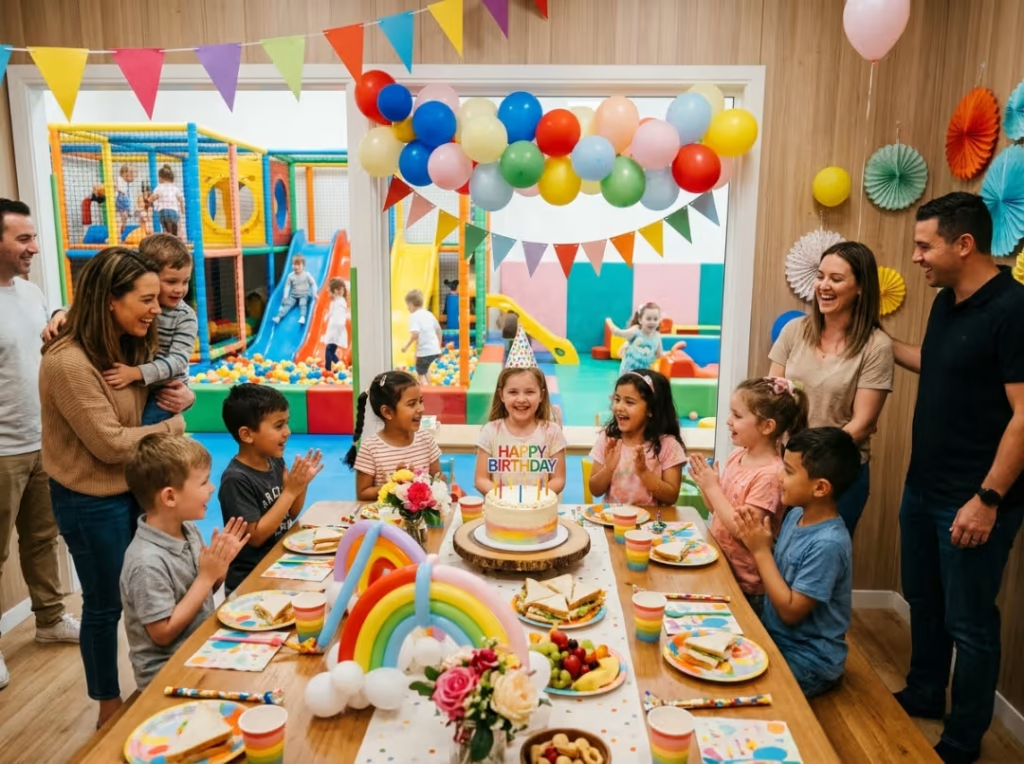
Walk-in admissions are the most visible revenue stream, but birthday parties are where the margin actually lives. Parties are booked days or weeks in advance, carry higher per-guest revenue than walk-ins, and don’t depend on weather or whether school is in session.
A concrete example: 20 weekend parties per month at an average of $450 each generate $9,000/month before a single walk-in guest arrives. Build in structured upsell menus — extended time slots, themed packages, catering add-ons, favor bundles — and systematic upselling adds 15–25% to base package prices. Operators who embed this into the booking confirmation process consistently outperform those who leave upselling to floor staff discretion.
Treat party revenue as the anchor of your financial model. Walk-in admissions are valuable for filling off-peak hours and building community awareness, but they’re seasonal, weather-sensitive, and hard to forecast reliably in year one.
Memberships and repeat visits
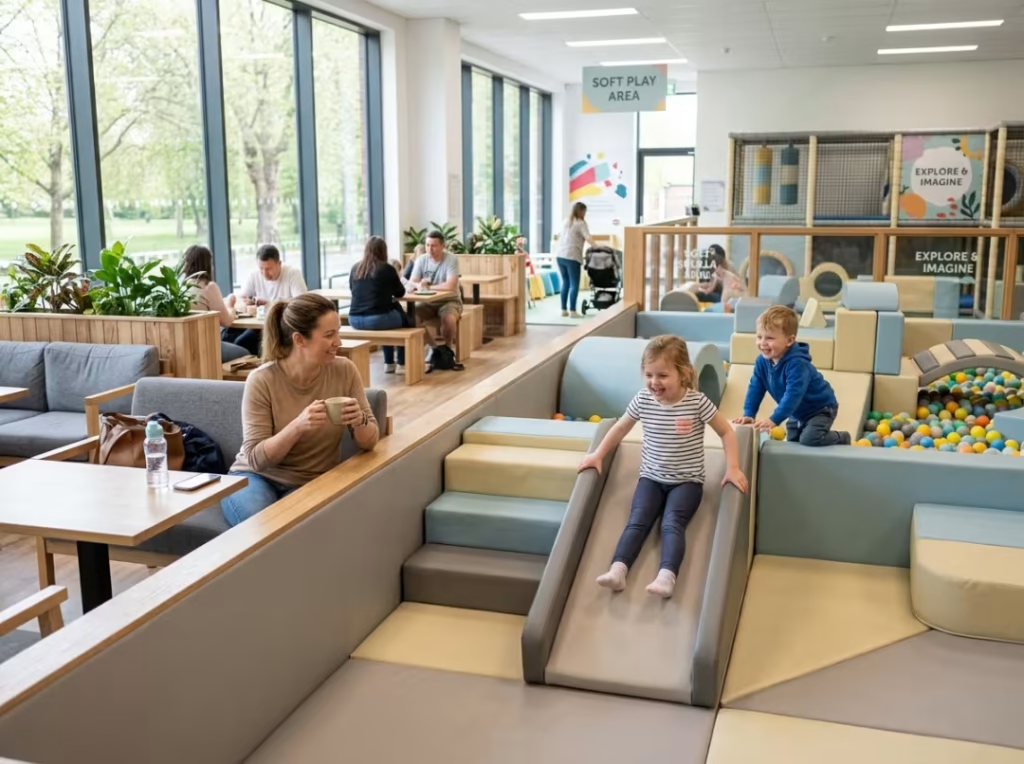
Membership revenue is the most financially stable stream in this model because it doesn’t depend on foot traffic, seasonal timing, or the weekend weather.
A useful benchmark: 300 active members at $59/month equals $17,700/month in baseline revenue before a party is booked or a walk-in arrives. That floor gives the business a predictable basis for planning staffing and inventory.
Watch monthly renewal rate as closely as any other metric. A sustained 70% monthly renewal rate is the threshold to measure against. Below it, churn becomes structural — no volume of new member acquisition fully offsets the ongoing attrition. Renewal rate is the clearest leading indicator of whether your programming, cleanliness, and customer experience are actually strong enough to hold the membership base you’ve built.
Café, retail, and add-ons
A café increases average spend per guest by 20–35% among families who visit during meal or snack windows. Across hundreds of weekly guests, that lift compounds. The trade-off is real: food service permitting, commercial kitchen equipment, inventory management, food handling certification, and dedicated staff. Operators with hospitality backgrounds can run a café profitably from day one. Those without one are typically better served by establishing the core play and party business first, then adding food service once operations are stable.
Arcade and retail belong in phase two for most first-time operators. The capital and management attention they require is more valuable during the first 12–18 months when it’s directed toward growing parties and memberships.
A simple break-even model
Knowing your break-even number before you sign a lease isn’t optional — it’s the most important calculation in your entire pre-opening process.
The formula:
Break-Even Revenue = Fixed Monthly Costs ÷ (1 − Variable Cost Ratio)
Here’s an illustrative example for a hypothetical 6,000 sq ft mid-size center. All figures below are estimates for modeling purposes only.
|
Cost Category |
Monthly Estimate |
|---|---|
|
Rent (NNN) |
$9,000 |
|
Payroll |
$28,000 |
|
Utilities & Cleaning |
$4,500 |
|
Insurance (amortized) |
$2,000 |
|
Marketing |
$2,500 |
|
Equipment Reserve |
$800 |
|
Loan Service (on $300K debt) |
$5,200 |
|
Total Fixed + Semi-Fixed |
~$52,000 |
With a 15% variable cost ratio (supplies, credit card fees, cost of goods for café and retail):
$52,000 ÷ 0.85 = ~$61,200/month break-even
Reaching $61,200/month through a combination of parties, memberships, and walk-in admissions is achievable — but it typically takes 9–18 months to build the booking volume, member base, and local awareness needed to sustain that number. Operators who understand that timeline before opening manage the cash ramp period far better than those who expect profitability by month three.
How Much Cash Should You Keep in Reserve?
The 3–6 months reserve rule exists because build-out overruns, delayed certificates of occupancy, below-projection early revenue, and slow membership ramp-up don’t happen independently. They happen at the same time, in the same quarter, to the same operator.
Using the illustrative $52,000/month fixed cost figure from the break-even model above:
$52,000 × 4 months = $208,000 minimum opening reserve
Operators who open with materially less than this regularly face a cash crisis in months 2–4, before party and membership programs have reached the volume needed to cover fixed costs. That pressure forces exactly the wrong decisions: cutting marketing during the window when local awareness most needs to build, deferring maintenance before equipment has been properly stress-tested, and making reactive staffing calls that drive turnover.
Cash reserve is not a contingency fund. It’s a required line item in your startup budget — as real as the equipment quote and the contractor bid.
Funding Options: Which One Fits Your Situation?
SBA or bank financing
The SBA 7(a) loan program is the most common financing vehicle for indoor play center startups. Loan amounts up to $5 million are available, with 7–10-year repayment terms for working capital. Down payments typically run 10–20% of total project cost.
Timeline is the main friction point: 60–120 days from application to funding is standard, and document readiness is the primary variable operators control. Organize financial statements, a full pro forma, and a detailed startup budget before applying. Conventional small business loans close faster but typically carry higher rates and shorter terms.
Equipment leasing
Leasing preserves working capital when you most need it — on opening day. The cost is a higher total outlay over the lease term: a $120,000 equipment package on a 5-year lease typically totals $160,000–$175,000 in payments. That $40,000–$55,000 premium is real, but for first-time operators where opening-day liquidity is the binding constraint, preserving cash often outweighs optimizing total cost.
Investors or partners
Equity partners provide capital without debt service — at the cost of shared ownership and ongoing decision-making authority. Any serious investor will want a credible pro forma and a defensible break-even model before committing. If you can’t demonstrate a clear path to break-even and a plausible return scenario, securing equity is difficult, regardless of how compelling the concept sounds. Build the financial model first.
Community pre-sales and launch funding
Membership pre-sales and founding member programs can generate early cash while simultaneously building your initial customer base. A pre-launch founding-member offer — a discounted rate available only before opening — creates urgency, generates revenue before the doors open, and gives you real local demand data. Position this as a complement to debt or equity financing, not a substitute.
A Practical Budgeting Framework Before You Sign a Lease
The operators who avoid the most costly mistakes follow a specific sequence before committing to a space. It takes four to eight weeks to complete properly. Every day is worth it.
- Define your investment model. Small/lean, mid-size standard, or large destination. This decision sets every subsequent budget constraint.
- Define your space requirements. Based on your model, establish the square footage, ceiling height, electrical capacity, and parking requirements that make the business viable — not just what’s available.
- Get three types of quotes. Contractor bids on actual spaces you’re considering. Equipment quotes from commercial manufacturers. Insurance estimates from at least three carriers. These inputs reveal what the numbers actually are in your specific market.
- Work with a commercial real estate broker. Understand realistic lease terms, NNN structures, TI allowance potential, and comparable rents before you become emotionally committed to a specific space.
- Build monthly fixed costs from real numbers. Use your actual quotes — not industry averages. Your market is your market.
- Calculate break-even revenue. Apply the formula above to your real cost structure.
- Stress-test market feasibility. Can this market, with this service mix, reach break-even within 12–18 months? How saturated is the local competitive landscape?
- Then sign the lease.
Every step before step eight exists to protect you from committing to a deal that works on paper and fails in practice.
Frequently Asked Questions
What is the typical startup cost range for an indoor play center?
Most independent indoor play centers open for between $150,000 and $800,000+. Small lean operations under 3,500 sq ft in secondary markets generally land in the $150,000–$280,000 range. Mid-size centers with party rooms in primary suburban markets typically run $280,000–$500,000. Large destination facilities with a café and full theming can exceed $800,000.
Can used equipment meaningfully reduce startup costs?
Yes — used equipment can reduce equipment spend by 30–50%. The primary risk is the need for ASTM compliance documentation, which is difficult or impossible to obtain for secondhand structures and that most commercial insurers require before binding coverage. Before committing to used equipment, confirm in writing that your insurer will accept it, along with the available documentation. If they won’t, the apparent savings aren’t worth the coverage gap.
What are the most underestimated costs when opening an indoor play center?
The three that catch most operators off guard: (1) mechanical upgrades — HVAC, electrical, and plumbing work that routinely goes missing from early contractor bids; (2) ASTM-compliant safety surfacing, which runs $8–$18/sq ft and adds up fast across large play zones; and (3) working capital reserve, which most operators treat as optional until they face the cash crisis firsthand.
How much working capital should I keep in reserve before opening?
A minimum of 3–6 months of total fixed monthly costs. Using the illustrative $52,000/month cost structure above, that’s $208,000 at the low end. Operators who open with less than three months of reserves consistently hit cash crises in months 2–4, before party and membership revenue has reached sufficient volume.
How long does it usually take to break even?
Most well-capitalized indoor play centers reach operational break-even within 12–24 months. Centers that open undercapitalized, in oversaturated markets, or without a party-led revenue strategy consistently take longer — or don’t reach it. The break-even timeline is largely determined before opening day, by the investment model and lease terms you commit to.
Should I start with party rooms or a café first?
Party rooms. Birthday parties are the highest-margin, most predictable revenue stream in this business model. A café adds meaningful per-guest revenue but introduces permitting, equipment, staffing complexity, and operational overhead that can overwhelm a first-time operator before the core business is stable. Build the party program first. Add food service in phase two.
What permits do most cities require?
At minimum: a business license, building permit, certificate of occupancy, and fire marshal inspection. Add a health department permit if you’re serving food. Plan review fees typically run $1,500–$8,000. Fire suppression upgrades, where required, add $15,000–$40,000. Budget $5,000–$20,000 total and add 4–10 weeks to your opening timeline.
Can this business model work in a smaller suburban market?
Often better than in competitive primary markets. Secondary markets offer lower rent ($12–$18/sq ft NNN vs. $28–$40/sq ft), less direct competition, and strong family density. The trade-off is revenue ceiling — a smaller addressable customer base means a lower revenue ceiling. A lean operation with proportionally lower fixed costs is far better suited to a secondary market than a large destination center that needs high weekly traffic volume just to cover its fixed cost base.
Build the Numbers Before You Build the Business
Three decisions determine whether an indoor play center is financially viable before a single piece of equipment is ordered: the investment model you choose, the lease terms and location you commit to, and the service mix you build around. Get those three right and the path to profitability is real. Get one wrong, and the financial model works against you from the day you open.
The most useful next step is a startup spreadsheet built from local quotes — not national averages. Real contractor bids, real equipment quotes, real insurance estimates from carriers who write this class of business. That spreadsheet, completed before you sign anything, is what separates operators who open with a viable financial model from those who open with an expensive set of assumptions.