
It’s 11 p.m. and you’ve got two tabs open. One is a franchise brochure: a name people already know, a fat operations manual, a supplier picked out for you. The other is a blank document where your own indoor playground is supposed to take shape. The franchise looks like the safe road. Going independent looks like freedom. At this hour, both feel right — which is exactly why the decision keeps you up.
Here’s the thing about opening an indoor playground without a franchise. The real question isn’t whether you can do it. You can. Independent centers fill up with families every weekend, no corporate logo on the door. The real question is whether you can build the systems a franchise would otherwise hand you: the operating manual, the marketing engine, the staff training, and the brand trust a familiar name carries before you’ve served a single child.
This guide won’t cheerlead independence. It’ll help you decide honestly, and if it’s your fit, show you how to do it right. It’s written for first-time operators, parents building something of their own, and small family entertainment center founders who don’t want franchise fees but do want to know exactly what they’re signing up for.
Here’s what you’ll walk away with:
- A straight franchise vs. independent comparison, including the trade-offs nobody prints in the brochure
- An honest look at who should not go independent
- Opening steps built around not having a franchise behind you
- The costs and workloads independent owners underestimate most
Franchise vs. Independent: What Each One Actually Costs You
Most articles on this topic list a few reasons independence wins and stop there. That’s advocacy, not advice. So let’s put both sides of the ledger on the table.
What a franchise gives you. On day one, you get a tested business model, a name families recognize, supplier relationships someone else negotiated, a marketing template, and a training system. You’re buying certainty and speed. That has real value, especially if you’ve never run a business like this before.
What a franchise costs you. Upfront fees. Royalties that never stop. Mandatory marketing contributions. Rigid design rules that leave little room to react to your own neighborhood. You trade money and flexibility for a proven path.
What independence gives you. Full creative control. No royalties. Any supplier you like. A brand you own outright. Pricing you set. Every dollar of profit stays with you instead of flowing back to a parent company.
What independence quietly costs you. This is the part that rarely gets said plainly. Every system the franchise would have handed you, you now build from scratch — the operating manual, the safety procedures, the marketing engine, the hiring playbook. And the hardest one of all: the brand trust a known name carries before your doors even open. You start at zero on all of it.
So here’s the honest read. Independence isn’t automatically cheaper in any way that matters. It trades franchise fees for execution responsibility. You save on royalties, then spend that saving — plus a lot of your own hours — building everything the franchise would have provided. The money doesn’t vanish. It moves onto your back as work and risk.
|
Franchise |
Independent |
|
|---|---|---|
|
Cost structure |
Fees + ongoing royalties |
No royalties, more setup cost on you |
|
Creative control |
Limited to brand rules |
Total — the space is yours |
|
Supplier choice |
Locked to approved vendors |
Open — pick anyone |
|
Operations support |
Manual and support provided |
You write and run all of it |
|
Marketing |
Templates and campaigns given |
Built from nothing |
|
Training |
Corporate system included |
Your procedures are the training |
|
Brand trust |
Instant recognition |
Earned family by family |
|
Risk profile |
Lower, more predictable |
Higher, more upside |
Read that table honestly before you pick a side. If the independent column looks like work you’d genuinely enjoy, keep going. If it reads like a list of things you’d rather pay someone else to handle, that’s just as useful to know now.

Who Should Not Open an Indoor Playground Without a Franchise
Independence rewards one kind of operator and punishes another. That’s not a knock on anyone. It’s just how it works, and it’s worth being honest with yourself before you sign a lease. Here’s who tends to struggle without a franchise’s guardrails.
You want certainty above all. If writing your own procedures and building marketing from nothing fills you with dread, a franchise buys you peace of mind that’s genuinely worth the fees. There’s no shame in paying for a system that lets you sleep at night.
You won’t do the local homework. Independence lives or dies on knowing your specific market. If you won’t spend weekends counting foot traffic at nearby centers and talking to parents, a franchise’s proven model is your safety net — and you’ll need it.
You need a playbook handed to you. Some people execute someone else’s system brilliantly and freeze the moment they’re asked to write their own. Neither type is wrong. But one of them should not open independent.
You’re thin on capital for the build phase. Without a franchise, you carry more upfront setup and a longer ramp before word of mouth kicks in. Thin capital plus zero brand recognition is a hard start, and running out of cash three months before things click is a real way to lose the whole thing.
You want to open fast. A franchise compresses the timeline because so much is pre-built. Independent takes longer to stand up, because you’re assembling every piece yourself.
Read those and think “that’s not me”? Good. The rest of this guide is built for you.
How to Open an Indoor Playground Without a Franchise, Step by Step
These are the steps a franchise would normally structure for you. Going independent means owning each one yourself — which is the point, and the workload. Work through them in roughly this order, and notice how every single step changes when there’s no franchise doing it for you.
Step 1: How do you prove demand with no brand name pulling people in?
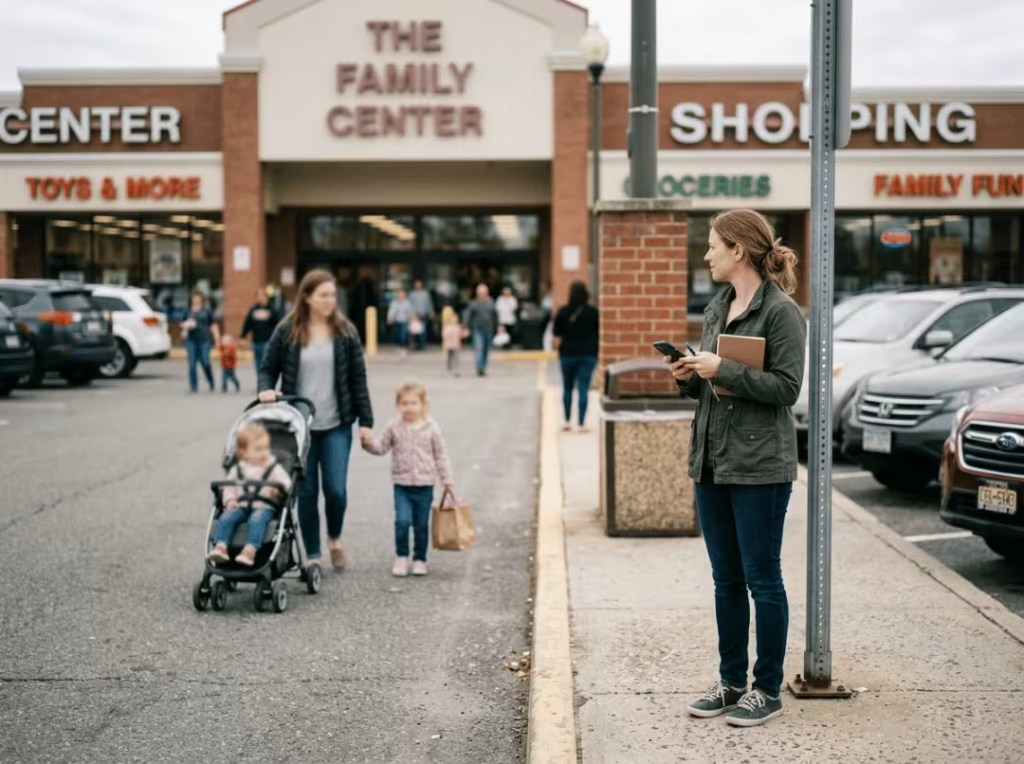
A franchise shows up with recognition already built. You don’t. So your proof of demand has to be real, not hopeful. Count the households with young kids inside a 15-to-20-minute drive. Scout weekend crowds at nearby play spaces and note how packed they actually get. Talk to local parents about where they take their kids and what they wish existed.
You’re proving people will come for you, not for a logo they already trust. Without a franchise name doing the early convincing, this homework is the only thing standing between you and an expensive guess. If the demand is there, you’ll feel it in these conversations. If it isn’t, far better to learn that now than after you’ve signed a five-year lease.
Step 2: How do you build a business model when nobody hands you one?
A franchisor gives you a pricing sheet and a revenue template. Independent, you get neither. That’s yours to figure out. Decide your mix — walk-ins, memberships, birthday parties, a café, maybe classes — and get clear on which one actually carries your margin. For most centers, parties do the heavy lifting, but you won’t know your own numbers until you build them.
This is where a real plan earns its keep. A solid indoor playground business plan guide forces these figures into the open before you commit to a lease, instead of letting you discover them the hard way six months in. Investors will want to see it, sure. But without a franchise model behind you, you need it more than they do.

Step 3: How do you pick a location without franchisor site criteria?
A franchise dictates its site rules. Independent, the judgment is entirely yours — freedom and pressure in equal measure. Look for a family-heavy catchment, easy parking, and enough ceiling height for the taller structures you might want. Then look hard at the rent and ask a blunt question: can you carry it through a dead-quiet January with no brand name pulling traffic through the door?
Match the space to how local families actually move through their week, not to a corporate formula built for an average town that isn’t yours. A smaller unit in the right spot beats a big one where nobody drives past.
Step 4: How do you choose suppliers without getting locked into a bad fit?
Franchise owners take the one approved supplier, like it or not. Your advantage is choice — so use it instead of grabbing the first quote. Compare a few manufacturers, get real numbers on the table, and confirm they handle design, safety compliance, and installation, not just the sale and a pallet on your doorstep.
Spend time here, because nobody’s vetting these vendors for you. The right indoor playground equipment for your space and your age range is a decision you live with for years. A supplier who understands your layout is worth far more than one who’s simply cheapest.
Step 5: How do you design a concept that’s genuinely yours?
This is independence at its best, and the one step you’d be foolish to rush. No brand template means you build zones around the gap you found in your own market — a strong toddler area if nearby centers ignore under-fives, a proper party-room setup if that’s where the money is, maybe a calmer sensory corner that sets you apart.
Give the space a theme families remember and want to photograph. A distinctive room built with custom playground equipment does something a generic franchise layout can’t: it earns the word of mouth that fills your weekends. Parents post about the place that felt special, not the one that looked like every other soft play down the road.
Step 6: How do you build operating systems from nothing?
No franchise manual means you write the manual. Opening and closing routines. Cleaning schedules broken out by zone. Safety inspection checklists. Your check-in and waiver flow. This is the invisible work, and it’s exactly what separates a smooth Saturday from three parties colliding while nobody’s sure who cleaned the ball pit.
It feels like busywork right up until the day you hire someone or take a day off. Then it becomes the thing holding your business together. A franchisee gets this in a binder. You get it by writing it down early, while you still remember why each step matters.
Step 7: How do you handle safety and permits without a franchisor clearing the way?
A franchise pre-clears a lot of this. You won’t have that cushion, so you carry it yourself. Confirm every piece of equipment meets recognized safety standards. Nail down your local permits and inspections before you’re counting on an opening date. Document your emergency procedures and drill your staff until they’re second nature.
In a business built around other people’s children, this isn’t a box to tick. It’s the foundation everything else sits on, and the one area where cutting a corner can end you before you’ve started.
Step 8: How do you plan for the ramp, not just opening day?
Without brand recognition, awareness builds slowly. The families who’ll eventually love your place don’t know you exist yet. So budget working capital to carry the quiet early months while word of mouth does its slow, steady work.
This is where independent timelines run longer than franchise ones, and where a lot of good centers stumble. A franchise name shortens this gap. You don’t have that, so plan for the stretch between opening your doors and filling them. Assume it takes longer than you’d like, and you’ll be fine when it does.
What Independent Owners Underestimate Most
Every step above is doable. What catches people out are the things that never show up on an opening-day checklist. These aren’t reminders. Each one has ended a center that looked fine on paper.
Working capital is what keeps independence alive. Owners budget the build and forget the quiet months after. Without a franchise name pulling traffic, busy comes slowly, and undercapitalized centers stall out in the exact stretch before word of mouth would have saved them. The cushion you never plan to touch is often the only reason you’re still open at month eight.
Undocumented process breaks the day you step away. Everything a franchise manual covers, you now hold in your head — and most owners badly underestimate how much lives there. It works fine while you’re on the floor every hour. Then you take one day off, and the whole operation wobbles, because nobody else ever knew how you actually run it.
Local trust is the substitute for a brand name, and it’s slow to earn. A franchise sign signals “safe and known” in a second. You earn that one visit at a time, one recommendation at a time, at the school gate and in the parent group chats. Owners treat this as marketing fluff until they realize it’s the entire thing a franchise was selling them.
Marketing from zero is a job, not a task. No corporate campaigns, no template, no brand equity. You build a social presence, referral relationships, and a launch from nothing — and you keep it consistent while you’re also mopping floors and running parties. Underestimate the ongoing effort and your feed goes dark right when you need bookings.
Inconsistent service is what parents actually remember. A franchise keeps service identical across locations through its training system. You have no such system unless you build it. Every hire learns a little differently, and the day a parent gets a warm welcome and their friend gets a cold one is the day your reputation splits.
Here’s what ties them together: independence doesn’t remove the work a franchise does. It moves that work onto you, in money, in time, and in attention. Budget for all three and the freedom genuinely pays off. Ignore any one of them and the freedom quietly becomes the trap.
How Do You Market an Independent Playground With No Brand Name Behind You?
Marketing for an independent isn’t a list of tactics. It’s one job done relentlessly: you are the brand, so you build recognition on purpose, starting from nothing.
Go where local parents already spend their time. Play spaces photograph well, and local parents live on Instagram and Facebook. This is where you become recognizable, so treat a steady, real presence there as core work — not something you get to on a slow Tuesday. A franchise arrives already known. You post your way there.
Build the referral relationships a franchise can’t buy for you. Schools, daycares, and pediatric offices are your cheapest and warmest source of customers. As an independent, these local relationships are your brand recognition. A trusted person pointing a parent your way does exactly what a franchise logo does — it borrows someone else’s trust until you’ve built your own.
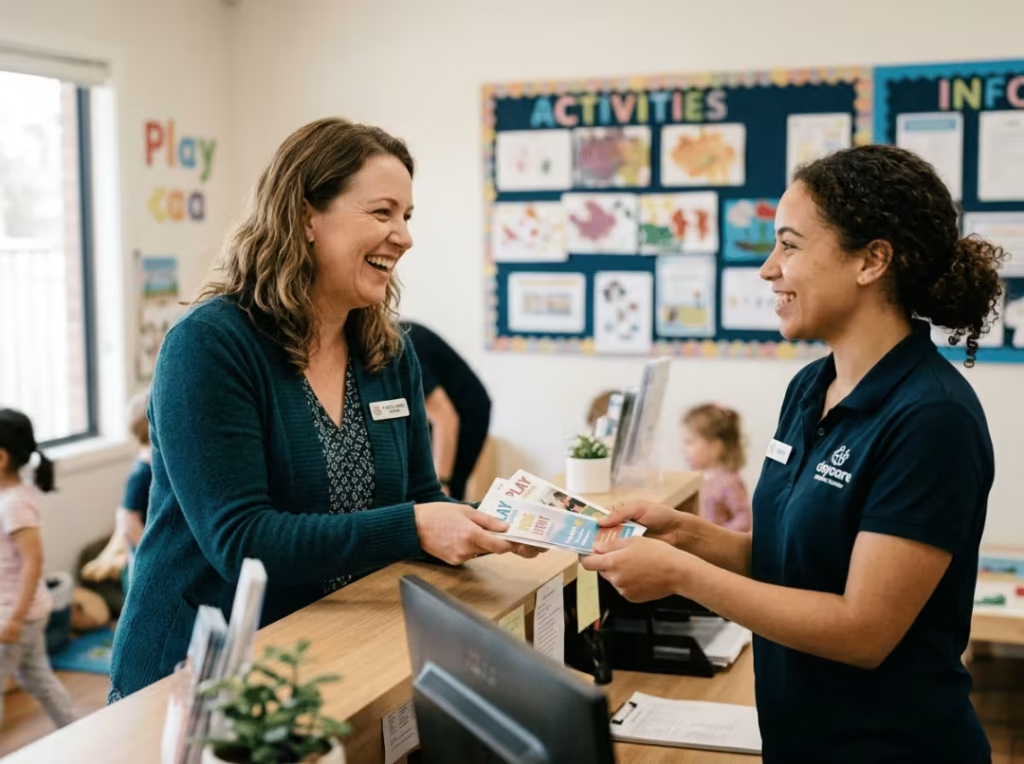
Make your grand opening do a brand name’s job. Your launch is your single biggest trust-building moment, and you don’t get a second first impression. Pull in the whole neighborhood, capture reviews while the excitement is high, and turn those first visits into repeat ones with a simple loyalty card. A franchise spreads this work across a hundred locations. You do it in one shot, so make it count.
Turn the space itself into your marketing. The themed room you built — your independence advantage — is content that spreads on its own. A memorable space earns shares and word of mouth a generic franchise layout rarely gets. Build something worth photographing and your customers quietly become your marketing team.
How Do You Build a Team With No Franchise Training System?
With no corporate training to lean on, your hiring choices and your documentation carry far more weight than they would for a franchisee. That single fact should shape how you approach the whole thing.
Hire for temperament, because you can’t train warmth. Look for patience, real energy, and genuine ease with both kids and frazzled parents. You can teach someone to run a register on their second shift. You can’t teach them to actually like a loud room full of five-year-olds, and parents can tell the difference instantly.
Write the training a franchise would have given you. Role-specific onboarding for the front desk, party hosts, floor monitors, and cleaning. Without a corporate manual, your procedures are the training — which means they have to be clear enough for a part-time teenager to follow correctly on shift two, with you nowhere in sight.
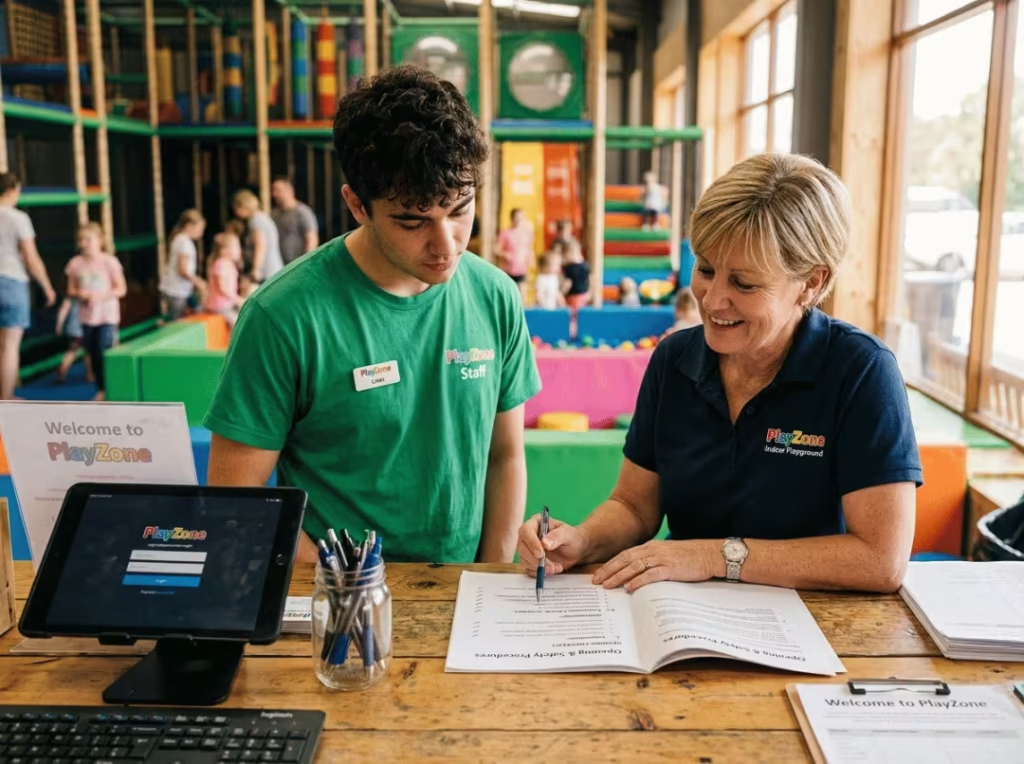
Guard consistency, because it’s where independents lose. A franchise enforces sameness across locations by design. You enforce it with documentation and follow-through, and nothing else. Inconsistent service is the fastest way an independent burns through the local trust it worked so hard to earn.
Lead from the floor until your systems can. As the owner, you are the standard in the early days. Stay visible, listen to what staff tell you, and fix problems fast. Your presence is the culture until your written systems are strong enough to carry it without you standing there.
FAQ
Is it cheaper to open an indoor playground without a franchise?
You skip the franchise fees and ongoing royalties, which is real, meaningful savings. But you take on more setup work and a longer ramp to build recognition, so the money tends to shift rather than disappear. Cheaper on paper, more effort in practice.
Can you really open an indoor playground without a franchise?
Yes, and plenty of successful independent centers do it every year. The catch is that you build every system a franchise would otherwise provide — the plan, the procedures, the marketing, and the brand trust — yourself. Very doable, just not effortless.
Is a franchise or an independent indoor playground better?
It depends entirely on you. A franchise buys certainty and speed for a price; independent gives you control and full profit in exchange for more work and more risk. Match the choice to your capital, your patience, and how much you genuinely enjoy building systems from scratch.
How much does it cost to open an independent indoor playground?
Most land somewhere between $100,000 and $500,000, depending on size, location, and equipment, plus working capital to carry the ramp. Always add a contingency on top, because build-outs run over and awareness takes time to grow without a brand name doing the heavy lifting.
What’s the hardest part of going independent?
Usually it’s earning local trust from zero while staying consistent as you do nearly everything yourself. The freedom is real, but so is the workload a franchise would otherwise carry for you. Owners who plan for both tend to come out ahead.
Do I need a business plan to open without a franchise?
More than a franchisee does, because nobody hands you a proven model to follow. A solid plan forces your numbers, your market, and your risks into the open before you sign anything. Think of it as protection against your own optimism.
Where to Start This Week
Opening an indoor playground without a franchise isn’t really about saving money. It’s about trading fees for control, and control for responsibility. You gain a brand you own and every dollar of profit that comes with it. In return, you take on every system a franchise would have built for you.
That makes it the right path for owners who like building and don’t mind the local homework, and the wrong one for anyone who needs a playbook handed to them. Be honest about which one you are, because that answer shapes everything that follows.
So here’s the single move worth making this week, before you fall for a location or a floor plan: pressure-test the numbers. Pull the demographics for your service area. Note what nearby centers charge and how busy they get. Then draft a real business plan and see whether the math holds without a brand name carrying you.
If it does, independence is genuinely on the table — and the best part, designing a space that’s unmistakably yours, is where all that responsibility finally starts to pay you back.