
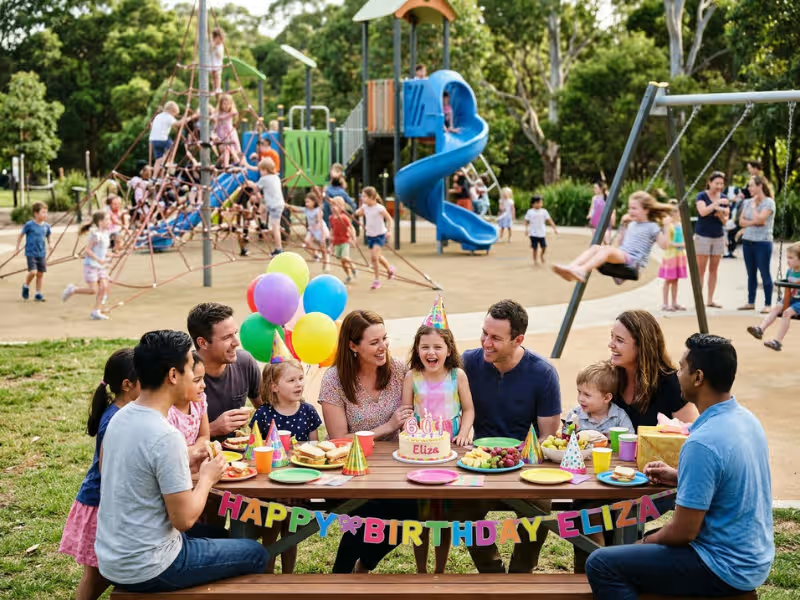
A playground birthday party sounds easy. Kids run free, the sun shines, and nobody has to book a party room.
But many parents worry about the details. Will it rain? Can you keep everyone safe? What if the party turns into chaos, or costs more than you planned?
I help families figure out what makes these parties work. This guide shows you how to decide if a playground party fits your family, pick the right site, and keep the day running smoothly.
It focuses on families with kids from preschool through elementary school.
Is a Playground Birthday Party the Right Fit?
A playground party can be the easiest win of the year. It can also leave you chasing kids across a park while the cake melts. The difference usually comes down to your child, your guest list, and how much you want to handle yourself.
Before families scout a single park, I ask them to picture the actual day. These two lists show you which side you land on.
When This Type of Party Works Especially Well
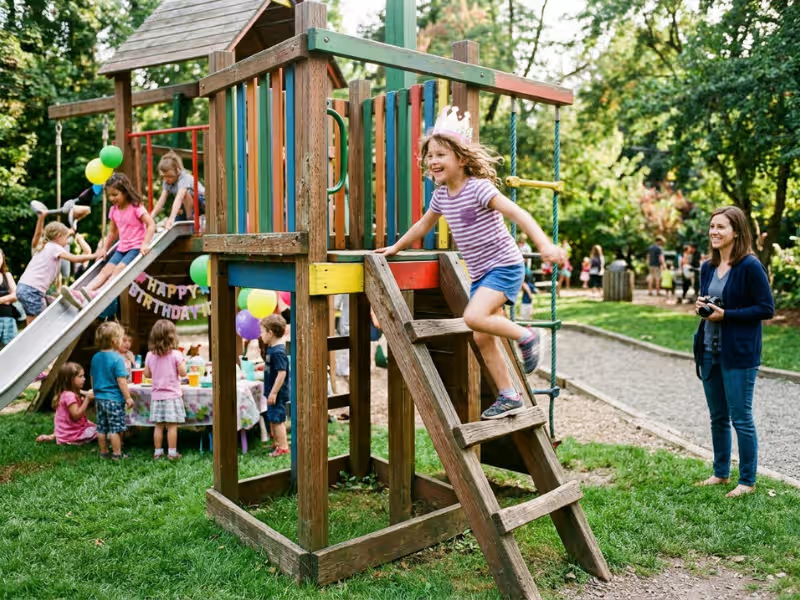
Playground parties shine when your child loves to move. If they head straight for the climbing net at every park visit, this party will feel like their favorite day.
They also suit kids who warm up fast. A child who joins a game of tag within five minutes doesn’t need a host to break the ice.
Mixed groups do well here, too. Classmates, cousins, and neighbor kids find their own play without a set schedule. The slides, swings, and open grass do most of the entertaining.
This format also fits parents who are comfortable running things loosely. If a rough timeline, simple food, and a couple of helpers sound fine to you, you’ll likely enjoy it.
When Another Format May Work Better
Some kids find a busy playground overwhelming. If your child covers their ears at loud parties or melts down in crowds, a small studio or home party may suit them better.
Wide age gaps cause trouble without extra adults. When toddlers and 10-year-olds share the same equipment, someone has to watch both groups. With only one or two helpers, that gets hard fast.
Weather matters more than most parents expect. If your area sees summer heat above 95°F or frequent spring storms, think twice without a covered pavilion or a backup date.
If you want to show up, enjoy the party, and leave the work to someone else, book a hosted venue. A playground party needs you to run it.
What Makes a Playground Party Site Actually Work
Most parents pick a park because it’s close or because their child loves the slide. Those are fine reasons to visit. They’re weak reasons to host 20 kids there.
When I scout a site with a family, I don’t ask whether the park looks nice. I ask how the day will feel 45 minutes in, when kids scatter and someone needs the bathroom.
Layout matters as much as the equipment itself. Parks built with custom playground equipment often place age zones, seating, and open space with real use in mind, which makes supervision and party flow much easier. Five conditions decide whether a site works.
Clear Sight Lines and Easy Supervision
How relaxed you feel depends on one thing: can adults see the kids from where they sit?
If the tables face away from the equipment, or a tall tower blocks half the play area, someone has to stand guard all party long. That person is usually you.
On your site visit, sit at the picnic area. Check whether you can see every slide exit, the swings, and the path to the parking lot without getting up.
Also look at the edges. A playground next to a street or pond needs a dedicated adult on that side. A fenced playground removes that job completely.
Age-Appropriate Play Equipment
Equipment that doesn’t fit your guests leads to bored kids or hurt kids. Well-designed outdoor playground equipment gives mixed-age groups more than one way to play, so kids spread out naturally.
A tower with a 10-foot slide pushes 4-year-olds past their skills. A toddler-only area leaves 8-year-olds kicking mulch by the fence.
Look for separate zones for ages 2–5 and 5–12, ideally side by side. Siblings and cousins can then play near each other without colliding.
Count the busy pieces, too. Fifteen kids and two swings means lines and arguments. Climbing nets, wide decks, several ways up, and extra freestanding playground equipment like spare swings or spring riders keep kids from bunching up around one feature.
Shade, Seating, Restrooms, and Parking
These details rarely show up in park photos. They decide whether adults stay happy for two hours.
Shade comes first. Plastic slides and metal decks can get hot enough to burn skin on summer afternoons. Adults in full sun get cranky, and frosting slides off the cake. A covered pavilion or mature trees near the tables change the whole mood.
Seating matters because most guests under 6 bring a parent. Ten kids can mean 15 adults. Two picnic tables leave half of them standing.
Restrooms decide how long your helpers stay at the party. A bathroom 50 steps away means a quick trip. One across the park pulls an adult away for 10 minutes, several times.
Parking affects arrivals and cleanup. Guests carry gifts, coolers, and strollers, so a long walk slows everything down.
Space for Food, Bags, Siblings, and Overflow Play
Kids need room to run, and your party needs a home base.
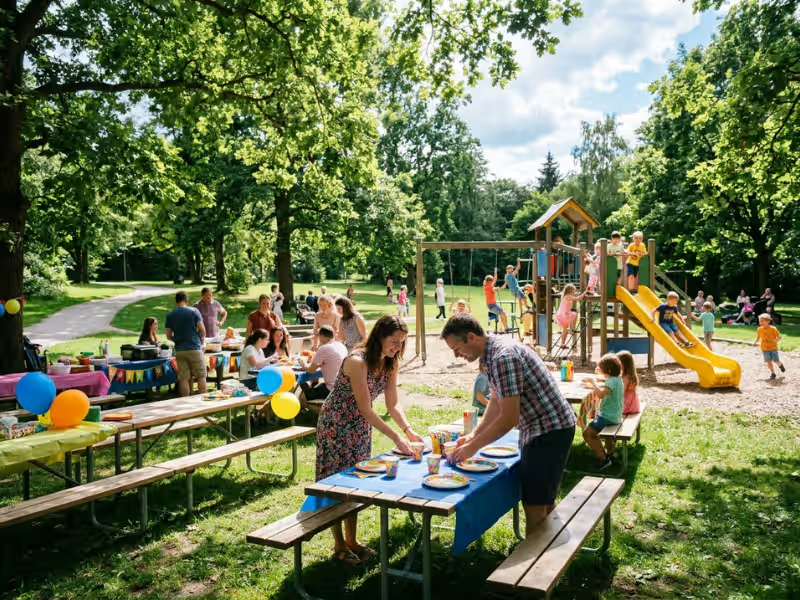
Find a flat spot near the play area for food, cake, and gifts that doesn’t block a path. Food set right next to the slide pulls kids off the equipment mid-meal.
A nearby lawn helps more than parents expect. Older kids get room for tag when the structure gets crowded. Baby siblings get a calmer patch away from the action.
If the park has no open grass, plan a smaller guest list.
Park Rules, Permits, and Local Restrictions
Park rules can quietly change your plans, so check them before you send invites.
Many cities require a permit for groups over a set size, often 25 to 50 people. Popular pavilions book weeks ahead on spring and summer weekends.
Many parks also ban bounce houses, amplified music, grills, or tape on shelters.
Call the parks department and ask about group limits, fees, and cleanup rules. A five-minute call now saves you an awkward talk with a park ranger in the middle of the party.
Choose the Right Time, Date, and Guest Count
The same playground can feel calm at 10 a.m. and miserable at 1 p.m. Timing shapes your party as much as the site does.
I help families settle three things before invites go out: the start time, the date, and the headcount. Get these right, and most other problems shrink.
Best Time of Day for a Playground Party
I steer most families toward two windows: 9:30 a.m. to noon or 3:30 to 5:30 p.m.
Morning slots catch kids at peak energy. The equipment stays cool, and the playground often sits half empty. A 10 a.m. start also lets you serve a simple early lunch around 11.
Late afternoon suits school-age kids who no longer nap. Shade stretches longer, and a snacks-and-cake menu works fine because guests eat dinner at home.
Skip midday. From noon to 3 p.m., the sun hits hardest, slides heat up, toddlers need naps, and crowds peak.
Visit the park at your planned hour the week before. Note where the shade actually falls.
Weather, Local Events, and Backup Thinking
Look past the forecast. Check average highs and rainy days for your party month. Then pick a date that gives you the best odds.
Next, check the city events calendar or call the parks department. Holiday weekends, local festivals, and youth sports tournaments on nearby fields can fill parking lots and playgrounds by 9 a.m.
Then build a real backup plan before you send invites. Choose one:
- Reserve a covered pavilion
- Print a rain date on the invitation
- Line up an indoor fallback, like your home or a community room
Set a decision time, too. I suggest 8 a.m. on party day. If rain odds top 50% or the heat passes 95°F, move the party and text every guest right away.
How Many Guests the Site Can Realistically Handle
Size your list to the site, not the class roster.
Start with supervision. Plan on one adult for every 4 to 5 kids under 6, and one for every 6 to 8 older kids. If you have two helpers, 12 to 14 kids is your ceiling.
Remember that you share a public space. On a Saturday morning, 20 other kids may already be climbing the same structure.
Food service sets limits, too. One picnic table seats about 8 kids at once. With more guests, you’ll need to serve in shifts or switch to grab-and-go food.
Count the parents as well. They need seats, shade, and snacks.
Keep the Budget Focused on What Actually Matters
A playground party costs less than most venues. But small purchases add up fast, and parents often spend on things nobody remembers.
When I plan a budget with a family, I sort every item into two piles. The first covers what keeps people comfortable. The second covers what only looks nice in photos. The first pile gets the money.
Spend Here: Comfort Beats Decor
- Shade and seating. If your site has no pavilion, a 10×10 pop-up canopy and a few folding chairs pay off in the first hour. Borrow from neighbors before you rent.
- Drinks and water. Plan on two drinks per guest, adults included, plus a cooler of ice water. Hot, thirsty kids melt down faster than tired ones.
- One extra adult. Hire a teen sitter for $15 to $20 an hour, or ask a relative to own one job, like watching the swings. That helper frees you up for the cake moment.
- Easy food service. Pre-cut fruit, single snack packs, and pizza by the slice cost a bit more. They also save you 30 minutes of serving while kids wait.
- Cake. Choose cupcakes or a simple sheet cake. Cupcakes need no knife and hold up better in the heat.
Save Here: Kids Won’t Notice
- Heavy decor fights the wind all afternoon. One banner and a few balloons tied low do the job.
- Big favor bags usually end up on the car floor. Bubbles or sidewalk chalk make a better send-off.
- Bounce houses and rented tables often need permits and can eat half your budget. The playground already brings the fun.
Cover Supplies, Cleanup, and a Cushion
Set aside $20 to $30 for plates, napkins, wipes, and sunscreen. Add heavy trash bags, since park bins fill up fast on weekends.
Keep 10% to 15% of your total as a backup fund. It covers extra pizza when siblings show up, more ice on a hot day, or a surprise pavilion fee.
What to Bring: The Short List That Saves the Party
Most parents overpack decorations and underpack the basics. Then a child scrapes a knee, and the only thing within reach is a party napkin.
I split my party gear into three bins or totes. Each bin has one job, so any adult can find what they need in under a minute.
Essentials for Comfort and Safety
This bin stays at your home base. Make sure one adult knows exactly where it is.
- Sunscreen: Bring an SPF 30+ stick for faces and a spray for quick touch-ups. Kids wiggle away from lotion, but a stick takes five seconds.
- Insect repellent: Pack it for late-afternoon parties near grass or water. Apply it away from the food table.
- First aid kit: Include bandages in several sizes, antiseptic wipes, tweezers, and an instant cold pack. Scrapes and splinters top the injury list at playgrounds.
- Hand sanitizer and wet wipes: Wipes clean sticky hands, frosting, and dusty bench seats.
- Water: Fill a large jug of ice water with refill cups. Keep it separate from the party drinks.
- Shade: If your site has no pavilion, bring a canopy, plus a blanket or umbrella for babies.
Food and Serving Basics
Wind and bugs cause most outdoor food trouble. Pack with both in mind.
- Lidded serving dishes to keep bees and dust off the food
- A tablecloth with clips so it stays put in a breeze
- Plates, utensils, and double the napkins you think you need
- Cake knife, server, candles, and a long lighter. Parents forget the lighter more than anything else, and matches fail in the wind.
- Two coolers. Use one for drinks, which people open all day. Use the other for perishables, so it stays cold.
Don’t leave food out for more than two hours, or one hour above 90°F.
Cleanup and Exit Supplies
A smooth exit starts with what you pack.
- Heavy-duty trash bags. Tape one open at the end of the table.
- Empty totes for gifts, so nothing gets lost on the walk to the car.
- A marker and sticky notes to label leftovers and track who gave each gift. Thank-you notes get much easier.
Food, Free Play, and a Party Flow That Works
Most playground parties don’t fall apart because of the food or the weather. They fall apart when the order of events fights the kids’ energy.
I plan every park party around one simple rule: let kids move first, then ask them to sit. Here’s how that rule plays out over two hours.
Why Free Play Should Come First
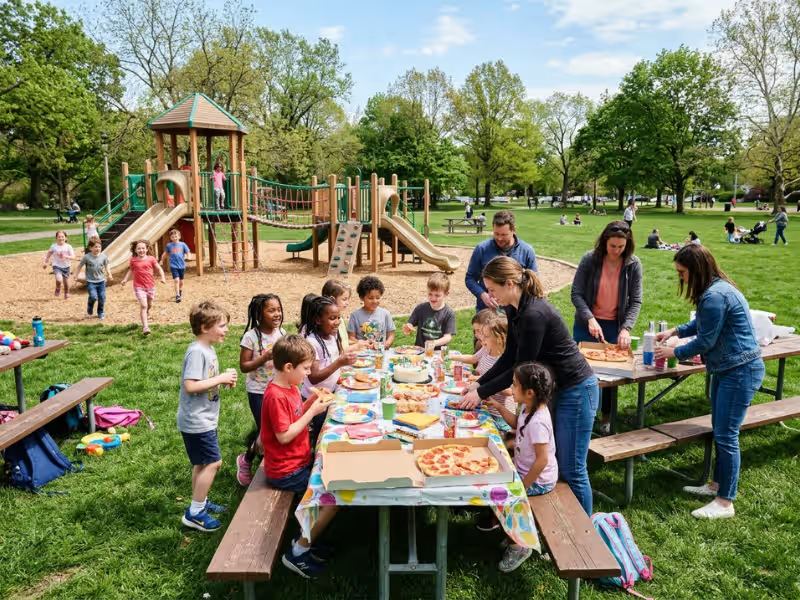
Kids arrive at a playground like soda cans someone shook in the car. They’ve sat in car seats, waited through goodbyes at home, and spotted the slide from the parking lot. If you sit them down for pizza right away, most will take two bites and bolt.
Give them 30 minutes of free play instead. They burn off that first rush, find their friends, and settle into the space. Shy kids get time to warm up without a crowd watching them.
This also buys you breathing room. Late guests trickle in, and you can finish setting out food without 15 kids hovering over the table.
By the time you call them over, they feel hungry and ready to sit.
A Simple 2-Hour Flow That Works for Most Families
Two hours suits most kids ages 3 to 10. A shorter party feels rushed. A longer one leaves toddlers drained and older kids wild.
|
Time |
What happens |
Why it works |
|---|---|---|
|
0:00–0:30 |
Arrival and free play |
Kids burn energy while late guests arrive |
|
0:30–1:00 |
Food |
Hungry kids sit longer and eat more |
|
1:00–1:20 |
Free play or one simple activity |
Bubbles or chalk let kids move again |
|
1:20–1:40 |
Cake and song |
The group comes back together |
|
1:40–2:00 |
Wind-down and departures |
Families leave at their own pace |
Food comes after play because tired, hungry kids actually stay at the table. The short play block after lunch matters more than parents expect. Kids need to move again before you ask them to gather a second time.
The last 20 minutes stay loose. Parents leave when they’re ready, and kids keep playing until pickup. Hand out favors as each family leaves.
Give a heads-up before each change. “Pizza in five minutes” works far better than a sudden whistle.
Easy Food Choices for Outdoor Parties
Pick food that survives wind, heat, and small hands. If a child can eat it standing up with one hand, it works.
- Pizza by the slice, timed to arrive around 0:25
- Wraps or sandwiches cut into halves or quarters
- Fruit like watermelon wedges, clementines, and grapes cut in half for kids under 5
- Pasta salad with an oil-based dressing, kept in the cooler until you serve it
- Cheese sticks, crackers, and single snack bags
Skip mayo-heavy salads on hot days, chocolate that melts, chips in open bowls that blow away, and anything that needs a knife and fork.
For allergies, ask about them on the invitation. Label each dish with a sticky note, like “contains nuts” or “dairy-free.” Place allergy-safe food at one end of the table, and serve it first with clean utensils.
When to Serve Cake So the Group Actually Regathers
Serve cake too early, and you lose your best tool for pulling kids back together. Wait until the very end, and some families have already left, often with the birthday child’s best friend.
Aim for about 80 minutes in. By then, kids have played twice and eaten, so they welcome a sugar break.
Give a 10-minute warning, then send one adult to sweep the slides and swings. Light the candles only when most kids reach the table. Sing, cut, and serve within 15 minutes.
The Biggest Mistakes Parents Make with Playground Parties
Most playground parties that go wrong share the same few problems. I see them at park after park, and nearly all of them start weeks before party day.
These are the six I warn families about first.
1. Picking a park you can’t see across. A pretty park with a tall tower or a hidden back slide forces one adult to stand guard the whole time. Kids slip out of view in seconds, often toward the parking lot. If you can’t see every slide exit from your table, keep looking.
2. Planning for the forecast, not the sun. A 78°F day still feels brutal on an open playground at 1 p.m. Slides heat up, kids get cranky, and the cake starts to sag. Shade over the tables matters more than shade near the swings.
3. Inviting the whole class. Twenty-five kids plus their parents on a public playground leaves no room for anyone. Lines form at the swings, kids scatter, and you spend the party counting heads. A smaller list almost always feels like a bigger party.
4. Packing decor instead of basics. I’ve watched parents spend 40 minutes taping streamers that blew away in the first breeze. Meanwhile, nobody packed a lighter or a first aid kit. One banner is plenty. Spend that setup time on food and shade.
5. Skipping the backup plan. “We’ll figure it out” turns into 30 frantic texts at 8 a.m. Choose your rain option and your decision time before you send invites. Then every guest knows what to expect.
6. Treating free play as free time for adults. Free play still needs eyes on it. Without set spots, every parent assumes someone else is watching the swings. Give each helper one zone, like the slide exit or the path to the street, and rotate every 30 minutes.
Fix these six, and you remove most party-day stress before it starts.
FAQs
Are there legal limits on the number of people allowed at a park party?
Often, yes. Most cities don’t ban groups outright. But many require a permit or reservation once a group passes a set size, usually somewhere between 25 and 50 people.
Count everyone, not just the kids. Ten children plus parents and siblings can reach 30 people fast.
Call the parks department three to four weeks ahead. Ask about group limits, pavilion fees, and rules on bounce houses, grills, and music. Keep the confirmation email on your phone. If another group claims your pavilion on party day, that email settles it in a minute.
What should I do if it starts raining right before the party?
Make the call at your set decision time, not when the first drops hit.
Light drizzle under a covered pavilion? Keep going. Most kids don’t mind. Lightning or steady rain? Move the party. Wet slides get slippery, and thunder means everyone comes off the equipment.
Write your “plan B” text before party day. Include the new location or rain date and the start time, then send it to every guest at once. If you move to your home, skip the decor. Set out the food and start one indoor activity, like cupcake decorating, so kids barely notice the switch.
What is the ideal duration for a playground birthday party?
Two hours works for most kids ages 3 to 10. For a group mostly under 4, keep it to 90 minutes.
Kids 8 and older can handle two and a half hours if the park has solid shade and open lawn. Past that point, energy crashes, food sits out too long, and parents start drifting toward the parking lot.
How do I manage shy or overly energetic children?
Give shy kids a job. Handing out bubble wands or chalk lets them join in without walking into a crowd. Pair them with one friendly kid, and let them watch from the edge first. The 30-minute free play block at the start gives them time to warm up.
Energetic kids need a challenge with a clear boundary. Try “Race to the big oak tree and back,” not “Go run around.” Station an adult near the tallest structure. Before cake, run one quick lawn game, like tag or freeze dance, so they burn off energy before you ask them to sit.
How do I keep a playground party from feeling chaotic?
Chaos usually starts when nobody knows what’s next. Fix that with a few habits:
- Set one home base for food, gifts, and bags, and keep it in sight of the play area.
- Use one signal. Pick a phrase or a hand bell, and use it for every transition.
- Give a five-minute warning before food and cake.
- Count heads at every transition, not just at the end.
- Limit planned activities to one or two. The playground handles the rest.
Open gifts at home. It saves 20 minutes and avoids a pile of crumpled wrapping paper blowing across the grass.
Can I host a playground party without spending much?
Yes. For about 12 kids, many families stay around $150 to $200. That covers pizza, cupcakes, drinks, and basic supplies.
To keep costs low:
- Pick a park with natural shade so you skip the pavilion fee.
- Start at 10 a.m. and serve snacks plus a simple early lunch.
- Borrow a canopy, coolers, and folding chairs from friends.
- Swap favor bags for bubbles or sidewalk chalk.
The playground already provides the entertainment. Spend your money on shade, water, and easy food, and the party will still feel generous.
Pick the Park First, Then Plan the Party
A great playground party doesn’t come from streamers or matching plates. It comes from four things: the right site, a timeline that follows kids’ energy, clear supervision, and simple food that holds up outdoors.
Of those four, the park matters most. Good sight lines, real shade, enough seating, and a nearby bathroom solve problems that no canopy or cooler can fix. If you pick the wrong park, you spend two hours patching gaps.
So start there. This week, shortlist one or two parks. Visit your top choice at the same hour as your party. Sit where the adults will sit. Check whether you can see every slide exit, where the shade falls, how many people the tables hold, and how far away the restroom is.
Once a park passes that walk-through, send the invites.