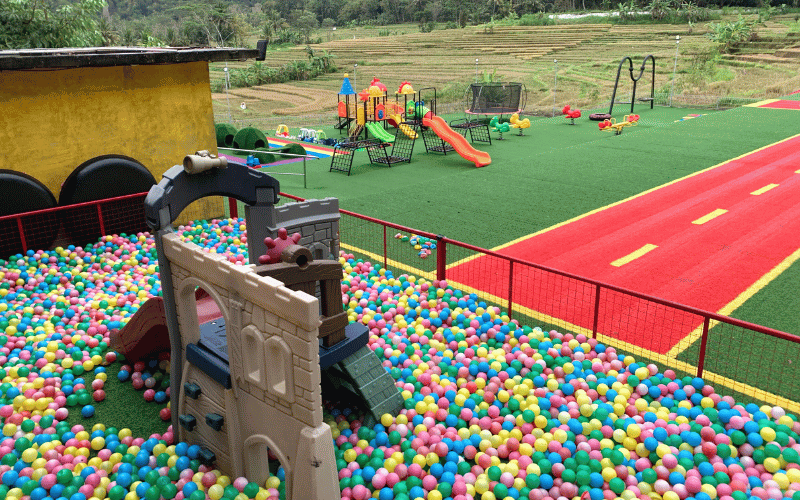
I’ve spent years working with outdoor play equipment, and here’s something most people get wrong: they obsess over the slides and climbers, then treat the ground as an afterthought. But the surface under that equipment is what catches the falls. It’s not a detail. It’s your real safety system.
Almost every playground fall ends on the ground, not on the structure. So the ground is what decides whether a tumble means a giggle or a trip to the ER. Pick the right surface, and you cushion the falls kids will absolutely take. Pick the wrong one, and you’ve designed a hard landing into your project from day one.
This guide walks you through choosing, as a buyer would. We’ll cover the factors that actually drive the decision, the real material options with their trade-offs, the safety standards you can’t skip, and how to keep it all performing for years. Let’s get into it.
Critical Factors for Choosing a Surface
Before you compare materials, get clear on what your site needs. These five factors shape every smart surfacing decision, and skipping any one of them leads to expensive regret.
Impact Attenuation
Impact attenuation is just a technical term for “how well the surface absorbs a fall.” When a child drops off a swing or slips on a climber, the surface should soften that landing enough to prevent a serious head injury.
This is the single most important job your surface does. Everything else is secondary. A surface that looks fantastic but doesn’t cushion a fall has failed at the only thing that truly matters.
Local Weather Patterns
Your climate decides how long a material lasts. High heat bakes and fades synthetic surfaces and can make some materials too hot to touch. Heavy rain washes away loose fill, pools on poorly drained surfaces, and speeds up rot in organic materials.
Plan for your worst weather, not your average. A surface that handles a mild spring but fails in a brutal August or a soggy winter is the wrong pick.
Age of the Children
Toddlers and older kids need different things. Younger children fall more often but from lower heights, so soft and forgiving wins. Older kids climb higher and move faster, which raises the fall height your surface has to handle.
Match the surface to the age group that will use the space the most.
Budget: Install vs. Maintenance
Here’s a mistake I see constantly. People pick the cheapest surface to install, then get hammered by maintenance costs for the next decade.
Loose fill, such as wood fiber, costs little up front but requires regular raking and topping off. Poured rubber costs far more to install but asks for very little upkeep. Look at the total cost over five or ten years, not just the install quote. That’s the number that actually matters.
ADA Accessibility
A truly inclusive playground welcomes every child, including those using wheelchairs or walkers. That means a firm, stable, slip-resistant surface that a mobility device can roll across without sinking.
Loose fill usually struggles here, while poured rubber and turf shine. If inclusion matters to your project, and it should, put accessibility near the top of your list, not the bottom.
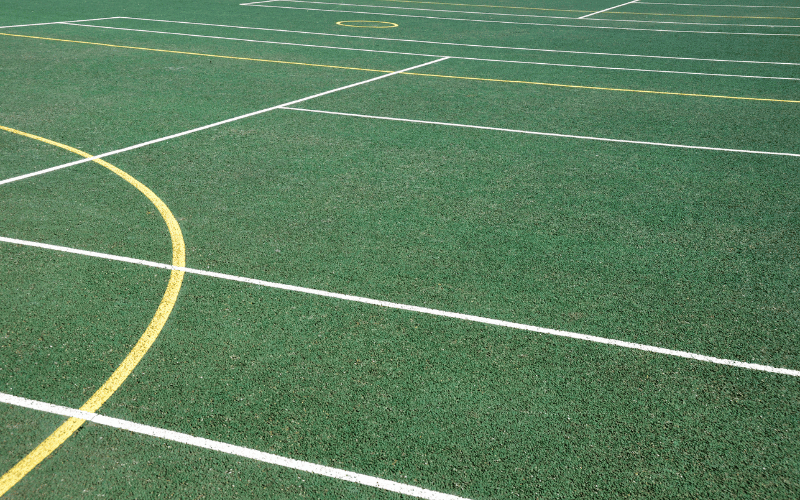
Loose-Fill Surfacing Options
Loose fill is the most common surfacing you’ll see, and for good reason. It’s affordable and easy to install. Here are your main choices and where each one fits.
Engineered Wood Fiber
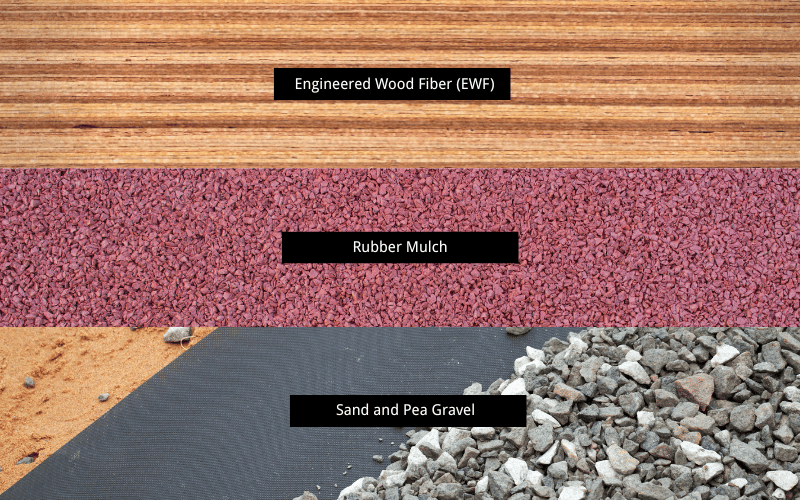
Engineered wood fiber, or EWF, is processed wood designed to knit together into a firm, cushioning surface. It’s a favorite because it’s cost-effective and looks natural, blending right into a park setting.
It cushions falls well at the right depth, usually around 12 inches under taller equipment. The catch is upkeep. It compacts, scatters, and breaks down over time, so it needs regular attention to stay safe.
Rubber Mulch
Rubber mulch is shredded recycled rubber, and it earns its keep. It delivers better shock absorption than organic materials like wood, and it won’t rot, compact, or decompose the way wood fiber does.
It costs more upfront than wood fiber, but it lasts longer and requires less topping off. One thing to watch: it holds heat, so it’s less ideal in very hot climates. For many sites, though, that durability trade-off pays off.
Pea Gravel
Pea gravel is small, smooth stones. On the plus side, it’s cheap and drains beautifully, so water never pools.
The downsides are real. It cushions less than other options, kids can throw it or put it in their mouths, and it’s tough for wheelchairs to cross. I rarely recommend it for younger children or for any site that cares about accessibility.
Sand
Sand is the old standby. Its best feature is that it stays cool in the sun when other surfaces get hot, a genuine plus in warm climates.
The trouble is hygiene. Sand hides debris, attracts animals, and needs frequent cleaning and raking to stay sanitary. It also tracks everywhere and clumps when wet.
Maintenance for Loose Fill
All loose fill demands ongoing work. Kids kick it out of the high-traffic zones first, especially under swings and at slide exits.
Plan to rake it level regularly and top off the depth so it never thins below the safe minimum. Skip this, and your cushioning quietly disappears right where falls most often happen. That’s the hidden cost nobody factors in until it’s too late.
Unitary and Poured Surfaces
Unitary surfaces are solid, seamless, or tile-based systems. They cost more up front but deliver accessibility and low maintenance that loose fill can’t match.
Poured-in-Place Rubber
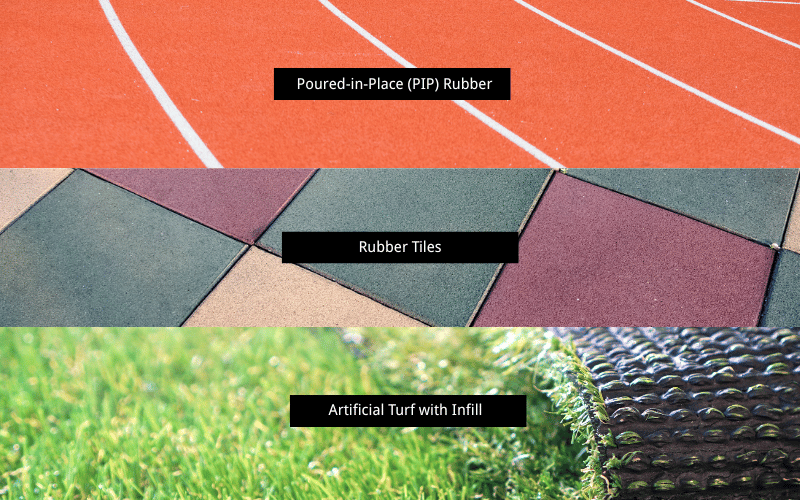
Poured-in-place rubber is a two-layer system installed wet, right on site. It curves into a smooth, seamless surface that’s fully customizable in color and design and highly accessible for wheelchairs and strollers.
It’s a premium choice, and it looks the part. You can build in colors, patterns, even simple games like hopscotch, right into the surface. The seamless finish also means no edges for kids to trip over.
Interlocking Rubber Tiles
Rubber tiles connect like puzzle pieces over a prepared base. Their big advantage is easy repairs. You can pull and replace a single damaged tile instead of redoing a whole surface.
They’re also more DIY-friendly than poured rubber for smaller projects. The trade-off is the seams, which need proper installation to stay tight and even over time.
Synthetic Turf with a Shock Pad
Synthetic turf gives you that grassy look without the mud, the brown patches, or the mowing. Paired with a specialized shock pad underneath, it cushions falls while staying clean and green year-round.
Parents love how it looks, and kids love how it feels. Just remember: the shock pad is what makes it safe, not the turf alone. Never install playground turf without a properly rated pad beneath it.
The Cost Trade-Off
There’s no way around it. These seamless surfaces carry a higher upfront investment than loose fill. You’re paying for accessibility, durability, and a polished look.
The payoff comes later. Lower maintenance and a longer lifespan often close the gap over time, especially on high-traffic sites. Synthetic surfaces still need care, though. Clear off leaves and debris regularly, rinse them down, and brush the turf to keep the fibers standing and the infill even.
Safety Standards and Compliance
This is the part you can’t cut corners on. Playground surfacing is governed by real standards, and meeting them protects both the kids and you.
Key ASTM Standards
Two ASTM standards matter most. ASTM F1292 covers impact attenuation, the surface’s ability to soften falls. ASTM F1951 covers accessibility for surfaces used by people with disabilities.
When a manufacturer says their product is compliant, these are the numbers behind that claim. Ask to see them in writing.
Critical Fall Height
Every piece of equipment has a fall height, the distance from its highest standing surface to the ground. Your surface must be rated to cushion a fall from that exact height.
This is the critical fall height, and it has to match your equipment. A surface rated for a four-foot fall under an eight-foot climber leaves a dangerous gap. Always match the rating to your tallest piece of equipment.
The Head Injury Criterion
When labs test impact attenuation, they use the Head Injury Criterion (HIC) along with a measure called G-max. In plain terms, these scores predict how likely a fall is to cause a serious head injury.
You don’t need to run the math yourself. Just know that a passing HIC score is what underpins a surface’s safety rating, so it’s worth confirming the product was actually tested to that standard.
Verifying Certifications
Don’t take “it’s safe” at face value. Before you buy, ask for documented test results and certifications tied to recognized ASTM standards. Third-party validation, like IPEMA certification, is a strong sign a product is what it claims to be.
A reputable supplier hands these over without hesitation. If a company dodges the question, that’s your answer. Walk away.
CPSI Inspections
Compliance isn’t a one-time event. Surfaces wear, settle, and thin out, which changes how they perform over time.
A Certified Playground Safety Inspector (CPSI) can audit your site and catch problems before they become injuries. Schedule professional inspections to keep your surface compliant for its whole life, not just on opening day.
Maintenance and Long-Term Performance
The right surface only stays safe if you maintain it. Here’s how to protect your investment for the long haul.
A Routine Inspection Schedule
Set a regular schedule and stick to it. Walk the site weekly to spot trash, sharp objects, and obvious damage.
Look closely for wear patterns and thinning spots, especially under swings, at slide exits, and around climbers. These high-traffic zones thin out first, and they’re exactly where kids land hardest. Keep a simple log of what you check and fix, since that record matters if an incident is ever questioned.
Rubber vs. Wood Lifespan
Under heavy use, the difference is stark. Rubber surfaces often last 10 to 15 years or more, holding their shape and cushioning throughout.
Wood-based materials break down faster. Wood fiber decomposes, compacts, and scatters, so it usually needs heavy topping off every few years and full replacement every 7 to 10. Rubber costs more up front but typically wins on lifespan.
Weeds and Drainage
Outdoor surfaces fight nature constantly. Weeds push up through loose fill and even tile seams, so a weed barrier under loose fill helps a lot.
Drainage matters just as much. Standing water signals a drainage problem, and water that lingers degrades materials, breeds bacteria, and creates slip hazards. Make sure water has a clear path away from the play area, and start with a properly graded, well-draining base.
UV Exposure
The sun is hard on synthetic surfaces. Over time, UV exposure fades colors and can stiffen materials, reducing the flexibility that helps cushion falls.
Quality products include UV stabilizers to slow this down. When you compare turf or poured rubber, ask how the product holds up over years of direct sun exposure.
Environmental Impact and Recyclability
Surfacing choices carry an environmental footprint worth weighing. Rubber mulch and tiles often use recycled material, giving old tires a second life.
Wood fiber is natural and biodegradable, which appeals to many communities. At the end of its life, ask whether a product can be recycled rather than dumped. A greener choice can also be a strong selling point for your park.
Frequently Asked Questions
Which playground surface is safest for high fall heights?
Poured-in-place rubber and deep loose fill like rubber mulch or engineered wood fiber perform best for high fall heights, as long as they’re installed at the right depth and rated for it. The key is matching the surface’s tested fall-height rating to your tallest equipment. Always confirm the ASTM F1292 rating before you buy.
How often should I replace engineered wood fiber?
EWF gets topped off more than it gets fully replaced. Expect to add material every year or two to maintain depth, since it compacts and scatters. A full replacement usually comes every 7 to 10 years, depending on traffic, climate, and how well it’s maintained.
Are rubber surfaces safe for children in extreme summer heat?
Rubber surfaces stay safe for impact in the heat, but they can get hot enough to be uncomfortable on bare skin in direct sun. In very hot climates, plan for shade structures over high-use areas. Sand and wood fiber tend to stay cooler if heat is a major concern at your site.
What is the least expensive surface that meets safety codes?
Engineered wood fiber is usually the cheapest surface that still meets safety codes, which is why it’s so common. It cushions falls well at the proper depth and costs little to install. Just budget for ongoing raking and topping off, since that upkeep is the real long-term cost.
How do I make an existing playground ADA-compliant?
Swap loose fill in key paths for zones with a firm, stable surface, such as poured rubber, rubber tiles, or cushioned turf, that meets the ASTM F1951 standard. You’ll also need an accessible route to the equipment and accessible play components. A CPSI can audit your site and lay out exactly what needs to change.
Does synthetic turf require a shock pad underneath?
Yes. On its own, turf doesn’t cushion falls enough to be safe under play equipment. The shock pad beneath it handles the actual impact absorption, so the system has to be tested as a whole to meet the fall-height rating. Never install playground turf without a properly rated pad.
How can I prevent drainage issues under poured rubber?
Start with a properly prepared, well-draining base, usually compacted aggregate, before the rubber goes down. Poured rubber is porous and lets water through, but it can only drain as well as the base beneath it. Grade the site so water flows away, and hire an experienced installer who gets the base right.
Finalizing Your Playground Surface Project
After years in this field, here’s the bottom line: the best surface is the one that balances real safety with a budget you can actually sustain. Don’t overspend on features you don’t need, and never underspend on the cushioning that protects kids.
A few final moves before you commit:
- Request material samples. Get them in hand to test durability, texture, and how they look and feel in your space. A sample tells you more than any brochure.
- Hire certified installers for poured and seamless products. These surfaces live or die on installation quality, and a bad install ruins even the best material.
- Take the long view on cost. Add up weekly and monthly upkeep over the years, not just the install price. The cheapest surface today is often the most expensive one over a decade.
- Run a final safety audit before you open. Have a CPSI confirm that the surface meets its fall-height rating and ADA requirements throughout the site.
Get these steps right, and you’ll build a play space that’s safe, inclusive, and built to last. That’s the goal every time, and it’s well within reach when you plan the surface as carefully as the equipment.