
Most first-time business plans fail for the same reason: they read like a wish list instead of a case someone can bet money on. The concept sounds fun, the owner is excited, and the numbers are either missing or wildly hopeful. A lender skims two pages and moves on. If you’re planning an indoor playground, that’s the outcome to design against from the first draft.
This guide is written for first-time operators, mall and daycare operators, and anyone about to sit across from a bank, a landlord, or an investor. It won’t spend your time explaining what a playground is. It will show you how to build a document that a skeptical reader trusts.
Here’s what you’ll leave with:
- The exact sections an indoor playground business plan needs, in the order lenders read them
- Startup cost categories that hold up, plus a revenue model that survives a hard look
- A plain framework for building projections and a break-even point people believe
- The specific mistakes that get plans rejected before anyone reaches the financials
We move section by section, so you can drop in your own numbers and hand the finished plan to whoever controls the money.
What Is an Indoor Playground Business Plan?
An indoor playground business plan is a written document that lays out your concept, market, operations, and finances clearly enough that you, a lender, or a partner can judge whether the business actually works. It’s the difference between “I think this will do well” and “here’s why the math says it will.”
It isn’t a brochure, and it isn’t a folder of ideas. A brochure sells a feeling. A plan defends a decision. That distinction shapes everything below.
The document works for two readers at once. One is you, forced into honest thinking before you sign a lease you can’t unwind. The other is anyone whose money is on the line, reading to decide whether the risk is worth it. A good plan satisfies both. A loose one convinces neither.
Why Do You Need One Before You Open?
Skipping the plan feels like saving time. It’s the fastest way to earn a “no” and to walk straight into costs you never saw coming.
It tests whether the numbers actually work
Writing the plan forces one uncomfortable question early: can your revenue cover rent, staffing, insurance, and loan payments with room to spare? Answer it on paper, before the lease, and you can still back out of a bad deal. Answer it after signing, and you learn the hard way, on the hook for a space that can’t pay for itself.
It drags hidden costs into the open
Map the whole operation and the surprises land on the page instead of mid-build. Safety flooring, permits, and staffing through a dead January stop being ambushes and become line items. An owner who has already found these costs reads as far safer than one who hasn’t, because the second owner will find them anyway, just later and more expensively.
It answers what your reader is really checking for
A lender, a landlord, and an investor open your plan looking for slightly different things, but the core questions overlap: can this person repay or return capital, do they understand their costs, is the demand real, and how do they handle risk. That last one carries extra weight here. You’re responsible for children at play, which puts safety, liability, and insurance at the center of your risk profile in a way a clothing store never faces. Meet it head-on and your scariest exposure becomes your strongest proof of competence.
What Should an Indoor Playground Business Plan Include?
This is the section most “ultimate guides” promise and never deliver. Below is the order a lender expects, and each part doubles as a mini-template: what belongs in it, what your reader is hunting for, and what a weak version looks like so you can avoid writing one.
One rule before you start. Write the executive summary last, even though it sits first. You can’t summarize a case you haven’t built yet.
1. Executive summary
One page, no more. This is the page that decides whether anyone reads the rest, so it earns the most rewrites.
Cover four things: your mission in a sentence or two, your legal structure, the basic facts, and your three-year targets. Most operators form an LLC because it separates personal assets from the business and caps everyone’s exposure if something goes wrong; say so and say why. Then the facts, which are facility name, location, square footage, and the ownership team’s background. Investors back people before ideas, so don’t shortchange the team part. Close with goals a reader can track: membership counts, weekend party bookings, annual revenue, and the month you expect to turn profitable.
A weak executive summary lists features. A strong one states a case. Something like: “Sunbeam Play is a 6,000-square-foot indoor playground serving families with children under ten in [city], built around high-margin birthday parties and a clean, all-weather space the area currently lacks.”
2. Company description and concept
Name what your playground is, the specific gap it fills, and how you’re positioned. Is the town short on toddler-friendly rainy-day options? Do working parents need dependable party and after-school space? State the demand, then show how your concept and theme answer it. This is short by design. Its job is to set up the market and revenue sections, not to carry them.
3. Market analysis
This section proves demand is real, and it’s the one funders most often check with their own data. Guess here and a single wrong figure can sink the whole plan’s credibility.
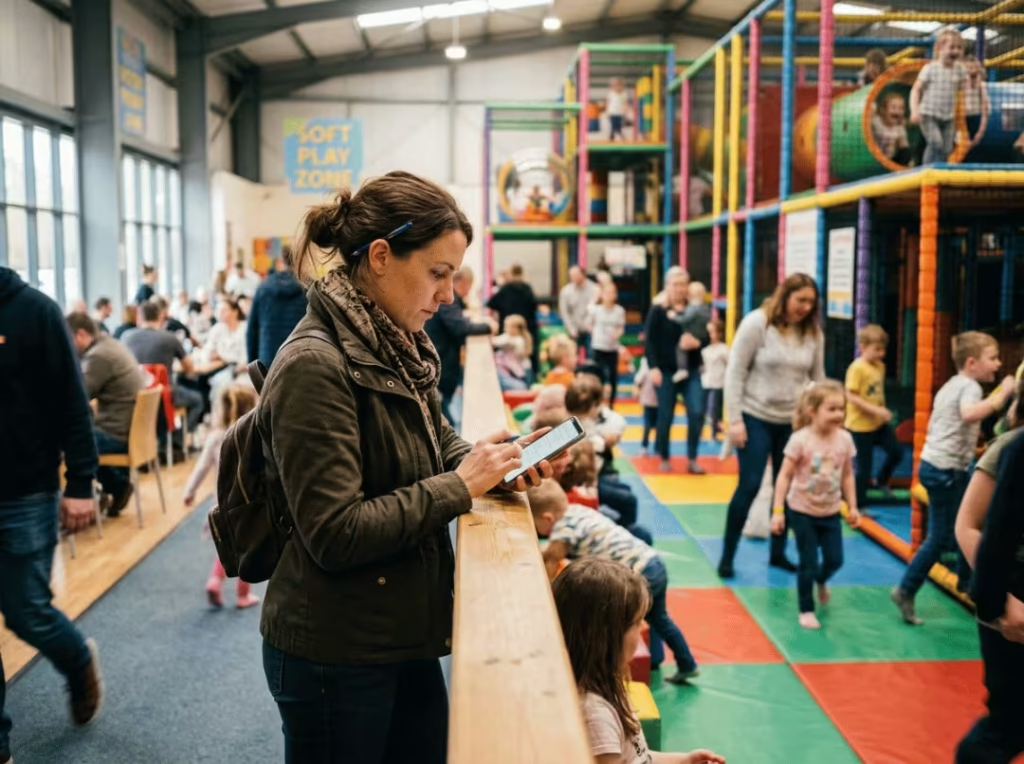
Define your service radius first, usually a 15- to 20-minute drive for a family with young kids. Then size the demographics inside it: how many households with children under 12 sit in that zone, and what do they earn? Income matters because memberships and parties are discretionary spending, the first thing a tight household cuts. Pull census data rather than estimating, and name your source in the plan.
Then map both kinds of competition:
- Direct competitors are other indoor play centers and soft play spaces. Visit them on a Saturday. Note pricing, cleanliness, equipment age, and how packed they are. Their weak spots are your opening, and naming those spots tells a reader exactly where your edge comes from.
- Indirect competitors are parks, trampoline parks, children’s museums, and the mall play area. You compete for the same afternoon and the same budget, so show you see the full field.
The weak version of this section says “there is strong demand for children’s entertainment.” The strong version says “4,200 households with under-12s live within a 15-minute drive, the two nearest play centers are dated and crowded on weekends, and neither offers private party rooms.”
4. Services and revenue streams
Spell out what you sell and how each piece earns. A plan built on one income source reads as fragile, so the goal is to show several streams that cover for each other when one dips.
Start with the equipment that defines the space: a multi-level structure, a ball pit, a walled-off toddler zone, and a calmer sensory area. Match every piece to the ages you serve, and keep younger children physically separated from older, faster ones, which is both a safety point and a way to serve more families at once. Rather than cataloguing every option inside the plan, point to your indoor playground equipment range and keep this section focused on how the equipment drives revenue.
Then lay out how you charge, because this is where the money actually comes from:
- Walk-in passes for one-time visitors, usually priced per child with adults free
- Memberships for regulars, the stream that smooths out your month
- Birthday parties, typically the highest-margin product and often the single biggest earner
- Café sales that lift average spend without adding much floor space
- Classes and workshops that fill dead weekday hours
- Retail, from required grip socks to small toys and branded merch
If a distinctive theme is part of your pitch, this is where it belongs, tied to repeat visits and word of mouth rather than treated as decoration. A memorable, well-themed space is exactly where custom playground equipment earns its cost, because it’s what a family remembers and posts about after a generic competitor blurs into every other room they’ve visited.
5. Operations and safety plan
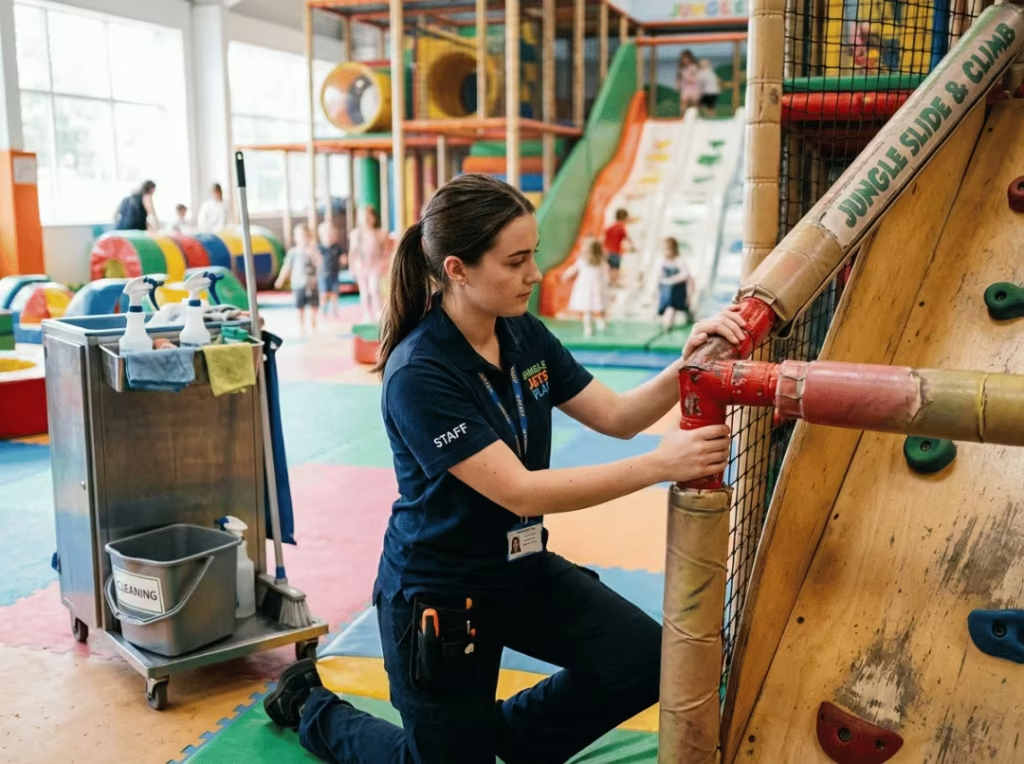
This section shows how the place runs on an ordinary Tuesday, and it’s where you prove your biggest risk is under control rather than hoped away. Cover your staffing model, cleaning schedule, equipment certifications, inspection routine, and check-in and waiver process.
Frame each as managed risk, not as a chore list. A daily cleaning schedule protects the reputation your repeat business depends on, because parents notice grime in seconds. Regular professional inspections plus quick daily checks catch a loose bolt before it becomes an injury and a lawsuit. Matching wristbands at entry and exit mean no child leaves with the wrong adult. Read through a lender’s eyes, this section is the difference between “children at play” as a scary phrase and as a contained, documented process.
6. Marketing plan
A great playground that nobody knows about still goes under. Cover your channels, and tie each one back to why it makes your revenue forecast believable rather than aspirational.
Lead with social media, since play spaces are photogenic and local parents already live on Instagram and Facebook. Add referral relationships with schools, daycares, and pediatricians, which are about the cheapest customers you’ll ever acquire. Plan a grand opening to pull the neighborhood in, and a simple loyalty program to bring them back. Every channel here should map to a number somewhere in your financials.
7. Financial projections and funding request
This is the section your reader studies hardest, and often first. It carries enough weight that it gets its own full treatment below, across costs, revenue, and projections.
What Do Indoor Playground Startup Costs Actually Include?
Quoting one wide range, like “$50,000 to $500,000,” tells a reader you haven’t done the work. That span is so broad it says nothing, and an experienced lender reads it as a guess dressed up as a figure. Itemize instead.

The core startup cost categories
- Lease deposit, often several months’ rent before you’ve earned a dollar
- Play equipment, manufacturing, and installation, usually your single largest line
- Build-out and renovations, including safety flooring, lighting, and partitions
- Licensing, permits, and insurance, heavier for a children’s business than for ordinary retail
- Pre-opening marketing and opening inventory, from grip socks to café stock to launch promotion
- Working capital to carry the quiet first months while traffic builds
- Contingency fund of 10 to 20 percent on top of everything above
The line item that swings the budget most is equipment and installation, and it’s also the one first-time owners most often lowball, usually by pricing the structure and forgetting freight, install labor, and flooring underneath it. Right behind it sits build-out, which runs late and over on almost every project. That’s exactly what the contingency fund is for, and a reader who sees one knows you’ve planned for the real world instead of the brochure.
How to present costs so they’re believed
Show an itemized table, not a paragraph of round numbers. Put your assumption beside each figure and flag which lines move most with location and size. Wherever you can, base the equipment and build-out lines on real supplier quotes rather than estimates. This is where a plan quietly wins or loses trust: neat, sourced numbers read as competence, while suspiciously round ones read as fiction. The moment a reader spots one figure that’s obviously invented, they start doubting all of them.
How Do You Build a Revenue Model That Holds Up?
A plan lives or dies on assumptions, not on the size of the final revenue number. Anyone can type a big annual total. What a reader wants to see is how you got there, one defensible step at a time.
Map the streams and know what each one does
- Memberships are your most dependable income, because they recur whether or not it rains
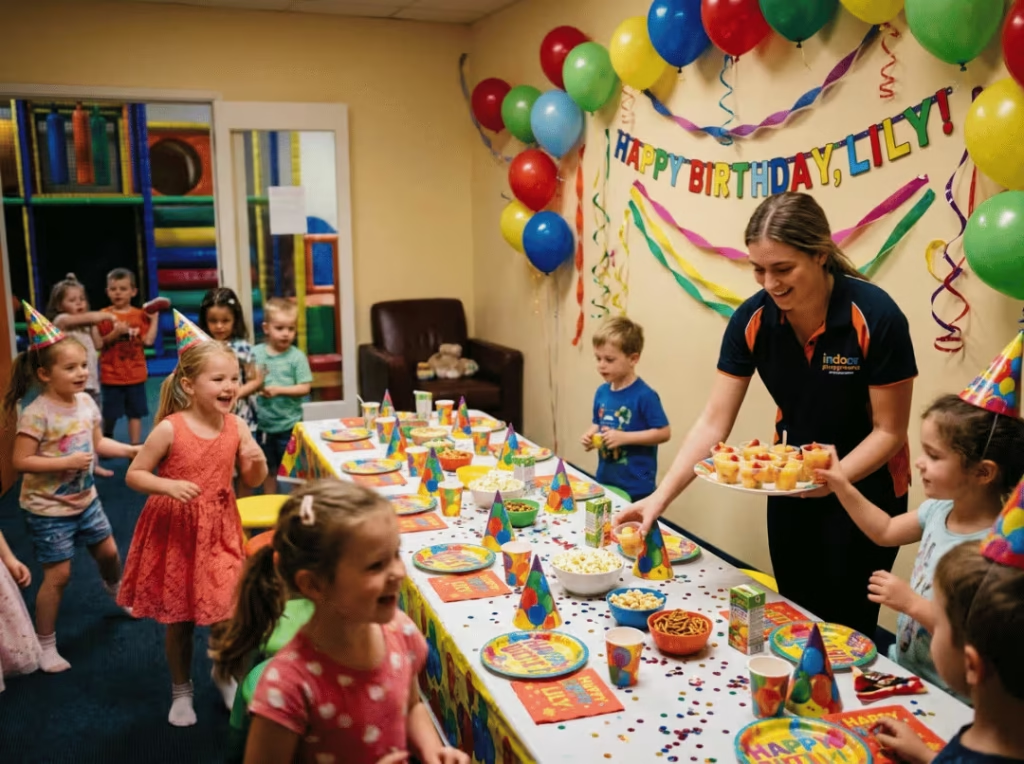
- Birthday parties usually carry the margin, since one weekend booking can out-earn a slow weekday entirely
- Walk-ins bring volume but swing hard with weather and season
- Café, classes, and retail are smaller, steadier add-ons that lift spend per visit
Knowing what each stream does changes how you plan the space and the calendar around it. A center that treats parties as an afterthought is leaving its best margin on the table.
Set assumptions you can defend out loud
Build the forecast from inputs you can justify: average daily visitors, party bookings per weekend, membership growth rate, and average spend per head. Then grow them slowly as word spreads. The assumption first-time operators overstate most is walk-in volume, closely followed by how fast memberships ramp. A reader who has seen a dozen plans spots an inflated occupancy rate instantly, and once they do, every other number in the plan inherits the doubt. A modest ramp you can beat builds far more trust than a steep one you’ll miss.
Show the mix, then label it honestly
An illustrative split helps a reader picture how the pieces fit. For a mid-sized center, that might run parties at roughly 35 percent of revenue, memberships at 25, walk-ins at 20, café at 15, and classes plus retail making up the rest. Present it as an example, replace it with your own modeled figures, and never let a placeholder masquerade as a projection.
How Do You Present Financial Projections and Break-Even?
You don’t need a forty-tab spreadsheet inside the plan. You need to show, plainly, that you understand your own economics well enough to run the place through a bad quarter.
Separate fixed from variable costs
- Fixed costs hold roughly steady each month: rent, insurance, utilities, and loan payments
- Variable costs rise and fall with traffic: labor hours, cleaning and café supplies, and party materials
This split isn’t bookkeeping for its own sake. It’s what lets you state a break-even point, the moment revenue covers total costs, which is one of the first numbers a lender hunts for. It also shows how you’d trim variable spending to survive a slow stretch without missing a payment.

Project three years, conservatively
Don’t model a packed house from opening day. Estimate occupancy modestly and grow it year over year as awareness builds. Most well-run centers cross into profit somewhere in year two or three, so mark that line clearly and name what drives it. This is where lenders stop trusting the numbers: a chart that spikes in month three tells them you’re either inexperienced or optimistic, and neither reassures a person deciding whether to fund you.
State the capital you need and how it comes back
Say plainly how much you need to launch and reach stability, where it’s coming from, and how it’s repaid. A lender wants a repayment timeline tied to projected cash flow, with a cushion built in for a soft month. An investor wants the mirror image: the return and a realistic timeline to reach it. Answer both directly, in their language, and you hand each reader the one thing they came for.
What Mistakes Get Indoor Playground Business Plans Rejected?
Even sharp operators trip over the same things. Any one of these can sink an otherwise solid plan.
- A single wide cost range instead of itemized, sourced categories. It signals the homework isn’t done.
- “Full from day one” occupancy with no ramp. A reader discounts your numbers the instant they smell it.
- Safety and liability treated as an afterthought. In a children’s business, that’s the exact risk your reader cares about most, so burying it works against you.
- A single revenue stream, usually walk-ins alone, with nothing to cover a weak month.
- An executive summary written first, or skipped, so the page that matters most fails to land your strongest case.
- Vague market claims with no census data or competitor comparison. “There’s plenty of demand” is an opinion, not evidence.
- No contingency fund, so the plan cracks at the first surprise cost, and every build has one.
Nearly every rejection traces back to two root causes: numbers a reader can’t believe, or a risk they can’t see you managing. Fix those and you clear the tallest hurdles between you and a yes.
FAQ
How much does it cost to start an indoor playground?
Most indoor playgrounds run between $100,000 and $500,000 to launch, driven mainly by size, location, and equipment. Build-out, lease, and the play structure account for the bulk of it. A small space in a low-rent area sits near the bottom, while a large facility in a pricey market climbs fast. Always include a contingency line, because funders expect to see one.
How do I write the financial section of the plan?
Separate fixed costs from variable ones, then project revenue over three years using conservative occupancy assumptions. State your break-even point clearly and tie a repayment timeline to projected cash flow. You’re proving you understand the economics, not producing a flawless forecast.
Is an indoor playground profitable?
Well-run centers usually land in the 15 to 30 percent margin range once established. The deciding factor is secondary revenue. Centers leaning on parties, memberships, and a strong café sit at the higher end, while those relying on walk-in fees alone tend to struggle.
What revenue streams should the plan include?
Cover walk-ins, memberships, birthday parties, café, classes, and retail. Parties typically deliver the highest margins, while memberships create predictable recurring income. Diversification is what a funder wants to see, because it cushions a slow month.
How much space does an indoor playground need?
Most profitable centers run between 3,000 and 10,000 square feet, with room for the play structure, a toddler zone, party rooms, café seating, and bathrooms. Usable ceiling height matters as much as floor area, since tall play frames need vertical clearance. A smart, open layout beats raw square footage.
Do I need a template to write the plan?
The section-by-section structure in this guide works as your template. Take each part in order, fill it with your own market data and numbers, and you’ll finish with a complete, fundable document. A fancy format matters far less than sound structure and honest figures.
Bringing It Together
A strong indoor playground business plan comes down to a handful of disciplines. Follow the section order a reader expects, itemize costs with a contingency, defend every revenue assumption out loud, and present safety as a risk you’ve already contained. Do that, and the plan reads as a case worth backing rather than a hopeful pitch.
The operators who get funded rarely have the flashiest concept. They’re the ones whose numbers survive a skeptical read on a slow afternoon.
Take one concrete step this week: gather your inputs. Pull the service-area demographics, note what nearby centers charge, and confirm your lease terms. Then fill each section in order, market first and executive summary last.
For the line that moves your budget the most, get real equipment and installation quotes so your costs reflect actual figures instead of guesses. That single step turns a rough draft into a plan someone can say yes to.