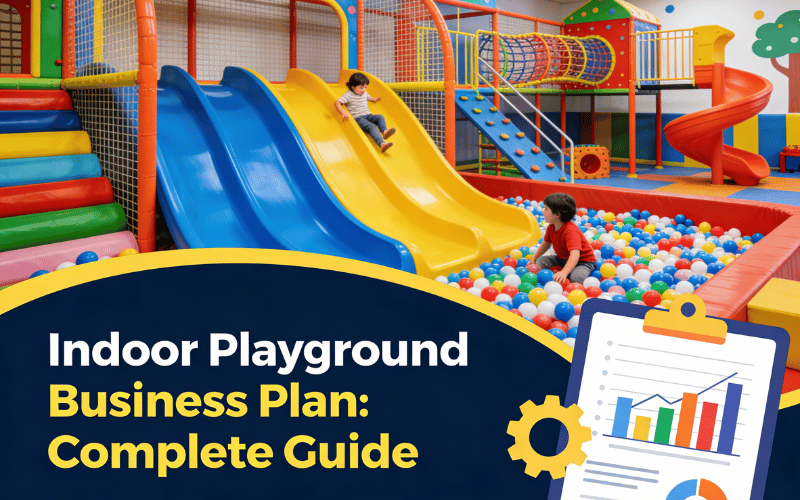
Dreaming of opening your own indoor playground? You’re not alone. The family entertainment industry is booming, with thousands of indoor play centers across the U.S. But here’s the reality check: many new businesses fail within the first year, and play centers are no exception.
Don’t let those numbers scare you off. The indoor playgrounds that succeed aren’t just lucky—they’re prepared.
What separates thriving play businesses from the ones that barely survive? A solid indoor playground business plan.
This guide walks you through creating a business plan that actually works. No wishful thinking—just the practical roadmap you need to build a profitable indoor playground business.
Ready to build success?
TL;DR: Indoor Playground Business Plan Essentials
Need the quick version? Here’s your indoor playground business plan roadmap:
What’s included:
- Executive summary and company vision
- Market analysis and competition research
- Facility design and equipment strategy
- Financial projections and funding plans
- Operations and team management systems
Key costs to expect: Indoor playgrounds typically cost $150,000 to $500,000 to start. Your most significant expenses hit play equipment, renovations, and facility safety preparation. Don’t forget permits, insurance, and 3-6 months of operating expenses.
Timeline reality: Plan for 6-12 months from concept to opening day. Permit approvals alone can take 2-4 months, so start early.
The bottom line: A solid business plan isn’t just paperwork—it’s your blueprint for avoiding the common mistakes that kill indoor playgrounds. Get the planning right, and you’ll spend less time putting out fires and more time building your dream business.
What Is an Indoor Playground Business Plan?
An indoor playground business plan is your roadmap to success. It’s a document that explains what your business idea is and how it will succeed. It answers the big questions: how much will it cost to start, where the money will come from, and how much profit you can expect.
Your Business Blueprint
Think of it as your business blueprint. Done right, your plan becomes a reference manual for running a thriving indoor playground. It forces you to think through everything from your target customers to your daily operations before you spend a dime.
Why You Need an Indoor Playground Business Plan
Most independent play centers struggle in their first few years, and the biggest reason is being unprepared for ownership. Many owners don’t realize the complexities of running a playground business until it’s too late.
What Your Business Plan Includes
Your business plan covers the essentials:
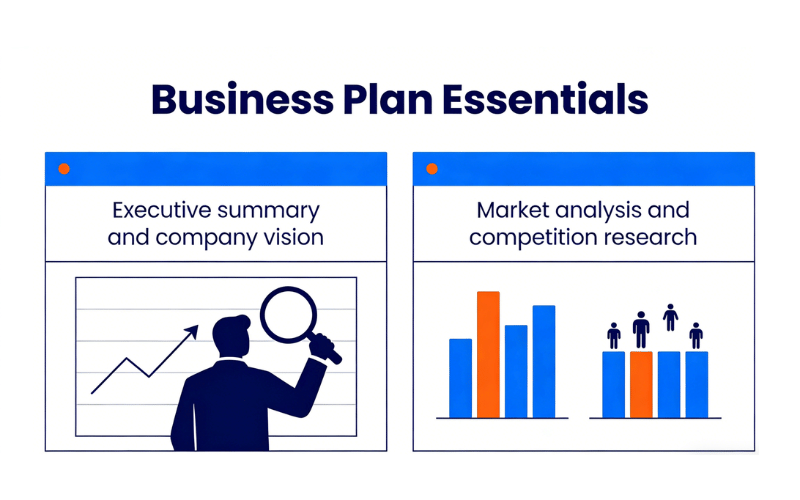
- Executive summary and company vision
- Market analysis and competition research
- Play equipment and pricing strategy
- Financial projections and funding plans
- Operations and team management systems
- Marketing and growth strategies
The good news? Solid planning dramatically improves your chances of success. Your business plan isn’t just paperwork for investors—it’s your defense against making costly mistakes.
Indoor Playground Business Plan Template
Skip the blank page panic. Here’s your complete indoor playground business plan template that covers everything investors and lenders want to see—and everything you need to think through.
Essential Business Plan Sections
- Executive Summary – Your one-page hook that covers your concept, target market, financial highlights, and funding needs. Write this last, but put it first.
- Company Overview – Your indoor playground’s mission, vision, and what makes you different. Include your business structure, location, and key team members.
- Market Analysis – Who are your customers? What’s your competition doing? How big is your market opportunity? Show you understand your local family entertainment scene.
- Facility Design and Operations – Your play equipment, pricing strategy, suppliers, and daily operations. Include everything from your main attractions to your check-in procedures.
- Marketing Strategy – How you’ll attract families and build loyalty. Cover everything from social media to community partnerships to your grand opening plans.
- Financial Projections – Your startup costs, revenue forecasts, and profit projections for at least three years. This is where the fun meets the financials.
Customization Tips for Your Indoor Playground
- Keep it focused: Tailor every section to your specific concept. A toddler-focused soft play area needs different details than a multi-age adventure park.
- Make it local: Include specifics about your community, local competition, and the needs of area families. Generic templates scream, “I didn’t do my homework.”
- Show your personality: Let your passion come through, but back it up with solid numbers and realistic plans.
Indoor Playground Startup Costs and Financial Planning
Money talks, and in the indoor playground world, it speaks loudly. Getting your financial planning right from the start isn’t just smart—it’s survival.
Essential Equipment Costs
Your play equipment is where the magic happens—and where your budget gets real.
- Play structures: $20,000-$100,000+ depending on size and complexity
- Safety flooring & mats: $10,000-$30,000 to ensure a safe environment
- Total equipment package: $50,000-$150,000 for a complete playground setup
- Additional features (café, party rooms, furniture): $20,000-$50,000
Total Startup Investment
Here’s the whole financial picture you’re looking at:
- Small to mid-size play centers: $100,000-$400,000 total startup cost
- Extensive, multi-attraction facilities: $500,000-$1,000,000+
- Franchise models: Vary widely based on brand and support
- Working capital for the first 6-12 months of operations
Revenue Expectations
What you can realistically expect to make:
- Average daily visitors: 50-150 children
- Monthly revenue range: $15,000-$60,000 for standard centers
- Annual owner income: Varies greatly based on profitability and scale
- Average revenue per square foot: $25-$50 annually
Break-Even and Profitability
When you’ll start seeing profits:
- Most indoor playgrounds: Profitable within the first 2-3 years
- Average profit margin: 15-25% for well-managed centers
- Service profit margins: 80-90% on general admission, 40-60% on birthday parties
- $15 ticket example: $3.00 operational cost = $12.00 gross profit per child
Ready to crunch your own numbers? Consider exploring small business loans to fund your startup costs.
How to Write Your Indoor Playground Business Plan
Your indoor playground business plan is your roadmap to success. Done right, it becomes your reference guide for making wise decisions and avoiding costly mistakes. Here’s how to write each section so it actually helps you build a thriving business.
Indoor Playground Executive Summary and Company Overview
Write this section last, but put it first. Your executive summary needs to hook readers immediately and cover:
- Your indoor playground concept and what makes it different
- Target market (families, age groups) and location advantages
- Financial highlights and funding needs
- Key team members and their experience
Your company overview answers the big question: what makes you different? Don’t fall back on “fun and safe for all ages”—every playground claims that.
Focus on your real advantages:
- It is the only indoor play space in a family-heavy suburb
- Specialty sensory-friendly equipment and play sessions
- Combining play with a high-quality café or co-working space for parents
- Perfect location next to a popular family restaurant or shopping center
Include your business structure (LLC is common for playgrounds), mission statement, and why you’re the right person to make this work.
Indoor Playground Market Analysis and Competition Research
This section proves you understand your local market, not just the family entertainment industry. Skip the generic industry stats and focus on your 5-mile radius.
Research your immediate area:
- How many families with young children live within 5 miles?
- What’s the median household income?
- Are there schools, daycares, or community centers nearby?
- What are the local traffic patterns on weekends and after school?
Indoor playgrounds succeed on convenience and being a go-to destination. Your customers need to find you easily, not see it as a significant trip.
Visit every family entertainment center within 10 miles. Don’t just look at their prices—observe:
- Busiest days and times (e.g., rainy Saturdays, weekday mornings)
- What age groups are most common?
- Gaps in their offerings (no toddler area, limited party options, poor food choices)
- Cleanliness and staff attentiveness
Include indirect competition, too. Free city parks, trampoline parks, and even movie theaters are competing for your customers’ entertainment budget.
Document your specific competitive advantages. Maybe you’re the only playground offering drop-off care, or you have a unique ninja warrior course for older kids. These details matter.
Facility Design and Operations Plan
Your layout and equipment are your main attractions. Start with a clear, safety-first plan.
Core facility strategy:
- A central, large play structure as the centerpiece
- Dedicated, enclosed toddler area for safety
- Party rooms and a small café to boost revenue
- Efficient layout for check-in, restrooms, and staff supervision
Price strategically, not just to fill space:
- $15 entry fee costs $3 in direct operational costs = $12 gross profit
- Don’t automatically match the cheapest competitor.
- Offer multi-visit passes or memberships for recurring revenue
- Party packages are a significant profit center; price them based on value, not just cost.
Consider your daily operational flow. A smooth check-in process, clear safety rules, and regular cleaning schedules are critical. These systems prevent chaos and create a better customer experience.
Plan for different attendance patterns:
- Weekdays will attract toddlers and homeschool groups
- Weekends and school holidays are your peak times
- Special events (character meet-and-greets, themed nights) drive traffic
Indoor Playground Marketing and Legal Requirements
Your marketing goal isn’t just to attract families once—it’s to become their go-to spot for fun. You need to build a community around your brand.
Local marketing wins:
- Partner with local parenting blogs, schools, and daycares
- Sponsor youth sports teams or community family events
- Focus on that 5-mile radius around your facility
- Offer special rates for group bookings like field trips
Launch strategy that works:
- Soft opening with friends and family to test your systems
- Work out operational kinks before your grand opening
- Host a high-energy grand opening event with special offers
- Loyalty programs to reward repeat visitors
Budget 4-7% of revenue for ongoing marketing. This covers social media ads, local event sponsorships, and loyalty program costs.
Legal requirements you can’t skip:
- Business license (varies by city/county)
- Liability insurance (crucial for this industry)
- Health and safety permits, especially if serving food
- Employee background checks
- Signed liability waivers from all participants
Business structure matters:
- An LLC offers liability protection from personal assets
- Register your business name
- Get an EIN for tax purposes
- Verify zoning allows for an amusement/recreation facility
Pull It All Together
Your business plan should tell one clear story: here’s the opportunity, here’s how we’ll capture it, here’s why we’ll succeed, and here’s what we need to make it happen.
Please don’t write it once and forget it. This document evolves as you learn more about your business. The planning process forces you to think through decisions before they become expensive mistakes.
Indoor Playground Team Management and Operations
Your indoor playground team makes or breaks your business. You can have the perfect slides and ideal location, but if your staff doesn’t show up or work well together, you’re done.
Indoor Playground Staff Scheduling Challenges
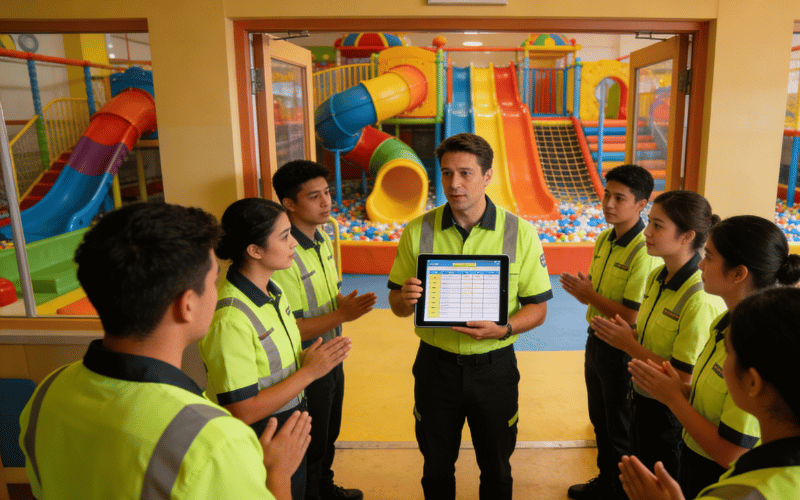
Here’s where most playground owners lose their minds—and their weekends. You’ll spend hours every week building schedules, only to have someone call out during the morning rush.
Common scheduling nightmares:
- Last-minute call-outs during peak hours
- Employees requesting shift changes via text
- Over-scheduling during slow periods
- Under-staffing during unexpected rushes
- Forgetting who’s trained on safety protocols
Smart playground owners use team management tools from day one.
Create schedules in minutes using templates, send automatic notifications when shifts are posted, and track who’s actually showing up. Your team can request time off, trade shifts with each other, and get reminders about upcoming shifts—all without you playing middleman.
“Love everything about it. I really love how user-friendly both the manager and employee sides of the app are. I am so impressed with all of the functions, and my employees love how everything is in one place. No more paper time cards, calendars for time off requests, or long chat messages for shift trades!!” says Sarah Jenkins, Owner of Jump Start Play.
Indoor Playground Labor Cost Management
Labor costs can make or break your indoor playground’s profitability. Track your numbers daily, not weekly.
Key cost control strategies:
- Set clear policies about early clock-ins and late clock-outs
- Use overtime alerts before employees hit the expensive threshold hours
- Schedule based on actual sales patterns, not guesswork
- Cross-train employees to handle multiple positions during busy periods
The best time-tracking software includes early clock-in prevention tools and overtime alerts, so those extra minutes don’t add up to budget-busting surprises.
Indoor Playground Employee Training and Retention
Your staff members are the face of your business. Invest in training that creates consistency and confidence.
Training essentials:
- Proper safety supervision techniques
- Customer service standards
- Equipment maintenance and cleaning
- POS system operation
- Opening and closing procedures
Retention starts with respect. Give your team transparency into their hours and earnings, clear communication about schedule changes, and the tools they need to do their jobs well.
“The software allows me to easily keep track of our daily sales and labor costs remotely – which means I can spend time with family away from my shop, but still feel some degree of oversight of my business,” explains Mike Chen, Owner of Active Kids Zone.
Your team is the backbone of your indoor playground. Build it right with the right tools from day one.
Build Your Indoor Playground Team for Success
You’ve got your business plan, funding, and location. But here’s what most indoor playground owners discover too late: your team determines whether your dream thrives or becomes a daily nightmare.
Why Indoor Playground Team Management Matters From Day One
Your indoor playground runs on relationships. Get the team dynamics wrong, and even the best play equipment can’t save you.
Team management challenges start before you open:
- Hiring reliable people who actually show up
- Training staff to consistent safety standards
- Creating schedules that work for everyone
- Building systems that don’t require your constant oversight
Indoor playgrounds that succeed long-term solve these challenges early with strong teams that handle rushes, cover sick days, and maintain safety when you’re not there.
Indoor Playground Scheduling Challenges That Kill Dreams
Indoor playground scheduling is brutal. Different staffing for weekday mornings versus weekend parties. Last-minute call-outs during Saturday rush. Most owners try spreadsheets and group texts until they’re covering every shift themselves.
“Outside of the app, keeping track of their requested time off and availability would be a nightmare! We know! We didn’t have it in our first season!” explains Lisa Thompson, Owner of Kids Kingdom Play. “Best employee communication tool ever!”
Ready to Build Your Dream Team?
Your indoor playground business plan is your roadmap, but your team is your engine. The proper management tools give you everything you need to schedule, communicate with, and manage your playground team from day one.
Ready to make your indoor playground team unstoppable? Start building your foundation today.
Indoor Playground Business Plan FAQs
How much does it cost to start an indoor playground?
Indoor playground startup costs range from $100,000 to $400,000 for small- to mid-size centers. Extensive multi-attraction facilities start at $500,000 to $1,000,000, while franchise models vary widely by brand and support.
Your biggest expenses? Play structures ($50,000-$150,000), safety flooring, facility renovations, and 6-12 months of working capital. Don’t forget liability insurance and permits—they add up fast.
What should be included in an indoor playground business plan?
Your indoor playground business plan needs an executive summary, company overview, market analysis, competitive research, facility design, pricing strategy, marketing plan, financial projections, and operations planning.
Skip the generic industry fluff—make every section specific to your local market and concept. That’s what separates real plans from templates.
How do I write an indoor playground business plan with no experience?
Start by getting out of your house and into your market. Visit every family entertainment center within 10 miles, observe their operations, and spot the gaps. Focus on your 5-mile radius for family demographics and traffic patterns.
Use our template sections, but customize everything for your specific location and concept. Real research beats guesswork every time.
What are the most critical financial projections for an indoor playground?
Focus on realistic revenue projections (50-150 daily visitors), break-even analysis, and 18-month cash flow forecasts. Include startup costs, profit margins (typically 15-25%), and seasonal variations in attendance.
Plan for monthly revenue of $15,000-$60,000 for standard centers, with annual owner income that varies widely by scale. Keep it real, not optimistic.
How long should an indoor playground business plan be?
Your indoor playground business plan should be 15-25 pages, including financial projections. Quality beats quantity—every section should provide specific, actionable information relevant to your concept and local families. No filler, no generic industry data.
Do I need a business plan to get indoor playground funding?
Yes, banks require a detailed business plan for indoor playground loans. They want market analysis, financial projections, competitive research, and proof you understand your local market and safety requirements. No plan, no funding.