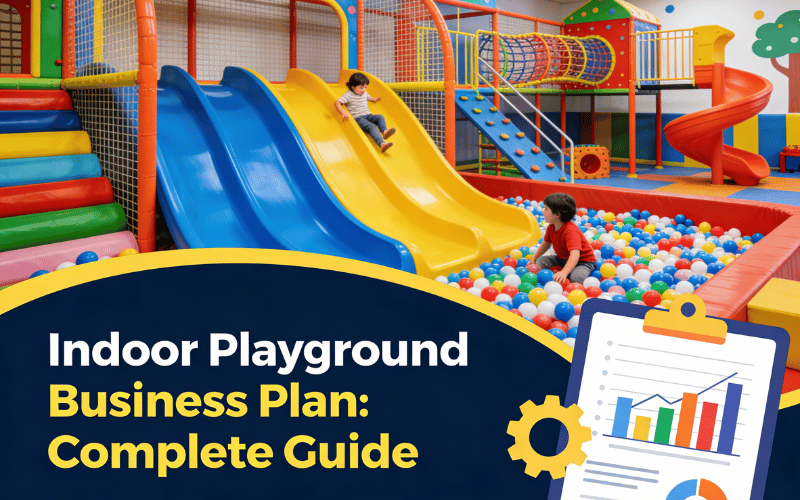
I’ve spent years around play equipment, and I’ve watched plenty of indoor playgrounds open with big dreams and thin paperwork. The ones that lasted had something in common: a business plan a lender or investor could actually trust. Not a wish list. A document that proved the numbers worked, and the risk was managed.
If you’re seeking funding, that’s the lens you need to write through. Banks and investors don’t fund passion. They fund well-understood risk and a clear path to getting their money back. Your plan is where you make that case.
This guide walks you through every section in the order you should write it, with a constant eye on what funders look for. Treat it as your template. By the end, you’ll have a framework you can fill with your own numbers and hand to someone who controls the money.
Why a Formal Plan Matters
Skipping the plan feels faster. It isn’t, and it’s a fast way to get a “no” from anyone you ask for money.
A business plan is your roadmap. It guides daily operations and long-term growth, keeping your decisions tied to the goals you set. But for a funder, it’s something else entirely. It’s a risk assessment tool.
What Lenders and Investors Actually Read For
When a bank or investor opens your plan, they’re hunting for a few specific things:
- Can this person repay us? They want to see realistic revenue and a clear repayment timeline.
- Do they understand their costs? Vague numbers signal an owner who’ll run out of cash.
- Is the market real? They want data, not optimism.
- How is risk handled? This is where playgrounds get special attention.
Give them clear answers, and you’ve removed the reasons they’d say no.
The Planning Process Uncovers Hidden Costs
When you map the whole operation on paper, the surprises surface early. Safety surfacing, build-out, insurance, permits, staffing during slow months, all of it shows up before you sign a commercial lease, not after you’re locked in.
This matters to funders because hidden costs are what blow up forecasts. An owner who has already found and budgeted for them looks far less risky than one who hasn’t.
Why Playgrounds Aren’t Like Retail
This is the part that changes how funders evaluate you. A clothing store sells products. You’re responsible for children at play, and that flips the risk profile.
Safety and liability sit at the center of your business. Your plan has to account for equipment certifications, regular inspections, liability insurance, and signed waivers. A lender sees these not as red tape but as proof you understand and contain your single biggest exposure. Address them head-on, and you turn a scary risk into a managed one.
Executive Summary and Business Overview
The executive summary comes first in your plan, but write it last. For a funder, it’s the page that decides whether they keep reading. Keep it to one tight page.
Start with your mission. In a sentence or two, say what your playground does and the gap it fills for local parents. Maybe your town has nowhere clean and safe for toddlers on rainy days. Maybe working parents need a reliable spot for parties and after-school energy. Name the demand you’re serving.
Next, lay out your legal structure. Most indoor playgrounds form an LLC because it separates your personal assets from the business, which also limits a lender’s and your own exposure if something goes wrong. Some owners choose an S-Corp for tax reasons as they scale. State your choice and the reasoning, since funders care about how liability is contained.
Then give the basic facts:
- The facility’s name
- Its location and square footage
- The ownership team and their background
Don’t rush the team part. Investors back people first. Highlight any experience in business, hospitality, childcare, finance, or management, and be honest about gaps you’ll fill with hires or advisors. A self-aware founder reads as a safer bet.
Finally, summarize your three-year goals in numbers a funder can track: membership counts, party bookings per weekend, annual revenue, and your target for reaching profitability. Keep it realistic. Conservative goals you can beat build more trust than wild ones you’ll miss.
Market Analysis and Customer Profiles
This section proves there’s real demand. Don’t guess here. Funders check your math, and a shaky market section sinks the whole plan.
Start by defining your service area. How far will families realistically drive for an afternoon of play? For most indoor playgrounds, that’s a 15- to 20-minute radius. Pull local census data to show exactly who lives in that zone.
Then define your target demographics. The core question: how many families with children under 12 live in your zip code and the surrounding area? That’s your customer base, and a funder wants to see it sized with real figures. Include income levels too, since memberships and parties are discretionary spending that depends on household budgets.
Sizing Up the Competition
Look at both kinds of competitors, because funders want to know you won’t walk into a saturated market blind.
Direct competitors are other indoor play centers and soft play spaces. Visit them. Note their pricing, cleanliness, equipment, and weekend busyness. Their weak spots are your openings, and naming those gaps shows a funder where your edge comes from.
Indirect competitors are the other places parents take kids to burn energy: public parks, trampoline parks, children’s museums, and even the mall play area. You compete for the same family time and budget, so show you understand the full landscape.
Demand for Parties and After-School Care
Two revenue drivers deserve their own look, because they often carry the whole operation. Find out what local birthday party venues charge and how booked they are. Strong party demand is one of the most convincing signals a funder can see, since it points to high-margin, recurring revenue.
Also gauge interest in after-school care. If your area has working parents and limited programs, this can fill quiet weekday hours with steady, predictable income, exactly the kind of stability lenders love.
Service Offerings and Revenue Streams
Spell out exactly what you sell and how you make money. Funders want to see diversified revenue because a business relying on a single income stream is fragile.
Your Play Equipment
List the equipment that defines your space:
- A multi-level play structure with slides and climbers
- A ball pit and soft shapes
- A toddler-only zone, walled off from the big kids
- A sensory room for kids who need a calmer space
- Interactive or themed features that set you apart
Match your equipment to the ages you serve, and always separate the little ones from the older, faster kids. That separation isn’t just safety; it’s also how you serve more families well.
Pricing Your Access
Lay out a clear pricing structure:
- Daily walk-in passes for one-time visitors, often priced per child, with adults free
- Monthly memberships for regulars who visit often and spend more over time
Memberships matter to funders because they stabilize income and create predictable, recurring revenue. Price them so a family visiting twice a month sees real savings, and you’ll convert casual guests into a reliable monthly base.
Birthday Party Packages
Parties are usually your biggest moneymaker and your highest-margin product. Build tiered packages that bundle:
- A private party room for a set block of time
- Decorations and setup
- A dedicated party host
- Food options or café add-ons
A full weekend party calendar can carry your whole operation, so show a funder your realistic booking targets and the margin on each tier.
Secondary Income
Stack on extra revenue with low effort:
- A café with good coffee for parents and healthy snacks for kids
- A retail corner for grip socks (often required), small toys, and branded merch
- Classes and workshops like toddler music, sensory play, or holiday camps
These fill slow hours and lift your average spend per visit. To a funder, every added stream is one more layer of protection against a weak month.
Operational Strategy and Safety Protocols
Operations are where good intentions meet daily reality. This section shows funders you’ve thought through how the place actually runs, and that you’ve contained the risks that scare them most.
Your Staffing Plan
Map out who you need on the floor:
- Floor monitors who watch the play areas and enforce rules
- Front desk staff handling check-in, payments, and waivers
- Cleaning crews keep surfaces spotless throughout the day
- Party hosts for weekend events
Hire people who genuinely enjoy working with kids, and make sure key staff have basic first-aid and CPR training. Tie your staffing levels to traffic so labor never quietly eats your margin, a detail lenders notice.
Cleaning and Sanitizing
Cleanliness is your reputation, and reputation drives the repeat business your forecast depends on. Parents notice grime in seconds.
Build a daily cleaning schedule covering every play surface, the ball pit, the bathrooms, and the café. Use non-toxic, child-safe sanitizers, since kids touch and mouth everything. Spell out who cleans what and when, so nothing slips through the cracks on a busy day.
Equipment Certifications and Inspections
This is where you directly answer a funder’s biggest worry about your venture. Name the safety standards your equipment meets and commit to a clear inspection routine.
Buy from manufacturers whose equipment carries recognized safety certifications. Then schedule regular professional inspections, typically once or twice a year, by a qualified inspector, with your own quick daily checks in between. Catching a loose bolt or worn padding early prevents both injuries and the lawsuits that wreck businesses.
Check-In, Check-Out, and Waivers
Child security is non-negotiable and also provides liability protection. Describe a tight process:
- Every parent signs a liability waiver at check-in, built into the system so it’s never skipped
- Kids and their adults get matching wristbands or tags at entry
- Staff verify the match at check-out, so no child leaves with the wrong adult
This protects both the children in your care and your business. For an investor, it’s evidence that your largest risk is actively managed, not just hoped away.
Marketing and Community Outreach
Even the best playground needs families to know it exists. Funders want to see how you’ll fill the place, because traffic is what makes your revenue forecast real.
Social Media
Start where local parents already spend time, usually on Instagram and Facebook. Indoor playgrounds are wonderfully photogenic, so share bright photos of kids playing, promote events, and let happy families tag and share for you. Post consistently, not just at launch.
Local Partnerships
Build roots in your community. Connect with schools, daycares, and pediatricians for referral relationships. A pediatrician who recommends your sensory-friendly hours, or a daycare that books a field trip, sends you exactly the families you want. Offer referral perks to keep these partners motivated, and treat these channels as low-cost customer acquisition, a funder can appreciate.
Grand Opening and Intro Offers
Make a splash at launch. A well-promoted grand opening event with activities and giveaways pulls the neighborhood through the door. Pair it with introductory discounts or a founding-member rate to convert that first wave into regulars and seed your membership base early.
Loyalty Programs
Repeat visits are cheaper than new ones, and that efficiency strengthens your margins. A simple loyalty program, like a punch card or points toward a free visit, gives neighborhood families a reason to keep coming back. Tie it to your membership push for even better retention.
Financial Projections and Funding Requirements
This is the section lenders and investors read most closely, often first. Be honest, be specific, and show your work. Vague numbers here lose the deal.
Startup Cost Breakdown
Break down everything it takes to open the doors:
- Lease deposit, often several months’ rent up front
- Equipment manufacturing and installation are usually your highest single cost
- Build-out and renovations, including safety flooring and lighting
- Licensing, permits, and insurance
- Initial marketing and opening inventory
Add a contingency fund of 10-20 percent. Build-outs run late, and surprises happen every single time. A funder who sees a contingency line knows you’ve planned for the real world.
Three-Year Revenue Forecast
Project revenue over three years based on realistic occupancy rates. Don’t assume a packed house from day one. Estimate average daily visitors, party bookings per weekend, membership growth, and café spend, then grow those figures conservatively year over year as word spreads.
Show the path to profitability clearly. Most well-run centers turn profitable within the first two to three years, so map when you cross that line and what drives it. A believable ramp beats a hockey-stick fantasy every time.
Fixed vs. Variable Costs
Separate your two types of costs so the picture stays clear and a funder can see your break-even.
Fixed monthly expenses stay roughly the same:
- Rent
- Insurance
- Utilities
- Loan payments
Variable costs rise and fall with traffic:
- Labor and staffing hours
- Cleaning and café supplies
- Party materials
Knowing the split lets you state your break-even point plainly, which is one of the first numbers a lender looks for. It also shows how you’ll survive slower months without missing payments.
Capital Needed and Repayment Plan
State plainly how much capital you need to launch and reach stability. Then explain where it comes from, whether savings, a small business loan, or investors, and exactly how you’ll repay any debt.
Lenders want a clear repayment timeline tied to your revenue forecast. Spell out monthly payment amounts against projected cash flow, and show there’s a cushion even in a slow month. Investors want the flip side: your projected return and a realistic timeline for it. Answer both, and you’ve given funders the confidence to commit.
Common Indoor Playground Business Plan FAQs
How much does it cost to start an indoor playground?
Most indoor playgrounds run somewhere between $100,000 and $500,000 to launch, depending heavily on size, location, and equipment. Your build-out, lease, and play structure drive the bulk of that. A small space in a low-rent area sits at the low end, while a large facility in a pricey market climbs fast. Always pad your budget with a contingency cushion, since lenders expect to see one.
What insurance is necessary for a children’s play center?
At a minimum, you need general liability insurance, since child injury is your biggest risk. Most owners also carry commercial property insurance, workers’ compensation if they have staff, and often a business owner’s policy that bundles coverage. Many landlords and lenders require proof of liability coverage before you sign. Talk to an insurer who understands children’s entertainment.
How much square footage do I need for a profitable indoor playground?
Most profitable centers range from 3,000 to 10,000 square feet. You need room for the play structure, a toddler zone, party rooms, café seating, and bathrooms. Ceiling height matters as much as floor space, since tall play frames need vertical room. When planning, prioritize a smart, open layout over raw square footage.
Do I need a license to include a café?
Yes. Serving food or coffee almost always requires a health permit and a food service license from your local health department. Rules vary by location and by what you serve, so a prepackaged snack setup faces lighter requirements than a full kitchen. Check with your local authorities early, since inspections take time and can delay your opening.
What is the average profit margin?
Well-run indoor playgrounds typically land in the 15 to 30 percent profit margin range once established. The big swing factor is secondary revenue. Centers that lean on parties, memberships, and a strong café sit at the higher end, while those relying on walk-in fees alone tend to struggle. Diversified income is the path to the healthy margins funders want to see.
Moving Toward Your Grand Opening
Here’s the truth after years in this industry: a well-written plan is the cheapest insurance you’ll ever buy, and the strongest pitch you’ll ever make. Every hour you spend planning saves you from an expensive mistake during construction, and it’s exactly what convinces a funder you’re worth the risk.
Use this guide as your template. Take each section, fill it with your own market data and numbers, and shape it to your town and your vision. No two playgrounds are identical, so make the plan yours, then stress-test every figure as a lender would.
Then take the next concrete step this week. Either start scouting locations that fit your space and ceiling-height needs, or reach out to equipment manufacturers for quotes so your budget reflects actual costs rather than guesses. Both move you from an idea to a fundable plan.
And remember, your business plan is a living document. Revisit it as you grow, update your projections against real results, and adjust your goals as you learn what your families actually want. Lenders and investors respect an owner who tracks the plan against reality, because that discipline is exactly what protects their money and builds yours.
Plan it carefully, build it safely, and run it clean. Do those three things, and you’ll have more than a playground. You’ll have venture funders’ trust and families returning, season after season.