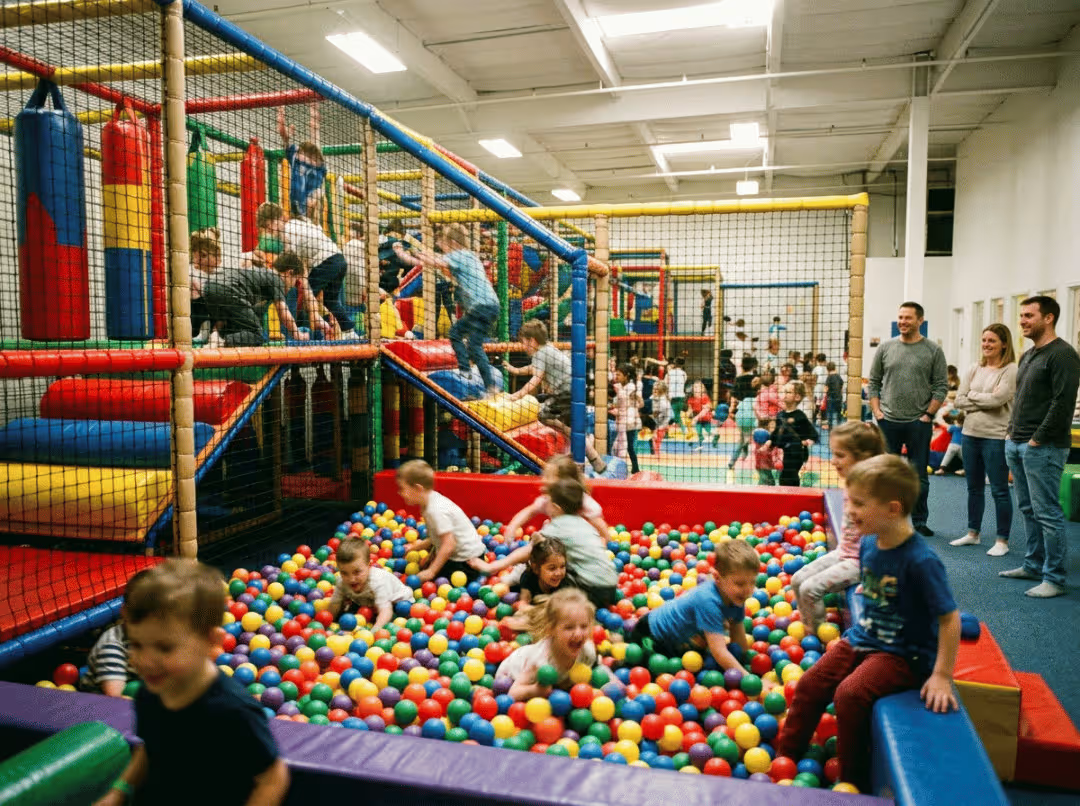
Most safety failures in commercial indoor playgrounds don’t begin on the play floor. They begin at the purchase stage, when a buyer accepts a vague assurance like “our equipment is fully compliant” without asking what that actually covers. By the time an inspector, an insurer, or an injured child’s family asks the same question, the money is spent and the equipment is bolted in.
This guide is written for buyers, operators, and project owners — people who need to evaluate supplier claims before committing, not after. It explains what each major standard actually controls, where the ASTM and EN systems differ in practice, and what documents you should be able to get from any credible supplier. The buyer checklist at the end is designed to be used on your next real project.
What These Standards Actually Control
Indoor playground safety standards are not a single unified code. They’re a collection of overlapping technical frameworks, each designed to govern a different category of risk. Knowing which standard covers which risk is the difference between evaluating a supplier properly and accepting paperwork at face value.
The five core categories:
- Material safety — toxicity, chemical content, and flammability of surfaces children contact directly
- Structural safety — equipment geometry, entrapment prevention, and how the structure is reinforced
- Impact attenuation — whether the flooring absorbs enough energy to prevent serious head injuries from falls
- Fire performance — how foam, padding, and netting behave when exposed to flame
- Operational safety — inspection intervals, maintenance requirements, and supervision obligations after installation
A supplier can be fully compliant in one category and completely unverified in another. Foam that clears a fire test tells you nothing about whether the ball pit geometry creates a neck entrapment hazard. When a supplier says “we’re compliant,” that statement is only useful once you know which standard, covering which risk, verified by which test.
Why Compliance Documentation Protects Operators
For a commercial operator, documented compliance sits at the center of three things that keep the business running.
Liability. If a child is hurt, the first question a lawyer asks is whether the equipment met recognized safety standards. Documented compliance with ASTM or EN standards changes the legal landscape. Undocumented equipment leaves you exposed regardless of how well your staff managed the day.
Insurance and licensing. Most insurers and local licensing bodies will not issue coverage or operating permits without proof that equipment and surfacing meet recognized benchmarks. No test reports frequently means no coverage, and no coverage means no legal operation.
Reputation. A serious incident spreads quickly through local parent communities and online. Operators with a documented safety record retain clients longer and are better positioned to defend premium pricing.
The only compliance that protects you is the kind you can prove. Documentation is not administrative overhead — it’s your defense.

The Standards You Need to Know
Names alone won’t help you evaluate anything. Here’s what each major standard actually governs.
ASTM F1918 (USA / North America)
The primary performance specification for soft-contained play equipment in North America. It covers containment, structural integrity, and no-climb zone design. When a US supplier cites “ASTM F1918 compliant,” that standard is confirming the structure is sound — not the flooring, not the chemistry.
EN 1176 (European Union / global reference)
The European standard for playground equipment. Its primary tool is geometry: precise dimensional requirements designed to prevent head, neck, finger, and clothing entrapment. EN 1176 is highly specific about openings and gaps — which is precisely where most entrapment injuries occur.
EN 1177 (Europe / international)
This standard governs impact-attenuating surfacing. It defines the Critical Fall Height (CFH) — the maximum height from which a child can fall onto a given surface without sustaining a serious head injury — and the test methods used to verify it. EN 1177 is entirely about the floor, not the equipment above it.
ASTM F1292 (USA / Canada)
The North American surfacing standard. It uses G-max and HIC (Head Injury Criterion) measurements to confirm whether flooring absorbs sufficient impact energy. If a supplier claims their padding is safe for a specific fall height, ASTM F1292 is the standard that would prove it.
ISO 8124 (global baseline)
The international standard for toy safety, covering mechanical and physical properties, small-part hazards, and material toxicity. For play areas that serve toddlers or incorporate small components, ISO 8124 provides the baseline chemical and physical safety framework that structural standards don’t address.
The key pattern: F1918 and EN 1176 cover the structure. EN 1177 and F1292 cover the floor. ISO 8124 covers materials and small-part hazards. A fully documented project requires evidence across all three categories — one certificate stretched across everything is not complete compliance.
ASTM vs EN: What the Difference Means for Your Project
ASTM and EN standards are not interchangeable, and treating them as equivalent creates real procurement risk.
The philosophies differ. EN standards rely primarily on geometry — precise measurements of gaps, openings, and angles that engineer entrapment hazards out of a design. ASTM standards rely more on performance testing — verifying that equipment and surfacing behave safely under measured conditions. Both pursue the same outcome through different methods.
In practice:
- US or Canadian projects: ASTM F1918 (structure) and ASTM F1292 (surfacing) are the reference standards. CSA Z614 applies in Canada and adds specific requirements for inclusive design and cold-weather durability.
- European projects: EN 1176 (equipment) and EN 1177 (surfacing) are what inspectors and insurers expect.
- Importing equipment for a specific market: The equipment must be tested to your jurisdiction’s standard — not the manufacturer’s domestic standard.
That last point is where many buyers get caught. A factory that primarily serves European clients will hold EN reports. If you’re installing in the US, an EN report does not automatically satisfy an American inspector or insurer. Before purchase, confirm that the equipment was specifically tested to the standard enforced in your market.
Material Safety: What You’re Actually Asking About
Children mouth surfaces, press against padding, and spend extended time in direct contact with play materials. Material safety is not a secondary concern.
PVC and vinyl. Most soft-contained play equipment uses coated vinyl as its primary surface. The minimum requirement is lead-free PVC. Ask whether the vinyl has been tested for lead and heavy metals, and request the supporting report — not just a claim.
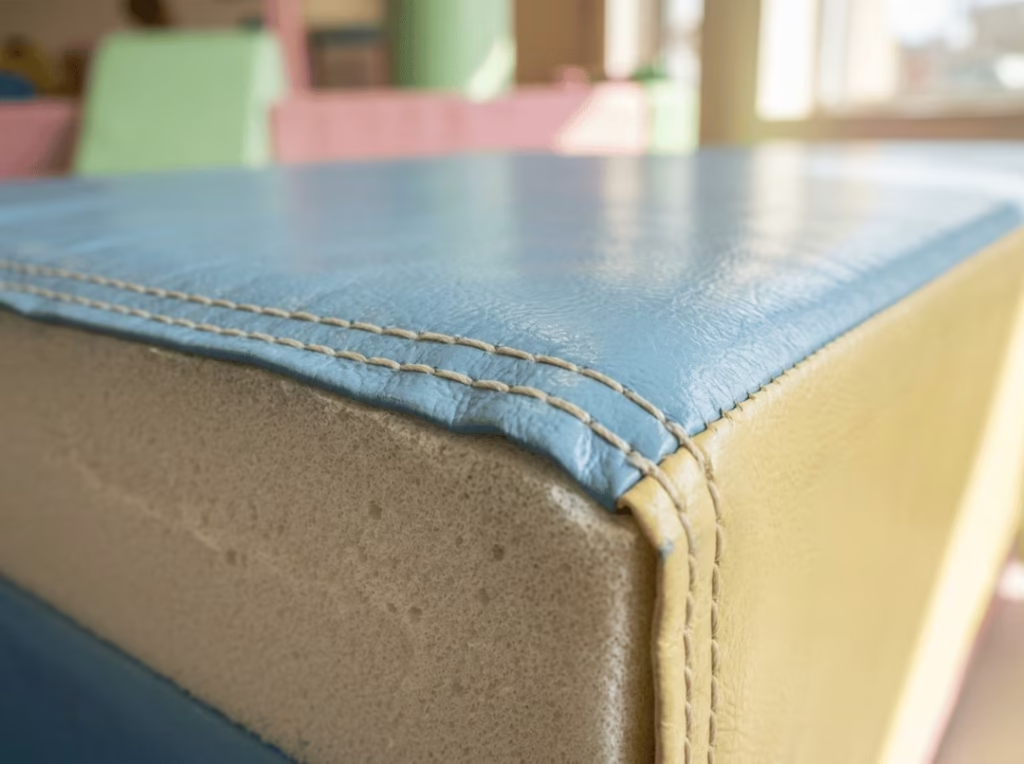
Foam. Interior foam should be phthalate-free. Phthalates are plasticizers restricted in children’s products across most major markets because of documented health concerns. A supplier that can’t confirm phthalate-free foam is leaving a basic question unanswered.
Chemical compliance frameworks:
- CPSIA (US) — sets limits on lead and phthalates in children’s products
- REACH (EU) — restricts a broad list of hazardous substances in materials
Any supplier serving international markets should be able to produce documentation against whichever framework applies to your region.
Antimicrobial coatings. These are increasingly standard on high-touch surfaces. They provide a genuine hygiene benefit but are a supplement to regular cleaning, not a substitute. The coating doesn’t change your sanitation obligations. For guidance on how indoor soft play equipment is constructed and what surface materials are commonly used, it’s worth reviewing the full material categories before finalizing any supplier shortlist.
When a supplier says materials are “child-safe,” that phrase is not a legal standard. The test reports behind it are.
Structural Safety: Entrapment, Barriers, Fall Heights, and Surfacing
Structural safety is where geometry and engineering prevent the most common and most severe injuries.
Entrapment zones. Head, neck, and finger entrapment are the highest-severity structural hazards in play equipment. Standards specify exact permissible dimensions for openings so that no part of a child’s body can pass through and become trapped. Any opening large enough for a child’s head to enter but not exit is a critical design failure. EN 1176’s dimensional requirements exist specifically to eliminate this class of hazard.
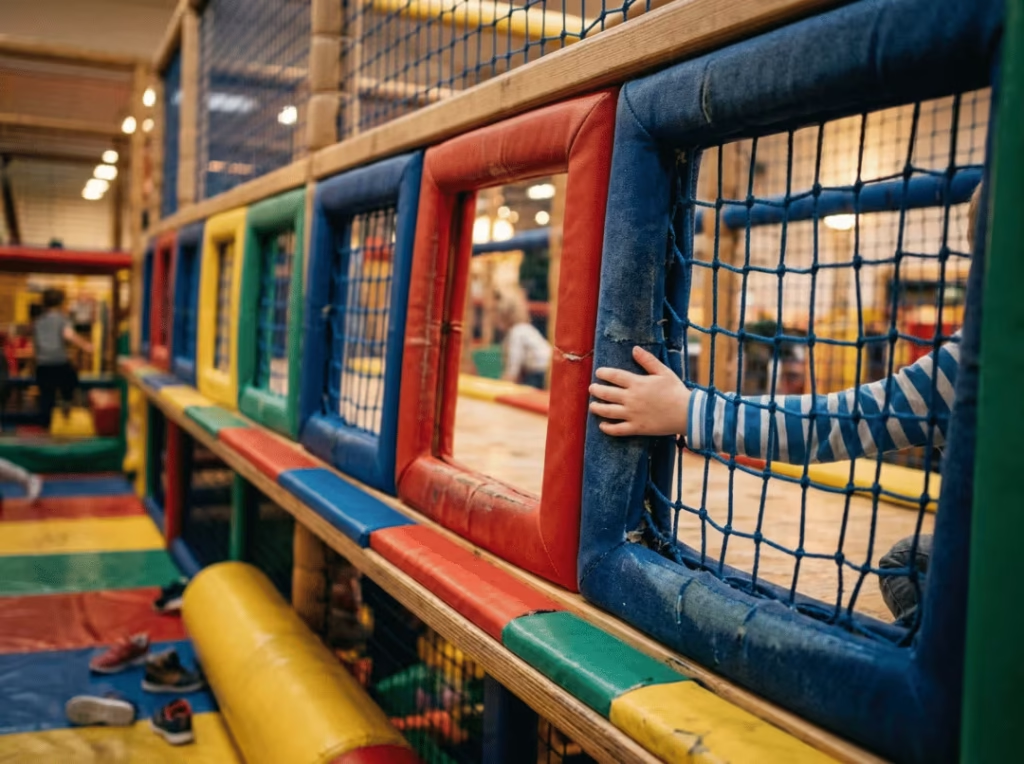
Guardrails and barriers. Elevated platforms require barriers sized and spaced for the age group using the equipment. Age zoning is not optional — a barrier height appropriate for school-age children may be inadequate to protect toddlers. Understanding common mistakes in children’s playground design is useful context here, since improper age zoning and barrier sizing are among the most frequently overlooked issues in commercial installations.
Fall heights and surfacing. Every elevated element has a fall height, and the flooring beneath it must absorb the energy of a fall from that height. This is the direct relationship between the structure and the floor: the equipment’s maximum fall height determines the surfacing performance required under ASTM F1292 or EN 1177. Buyers frequently verify the equipment and assume the floor is adequate. Both must be confirmed, and they must match.
Ask the supplier to state the maximum fall height for each elevated element and confirm that the specified surfacing is rated to meet the corresponding Critical Fall Height. If those two numbers don’t align, the installation is not safe — regardless of how many certificates are attached.
Fire Safety: The Most Common Insurance Blocker
Enclosed indoor play spaces concentrate children, foam, and netting in a single area. Fire behavior of those materials is treated as non-negotiable by most insurers, and it’s one of the most common reasons an installation runs into coverage problems.

Three standards govern this:
- UL94 (V-0 rating) — the US benchmark for flammability of plastic materials. V-0 indicates the material self-extinguishes within a defined timeframe.
- NFPA 701 — the US standard for flame propagation of textiles and films, covering netting and fabric components.
- EN 13501-1 — the European classification for fire behavior of construction and play materials.
Foam, padding, netting, and fabric surfaces should carry documentation against the standard relevant to your market. This is the area most likely to block insurance approval, and it’s the one most often left unverified until it becomes a problem. A supplier who cannot produce fire-performance documentation for the specific materials in your project — not a generic sample, the actual materials — is a supplier worth reconsidering.
What Documents to Request Before Signing
Most competitor guides stop at listing standards. This is where buyers actually protect themselves.
“Compliant” is a claim. Documentation is evidence. Before committing to any supplier, request the following:
- Test reports for structural compliance — ASTM F1918 or EN 1176, depending on your market
- Test reports for surfacing compliance — ASTM F1292 or EN 1177
- Material and toxicity documentation — ISO 8124 and either CPSIA or REACH, as applicable
- Fire-performance certificates — UL94, NFPA 701, or EN 13501-1 for foam, padding, and netting
- A complete material list identifying the specific PVC, foam, and coating formulations used
- Installation drawings with stated fall heights for each elevated element
- A maintenance manual covering inspection intervals and part-replacement procedures
- Warranty terms for both materials and structural components
Two verification habits matter most. First, confirm that each test report names the exact product or material you’re purchasing — not a representative sample or a related but different product line. Second, read the scope section of each report. A report that covers one component does not certify the entire structure. The five minutes spent reading the scope of a test report is one of the highest-return checks you can do before a purchase.
Red Flags and Common Buyer Mistakes
Most compliance failures trace back to a short, predictable list of avoidable errors.
Accepting one certificate as proof of full compliance. A single report rarely covers structure, surfacing, materials, and fire performance simultaneously. Ask what each document actually certifies.
Conflating material safety with structural safety. Non-toxic foam says nothing about entrapment geometry or fall protection. These are different tests addressing different risks.
Overlooking surfacing. Buyers scrutinize the play structures and approve the floor without investigation. The flooring is what prevents serious head injuries. It deserves the same level of verification.
Trusting a logo rather than a document. A certification logo on a brochure or website is not a test report. Request the document, then read it.
Assuming an overseas factory’s home-market standard satisfies your jurisdiction. It may not. Verify that testing was performed to the standard enforced where you’re installing.
Ignoring age zoning. Equipment designed for school-age children can present serious hazards for toddlers. Barrier heights, opening dimensions, and fall height calculations all shift depending on the intended age group. Families with young children face a distinct set of playground safety hazards that require specific equipment design responses — not generic compliance claims.
Choosing on price alone. The lowest quote often reflects a narrower test scope, not a comparable product at a better price.
A supplier who becomes evasive when asked to provide documentation has given you a clear answer about the reliability of their compliance claims.
Installation, Inspection, and Ongoing Maintenance
Compliance doesn’t end at delivery. Equipment starts safe; how it stays safe is a function of installation quality and ongoing maintenance discipline.
Installation. Certified equipment installed incorrectly is not safe equipment. Confirm in writing who is responsible for installation — the supplier, a certified third party, or your own team — and clarify who carries liability if installation creates a safety issue.
Routine inspection. Staff should visually check high-traffic elements — nets, slides, padding, seams, and surfacing — daily and monthly for wear, loosening fasteners, tears, and surface displacement. Small issues identified early rarely escalate into serious problems.
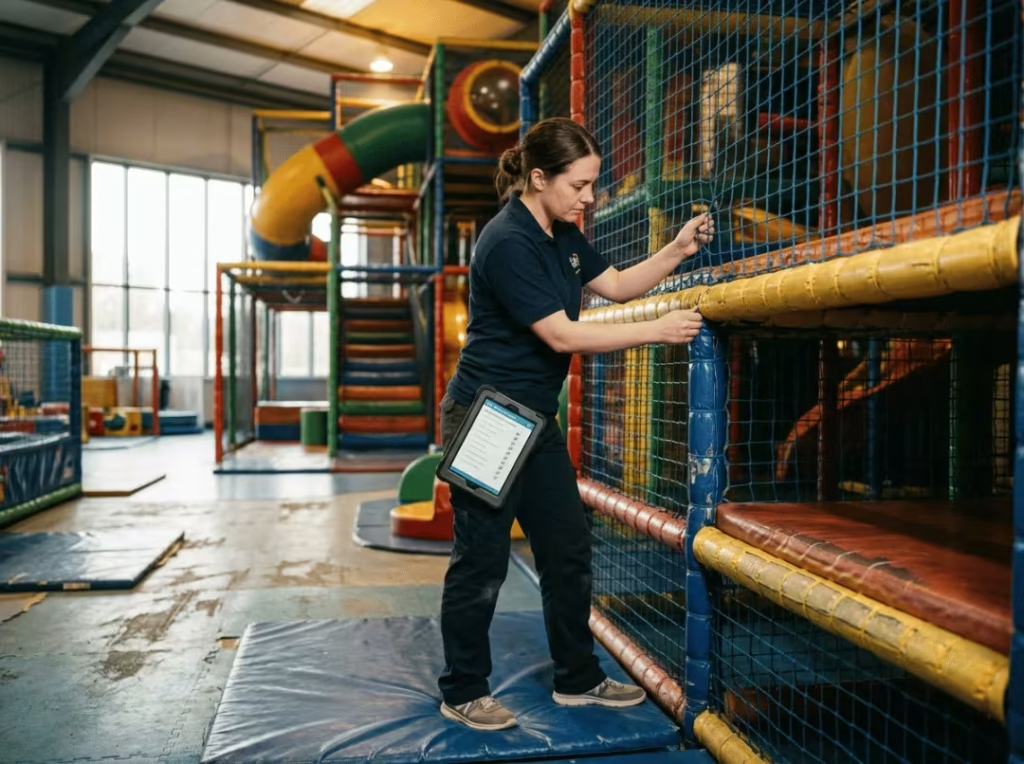
Annual third-party audits. Most insurers and licensing bodies require an independent inspection each year. These audits assess structural integrity, surfacing condition, and material state, and they produce the documentation required to maintain active coverage and permits.
Maintenance records. Digital inspection logs make audits faster and create a documented record that proves diligence if a claim is ever filed. A consistent maintenance history is itself a form of liability protection.
The principle is straightforward: certification confirms the equipment was safe when installed. Inspection and maintenance confirm it remains safe in operation.
Indoor Playground Safety Buyer Checklist
Use this before committing to any supplier or signing any purchase agreement.
Standards and testing
- Structural test report (ASTM F1918 or EN 1176) provided; scope section reviewed
- Surfacing test report (ASTM F1292 or EN 1177) provided
- Equipment tested to your jurisdiction’s standard, not only the factory’s domestic standard
- Maximum fall heights of elevated elements confirmed to match the surfacing’s rated Critical Fall Height
Materials and chemistry
- Lead-free PVC/vinyl documentation provided
- Phthalate-free foam documentation provided
- CPSIA or REACH compliance confirmed for your market
- Full material list provided with specific product formulations
Fire safety
- Fire-performance certificates (UL94 V-0, NFPA 701, or EN 13501-1) covering the actual foam, padding, and netting in the project
Documentation and verification
- All reports name the specific product or materials being purchased
- Scope of each report reviewed and understood
- Installation drawings include stated fall heights for elevated elements
- Maintenance manual with inspection intervals provided
- Warranty terms for materials and structure confirmed
Operations
- Installation responsibility and associated liability defined in writing
- Age zoning confirmed for the intended user group
- Annual third-party inspection plan established
Any item left unchecked should be resolved before the purchase is finalized.
FAQ
What is the main indoor playground safety standard in the US?
ASTM F1918 is the primary performance specification for soft-contained play equipment in the US, covering structure, containment, and no-climb zones. It’s the standard recognized by most insurers, regulators, and inspectors. Surfacing is governed separately under ASTM F1292.
Are EN 1176 and ASTM F1918 the same standard?
No. EN 1176 is the European standard and relies on geometry-based dimensional requirements for entrapment prevention. ASTM F1918 is the North American standard and relies more on measured performance testing. They address the same risks through different methodologies, and neither automatically satisfies the other’s jurisdiction.
How do I verify that a supplier’s equipment is actually compliant?
Request test reports for each relevant standard — structural, surfacing, material, and fire. Then confirm two things: that the report names the exact product you’re purchasing, and that the report’s scope covers what you’re actually installing. A logo or compliance claim is not verification. The test document is.
Which fire safety standards apply to playground foam and padding?
UL94 (V-0), NFPA 701, and EN 13501-1, depending on market and material type. Foam, padding, and netting should each carry documentation against the applicable standard. Fire compliance is one of the most common reasons an installation runs into insurance approval problems — verify it before installation, not after.
Does the flooring need separate certification from the equipment?
Yes. Equipment standards (F1918, EN 1176) and surfacing standards (F1292, EN 1177) are distinct. The surfacing must be rated to absorb the energy of a fall from the equipment’s maximum fall height. Both must be verified independently, and the two must correspond.
How often should an indoor playground undergo professional inspection?
Staff should conduct daily and monthly visual checks of high-traffic elements. A certified third-party audit is typically required annually to maintain insurance coverage and operating permits. That annual inspection also generates the compliance documentation required by most licensing bodies.
What documentation should an operator keep on file?
All test reports, fire-performance certificates, the material list, installation drawings, the maintenance manual, warranty terms, and a running maintenance log. That file is both your compliance record and your liability defense if an incident ever leads to a claim.
Before You Commit
Indoor playground safety compliance is ultimately a documentation problem, not just a product quality problem. The question is never whether a supplier says they’re compliant — it’s whether they can prove it with the specific documents covering structure, surfacing, materials, and fire, all matched to the jurisdiction where you’re installing.
Request those documents before the contract is signed. Confirm the scope of each report. Match fall heights to surfacing ratings. Run the checklist above on your next project. A supplier who can satisfy every item without hesitation is a supplier you can work with. A supplier who can’t has told you the most important thing about them before any money changes hands.