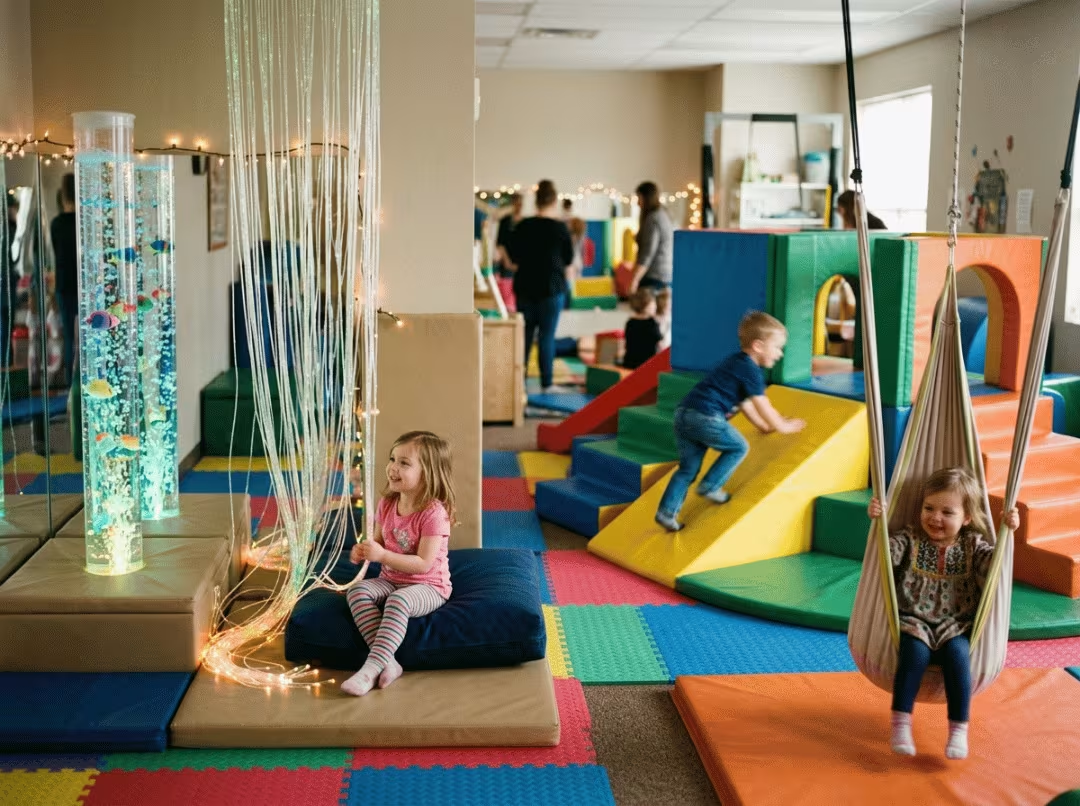
The most expensive sensory equipment mistakes in commercial play spaces aren’t about buying the wrong product. They’re about placing it wrong. A calming bubble tube positioned next to a trampoline doesn’t calm anyone. A home-grade tactile panel installed in a high-traffic FEC fails within months. Every piece of sensory equipment either earns its place — or becomes an expensive lesson in the importance of matching.
This guide works through the decisions that actually determine whether a sensory area succeeds: what each equipment type does and where it belongs, how to separate calming and active zones with intent, how to match features to different children and space constraints, and how to distinguish commercial-grade gear from products that won’t survive daily use. The buyer checklist at the end is designed for real supplier conversations.
What Sensory Equipment Is — and Why It Matters Commercially
In a commercial indoor playground, sensory equipment means any play feature designed to engage a child’s senses with purpose, not just to occupy them. That includes bubble tubes, fiber-optic strands, tactile wall panels, musical boards, projector floors, therapeutic swings, weighted seating, and climbing structures chosen specifically for the input they provide.
The two senses most facilities underestimate: the vestibular sense (balance and movement) and the proprioceptive sense (body awareness). When children use these systems through play, they build motor skills, sustained focus, and emotional regulation. That developmental value is what allows you to position a sensory area as something meaningfully different from a standard play floor — and it’s what attracts the occupational therapy clinics, special-education groups, and families of neurodivergent children that most competitors are failing to serve.
For how these features connect to child development across equipment categories, the guide to indoor playground equipment covers that ground well. The focus here is on making the right commercial decisions.
Why Sensory Zones Are a Business Decision, Not a Feature Addition
A sensory zone done well has three concrete commercial payoffs.
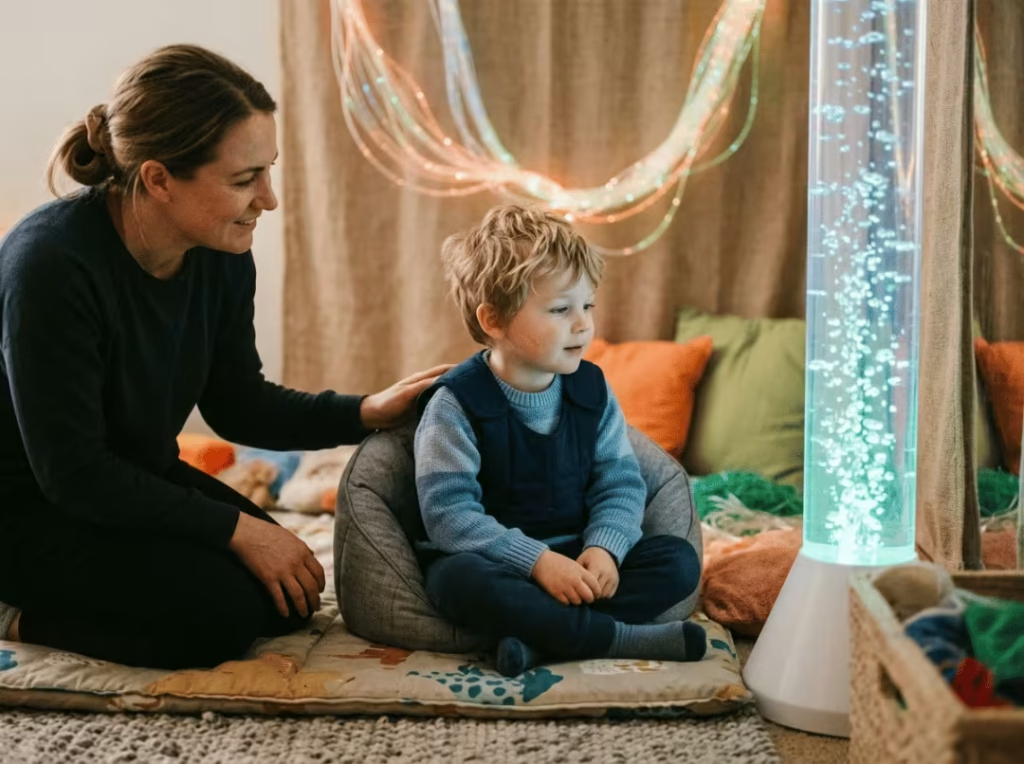
It opens a demographic most facilities close the door on. A child who overloads easily in a loud play center needs a place to recover — or the whole family leaves and doesn’t return. Adding a genuine calming zone makes your facility usable for families that currently avoid play centers entirely.
It fills weekday revenue gaps. Occupational therapy clinics, special-education cohorts, and parent support groups book weekday and off-peak slots — the hours when most play centers are generating nothing. A credible sensory offering makes those bookings possible.
It extends dwell time. Families who can move between active play and calming recovery stay longer. Longer visits generate more revenue from food, parties, and add-ons. Sensory zones tend to pay for themselves through retention rather than headline admissions.
One word matters here: credible. A single tactile panel bolted to a wall is not a sensory offering. Proper zoning and intentional equipment matching are what make it real — and what make the bookings happen.
The Five Equipment Categories: What Each One Does and Where It Belongs
Understanding the categories isn’t enough. The question that determines whether a purchase earns its place is: where does this belong, who does it help, and what goes wrong if it’s placed incorrectly?
Visual Equipment
What it does: Bubble tubes, fiber-optic strands, infinity mirrors, and interactive light panels engage sight and visual tracking. A bubble tube in a calming corner reduces anxiety through slow, predictable movement. A fast-changing LED wall in an active zone sustains attention and energy.
Where it belongs: This is placement-dependent more than any other category. Fiber-optic strands belong in calming zones — they carry light without heat or electrical current, so children can safely hold and wrap themselves in the strands. Bright, high-speed LED walls belong in active zones. Put them in a quiet space and you’ve created the opposite of what you wanted.
What to look for: Adjustable brightness and animation speed. Equipment you can dial down during sensory-friendly hours and turn up for standard sessions has far more commercial value than a fixed-intensity product.
Tactile Equipment
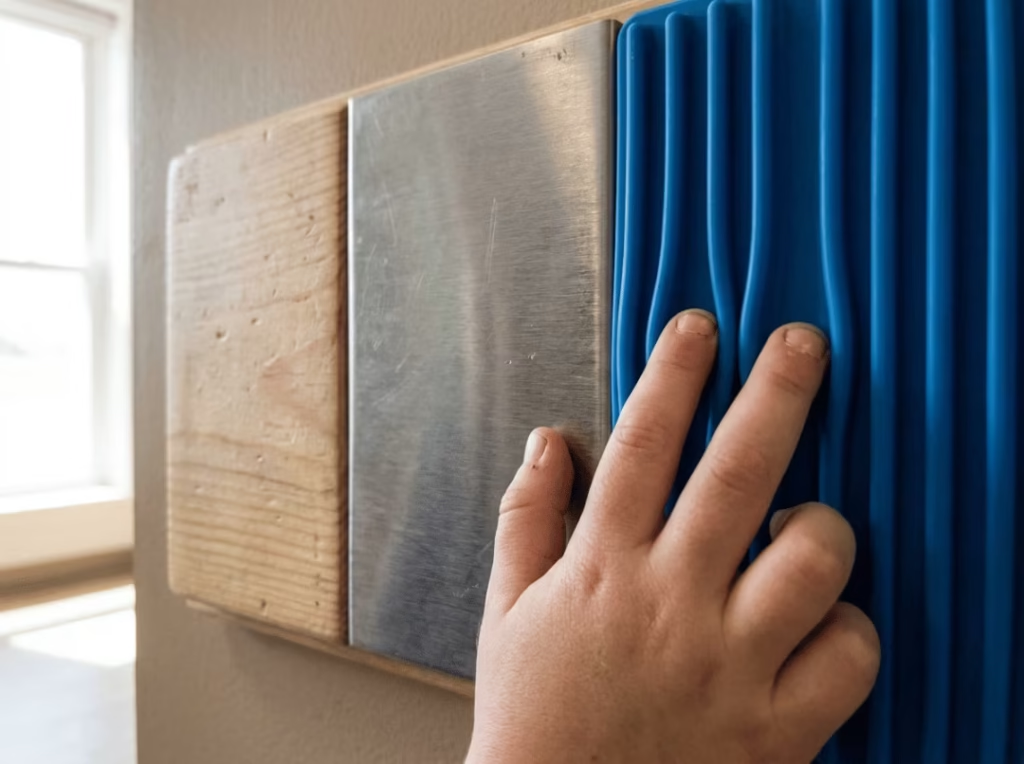
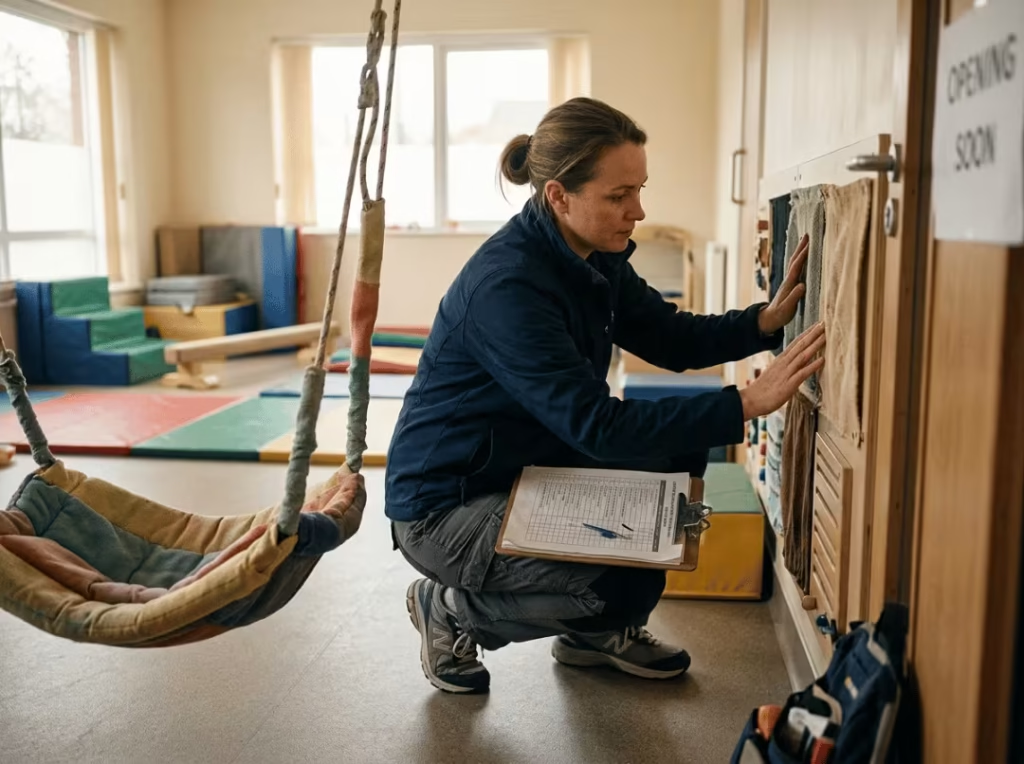
What it does: Textured wall panels, activity boards with latches and gears, and gradient walking paths develop touch sensitivity and fine motor control. These features are effective across a wide age range, require relatively little space, and are among the most durable categories when bought correctly.
Where it belongs: Tactile panels suit both calming zones (smooth, low-texture surfaces) and active zones (complex boards with mechanical elements). The key is matching texture intensity to the zone’s purpose.
What to look for: Variety in material — sanded wood, brushed metal, ribbed silicone create contrasting temperature and texture responses. Activity boards with heavy-duty mechanical elements (gears, latches, sliders) build hand strength effectively, but they absorb the most wear of any wall-mounted feature. This is not the place to cut cost on hardware quality.
Auditory Equipment
What it does: Musical panels, chimes, xylophones, and drum surfaces engage rhythm and sound recognition. They’re among the most popular with children and among the most problematic when placed without planning.
Where it belongs: Never adjacent to a calming zone. Musical equipment belongs in active zones, buffered by acoustic baffles above and around it. Without sound dampening, a musical panel becomes the loudest problem in your building.
The opposite function: For quiet zones, commercial white-noise machines don’t produce sound for play — they mask the chaos from the active floor, allowing a sensitive child’s nervous system to reset. These serve completely different purposes and should be selected separately.
Vestibular Equipment
What it does: Swings, rockers, spinners, and wobble boards engage the inner ear and help children organize their attention and regulate physical energy. This is the category most consistently requested by therapy clinics booking group sessions.
Where it belongs: Primarily in active zones, though pod swings can function in transition or autism-friendly spaces where the enclosed canvas provides the deep-pressure benefit alongside movement.
Planning before buying: Vestibular equipment needs real floor clearance — a swing arc, a buffer around a wobble board. Estimate the footprint required before committing to any piece in this category. Buying a swing you can’t safely position is a common and costly mistake.
Proprioceptive Equipment
What it does: Climbing structures, crawl tunnels, crash pads, weighted items, and mini-trampolines provide “heavy work” — deep pressure to muscles and joints that functions as a neurological anchor for children who struggle to self-regulate. This is the category with the strongest therapeutic reputation.
Where it belongs: Split clearly between zones. Trampolines and climbing walls go in active zones. Crash pads and weighted lap pads go in calming zones. Crawl tunnels serve active play but create a supervision challenge — enclosed and darkened tunnels force children to navigate by body awareness rather than sight, which is developmentally valuable, but staff sightlines must be preserved. Solve that tension at the layout stage, not after installation.
Calming Zones vs Active Zones: The Decision That Determines Everything Else
Zoning is not a layout preference. It’s the functional foundation of a sensory area. Conflicting inputs placed side by side cancel each other out and distress the children the quiet space was meant to serve.
Calming zone — what belongs here:
- Bubble tubes and fiber-optic strands
- Weighted seating, lap pads, and crash pads
- Soft, warm, low lighting (adjustable preferred)
- Low-texture tactile walls
- Soundproof or acoustic pods with white-noise machines
- Enclosed, comfortable seating
Active sensory zone — what belongs here:
- Therapeutic and pod swings
- Climbing structures and crawl tunnels
- Mini-trampolines
- Balance beams and wobble boards
- Motion-activated projector floors
- Bright interactive light walls
Layout rules worth enforcing:
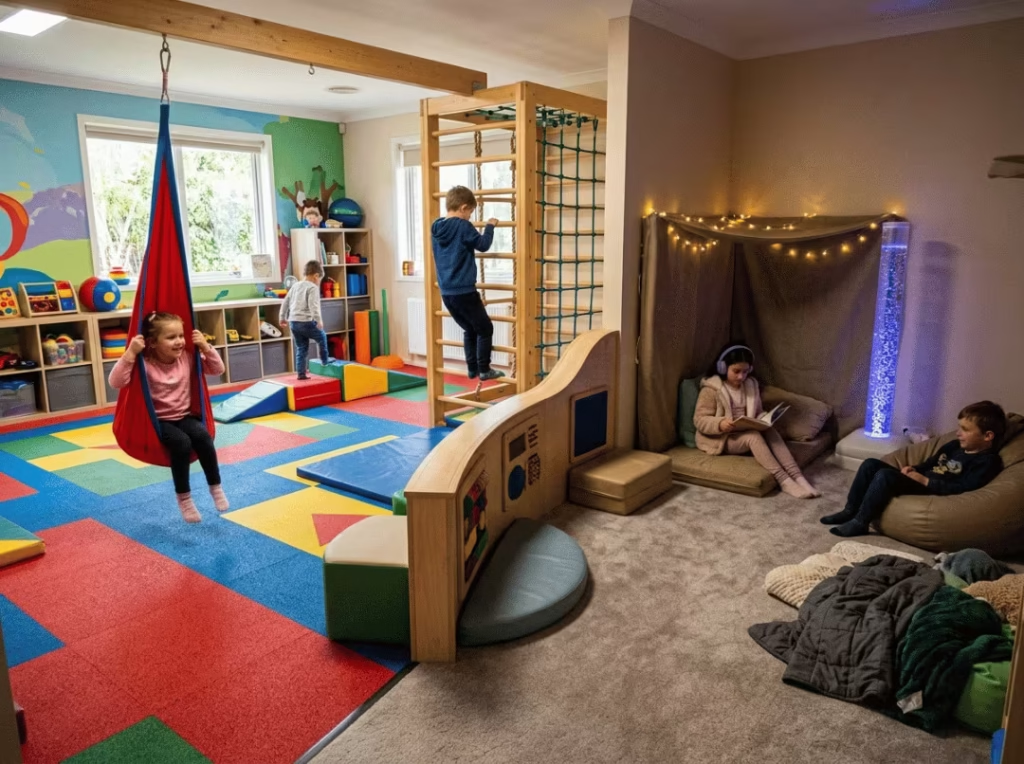
Physically separate the zones. Walls, dividers, or significant distance — never put a musical panel or trampoline beside a quiet pod. Use floor material transitions as behavioral cues: bright rubber in the active area shifting to muted carpet in the calming zone signals a change of mode without a word being spoken. Build a neutral buffer between the two so children can downshift gradually rather than moving directly from high stimulation into a space meant for quiet. And maintain staff sightlines into both zones — enclosed features are valuable, but their placement should never block supervision.
A projector floor earns its cost when programmed this way: a high-energy interactive scene during busy weekend hours, a slow and calm scene during designated sensory-friendly sessions. One piece of equipment, two functions at different times.
Matching Equipment to Your Users and Space
The same facility with the same budget can serve very different populations. Buying without knowing who you’re serving is how equipment ends up unused.
Toddlers (1–3). Keep everything at ground level. Shatterproof floor mirrors, large cause-and-effect buttons, soft tactile surfaces, gentle visual features with slow animation. Toddlers overload faster than older children, so keep stimulation simple, predictable, and low-to-the-ground.
Autism-friendly areas. Predictability matters more than variety. Pod swings, weighted seating, crash pads, fiber-optic strands, and a genuine acoustic retreat — features that provide consistent, reliable input. A child who depends on predictability will benefit less from a rotating set of novel stimuli than from a small, dependable space they can trust.
Mixed-age FECs. You’re designing for multiple age groups simultaneously, which means zoning by age as well as by stimulation level. Barrier heights, opening sizes, and challenge levels all shift with age. Equipment that’s safe for a seven-year-old can present real hazards for a two-year-old. Improper age zoning is one of the most consistent mistakes in playground design, and a sensory area is just as susceptible as any other zone.
Limited-space facilities. A meaningful sensory zone doesn’t require a large footprint. A well-configured 200–300 square foot area can hold a tactile panel cluster, a calming corner, and one strong visual feature. In constrained spaces, flexibility matters: projector systems and swappable wall boards allow one area to serve different functions at different times rather than requiring more square footage.
Commercial-Grade vs. Home-Use: Where Budget Gets Wasted
Home-use sensory products look nearly identical to commercial equipment in supplier photos and cost significantly less. Under daily commercial traffic, they fail in predictable ways: foam compresses, latches crack, vinyl tears and stains, electronics overheat, and what appeared safe at purchase becomes a liability.

What genuinely commercial-grade equipment includes:
- High-density foam under 18-ounce (or heavier) fire-retardant, antimicrobial PVC vinyl — not thin retail-grade foam
- Rotational-molded HDPE and powder-coated steel on rigid structures
- Reinforced stitching and heavy-duty mechanical hardware on activity boards — the category that absorbs the most wear
- Low-heat, sealed electronics rated for continuous operation on light panels and projector systems
- Non-toxic material documentation — BPA-free plastics and medical-grade vinyl, confirmed by actual certification rather than a brochure claim
Maintenance realities by type:
Smooth tactile panels, sealed light features, and projector floors are the easiest to maintain — wipe-clean surfaces with few crevices. Ball pits and deeply textured surfaces are the most demanding — they require commercial ball-washing equipment and electrostatic sanitizing to stay hygienic under real use. Mechanical activity boards, swing hardware, and budget electronics break fastest; replacement parts should be part of the purchasing conversation before you sign.
The same due diligence that applies to any major equipment purchase applies here. The factors worth checking before buying indoor playground equipment — material quality, certification, warranty, and supplier support on replacement parts — apply equally to sensory features.
Common Mistakes That Undermine Sensory Areas
These appear consistently in facilities that installed sensory equipment without a zoning plan.
Placing high-stimulation features adjacent to calming ones. A bright interactive wall or musical panel beside a quiet pod doesn’t just reduce the quiet pod’s effectiveness — it makes it counterproductive.
Overloading a small space. Filling a compact room with multiple light sources, sound elements, and textured surfaces creates the overstimulation a sensory area is supposed to prevent.
Using home-grade products for commercial traffic. Frayed wires, cracked acrylic, and compressed foam are the visible results. The less visible result is a liability claim you weren’t prepared for.
Skipping age zoning. Mixing toddler and school-age equipment in one space leaves both groups underserved and creates real safety risks for younger children.
Ignoring maintenance at the buying stage. If a feature can’t be cleaned efficiently under your actual staffing and schedule, it becomes a hygiene problem. Factor that in before purchasing, not after.
Treating ADA accessibility as optional. Pathways wide enough for wheelchair turning, transfer stations at ball pits and tactile walls, and height-adjustable features aren’t a nice-to-have. They’re often required, always expected by families who need them, and a demographic you lose if you overlook them.
How Much Space Do You Actually Need?
Less than most operators assume. A dedicated sensory zone becomes functional at around 200–300 square feet — enough for a tactile panel cluster, a calming corner with weighted seating, and one visual feature.
The non-negotiable isn’t size; it’s separation. Those 200–300 square feet need to be acoustically and visually distinct from your main active floor. A sensory corner in the middle of a loud climbing area isn’t a sensory zone — it’s just a corner. If more space is available, use it on the buffer between zones rather than packing in additional features. Good zoning returns more value than additional equipment in an undifferentiated space.
Buyer Checklist: Questions to Resolve Before You Commit
Equipment fit
- Equipment matched to your primary user group (toddlers, autism-friendly, mixed-age)
- Calming-zone and active-zone features kept physically separate in the proposed layout
- Visual and auditory equipment includes adjustable intensity
- Flexible or swappable features where space is limited
Commercial quality
- High-density foam with fire-retardant, antimicrobial commercial vinyl confirmed
- HDPE and powder-coated steel on rigid structures
- Reinforced mechanical hardware on activity boards and swing fittings
- Sealed, low-heat electronics rated for continuous daily operation
Safety and compliance
- Non-toxic material certification documented, not just claimed
- Shatterproof mirrors and safe edges throughout
- ADA-accessible pathways and transfer stations included in the layout
- Age zoning confirmed for intended user groups
Maintenance and supplier support
- Cleaning requirements understood for every textured or ball-based feature before purchase
- Replacement parts available for high-wear items
- Warranty terms confirmed for materials, structures, and electronics separately
- Daily inspection guidance provided for all electrical components
Any item left unresolved is a conversation to have before the contract, not after something fails.
FAQ
What is the difference between a sensory room and a sensory zone?
A sensory room is a small, enclosed, controlled space — typically used for calming or therapeutic purposes — that provides gentle, predictable visual, auditory, and tactile input. A sensory zone is integrated into the wider play floor and blends sensory features into active play. Many commercial facilities benefit from both: an active sensory zone for movement and stimulation, and a separate quiet room for recovery.
Which sensory equipment works best for children with autism?
Prioritize predictable, deep-pressure input: pod swings, weighted seating, crash pads, fiber-optic strands, and a genuinely quiet retreat. For autism-friendly spaces, consistency matters more than variety. Avoid fast-changing lights and loud sound features in areas designed for this group.
How much space do I need to add a sensory area?
A well-planned 200–300 square feet is enough for a meaningful sensory zone. The critical requirement is acoustic and visual separation from the active floor — not a specific square footage target.
What materials hold up best in high-traffic sensory equipment?
High-density foam covered in fire-retardant, antimicrobial commercial vinyl for soft features; rotational-molded HDPE with powder-coated steel framing for rigid structures. Both categories significantly outlast home-grade equivalents under commercial use conditions.
Can I add sensory equipment without a full renovation?
Yes. A compact, properly zoned cluster — tactile panels, a calming corner, and one visual feature — works without a full redesign. What it does require is genuine separation from the active floor and commercial-grade durability from the start.
How do I maintain hygiene in a commercial sensory area?
Match the method to the equipment. Smooth panels and sealed light features wipe clean easily. Ball pits and deeply textured surfaces need commercial ball-washing equipment and electrostatic sanitizing. Build cleaning time into your staff schedule before you buy, not after a hygiene problem appears.
Before You Commit
A sensory area earns its place through matching and placement, not through volume of equipment. Know who your primary users are. Separate calming and active zones with real physical and acoustic intent. Buy commercial-grade gear that survives daily traffic and can be cleaned efficiently. Those three decisions determine whether a sensory investment pays off — not how many features are on the floor.
A supplier who can align equipment to your users, speak specifically to durability and certification, and support you on replacement parts is worth working with. One who can’t has told you what you need to know before any money changes hands.