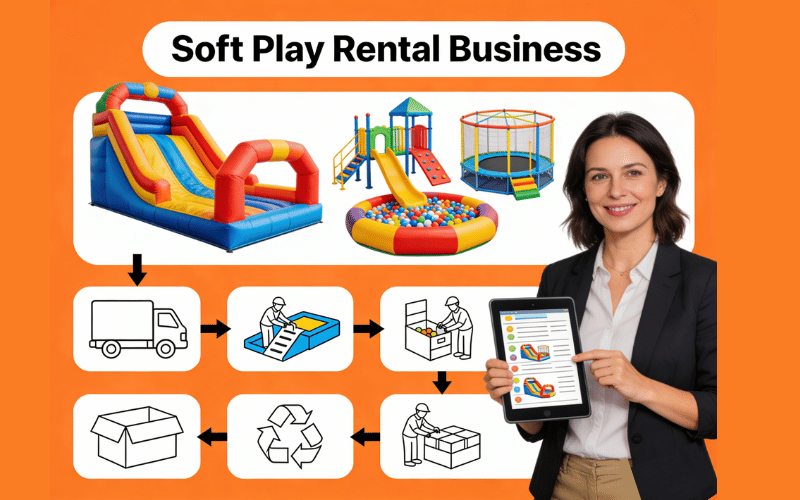
Thinking of starting a soft play rental business? Check out our list of pros and cons, as well as examples, and a step-by-step guide to launching your own.
Key Takeaways
- Soft play rental businesses offer a low-cost, flexible entry point into the event and entertainment industry — ideal for testing new markets, building community connections, and generating income without the overhead of a traditional business.
- They can take many forms, from small setups for private birthday parties to larger installations for corporate events, community gatherings, or even pop-up play zones at festivals.
- Pros include lower startup costs, creative freedom, mobility, and the ability to partner with event planners or venues to reach built-in audiences.
- Cons to consider are the need for storage space, equipment maintenance, and a strong marketing strategy to attract clients and stand out in a competitive market.
- To launch a successful soft play rental business, follow a structured process that includes developing a concept, writing a business plan, securing permits, purchasing equipment, building your brand, setting up finances, and hiring a reliable team.
- Smart planning and strategic partnerships can turn a soft play rental business into a profitable venture — and potentially pave the way for expansion into larger markets or permanent play centers in the future.
Soft play rental businesses are a trendy but practical force in the event industry.
Looking for a low-cost way to break into the event and entertainment market? Are you a new or aspiring entrepreneur, but don’t have the funds to open a permanent play center?
A few years ago, your answer might have been a party planning service. They, too, allow you to test the waters and give new clients a chance to learn about your services and the team behind them — without having to invest too much in a physical location or extensive inventory.
But soft play rental businesses are a relatively newer trend that might be your answer to building a successful proof of concept — and they don’t usually involve managing a full-scale event planning operation.
Here are a few things to consider as you think about starting a soft play rental business.
What Is a Soft Play Rental Business?
Soft play rentals are temporary play areas hosted in various spaces, such as private homes, community centers, schools, parks, or even corporate offices. A soft play rental can take many forms, from a small setup for a toddler’s birthday party to a large, elaborate installation for a community festival or public event.
Many established and aspiring entrepreneurs are now turning to the flexible soft play rental concept, both to build community connections and to create buzz and gather feedback before investing in a full-scale indoor playground. They’re also a great way to start building relationships with families and partnerships with other local businesses.
The Pros & Cons of Starting a Soft Play Rental Business
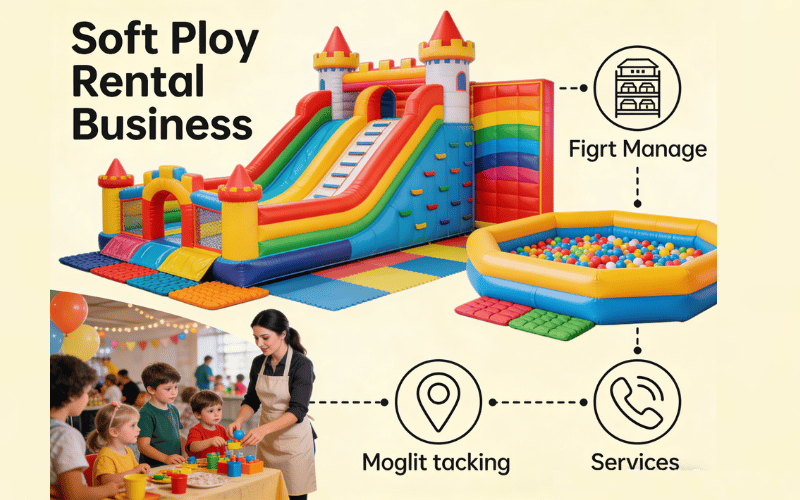
Entrepreneurs are launching new soft play rental businesses all the time, and clients are scrambling to book these services for events. But before you jump in to open one yourself, you need to consider the pros and cons, as well as your purpose or mission for starting one. You’ll also find inspiration from other soft play businesses that have succeeded.
The pros of starting a soft play rental business
- Ability to test the market and your business concept, as well as evaluate demand, before investing further.
- Lower startup costs, including lower overhead and labor, compared to a fixed-location setup.
- Opportunity for creative and unique play-area designs.
- Extra marketing power and a built-in target audience when partnering with existing venues or event planners.
- Option to test different pricing methods, such as package deals or hourly rates for various events.
- Flexibility in location and the ability to serve different areas with similar equipment packages.
The cons of starting a soft play rental business
- Must be willing to operate in limited spaces, transport, and set up equipment efficiently.
- Challenging logistics and labor costs to control, and it can be difficult to turn a profit despite high demand.
- It may be challenging to create repeat customers if you have limited availability or service areas.
- Heavy reliance on a social media presence, public relations, community building, and marketing to attract clients.
How to Start a Soft Play Rental Business: A Step-by-Step Guide
After reading all of the above, are you feeling excited about the idea of starting a soft play rental business? If so, here’s a helpful checklist for launching your business — any business — as well as 13 steps for achieving your dream.
1. Choose a Soft Play Rental Business Model
As mentioned, a soft play rental business can take many forms. Here are a few business model examples to consider.
- Small Private Events: Focus on renting out smaller setups for private events like children’s birthday parties, family gatherings, and playdates. This model allows you to start with a smaller inventory and build a local client base.
- Large Public Events: Target larger events such as community festivals, school fairs, and corporate family days. This requires a larger inventory and more staff but offers higher revenue potential per event.
- Themed Packages: Create pre-designed packages based on popular children’s themes, like jungle, princess, or superhero. Themed setups are highly marketable and can attract clients looking for a unique party experience.
- Customizable Setups: Offer clients the flexibility to build their own play areas by choosing from a menu of equipment. This caters to specific needs and budgets, from small indoor spaces to large outdoor venues.
- Venue Partnerships: Collaborate with local party venues, community centers, or event spaces to become their preferred soft play provider. This can create a steady stream of business and reduce marketing efforts.
2. Create a Business Plan
Once you have your concept secured, the next step in starting any business is to create a business plan. Your soft play rental business plan will serve as a blueprint outlining your entire vision, including the end goal of your rental service. The plan will act as a roadmap to help you stay focused when you’re in the weeds.
Here, you’ll talk about your company overview, your operations (who are your equipment suppliers? What is your delivery and setup model?), and even more details that will help you get everything going.
3. Secure a Location for Storage and Operations
If possible, finding a dedicated storage unit or garage space is essential. A clean, dry, and secure location will protect your investment. But if you’re starting from scratch, research local storage facilities or commercial spaces that offer the room you need to organize and maintain your equipment.
Here are a few things to consider before choosing the correct storage location:
- Your Equipment Size: How much space do you need for ball pits, climbers, and mats? This will determine the size of the storage unit required.
- Target Market: Is the storage location central to your primary service area? Consider travel time and fuel costs for deliveries and pickups.
- Accessibility and Loading: Can you easily load and unload heavy equipment? Look for ground-floor units or facilities with loading docks.
- Zoning Restrictions: Are there any local rules about operating a business from a storage unit?
- Rent and Utilities Costs: Will you be able to cover these costs with your projected rental income?
4. Obtain Necessary Licenses and Permits
When it comes to getting the permits and licenses needed to open a rental business, it’s a good idea to start with state-specific requirements. Each state (and some counties) has its own regulations for new businesses, so you’ll want to begin the process of obtaining them as early as possible.
Start this step by figuring out which business licenses and permits you will need. Do some research on your local requirements and make a thorough list, as some forms will depend on the completion of other licenses. Outline everything that needs to be done, in order, to make sure you don’t miss a step.
The licenses and permits needed may include, but are not limited to:
- Business license
- Liability insurance
- Sales tax permit
- Health and safety compliance for children’s equipment
5. Build Your Brand and Marketing Strategy
Set up your grand opening for success and get customers in the door with great marketing. The best place to start is by creating your marketing plan, where you can set goals, choose which best practices you’ll try, and plan your marketing calendar and budget for that critical first year.
Developing your marketing strategy begins by defining precisely what it is you are marketing. The specific packages of your soft play rental business and its intended audience will drive your branding —the look and feel of your business, website, photos, social media, and email marketing. It’s where it all comes together.
When determining your approach to marketing and advertising, consider your target customers (parents, event planners), which social media and online platforms they use, and whether you want to pay for ads or work with local parent influencers.
When you launch your new business, developing a strong social media marketing strategy can help showcase your setups in a visual, shareable format. Social media helps put rental companies on the map and attract new customers, often driving strong word-of-mouth referrals.
6. Purchase and Maintain Equipment
At this stage, it’s time to revisit your business plan and review your initial financial projections to plan your equipment purchases. With a more thorough understanding of your operating and marketing costs, you can more accurately predict your future earnings and your inventory budget.
How much does it cost to start a soft play rental business? While there isn’t a set amount, the general cost is significantly lower than that of a fixed indoor playground, with a lower initial investment.
When factoring in the costs of running a soft play rental business, think about equipment, staff, marketing, storage, tech, and transportation. The typical operational costs include storage rent, insurance, marketing, website hosting, and fuel.
7. Set Up a Booking and Payment System
Most people don’t have the cash on hand just to start a new business tomorrow. But luckily, small business financing is available, and there are many options to consider.
Consider investigating how to get a business line of credit, an SBA Microloan, a startup business grant, or equipment financing for your soft play rental business — among many other options.
Once you’ve got your financing, you can start buying equipment and setting up your business with the basics that you’ll need to get started. Use a user-friendly booking platform to manage reservations and accept payments seamlessly.
8. Hire a Reliable Team
A great staff is the backbone of a successful rental business. When hiring for your soft play rental business, you can start by tapping your network, former colleagues, and local parent or community Facebook groups. You can also try out industry job sites if you need more specialized roles. If required, hire reliable staff to assist with delivery, setup, and teardown. Train them on safety procedures and customer service to ensure every event is a success.
9. Develop a Pricing Strategy
Use your soft play rental business as an opportunity to create packages that surprise and delight new clients. Make sure to consider your costs, including equipment, labor, and transportation, when pricing your packages to make sure you’re turning a profit.
Start building your pricing structure based on your business model. Are you offering tiered packages? A la carte options? All-inclusive deals? This is the time to figure it out.
Start by writing down all your ideas, then organize them into packages by equipment and duration. Take a peek at what your competition offers, and see where you can fill a gap in the market. Then, use strategic pricing to craft a rental menu that will boost sales and attract new clients.
10. Create a Maintenance and Safety Plan
Now that you have determined your packages — in addition to the equipment you’ll need for them — you can begin purchasing your inventory. Of course, first, you’ll need to decide where you’ll be buying your supplies from. It’s always a good idea to take your time reading reviews and chatting with your peers about potential suppliers—partner with a supplier you trust and respect. Establish a strict routine for cleaning and sanitizing all equipment after each use to ensure it is hygienic and safe for children.
11. Market Your Business Locally and Online
Another critical decision you’ll have to make regarding your business’s operations is choosing your booking system. The best platforms for emerging businesses are user-friendly and make the payment process seamless for clients and staff. Make sure to partner with a booking system that’ll grow as you go.
Showcase your setups at local family-friendly events, fairs, and markets. Use targeted social media ads and SEO to reach parents and event planners in your service area. Encourage happy customers to leave reviews and share photos of their events.
12. Build Partnerships with Event Planners and Venues
With a thorough business plan and vision in place, you’ll now need to design a brand and online presence that align with your business goals. Your branding should align with your target audience, and your service style should reflect the fun and professional atmosphere you hope to create.
Collaborate with local party planners, venues, and photographers who serve the same market. Offer referral incentives or create package deals to provide more value to clients and strengthen your professional network.
13. Plan for Growth and Expansion
A great staff is the backbone of a successful business. When hiring for a soft play rental business, you can start by tapping your network, former colleagues, and local industry Facebook groups. You can also try out industry job sites.
Continuously monitor your bookings and customer feedback to identify growth opportunities. Consider expanding your inventory with new and exciting play equipment, offering services in new locations, or adding complementary services like balloon decor or party favors to increase your revenue streams.
Conclusion
And you’re off! Launching a successful soft play rental business can seem daunting, but taking it one step at a time and doing your research will make the process easier. Maybe one day your rental service will turn into a full-fledged family entertainment center, or perhaps you’ll love the flexibility of the rental life. Most entrepreneurs do.