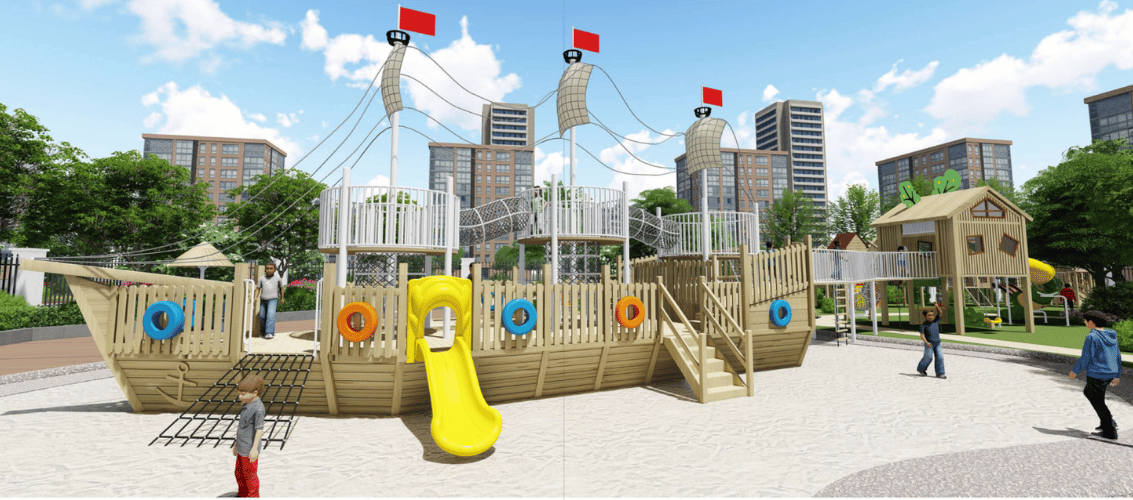
In the field of playground equipment manufacturing, materials form the foundation of safe, durable, and engaging play structures. These materials are used to create the main framework, surface finishes, and functional components of playground equipment. The choice of materials not only determines the equipment’s strength and longevity but also its aesthetic appeal and ability to meet safety standards. With advancements in technology, playground equipment now incorporates a variety of natural and synthetic materials to cater to diverse design and functional requirements. Understanding these materials is essential for making informed investment decisions in high-quality playground equipment.
Natural Wood
Wood is a natural material with fine texture, beautiful grain, and ease of processing and molding. It has been one of the most widely used materials for playground equipment. Natural wood can generally be divided into two categories: coniferous wood (softwood) and broadleaved wood (hardwood).
| Types | Material Characteristics | Typical Representatives |
|---|---|---|
| Softwood | The trunk is straight and tall, with a straight texture, uniform material, light and soft wood, easy to process, high strength, small surface density and expansion deformation, and strong corrosion resistance. | Korean pine, larch, white pine, spruce, fir, Japanese cedar, hemlock, yew, fir, cypress, masson pine, Chinese pine, Yunnan pine, Douglas fir, Chilean pine, etc. |
| Hardwood | The straight part of the trunk is generally shorter; the material is more rigid to process, with higher density and strength; and it exhibits significant expansion and contraction, warping, and deformation, making it easy to crack, making it suitable for smaller components. | Ash, elm, basswood, locust, poplar, maple, beech, jujube, sumac, yellow-barked locust, holly, alder, chestnut, holly, chestnut, Chinese holly, boxwood, rubber wood, nanmu, oak, teak, rosewood, camphor wood, rosewood, wenge, ironwood, walnut, etc. |
Wood is not only a natural biological resource (regeneration) but also a resource that can be reused (reuse) and recycled (recycle). It has the following advantages:
- Natural color and texture: Wood forms various coarse and fine straight and oblique textures due to different annual rings and wood grain directions. Through sawing, rotary cutting, or planing, it can be crafted into rich, beautiful patterns. Other tree species also have unique natural colors and lusters.
- Lightweight and high-strength: Wood has high elasticity and toughness, can withstand large deformations without breaking, and is resistant to impact and vibration.
- Easy to process: Wood can be used after felling, sawing, and drying. It can be cut and decorated with simple tools or machinery and joined in various ways, such as tenons, glue, nails, screws, and connectors.
- Low electrical conductivity: As a porous material, wood offers sound insulation, slow heat conduction, and a low thermal expansion coefficient, providing comfort and security in different seasons.
However, wood also has disadvantages, such as hygroscopicity (shrinkage and swelling), anisotropy, knots, and susceptibility to insects, fungi, and moisture. Among these, hygroscopicity significantly affects the processing and utilization of wood products. Proper drying and treatment are essential to ensure the wood’s stability and durability, especially for outdoor use.
By understanding its characteristics and applying proper treatments, natural wood remains a versatile and sustainable material for playground equipment.
Metal
Metal is a widely used material in the manufacturing of playground equipment due to its strength, durability, and versatility. It offers excellent resistance to wear and tear, making it ideal for structures that endure heavy use and outdoor exposure.
Steel
Steel is one of the most common metals used in playground equipment. Known for its high tensile strength and toughness, steel ensures the structural integrity of components such as frames, slides, and climbing structures. Carbon steel, in particular, is frequently used in the form of pipes, plates, and sections. To enhance its durability, steel is often treated with protective coatings such as galvanization or powder coating, which help prevent rust and corrosion, ensuring long-term performance in outdoor environments.
Aluminum
Aluminum is another popular choice for playground equipment. It is lightweight, corrosion-resistant, and easy to work with, making it suitable for components like panels, railings, and decorative elements. Aluminum’s natural resistance to rust and its ability to withstand various weather conditions make it a practical option for outdoor use. Additionally, its lightweight nature simplifies transportation and installation.
Stainless Steel
Stainless steel is valued for its superior corrosion resistance and sleek appearance. It is commonly used in high-contact areas such as handrails, slides, and swing chains. Its smooth surface not only enhances safety by reducing friction but also adds a polished, modern aesthetic to playground designs.
By combining these metals with advanced manufacturing techniques, playground equipment achieves a balance of safety, durability, and visual appeal. The use of metal ensures that playgrounds remain functional and attractive, even under constant use and exposure to the elements.
Plastic and Polyethylene
Plastic is a versatile and ever-evolving synthetic material with a wide range of applications. Since its rapid development in the 19th century, it has become a staple in various industries, including playground equipment. High-density polyethylene (HDPE) and other durable plastics are commonly used in the construction of slides, panels, and molded playground components.
Plastics can be shaped into virtually any form through processes such as injection molding, blow molding, and rotational molding. This flexibility allows for the creation of diverse and innovative designs. HDPE, in particular, is lightweight, weather-resistant, and available in vibrant colors, making it an ideal choice for outdoor use. However, prolonged exposure to natural elements such as sunlight and rain can cause plastics to fade, crack, or weaken. To combat this, UV stabilization is often required to enhance durability and maintain appearance.
Despite these challenges, plastic remains a popular material due to its adaptability and cost-effectiveness. Its ability to combine functionality with aesthetic appeal ensures its continued use in playground and outdoor equipment design.
Wood-Based Panels
Wood-based panels are a versatile and cost-effective material widely used in playground equipment manufacturing. They are made from logs or wood processing residues through various methods, offering a sustainable alternative to solid wood. These panels are valued for their uniform texture, large format, and ease of processing, making them ideal for creating structural and decorative components in playgrounds.
Plywood
Plywood is a popular choice for playground equipment due to its strength and resistance to warping. It is made by gluing multiple layers of veneer together, with each layer’s grain running perpendicular to the next. This structure ensures durability and stability, making plywood suitable for platforms, walls, and other structural elements.
Particleboard
Particleboard is another commonly used material, made by compressing wood fragments mixed with adhesives. It is cost-effective and offers a smooth surface, making it ideal for decorative panels and non-load-bearing components. However, it requires proper sealing to prevent moisture absorption, which can lead to swelling and damage.
Fiberboard
Fiberboard, often called MDF (medium-density fiberboard), is made from wood fibers and provides a smooth, uniform surface. It is easy to cut and shape, making it suitable for intricate designs and finishing. Fiberboard is commonly used for decorative elements and panels in indoor playground equipment.
Wood-Plastic Composites
Wood-plastic composites are innovative materials that combine natural wood fibers with plastic. They are lightweight, durable, and resistant to moisture and insects, making them ideal for outdoor playground components. These composites offer the appearance of wood while providing enhanced durability and low maintenance.
By combining functionality, sustainability, and cost-effectiveness, wood-based panels play a crucial role in the manufacturing of playground equipment, ensuring safety, durability, and aesthetic appeal.
Rubber and Safety Surfacing
Rubber is a versatile and continuously evolving material widely used in playground safety surfacing. Since its introduction in the 20th century, rubber has become a key component in creating safe and durable play environments. With its shock-absorbing properties and vibrant color options, it has opened new possibilities for playground design.
Rubber can be processed into various forms through techniques such as molding, extrusion, and vulcanization. These processes allow for the creation of diverse safety surfacing options, including poured-in-place rubber, rubber tiles, and loose-fill rubber mulch. These surfaces provide excellent impact absorption, reducing the risk of fall-related injuries. However, prolonged exposure to sunlight and weather can cause rubber to harden, fade, or lose elasticity. To address this, UV stabilizers and protective coatings are often applied to enhance durability and maintain performance.
Commonly used rubber materials for safety surfacing include ethylene-propylene diene monomer (EPDM), styrene-butadiene rubber (SBR), and recycled rubber. For example, EPDM is often used in poured-in-place surfaces due to its flexibility and vibrant color options. SBR, derived from recycled tires, is a cost-effective choice for rubber tiles and mulch.
Innovative designs in rubber safety surfacing have also emerged. For instance, some playgrounds feature colorful patterns and interactive elements embedded into the rubber surface, enhancing both safety and aesthetic appeal. These designs not only provide a safe play area but also stimulate children’s creativity and engagement.
By combining functionality, safety, and visual appeal, rubber and safety surfacing have become essential components in modern playground design, ensuring a secure and enjoyable environment for all users.
Bamboo and Eco-Friendly Materials
Bamboo is a sustainable and rapidly renewable material that has gained popularity in playground equipment manufacturing. It grows much faster than trees, reaching maturity in just three to five years, making it an abundant and eco-friendly resource. Its versatility and environmental benefits make it an ideal choice for creating durable and aesthetically pleasing playground components.
Traditional Bamboo
Bamboo has been used for centuries in various applications, including furniture and construction. In playgrounds, traditional bamboo is often used for decorative elements, railings, and small structures. Its natural appearance and strength provide a warm and inviting aesthetic while maintaining functionality.
Engineered Bamboo Materials
With advancements in technology, bamboo can now be processed into engineered materials such as bamboo plywood, laminates, and fiberboards. These materials offer enhanced strength, stability, and resistance to wear, making them suitable for structural components like platforms, panels, and climbing structures. Engineered bamboo materials are also treated for insect resistance, moisture protection, and durability, ensuring long-lasting performance in outdoor environments.
Eco-Friendly Composites
Bamboo is often combined with other eco-friendly materials to create composites that are lightweight, durable, and resistant to environmental factors. These composites are used in playground equipment to provide a balance of sustainability and functionality. They can be molded into various shapes and coated with protective finishes to meet safety and design requirements.
By integrating bamboo and eco-friendly materials into playground equipment, manufacturers can create sustainable, durable, and visually appealing play spaces that align with modern environmental standards.
Glass and Transparent Panels
Glass and transparent panels are increasingly used in playground equipment manufacturing due to their aesthetic appeal and functional properties. These materials offer excellent waterproof, acid and alkali resistance, as well as moderate fire and wear resistance, making them suitable for both decorative and structural applications.
Tempered Glass
Tempered glass is a popular choice for playground equipment because of its strength and safety features. It is processed through controlled thermal treatments to enhance its durability and impact resistance. Commonly used in panels, barriers, and viewing windows, tempered glass helps ensure safety by breaking into small, blunt fragments upon impact, reducing the risk of injury.
Acrylic and Polycarbonate Panels
In addition to glass, transparent materials like acrylic and polycarbonate are widely used. These materials are lightweight, shatter-resistant, and easy to mold into various shapes, making them ideal for protective barriers, domes, and decorative elements. Acrylic panels offer excellent clarity, while polycarbonate provides superior impact resistance, making it suitable for high-contact areas.
Decorative Applications
Glass and transparent panels are often used to create visually engaging playground features. For example, colored or patterned glass can be incorporated into climbing walls or playhouses to add a vibrant and interactive element. Transparent panels also allow for the integration of lighting effects, enhancing the overall aesthetic and creating a dynamic play environment.
By combining durability, safety, and design flexibility, glass and transparent panels play a significant role in modern playground equipment, offering both functional and decorative benefits.
Conclusion
The materials used in playground equipment manufacturing are carefully chosen to ensure safety, durability, and visual appeal. From natural wood and metal to advanced plastics and eco-friendly options, each material contributes to the functionality and longevity of the equipment. These materials are designed to withstand environmental challenges while providing a safe and enjoyable play experience for children. By understanding the properties and applications of these materials, buyers can confidently invest in playground equipment that meets their needs and enhances the play environment for years to come.