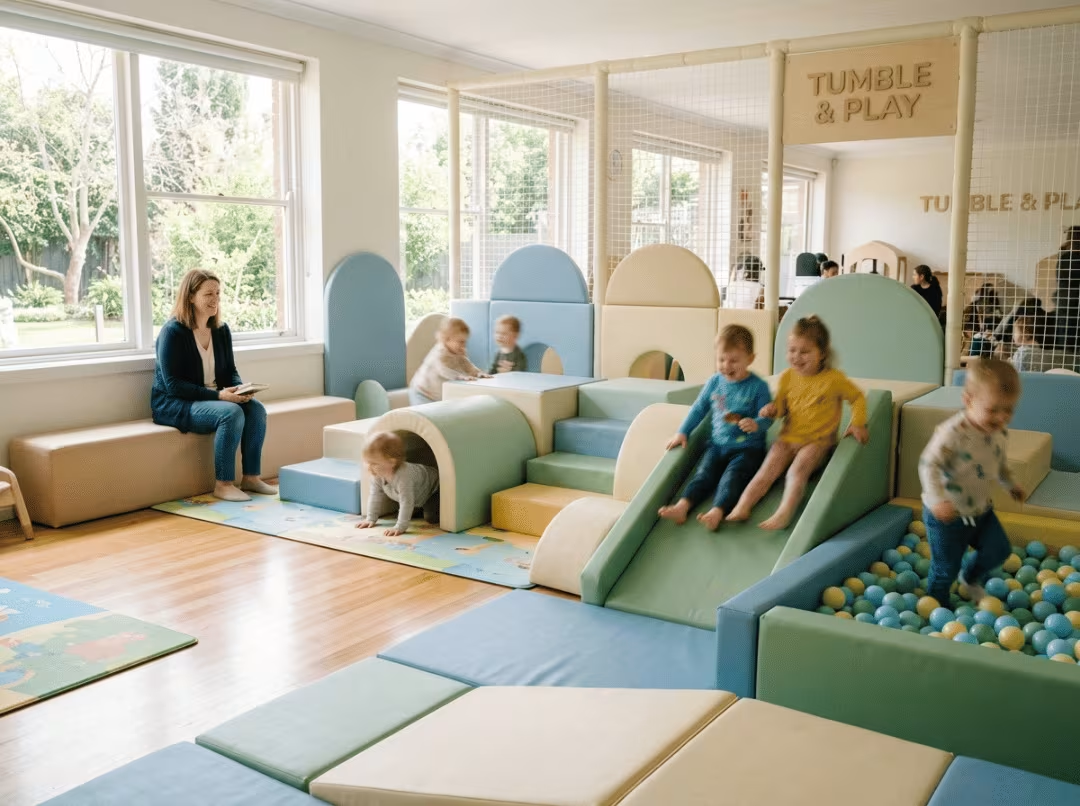
Indoor soft play equipment is a set of padded, low-impact structures and interactive features, built from foam, fabric, and other soft materials, that give children a safe place to climb, crawl, slide, and explore indoors. It’s made mostly for kids aged one to twelve, with the real sweet spot on toddlers and pre-schoolers who need cushioned surfaces and close supervision more than height and speed.
If you’re a daycare buyer, a mall operator, or someone planning a first play center, this one’s for you. The aim isn’t to sell you a structure. It’s to help you understand what soft play actually is, what it includes, where each type fits best, and how to choose a setup that suits your space, your age group, and your budget.
You’ll get four things here: a clear definition with a real boundary around it, a breakdown of types tied to actual use cases, practical selection advice, and the mistakes that trip up first-time buyers. Read it as planning help from someone who’s seen these spaces built well and built badly.
What Is Indoor Soft Play Equipment?
Soft play equipment is exactly what the name suggests: play structures made soft on purpose. Foam padding, fabric coverings, and rounded shapes replace the hard metal and plastic edges of a traditional playground. The whole point is to lower the risk when a child trips, bumps, or tumbles, which happens constantly when small kids play.
What makes something “soft play” comes down to three things. The surfaces are cushioned, so falls rarely cause injury. The structures stay low and contained, so children aren’t climbing to heights that need harnesses or nets. And the space is supervised and enclosed, so caregivers can keep eyes on everyone. Take those away and you’re no longer looking at soft play. You’re looking at something built for older, more independent kids.
How is soft play different from general indoor playground equipment?
This distinction matters more than most buyers realize, because it shapes your budget, your staffing, and who walks through your door.
General indoor playground equipment is a broad category. It can include tall multi-level structures, trampolines, ropes courses, ninja obstacles, and challenge features aimed at older children and even teens. Those attractions are higher-impact, need more clearance, and often demand more supervision and safety gear.
Soft play sits at the gentle end of that spectrum. It skews younger, stays lower, and is far easier to watch over. A toddler soft play zone and a two-story adventure structure might both live under the label “indoor playground,” but they’re different products serving different ages with very different cost and risk profiles. Knowing which one you’re building keeps you from budgeting for the wrong thing.
What Types of Indoor Soft Play Equipment Are There?
Soft play is modular by nature. Most spaces pair one centerpiece with a handful of supporting features, so think of the list below as building blocks rather than a shopping checklist. What you pick depends on who you’re serving and how much room you have.
Soft play structures (multi-level frames)
These are the interconnected frames of tunnels, ramps, bridges, and ball features that usually anchor a space. They’re the centerpiece, the thing kids spot first and run straight for.
Best for larger footprints and mixed-age indoor playgrounds where you have the floor area and, just as importantly, the ceiling height to build up. In a small room, a big frame does more harm than good by eating the space children need to move. The thing operators overlook: a towering structure looks impressive in a brochure but can leave a tight floor feeling cramped and hard to supervise.
Slides
A near-universal feature, and one of the most flexible. Slides come single or multi-lane, straight or spiral. Lane count and height let you match them to age: a gentle single lane suits toddlers, while multi-lane racing slides pull in older kids who want to go side by side.
Best as a supporting feature attached to a larger structure rather than a standalone piece. Check your ceiling clearance before you commit to a spiral, since they need more vertical room than people expect.
Ball pits
Endlessly popular, low-impact, and great for sensory play. Ball pits work especially well for toddlers, who love sinking in and tossing balls around.
Best for almost any setting, but with one catch operators forget until it’s too late: hygiene. Balls need regular cleaning, and the pit itself needs a design that actually lets you get in there to do it. Budget for that upkeep from day one, or the pit becomes the least appealing part of your space within a few months.

Soft climbing frames and low climbers
These build gross motor skills, balance, and confidence. For toddlers, keep them low and heavily padded.
Best as a supporting feature for younger children. The moment climbing height passes a certain point, you cross into territory that triggers extra safety requirements like automatic belays, which changes both your cost and your supervision needs. For a soft play space, low and padded is the whole idea.
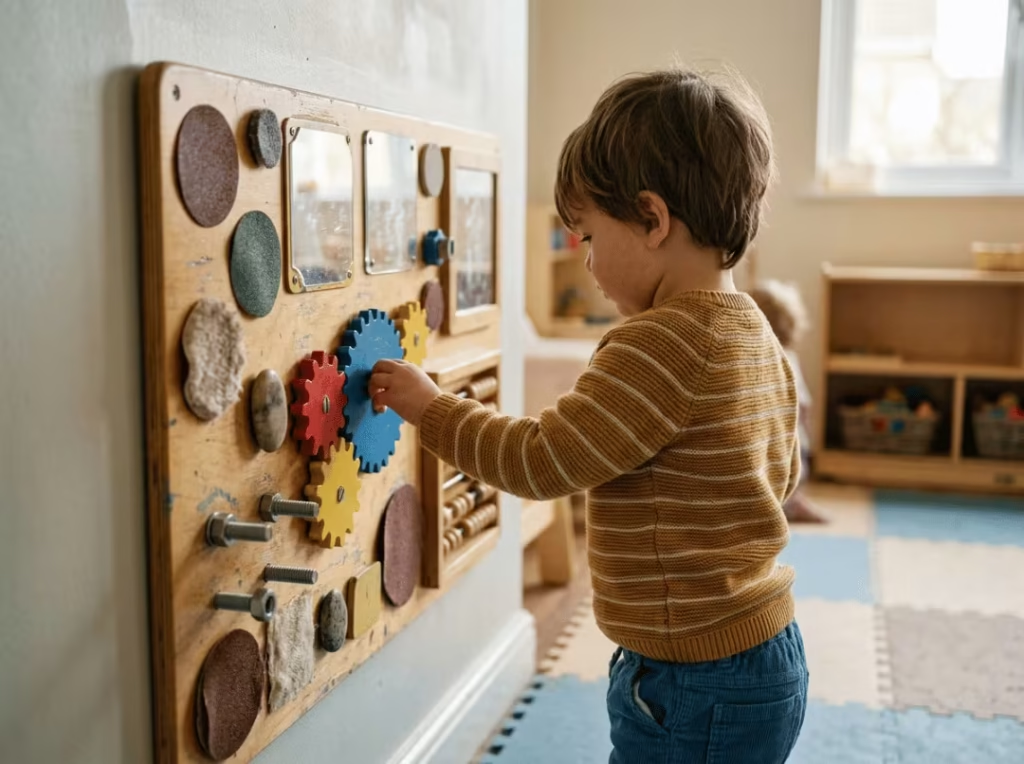
Sensory play areas and interactive panels
Textured walls, light features, touch panels, gears, and mirrors. This category punches well above its weight in tight spaces, because it delivers real engagement without needing much floor area.
Best for daycares, early-years rooms, and compact corners where a full structure simply won’t fit. Often the smartest choice when floor space is your main constraint.
Obstacle courses
Stepping stones, balance beams, hurdles, and tunnels that test agility and coordination.
Best for older toddlers and pre-schoolers ready for a bit of challenge, and they adapt nicely to narrow or leftover floor space that a bulky structure can’t use. A good way to add play value along a wall or in an awkward strip of room.
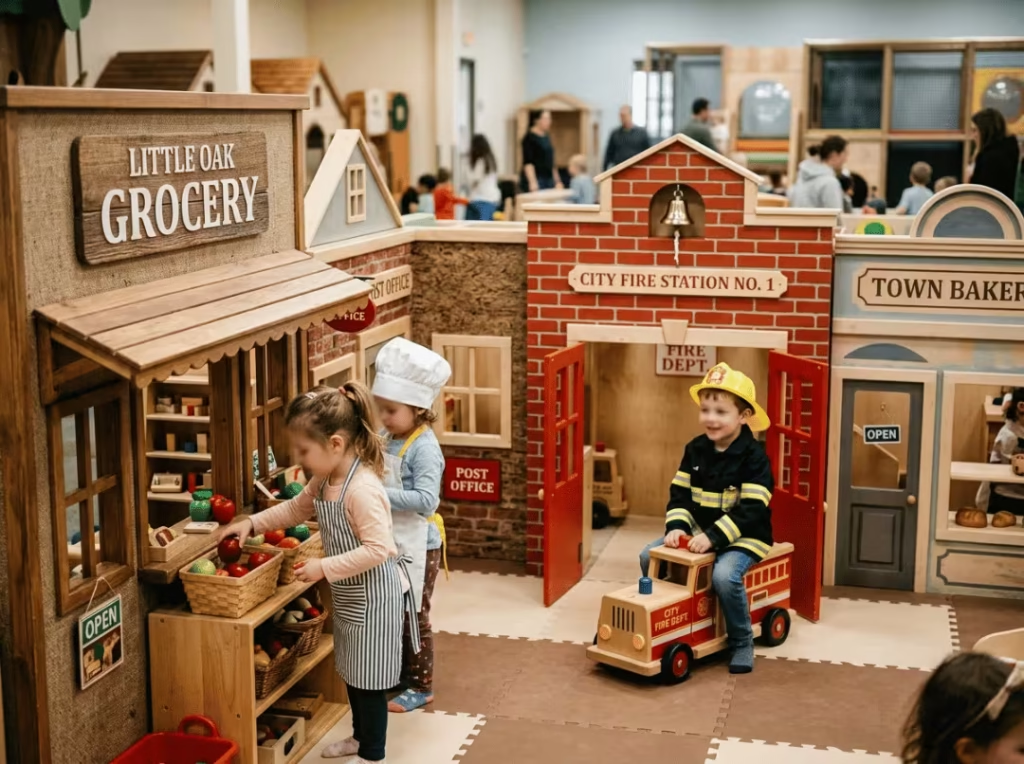
Role-play zones (“little town” style)
Miniature storefronts, themed corners, and pretend-play setups like a shop, a post office, or a fire station.
Best where dwell time and repeat visits matter, because imaginative play holds a child’s attention far longer than a single slide. This is also the natural home for custom theming that sets your space apart.
Which Soft Play Types Work Best for Different Operators?
The right mix depends less on what looks impressive and more on who you serve and where you’re building. Here’s how the choices shift by setting.
Daycare and early-years settings
Safety, supervision, and cleaning outrank everything here. You’re better off with sensory panels, low padded climbers, and a modest ball pit than with a towering centerpiece. The children are young, staff ratios are tight, and equipment that’s easy to watch and easy to wipe down earns its keep every single day. Skip anything that creates blind corners or hard-to-reach nooks.
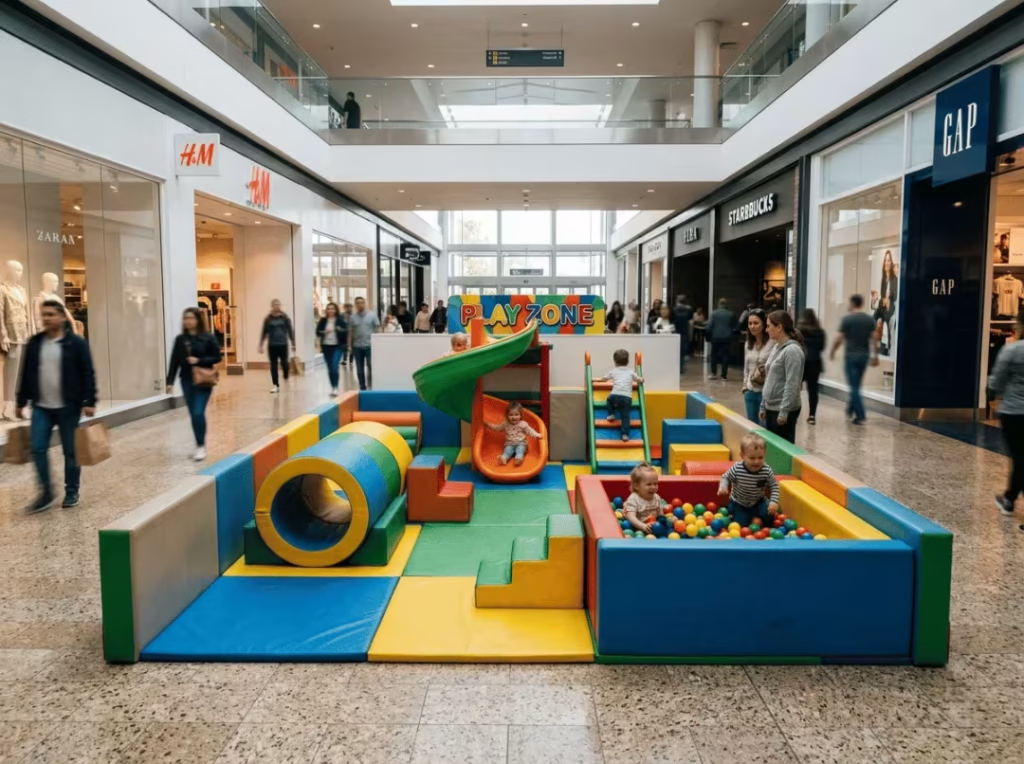
Mall indoor play area
Space efficiency and durability lead. Every square meter costs you, and the play zone has to sit comfortably beside polished storefronts. A compact, hard-wearing structure beats a sprawling one, and it needs to hold up under heavy weekend traffic without looking tired by month three. In a premium retail setting, durability isn’t a luxury. It’s what keeps the space looking like it belongs.
Neighborhood indoor playground
A modest centerpiece plus a few supporting features usually does the job, covering toddlers through pre-teens with balanced spend. You want broad local appeal without overbuilding for any single group. The move here is simple: pick a primary age band, build for it well, and add a secondary zone only if the footprint genuinely allows.
Family entertainment center (FEC)
In a larger venue, soft play works as a dedicated toddler zone, not the main event. It gives younger siblings somewhere safe while older kids hit the trampolines or arcade, which keeps whole families on-site longer. That complementary role is exactly why FECs include it. It captures an age group the high-energy attractions can’t safely serve.
Why Do Operators Choose Indoor Soft Play Equipment?
There’s a developmental case and a business case, and both are short.
On the child side, soft play does real work. Climbing and balancing build strength and coordination. Navigating a structure sharpens spatial awareness. Shared play teaches turn-taking and simple negotiation. Parents notice it too, even if they’d just say “she’s finally worn out and happy.”
On the business side, the logic is just as clear. Soft play is easier and safer to supervise than high-impact equipment, which keeps staffing lean. It runs all year regardless of weather, so a rainy weekend becomes your busiest day rather than a dead one. It carries a lower injury and liability profile than tall or fast attractions. And because young children want to come back again and again, it’s a steady engine for repeat family visits, the kind of traffic that keeps a venue afloat between busy seasons.
How Do You Choose the Right Indoor Soft Play Setup?
This is where most projects are won or lost. Get these six calls right and the rest tends to fall into place.
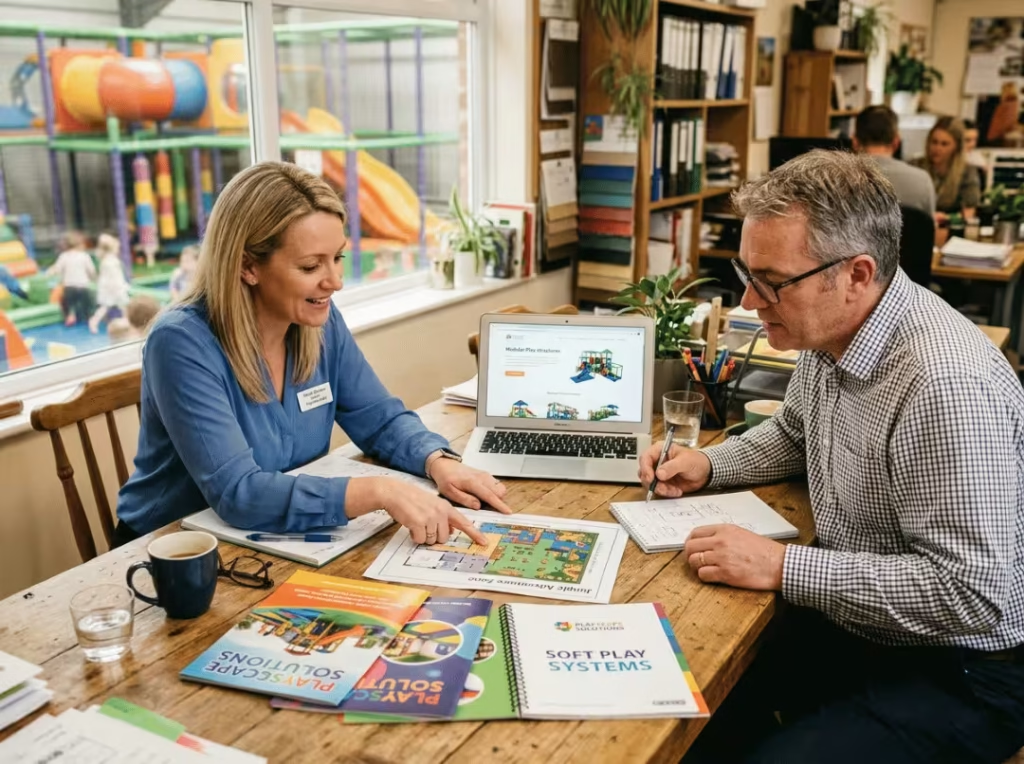
Start with age group
This decision drives every other one. A toddler-only space needs low heights, soft everything, and simple features. A mixed-age space needs zones, varied challenge levels, and careful separation so a running eight-year-old doesn’t barrel into a crawling one-year-old.
Decide who you’re really serving before you look at a single product. Building for “everyone” usually means half-satisfying each group.
Match it to your space and ceiling height
Footprint tells you how much you can fit. Ceiling height tells you whether you can build up at all. Generous clearance opens the door to a multi-level centerpiece. Low ceilings push you toward horizontal, sensory-led layouts, and that’s perfectly fine. A well-planned flat space beats a cramped tall one every time.
Measure the true usable height, below ducts, sprinklers, and lighting, before you plan anything.
Factor in your supervision model
Layout quietly sets your labor bill for years. A design with clear sightlines lets fewer staff watch more children. Enclosed tunnels and blind corners do the opposite, raising both your supervision demands and your ongoing cost. If you’re running lean on staff, favor open, visible designs.
Budget by priority, not by looks
Fund the essentials first: safe flooring and a well-chosen centerpiece that fits your space. Theming, extra features, and eye-catching add-ons come after safety and core play value are covered. A space that spent everything on a flashy look but skimped on flooring won’t survive its first inspection, let alone its first year.
Plan for cleaning and maintenance
Ball pits, fabric surfaces, and padding all need regular cleaning, and children are not gentle. Choose materials and access points that make upkeep realistic rather than a daily battle. This is the least glamorous part of planning and one of the most important, because a grimy space loses families fast.
Consider theming and customization
When experience or brand identity matters to your business, custom layouts and themed role-play zones earn their cost by making your space memorable and shareable. This is where custom playground equipment pays off. It’s far easier to plan custom elements into the brief early than to bolt them on once the design is locked.
Common Mistakes to Avoid When Buying or Planning
Even experienced buyers repeat the same errors. Watch for these.
- Cramming too many features into a small footprint. It crowds circulation, creates safety pinch points, and actually lowers play value. Empty space is part of good design.
- Mixing toddler equipment with older-child challenges in one open zone. Different ages need different spaces, or the little ones get bowled over and the older ones get bored.
- Prioritizing theme and looks over safety flooring and sightlines. A stunning space that fails its safety check isn’t a space you can open.
- Underestimating cleaning and hygiene. Ball pits and soft surfaces need real, routine upkeep. Plan for it before you buy, not after the complaints start.
- Choosing equipment on appearance alone. A piece that photographs beautifully but doesn’t fit your age group or footprint is money poorly spent.
- Cutting corners on certification and material quality. Cheap components wear out early, fail inspections, and cost more over time through repairs and downtime.
Frequently Asked Questions
What age is indoor soft play equipment for?
It’s generally built for children aged one to twelve, but the real sweet spot is toddlers and pre-schoolers. Younger kids benefit most from the low-impact, cushioned design, while older children usually want more height and challenge than soft play offers.
What is the difference between soft play and a regular indoor playground?
Soft play is lower-impact, skews toward younger children, and stays easy to supervise in an enclosed space. General indoor playgrounds can include taller structures, trampolines, and challenge features for older kids, with higher impact levels and more demanding safety needs.
What soft play equipment is best for toddlers?
Sensory panels, ball pits, and low padded climbers are the strongest picks. Toddlers need soft surfaces, gentle heights, and features that reward exploration rather than speed, so keep everything low, padded, and easy to watch.
Is indoor soft play equipment safe?
It’s designed to be, thanks to cushioned surfaces, rounded shapes, and low heights. Real safety, though, comes from pairing certified, quality equipment with proper supervision and regular maintenance. Skip any of those and the built-in safety only goes so far.
How much space do you need for indoor soft play equipment?
It ranges widely. A sensory corner can fit into a few square meters, while a full multi-level structure needs a large footprint and generous ceiling height. Your usable clearance often matters as much as your floor area, since it decides whether you can build upward at all.
How do you clean and maintain soft play equipment?
Plan for routine cleaning of padding and surfaces, regular sanitizing of ball pits, and scheduled inspections of joints, netting, and flooring. Consistent upkeep protects both the children using the space and the lifespan of your investment.
Choosing a Soft Play Setup That Works
Indoor soft play equipment comes down to a simple idea: low-impact, supervised, younger-skewing play built on cushioned surfaces. Everything else, the types you pick, the layout you build, the budget you set, flows from your age group, your space, and how you plan to run the place.
The operators who get it right choose by use case, not by looks. They build for a clear primary age group, respect their ceiling height, plan for cleaning from the start, and put safety and core play value ahead of flash. That’s the difference between a space families return to and one they visit once.
If you’re planning a soft play area and want a setup matched to your room and your audience, share your space dimensions and target age group, and we can put together a tailored equipment recommendation built around your actual site. It’s a straightforward next step toward a space you can feel confident in.