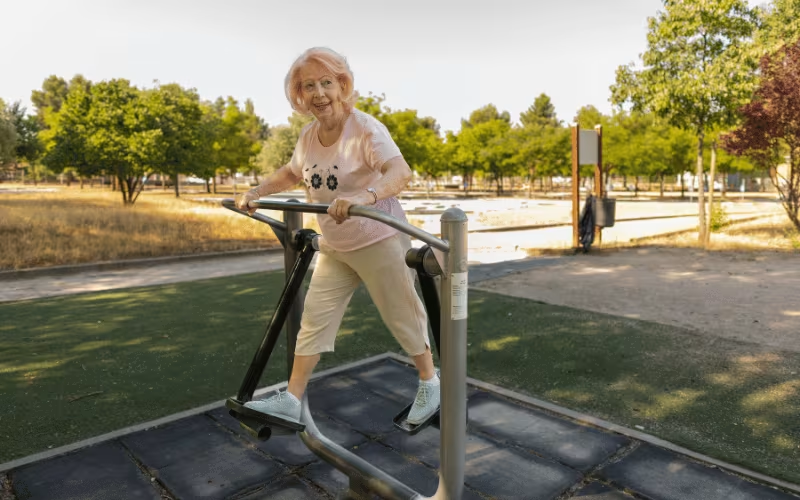
Looking to upgrade a community park or create a personal workout space in your backyard? Outdoor fitness equipment is an excellent solution. Before making a purchase, it is essential to consider factors such as material durability, machine types, and safety certifications. This guide outlines 10 key tips to help you choose the perfect outdoor fitness setup for your specific needs, ensuring long-lasting performance and maximum user satisfaction.
1. How Can Outdoor Fitness Equipment Benefit You?
With the rise of health-conscious communities and outdoor lifestyles, installing accessible fitness equipment has become increasingly popular. Sedentary routines often lead to reduced cardiovascular health and muscle weakness. These issues can reduce overall vitality and adversely affect long-term well-being.
Here is how outdoor fitness equipment can help:
- Improve physical health: Engaging with outdoor stations boosts cardiovascular endurance and builds muscle strength effectively.
- Enhance mental well-being: Exercising in fresh air and natural sunlight significantly reduces stress and anxiety.
- Promote accessibility: Free public fitness stations reduce financial barriers, allowing everyone in the community to stay active.
- Encourage social interaction: These workout areas naturally become community hubs, fostering connections among neighbors and fitness enthusiasts.
- Optimize available space: Transforming an unused patch of grass into a functional gym maximizes the utility of public parks or private yards.
- Boost aesthetic appeal: Modern, sleek equipment designs enhance the visual appeal of any landscape or recreational area.
- Simplify maintenance: High-quality outdoor machines require less daily upkeep compared to complex indoor electronic treadmills or ellipticals.
Want to know more about these incredible benefits? Explore our comprehensive guide on why communities are choosing outdoor fitness parks to improve public health.
2. Types of Outdoor Fitness Equipment
Outdoor fitness equipment is typically classified by function to support diverse training goals, from basic mobility and strength building to cardio endurance and group training. Below are the primary categories designed for public parks, community spaces, and recreational outdoor fitness areas.
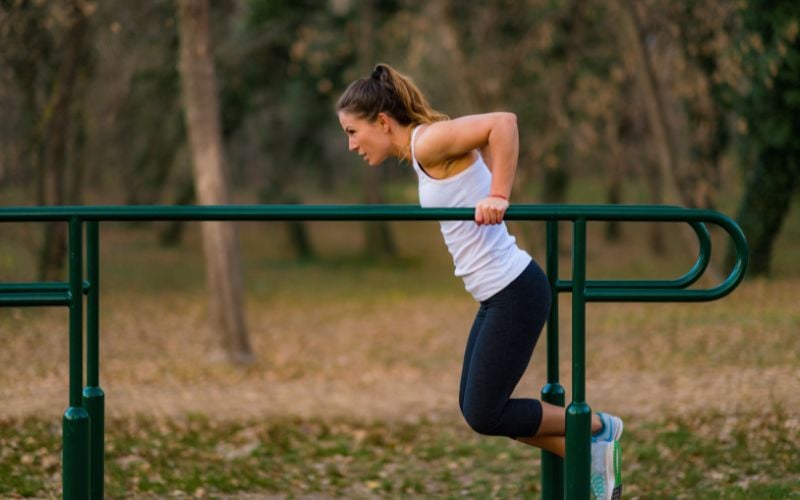
a. Static Strength Stations
Static strength stations provide fixed, stable structures for bodyweight–based strength training. As the equipment remains stationary, resistance comes entirely from the user’s own body weight.
Typical examples include pull-up bars, parallel dip bars, sit-up benches, and push-up stations.
These units are durable, low-maintenance, and suitable for users seeking basic strength and core conditioning. However, they do not offer adjustable resistance, making them more appropriate for foundational exercises than for progressive strength training.
b. Cardiovascular Machines
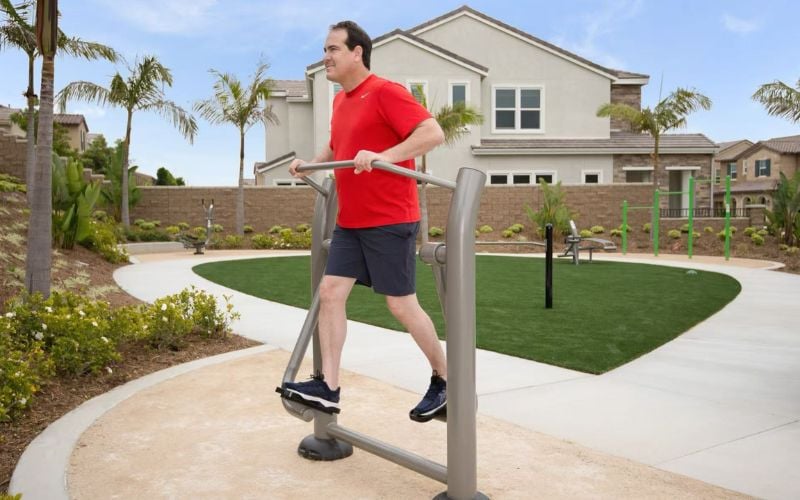
Cardio-focused outdoor equipment is designed to elevate heart rate, improve lung capacity, and build stamina.
Common types include outdoor elliptical trainers, stationary recumbent bikes, air walkers, and treadmills.
Smooth, low-impact motion makes these accessible to most age groups, while consistent rhythmic movement supports long-term cardiovascular health. For a well-rounded fitness zone, they are often combined with strength equipment to create balanced workout circuits.
c. Dynamic Resistance Equipment
Dynamic resistance machines feature built-in adjustable resistance systems to accommodate varying strength levels and training intensities.
Resistance can be modified during pushing, pulling, or lifting movements, allowing multiple users — from beginners to advanced exercisers — to train safely and effectively on the same apparatus.
This category supports progressive strength training without relying solely on body weight, offering greater versatility for targeted muscle development.
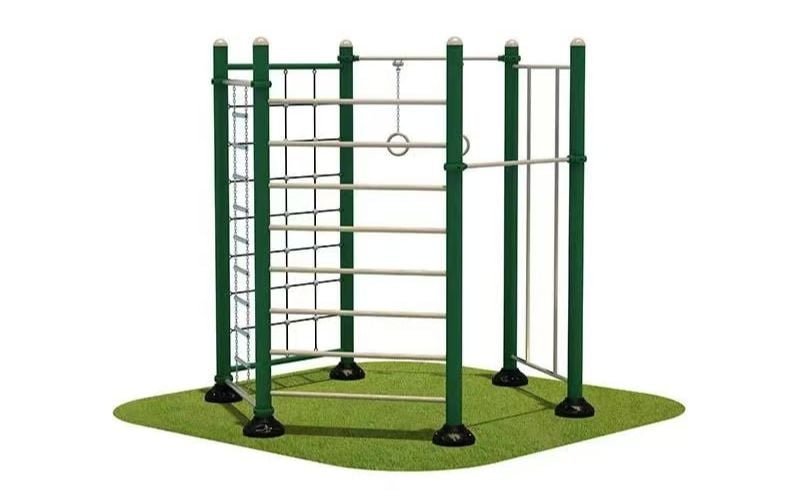
d. Multi-Functional Fitness Rigs
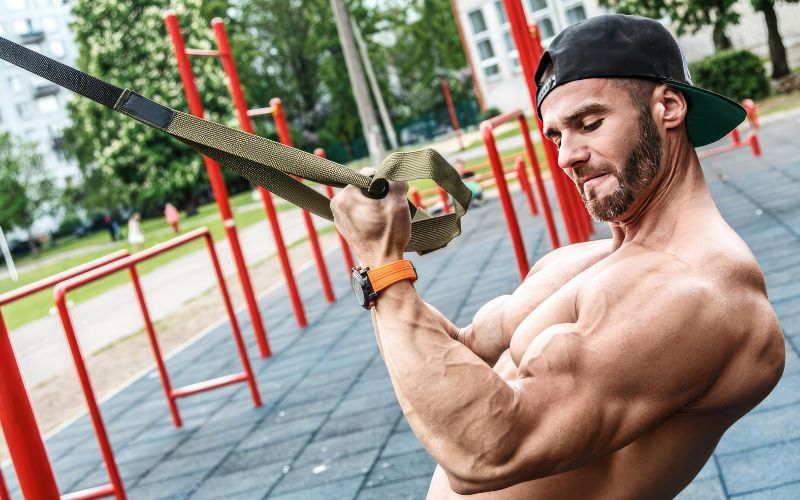
Multi-functional fitness rigs are all-in-one structures that combine multiple exercise stations in a compact footprint.
They support simultaneous use by three or more people, making them highly efficient for parks, campuses, and community fitness areas.
These rigs integrate strength, agility, and functional training functions while maintaining a neat, unified appearance. Ideal for group workouts and high-traffic public spaces, they maximize usability without requiring excessive space.
4. Installation and Space Requirements
When deciding whether to install outdoor fitness equipment, it is important to evaluate your available space and soil conditions. Most outdoor machines come with specific mounting options, which can be selected based on the following foundational conditions:
a. Surface Mount Installation
If your designated space has an existing concrete pad that is at least a few inches thick, surface mounting is the most flexible and recommended option. This method works best for solid foundations that can securely hold heavy expansion bolts. It does not require digging deep into the earth and allows for a relatively straightforward installation process, making it ideal for urban recreational setups.
b. In-Ground Direct Mount
If your fitness area is situated on natural grass or dirt, you must secure the equipment deep into the ground. Depending on the soil type, concrete footings must be poured around the extended base posts to permanently anchor them. Both traditional soil and sandy grounds may require this highly secure method to ensure maximum stability and safety.
c. Freestanding Weighted Base
If your area cannot be drilled into, or if there are prohibitive structures underneath, like plumbing, you may need to use freestanding equipment with heavy, weighted bases. This installation type is less permanent, so ensure the placement meets your daily needs. Avoid placing these on highly uneven terrain to prevent tipping and irreversible damage to the machine or the user.
Tip: For additional guidance, check out the Inqila Outdoor Installation Guide. If necessary, consider hiring a professional contractor to handle the concrete pouring. These services are often sold separately and can be costly. Alternatively, opt for complete installation packages if the manufacturer offers them for added convenience.
d. Wall-Mounted Stations
For compact spaces that cannot accommodate large ground footprints, a wall-mounted fitness station is one of the remaining options. These sturdy rigs are equipped with brackets that can be bolted directly to strong structural walls. While no changes to the ground are necessary, the drawback is that you must ensure the wall is load-bearing and structurally sound.
e. Mobile Fitness Units
If your facility is not suitable for permanent mounting, or if you regularly host seasonal events, mobile fitness trailers or units fix the equipment directly to a movable base. This offers maximum versatility, saves permanent park space, and provides greater flexibility for community outreach. The downside is that it requires a vehicle for transportation and secure locking mechanisms when parked.
5. Avoiding Installation Pitfalls
Before purchasing outdoor fitness equipment, double-check your installation site for the following potential issues to ensure a secure and stable setup:
a. Uneven Terrain
Ground surfaces with slopes exceeding a few degrees may reduce equipment stability. Ensure your installation site is properly leveled and properly graded for optimal performance and user safety.
b. Underground Utilities
Obstacles such as buried water pipes, electrical lines, or gas mains near the installation zone may require you to adjust the layout. To ensure safe in-ground mounting, you must always consult local utility maps and call your local digging authority before breaking ground.
Example: High-voltage lines prevent deep digging, requiring alternative surface-mounted installation methods on a newly poured concrete slab.
c. Foundation Material
Certain materials may not support heavy fitness mounts well and risk catastrophic failure:
- Thin or cracked asphalt
- Loose gravel or sand without deep footings
- Decorative paving stones prone to shifting
To avoid damage and injury, consider installing reinforced concrete footings to distribute users’ dynamic loads. These foundational upgrades are often handled separately, but some equipment providers offer specialized anchoring kits for added convenience, ensuring greater site compatibility.
6. Safety Standards and Certifications
Safety standards are global benchmarks for recreational products, defined by organizations like ASTM and EN. Most reputable outdoor fitness machines are rigorously tested to meet strict guidelines regarding pinch points, structural integrity, and material safety. The Inqila Pro Series supports the most common international safety configurations, ensuring peace of mind.
However, there are exceptions to watch out for:
Uncertified imports: Cheaper models may lack critical ASTM or EN certifications, posing significant liability risks. For public parks, you will likely need to provide proof of these safety standards to local municipalities, which is why choosing a certified manufacturer is essential.
Children’s Play Areas
Only specialized, age-appropriate equipment should be placed near playgrounds. Standard adult fitness machines cannot be safely used by small children, making it essential to verify age ratings before purchasing and installing equipment near a school.
Inclusive Design
High-performance inclusive models often feature unique accessibility designs for wheelchair users. These typically require wider clearance zones, which may be specified in ADA compliance guidelines. Ensure your layout fits both the specialized equipment and the required clearance space for a safe and legal installation.
7. Weight Capacity and User Specifications
When choosing outdoor fitness equipment, it is crucial to check its maximum weight capacity and compare it with the expected user demographic. You can typically find this information on the manufacturer’s official website. Keep these factors in mind:
a. High-Traffic Usage
Public parks tend to see incredibly heavy use, making the equipment subject to constant, rigorous stress. To ensure stability and safety, add a significant buffer to the weight capacity when calculating the structural strength required for the machines you plan to buy.
b. Dynamic vs. Static Loads
Exercises such as jumping or aggressive swinging increase the dynamic load on the equipment. Be sure to account for these multiplied forces—not just a user’s resting body weight—when selecting suitable, heavy-duty outdoor rigs.
c. Avoiding Weight Limits
Resistance-based machines perform poorly when the user’s weight is too close to the equipment’s absolute upper limits. To maximize functionality and lifespan, leave a wide margin of error on the weight range to accommodate unexpectedly heavy users.
Finding the Ideal Range
Most standard adult users weigh between 150 and 220 lbs. Including the dynamic forces of rigorous exercise and a safety margin, commercial-grade outdoor equipment with a weight capacity of 300–350 lbs is usually the most versatile and secure choice.
Equipment with a maximum capacity of only 200 lbs might bend or fail when heavier individuals use it, leading to performance issues and reduced overall safety.
The Inqila equipment line has already factored in the extreme forces of outdoor public use, so you can purchase with confidence.
A Word of Caution: Heavy-duty resistance mechanisms designed for advanced athletes often exert a strong counter-force. This can make the machines difficult for beginners or elderly users to operate. Unless you are outfitting a highly specialized military or athletic training camp, avoid over-specifying your resistance levels, as this may lead to unused equipment and suboptimal community engagement.
8. Adjustability and Versatility
When choosing outdoor fitness equipment, it is crucial to check its adjustability range to accommodate a diverse user base. Keep these factors in mind:
a. Height Adjustability
Check if the equipment can be adjusted for taller or shorter users. Most standard machines have fixed heights, so verify the ergonomic reach in the specifications or product images to ensure compatibility with your target community.
b. Resistance Adjustment
Can the machine provide varying levels of difficulty? According to modern fitness standards, an optimal workout requires progressive overload. Ensure the machine you choose offers adjustable resistance mechanisms, especially for comprehensive community gym setups.
c. Range of Motion
Most dynamic fitness machines specify adjustment angles for key body movements:
- Seat Positioning: Adjust the seat to be closer or farther from the handles.
- Pivot Range: The arc through which the machine’s arms can travel smoothly.
- Step Length: For ellipticals, the stride length required to operate the machine.
While basic pivot ranges are generally similar across most outdoor brands, seat positioning varies significantly. For users with specialized needs, such as seniors requiring extra support, look for machines that offer simple, intuitive seat adjustments.
d. Multi-Grip Handles
If you plan to install a pull-up station or chest press, ensure it features multi-grip handles to target different muscle groups. Simple, single-grip bars may not provide adequate versatility for advanced users. Products from the Inqila Pro line offer a range of grip angles, making them better suited to these dynamic workout scenarios.
e. Vandal-Proof Mechanisms
If your fitness park is located in an unsupervised public area, consider equipment with built-in tamper-proof adjustment knobs. These specialized mechanisms limit vandals’ ability to remove or break moving parts while keeping the machine functional for legitimate users. However, some models lack this protection, making them more easily damaged. If you anticipate security challenges in the future, prioritize equipment with enclosed, vandal-proof designs.
9. Maintenance and Longevity
One of the most common issues users face after purchasing outdoor fitness equipment is “premature rusting.” This problem typically occurs in two key areas:
Moving Joints: Insufficient lubrication at the pivot joints can cause the metal to grind and rust.
Base Anchors: Water pooling at the base can cause the foundation posts to corrode over time.
How to Fix Maintenance Issues
To resolve these issues, first apply specialized weather-resistant lubricants to the joints and check if the smoothness improves. Some products require routine inspections to ensure bolts remain tight, which may test your maintenance team’s schedule. Avoid using harsh, corrosive chemical cleaners, as they could damage protective coatings or plastic components.
If the rusting persists despite proper maintenance, it may indicate that the equipment lacks proper powder coating or that extreme coastal weather has deteriorated the finish. Consider whether the material is appropriate for your specific climate.
Choosing Durable Outdoor Equipment
Lower-priced outdoor machines often rely on simple, thin paint jobs that may chip and weather over time. Consider investing in products with double powder-coated galvanized steel, designed for enhanced durability. These designs provide maximum resistance against the elements, ensuring longer-lasting performance and safer workouts.
Special Considerations for Coastal Areas
Corrosion issues are more common in high-humidity or saltwater environments. Many brands claiming to be “rust-proof” can only survive mild climates, failing quickly when exposed to salty sea air. This often leads to customer dissatisfaction and expensive replacements. Before purchasing, check the manufacturer’s anti-corrosion warranty to ensure the equipment meets your expectations.
10. Aesthetic and Design Considerations
Proper aesthetic integration is essential when designing an outdoor fitness park. The equipment’s visual appeal influences how often the community engages with the space. Here is what to keep in mind:
Color Schemes
- For nature-integrated setups, use subtle greens, browns, and blacks to ensure the equipment blends seamlessly into park environments without causing visual disruption.
- For modern urban setups: Vibrant colors like bold reds, blues, or sleek silvers can create a highly energetic and inviting workout zone, keeping your civic space looking modern and professional.
Landscape Integration
Modern public spaces often face challenges in balancing green areas with functional zones. Outdoor fitness equipment with a minimalist, integrated design can efficiently provide workout opportunities without dominating the landscape. Most premium lines offer customized color matching, making them ideal for high-end residential communities, university campuses, or corporate outdoor spaces.
Conclusion
We have covered common questions about selecting outdoor fitness equipment, including structural durability, weight capacities, and installation requirements. If you are still unsure which setup to choose, the Inqila Pro Series is a reliable, well-rounded option:
Supports high-traffic community usage with robust weight capacities, making it suitable for heavy-duty public park installations.
Features premium galvanized steel and UV-resistant coatings to prevent rusting and fading over time, especially in harsh weather conditions.
Includes comprehensive installation guides and tamper-proof hardware to protect your investment in unsupervised environments.
If you have additional questions, feel free to reach out to our team for personalized assistance with outdoor gym layout planning or finding the perfect fitness stations for your community’s needs.