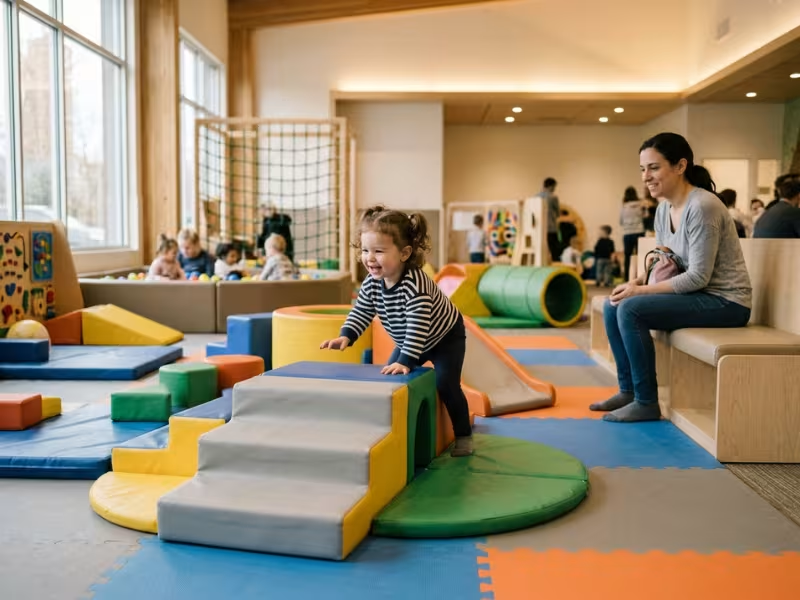
It’s 95 degrees in the Valley, and the air quality app just turned red. Or a rare rainy morning keeps everyone home. Your toddler still has energy to burn, and the living room feels smaller by the minute.
Not every play space works for little kids. Some are too loud, too crowded, or too rough. You need a place your toddler can handle and you can actually tolerate.
I help families find indoor playgrounds that truly fit. This guide shows you how to judge a venue, pick one for your family, and skip the spaces that only look toddler-friendly.
Families often start with short visits like these, while schools, play centers, and family venues rely on well-planned indoor playground equipment to create safer, more age-appropriate play areas.
What Actually Makes an Indoor Playground Good for Toddlers
Plenty of venues in Los Angeles call themselves toddler-friendly. Far fewer actually are. When I walk into a new play space, I check three things first: where the little kids play, where the parents sit, and how clean the space looks up close.
These checks take about five minutes. They tell you more than any website photo or online review.
True Toddler Zones, Not Just “Kids Welcome”
A sign that says “all ages welcome” means nothing for a 20-month-old. What matters is whether toddlers get their own protected space.
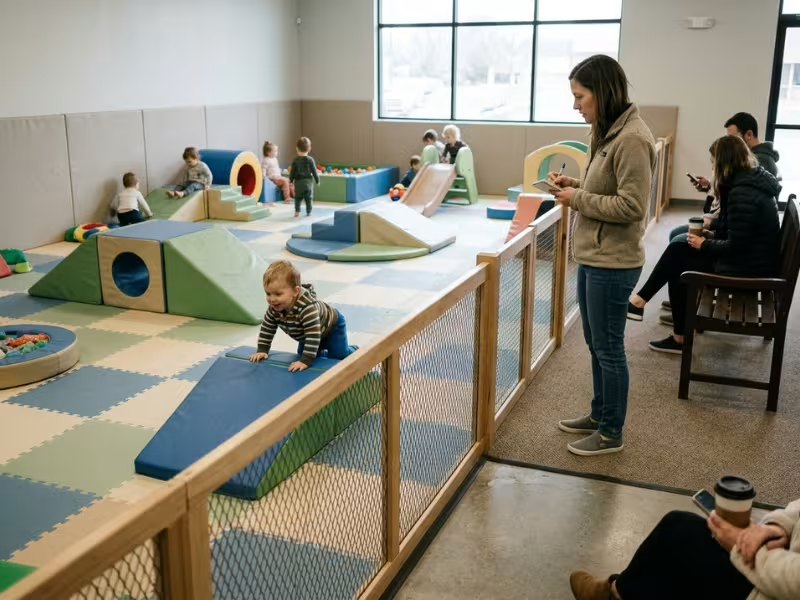
Look for a separate area for kids under 3, or under 4 at most. The best venues post the age limit at the entrance and enforce it. If a 7-year-old cannonballs into the toddler ball pit and no staff member steps in, the rule only exists on paper.
Next, check the floor. Good toddler zones use thick foam mats or padded vinyl across the whole area, not just under the climbers. Little kids fall constantly, and they rarely fall where adults expect.
Then look at the height. My rule is simple: a toddler should climb everything without help, and nothing they stand on should sit much higher than your waist. Soft ramps, low steps, tunnels, and small slides work well. Tall nets and rope bridges belong in the big-kid area.
Finally, check the boundary. A strong toddler zone has a clear barrier, such as a half-wall, a padded fence, or a gate with an adult-height latch. A rug or painted line on the floor does not count.
Parent Comfort That Actually Helps
Parent comfort is not about trendy décor. It’s about whether you can sit down and still see your child.
Pick a seat and test it. Can you see the entire toddler zone without standing up? Pillars, tall climbers, and party rooms often block the view. The best layouts put benches or café tables right along the toddler barrier, within about 15 feet of the play area.
Then check what the venue offers adults:
- Coffee and snacks: An on-site café is a big plus. If there isn’t one, ask about outside drinks.
- Tables and outlets: These matter if you plan to answer emails or stay longer than an hour.
- Wi-Fi: Ask for the password at check-in and test it before you open your laptop.
Last, listen. If you have to raise your voice to talk to the parent next to you, the space is too loud. Loud music and echoing walls wear out toddlers fast, and parents even faster.
Cleanliness and Safety Signals Worth Checking
Every venue says it cleans often. You can verify that claim yourself.
Start at the door. A solid venue requires socks for everyone, adults included, and provides shoe cubbies at the entrance. If people walk in wearing street shoes, think about what toddlers will touch and put in their mouths.
Watch how entry and exit work. The safest spaces use wristbands or matching tags for each child and parent. Staff should check them at the exit, and that exit should sit far from the toddler zone.
Look for cleaning habits you can actually see:
- A “mouthed toy” bin where staff collect toys to wash
- Staff wiping surfaces during open play, not only at closing
- Hand sanitizer near the toddler zone entrance
Inspect the padding, too. Torn vinyl, exposed foam, and cracked plastic signal poor upkeep. Then visit the bathroom. A venue that ignores its restroom usually ignores its ball pit as well.
How to Choose the Right Indoor Playground for Your Family
The best indoor playground for your neighbor might be a bad fit for you. A venue that thrills a 3-year-old can overwhelm a 14-month-old. So before you search for names, figure out what your family needs today. Most parents I talk with fall into one of four groups.
If You Have a 1-Year-Old or a Young Toddler
New walkers need a small, protected world. Look for a fully enclosed soft play area with one entrance, padded walls, and foam flooring from edge to edge.
Skip venues with one big open play floor. Mixed-age spaces put wobbly 1-year-olds in the path of 6-year-olds who run and slide headfirst. Low music, soft lighting, and fewer kids help young toddlers explore instead of freezing up.
Before you pay, call and ask: “Do you have a separate area for kids under 2?” A clear yes is a good sign. A vague “all ages play together” means keep looking.
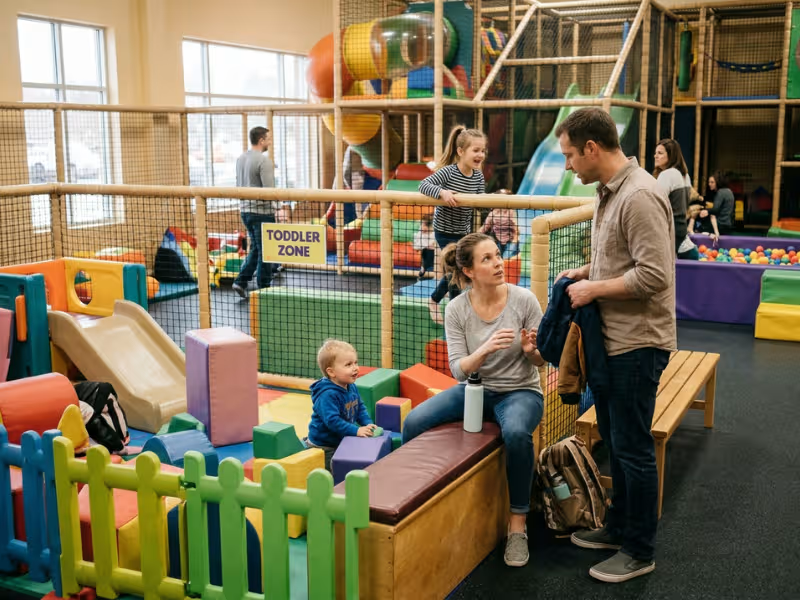
If You Have a Toddler and an Older Sibling
This is the trickiest setup. A toddler-only room bores your 6-year-old within minutes. A big-kid gym leaves your toddler on the sidelines.
Look for two clearly separate zones under one roof, ideally side by side with seating in between. That lets you watch both kids from one chair. Ask whether the toddler zone has a firm age cap, and check for sibling discounts. Those savings add up fast.
If You Want to Sit, Rest, or Work a Bit
Sometimes the goal is simple: your child plays, and you sit with a coffee. Choose a venue with a café and tables right along the play area.
Check the session rules. Some venues cap open play at 90 minutes, which can cut a work session short. Go on a weekday morning, roughly 9 to 11 a.m. If you plan to answer emails, go on a Tuesday, not a Saturday.
If You Need a Quick Drop-In
Some days you just need 60 minutes to burn energy before nap. Convenience beats features here.
Start with parking. In Los Angeles, circling the block with a cranky toddler wipes out the benefit of going at all. Then pick a spot where you sign a waiver once and pay at the door. If you can’t figure out the price from the website in under a minute, the visit won’t feel quick either.
Best Types of Indoor Playgrounds for Toddlers in Los Angeles
Westside café gyms, Valley warehouse playgrounds, and boutique rooms in Pasadena and Glendale all compete for your morning. A long list of names won’t help much. Knowing which type of venue fits your visit will. Here are the four types I point families toward most.
Best for Younger Toddlers and First Visits: Small Soft Play Rooms
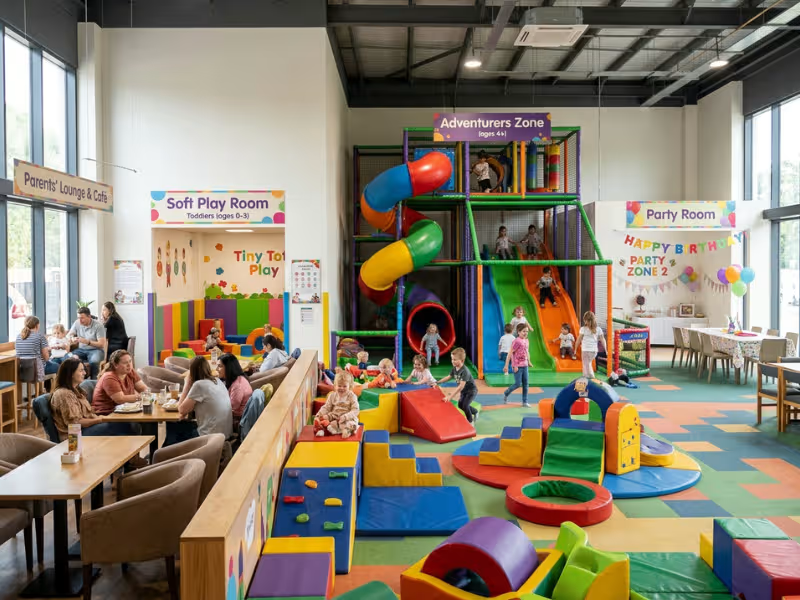
For a first visit or a child under 2, I almost always suggest a small soft play room. You’ll find many in Pasadena, Glendale, Santa Monica, and Sherman Oaks. They work better for new walkers for three reasons:
- Less stimulation. Softer music and fewer kids help toddlers explore instead of shutting down.
- Easier supervision. You can see the whole room from one spot.
- Easier to keep clean. Staff can wipe down a compact space several times a day.
These rooms also work as a low-risk test. Your child may love the ball pit, or cling to your leg for 20 minutes. Either result tells you something before you buy a membership. Expect sessions of 60 to 90 minutes, which matches most toddlers’ stamina.
Best for Parents Who Want Seating and Coffee: Café-Style Play Spaces
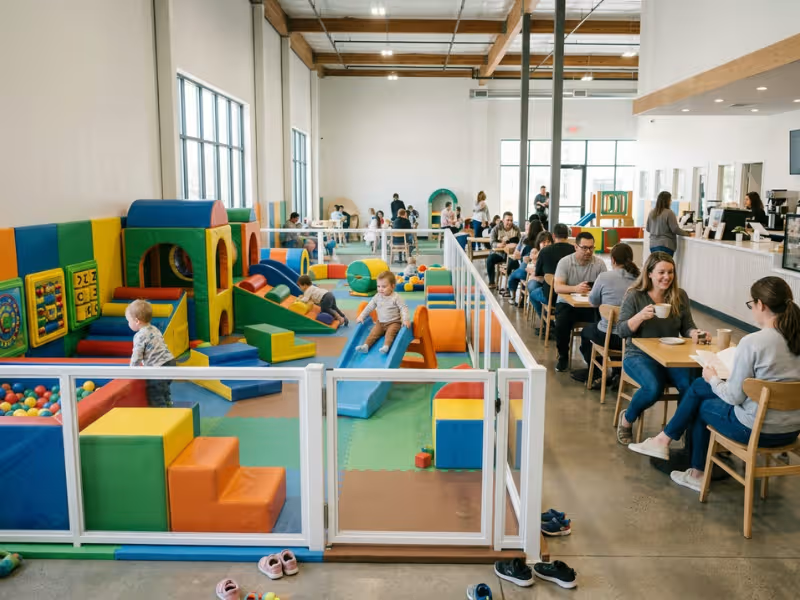
Café-style playgrounds pair a play area with a real coffee counter. Many sit on the Westside, in Culver City, and around Silver Lake and Los Feliz.
Some look stunning, but check the layout before the décor. A pretty room with bad sightlines keeps you on your feet. A plain room with tables along the barrier lets you rest. I look for:
- Tables within a few steps of the toddler area
- Real food, not just packaged snacks
- Clear rules about laptop time during busy hours
Café venues often cost more. If you’ll use the coffee and seating, it’s worth it. If you mostly stand and spot your child, a simpler venue gives better value.
Best for Mixed-Age Families: Larger Venues With Split Zones
When you bring a toddler and a 5- or 7-year-old, size matters. Larger venues in the Valley, Burbank, Torrance, and around Koreatown often fit two separate areas under one roof.
The key word is separate. A good venue puts the big-kid structure in one zone and a gated toddler area in another. Big kids don’t have to slow down, and you don’t spend the visit saying “watch out for the baby.”
Walk the layout first. If the toddler zone sits at the foot of a busy slide exit, you’ll face constant traffic. That kind of split layout works because mixed-age play needs clear zoning, better sightlines, and smarter flow, which is why many operators turn to custom playground equipment when they build spaces for different age groups.
Best for Birthdays and Longer Play Dates: Venues With Private Rooms
Many LA playgrounds earn most of their income from parties. Some handle toddler parties well, while others seem built for 8-year-olds.
A private room is worth the cost. It gives you a calm base away from the main floor. Some venues offer a private play session, where your guests have the toddler area to themselves. For kids under 3, that beats a shared floor.
Keep toddler parties manageable:
- Book a morning slot that ends before nap time.
- Invite around 8 to 12 kids.
- Ask the host to lower the music.
- Choose a 90-minute package, not a full afternoon.
When to Go, What to Pack, and What to Watch For
The same venue can feel calm at 9:30 on a Tuesday and chaotic at 2 p.m. on a Saturday. Timing, your bag, and a quick scan of the room shape the visit more than the venue’s name.
Go During the Quiet Hours
Weekday mornings win almost every time. Arrive right at opening if you can. Staff have just cleaned, and a handful of toddlers often have the whole zone.
Skip weekend afternoons, when back-to-back birthday parties flood the floor. Heat waves and smoky days also send every family indoors, so get there early.
Pack a Small, Smart Bag
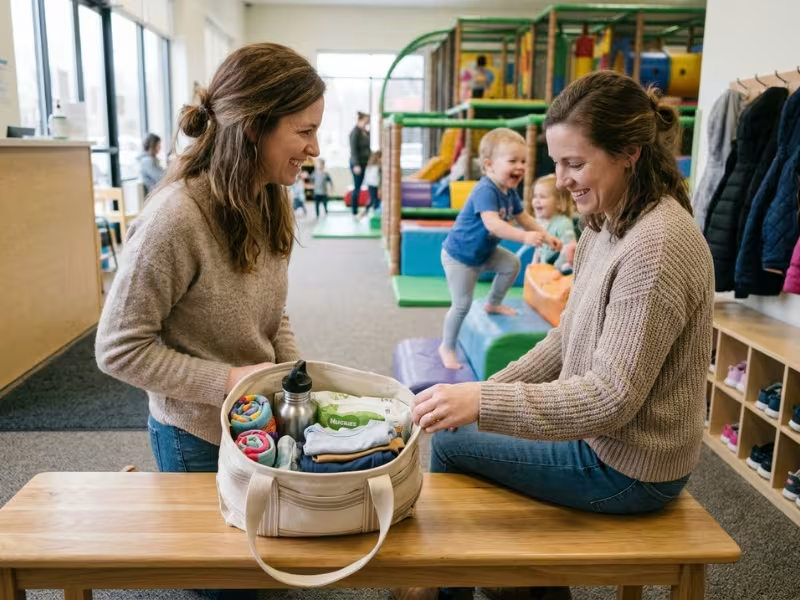
A small tote fits a crowded cubby better than a giant diaper bag.
- Grip socks for both of you. Venues often charge $3 to $5 a pair.
- A full change of clothes. Toddlers spill, sweat, and leak.
- A labeled water bottle. Play spaces get warm fast.
- A snack backup, if the policy allows it. Many venues ban nuts.
- Wipes and mini sanitizer for snacks and bathroom trips.
Know When to Walk Out
Scan the room for two minutes before you settle in. These signs tell you to leave or ask for a refund:
- A crowded toddler zone, or older kids sneaking in
- Worn soft surfaces, such as cracked vinyl or exposed foam
- Broken equipment, like a loose slide or tape over damage
- Poor sightlines from every open seat
- A sloppy checkout, with no wristbands and an unwatched exit
Trust your gut. One rough visit costs an hour. Returning to the wrong venue costs much more.
A Quick Comparison Table for Busy Parents
Start with the column that matters most today: safety for a new walker, a seat and coffee, or price. Then check the last column so you arrive at the calmest time.
|
Type of Indoor Playground |
Best For |
Parent Comfort |
Safety for Young Toddlers |
Cost Level |
Best Time to Go |
|---|---|---|---|---|---|
|
Small Soft Play Room |
Kids under 2, first visits, shy toddlers |
Moderate; basic seating, full-room view |
High; soft floors, low equipment |
Low to moderate |
Weekday mornings at opening |
|
Café-Style Play Space |
Parents who want coffee or work time |
High when tables line the play area |
Moderate to high; depends on gated zone |
Moderate to high |
Weekdays, 9 to 11 a.m. |
|
Large Venue with Split Zones |
Toddlers with older siblings |
Moderate; best with central seating |
Moderate; only if toddler area is gated |
Moderate, often with sibling discounts |
Weekday mornings or early weekend slots |
|
Birthday/Party Venue |
Toddler parties, longer play dates |
High in a private room |
Moderate; private sessions are safer |
High for parties |
Morning slots before nap |
Most families end up with two favorites: a soft play room for quiet weekdays and a larger venue for sibling days.
Common Parent Questions Before You Go
Is an indoor playground safe for a 1-year-old?
Yes, if the venue has a separate, gated area for the youngest kids, with wall-to-wall foam flooring and staff who keep older children out. Stay within arm’s reach for the first few visits.
Do adults usually have to pay too?
Usually not. Most venues admit one or two adults free with a paying child. Some charge for extra adults, and café spaces may ask you to buy a drink.
Are grip socks required?
At most venues, yes. Nearly all require socks for everyone, and many require grip socks for kids. Keep a spare pair for each family member in the car.
Can I bring outside snacks?
It depends. Venues with full cafés often ban outside food but still allow baby food, formula, and allergy-safe snacks. Call ahead before you pack.
Are reservations needed, or can I walk in?
Many venues welcome weekday walk-ins. Weekends, holidays, and heat waves fill up fast. Book the night before and sign the waiver online to skip the line.
Which kind of indoor playground works best for toddler birthdays?
Pick a venue with a private room, ideally one that offers a private play session. Keep it to about 90 minutes in the morning. A calm, short party beats a big, loud one at this age.
Find Your Toddler’s Go-To Spot
The biggest indoor playground in Los Angeles is rarely the best one for a toddler. Three-story climbers and trendy décor look great online, but a 2-year-old needs something simpler.
Focus on what shapes the visit. Look for a gated toddler zone with soft floors and low equipment. Pick a seat where you can see your child without standing. Check the sock rule, the toys, and the bathroom. Then go when the room stays calm.
Start small this week. Choose one spot that opens early on a weekday, and pack grip socks for both of you. Test the space before you buy a membership. One good morning will tell you whether you’ve found your place.