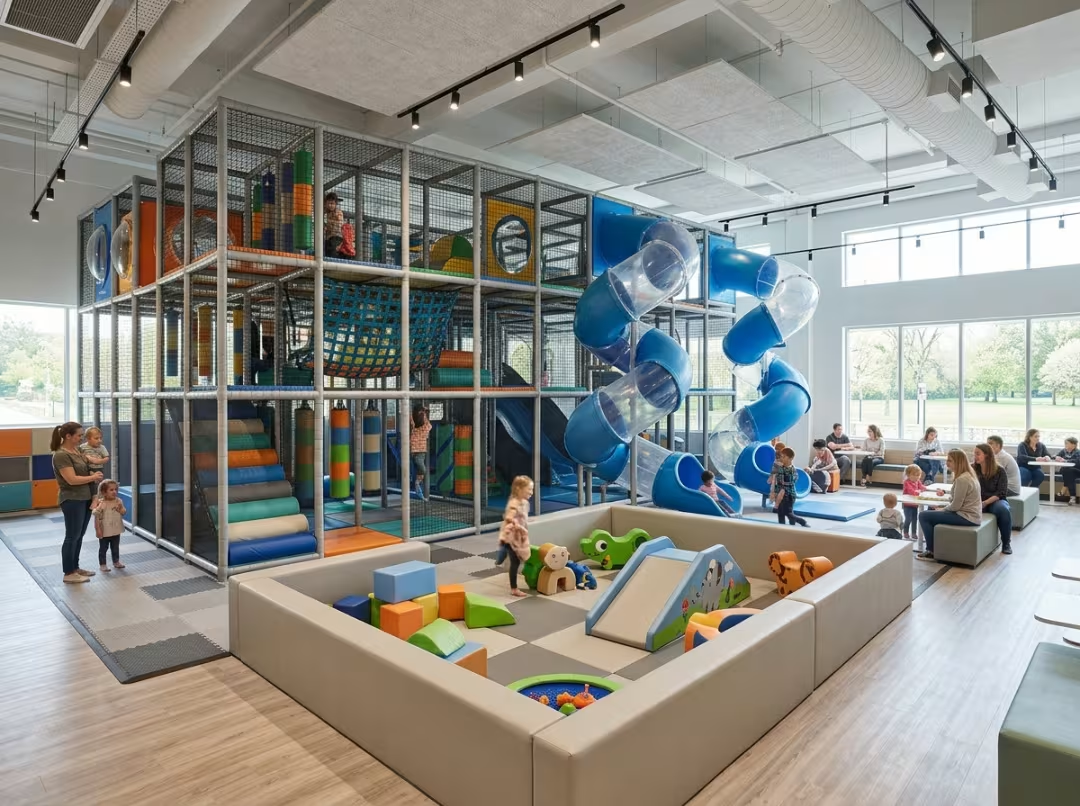
Commercial indoor playground flooring is a safety-critical decision governed by ASTM F1292 impact attenuation standards, ADA accessibility requirements, and local fire and VOC codes. The right material for each zone depends on the Critical Fall Height (CFH) required by the equipment above it — not aesthetics or price per square foot. Poured-in-place rubber delivers the highest CFH ratings and best long-term hygiene performance for active zones.
Most operators spend months selecting equipment — structures, themes, layouts, custom colors — and then treat flooring as the last line item to fill in before opening. That’s a costly sequence. Commercial indoor playground flooring is not décor. It’s the only safety system that absorbs impact on every fall, across every zone, for every child in the facility.
Get it wrong, and the consequences appear fast: failed safety inspections, injury claims with direct legal exposure, and replacement cycles that arrive years earlier than budgeted. Get it right, and you have a surface that performs reliably for a decade, holds up under daily sanitization, and meets compliance requirements without retrofitting.
This guide covers the safety standards that govern flooring decisions, each commercially relevant material with honest trade-offs, a zone-by-zone selection framework, installation realities, maintenance requirements, and real budget figures — so you can make a decision grounded in your facility’s actual requirements, not a spec sheet or a salesperson’s recommendation.
Why Flooring Is Your Most Important Safety Decision
Falls are the leading cause of injury in indoor play facilities. The equipment determines where children climb and how high. The flooring determines what happens when they land.
Impact attenuation is the mechanism at work: the floor absorbs kinetic energy from a fall and dissipates it before it reaches the child’s head. How much energy a surface absorbs — and at what fall height it stays within safe limits — is the number that matters. Cost per square foot is not.
The liability dimension follows directly from the safety one. Indoor playground surfacing that doesn’t meet ASTM standards or is installed incorrectly creates legal exposure on both fronts. Insurance carriers increasingly require documented compliance before commercial coverage applies. That’s not a future risk to monitor — it’s a current requirement to verify before you open.
Accessibility is equally non-negotiable. Surfaces that are uneven, excessively soft, or poorly transitioned between zones create barriers for children using mobility aids and their caregivers. Under the Americans with Disabilities Act, that’s a compliance issue, not a design preference.
Framed correctly, flooring is a risk-management choice that also determines your maintenance burden, operational disruption tolerance, and long-term replacement cost. Aesthetics and price belong after those factors — not before.
What Playground Flooring Safety Standards Apply to Commercial Indoor Facilities?
Operators frequently misread or misapply these standards. This section closes that gap.
What Does ASTM F1292 Measure — and What Is Critical Fall Height?
ASTM F1292 is the primary standard governing impact attenuation for playground surfaces in the United States. It measures two values: Head Injury Criterion (HIC) and Gmax. Both have maximum thresholds the surface must remain under to be considered safe. A surface “meeting ASTM F1292” means it passed those thresholds at a specific thickness, under controlled laboratory conditions.
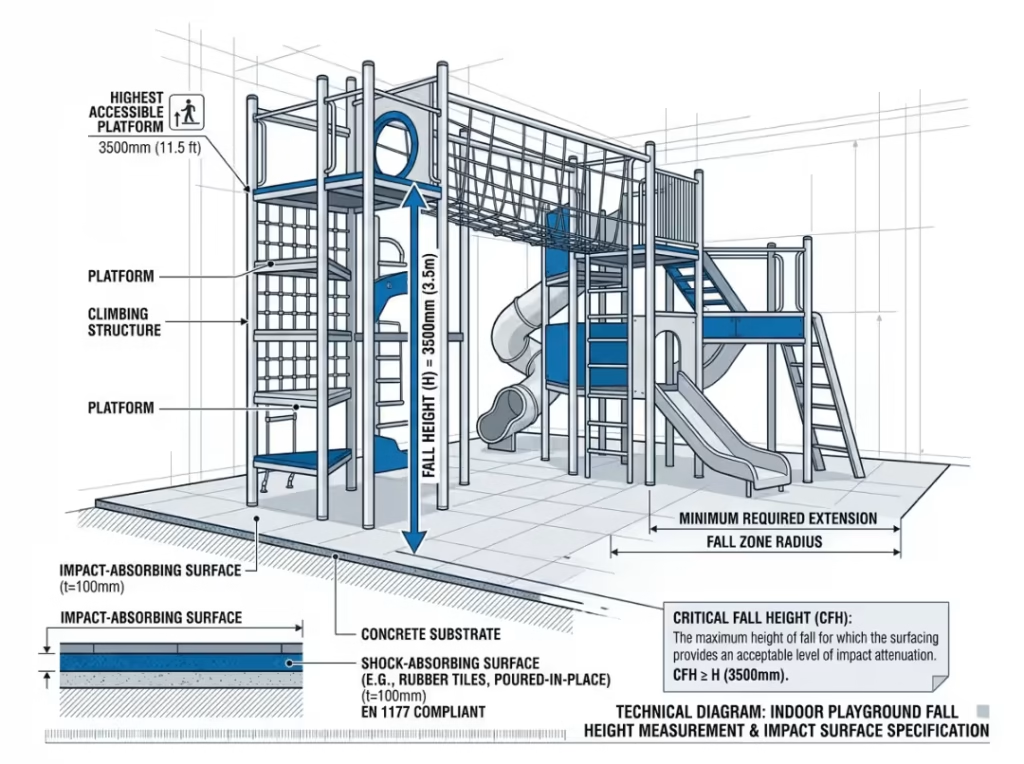
The number operators need to work from is Critical Fall Height (CFH): the maximum height from which a child can fall onto the tested surface and remain within safe HIC and Gmax limits. This value is product-specific and thickness-specific. It appears in the manufacturer’s ASTM F1292 test report.
The practical rule is straightforward. The surface’s CFH rating must meet or exceed the maximum accessible height of the tallest structure installed above it. A surface rated to a 6 ft CFH is not safe beneath a 10 ft climbing structure. That mismatch is common and one of the most expensive compliance failures a facility can make — because it typically requires a complete zone replacement after the fact.
One more nuance worth understanding: ASTM F1292 test results are produced under laboratory conditions. Installed performance varies with subfloor type, ambient temperature, wear compression, and installation quality. Ask manufacturers directly how installed conditions affect their product’s rated CFH at your specified thickness.
What Does ADA Compliance Require from Indoor Playground Surfaces?
ADA-compliant playground surfaces must be firm, stable, and slip-resistant. The practical implication for material selection: hard rubber and properly specified vinyl typically pass. Thick foam tiles frequently fail — excessive compression underfoot creates instability for users with mobility aids, which disqualifies the material regardless of its impact attenuation performance.
Transitions between zones demand specific attention. The interface between foam and vinyl, or rubber and carpet, must be flush or ramped. A raised edge at a zone transition is simultaneously an ADA violation and a trip hazard. Both problems appear regularly in facility inspections.
What Local Building Codes, Fire Ratings, and VOC Requirements Apply?
Flame spread ratings — typically measured under ASTM E648 or an equivalent standard — are commonly required for commercial floor coverings in publicly accessible spaces. This requirement is frequently overlooked during the material selection phase and instead surfaces during the permit or inspection process.
Poured-in-place rubber installations may require a building permit in certain jurisdictions. Confirm this before signing a contractor agreement, not after the pour has cured.
VOC emissions standards apply in some markets. California’s CARB (California Air Resources Board) compliance requirements are the most commonly referenced benchmark in the US context. If your facility is in a regulated market, confirm compliance before purchasing material.
Compliance Checklist for Indoor Playground Flooring
Before finalizing any flooring specification, verify each of the following:
- CFH requirement confirmed against the tallest accessible height on each structure
- ADA surface firmness verified for all zones accessible to mobility aid users
- Flame spread rating confirmed for commercial occupancy requirements in your jurisdiction
- VOC emissions compliance verified if operating in a regulated market
- Building permits checked for any poured-in-place or permanent installation
- ASTM F1292 test reports obtained at the specific thickness and installation method being used — not a general product category claim
What Types of Flooring Are Actually Used in Commercial Indoor Playgrounds?
Each material below is evaluated as an operator would: what it does well and the honest trade-offs.
EVA Foam Tiles
EVA foam tiles are common in toddler zones, soft play areas, and padded activity rooms. They’re low-cost, lightweight, and individual tiles can be replaced without disturbing the rest of the installation.
Trade-offs to plan around: CFH ratings are typically low — often under 4 ft. EVA foam tiles are not suitable beneath any climbing structure or elevated platform. Seams between tiles accumulate dirt and resist thorough sanitization, which is especially important in high-traffic commercial environments. Over time, compression reduces impact attenuation; busy facilities often require full zone replacement within 3–5 years. Interlocking tabs can lift under heavy foot traffic, creating trip hazards that require ongoing monitoring.
Best suited for: enclosed toddler zones, sensory rooms, and low-fall-height soft play areas where structures are at or below the product’s rated CFH.
Rubber Playground Flooring (Vulcanized / Interlocking Tiles)
Commercial rubber tiles are a standard across active zones, entrances, and transitional spaces. They offer a 10+ year lifespan with proper maintenance, strong slip resistance, and are available in thicknesses that meet higher CFH requirements.
Trade-offs to plan around: higher upfront cost than EVA foam. Heavier and harder to cut on-site — installation requires experience to achieve clean seams, particularly around columns and equipment bases. Color range is more limited than foam products, which can read as institutional in themed environments. Seam alignment requires care; post-installation drift creates trip hazards if edges aren’t properly managed.
Best suited for: active play zones where structure heights fall within the tile’s rated CFH at the specified thickness, high-traffic walkways, and transition areas requiring durability.
Poured-in-Place (PIP) Rubber — The Most Important Material for Active Zones
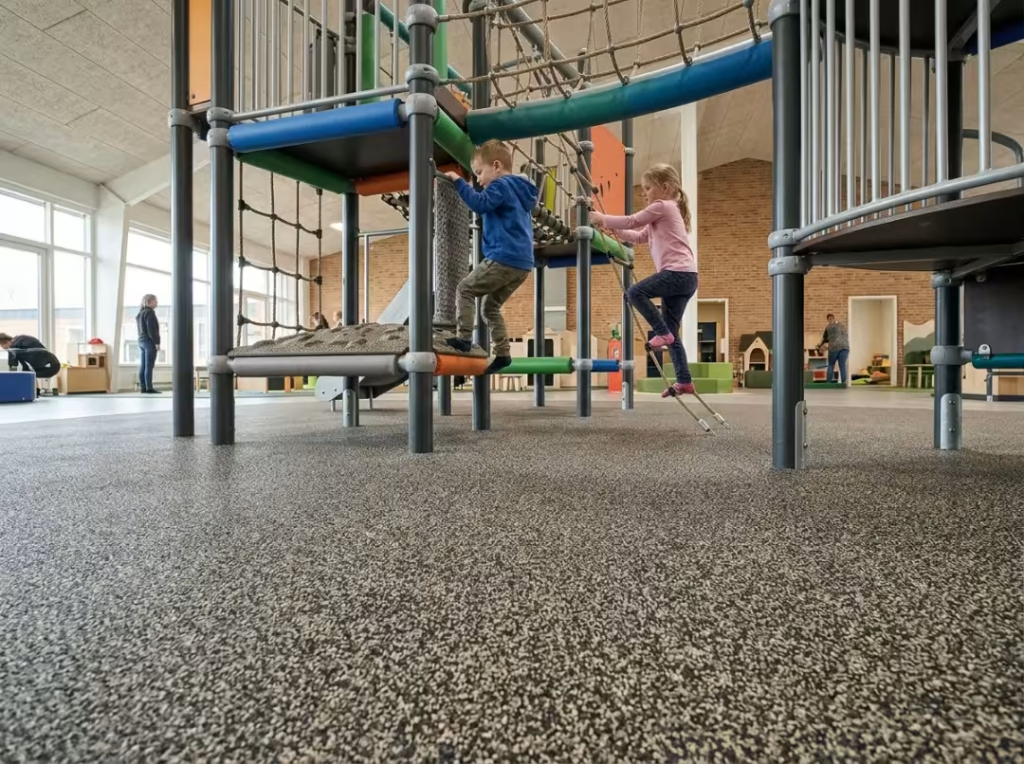
Poured-in-place rubber is a two-layer system. A base layer of recycled rubber granules — typically SBR (styrene-butadiene rubber) — provides the bulk of the impact attenuation. Over that, a wear layer of EPDM (ethylene propylene diene monomer) granules is bound with polyurethane and troweled or sprayed in place to create a seamless, continuous surface.
The seamless nature is the defining operational advantage. No seams means no trip hazards from tile edges. It also eliminates the seam channels that allow pathogen accumulation — the leading hygiene problem with any tiled system. In a high-traffic commercial facility where sanitization happens daily, that difference compounds over years. A toddler zone sees crawling, floor-level play, and close adult-child contact throughout the day; removing seams from that surface is not a minor benefit.
CFH performance is the strongest among commercially available soft surfacing options. Depending on installed depth, poured-in-place rubber can achieve CFH ratings of 6–12 ft, making it the appropriate — and often the only appropriate — choice beneath tall climbing structures. Any active zone where the maximum accessible height exceeds what commercial rubber tiles can reliably cover is a PIP zone.
ADA performance is among the strongest available. PIP rubber is firm, stable underfoot, and non-slip when installed correctly, meeting ADA requirements for firmness and stability across different ambient conditions.
Trade-offs to plan around clearly:
- Highest installed cost of any option. Both material and skilled labor are premium line items.
- Subfloor preparation requirements are the most demanding of any material. Concrete must typically be level within ±3mm per 3m, completely dry, crack-free, and structurally sound. Poor subfloor prep is the leading cause of PIP delamination and failure — and the cost variable operators most consistently underestimate.
- Repairs are visible. Patching doesn’t blend with the original pour. In heavily themed environments where aesthetics matter, this is a genuine long-term consideration.
- Cure time prevents zone use for 24–72 hours after installation, depending on ambient conditions and product specifications.
- PIP rubber is not DIY-installable at any meaningful commercial scale. Mixing ratios, pour depth, and troweling technique directly determine whether the finished surface achieves its stated ASTM F1292 rating.
Best suited for: active play zones with structures above 6 ft CFH, facilities where long-term cleanliness and sanitization efficiency are operational priorities, and any zone where seamless surfacing provides a safety or hygiene advantage.
Commercial Carpet Tiles
Carpet tiles appear almost exclusively in party rooms, seating areas, and low-activity transition zones. They’re comfortable underfoot and provide meaningful acoustic benefit in high-volume event rooms.
Trade-offs to plan around: no impact attenuation rating. Carpet tiles are not appropriate as a primary safety surface under any play equipment. Staining is a persistent operational challenge in children’s environments. A clear cleaning schedule and a realistic replacement timeline are both required before installation.
Best suited for: party rooms, parent viewing areas, and reception zones — not play zones.
Vinyl / LVT (Luxury Vinyl Tile)
Vinyl and LVT are appropriate for walkways, check-in areas, food service areas, and restrooms. They’re highly durable, water-resistant, and easy to clean.
Trade-offs to plan around: zero impact attenuation. Not suitable in any area where falls are possible. Can become slippery when wet if slip-resistant texture is not explicitly specified at purchase.
Best suited for: non-play circulation areas, reception, food service, and storage.
Side-by-Side Comparison of Commercial Indoor Playground Flooring Materials
|
Material |
CFH Range |
Est. Lifespan |
Maintenance Level |
Approx. Material Cost (per sq ft) |
Best Use Zones |
|---|---|---|---|---|---|
|
EVA Foam Tiles |
Up to ~4 ft |
3–5 years |
Medium (seam hygiene) |
$2–$5 |
Toddler zones, soft play |
|
Rubber Tiles (commercial) |
Varies by thickness |
10+ years |
Low–Medium |
$4–$9 |
Active zones, walkways |
|
Poured-in-Place Rubber |
6–12 ft |
10–15 years |
Low |
$8–$18 (installed) |
Active/climbing zones |
|
Commercial Carpet Tiles |
None |
5–8 years |
High (staining) |
$3–$7 |
Party rooms, seating areas |
|
Vinyl / LVT |
None |
10–15 years |
Low |
$3–$8 |
Walkways, non-play areas |
Cost figures are approximate US ranges and vary by region, thickness, and supplier. Always obtain quotes based on your specific CFH requirement and installation conditions — not material category alone. The cheapest option per square foot is rarely the cheapest option over five years.
Zone-Based Selection Guide: How to Match Flooring to Each Area of Your Facility
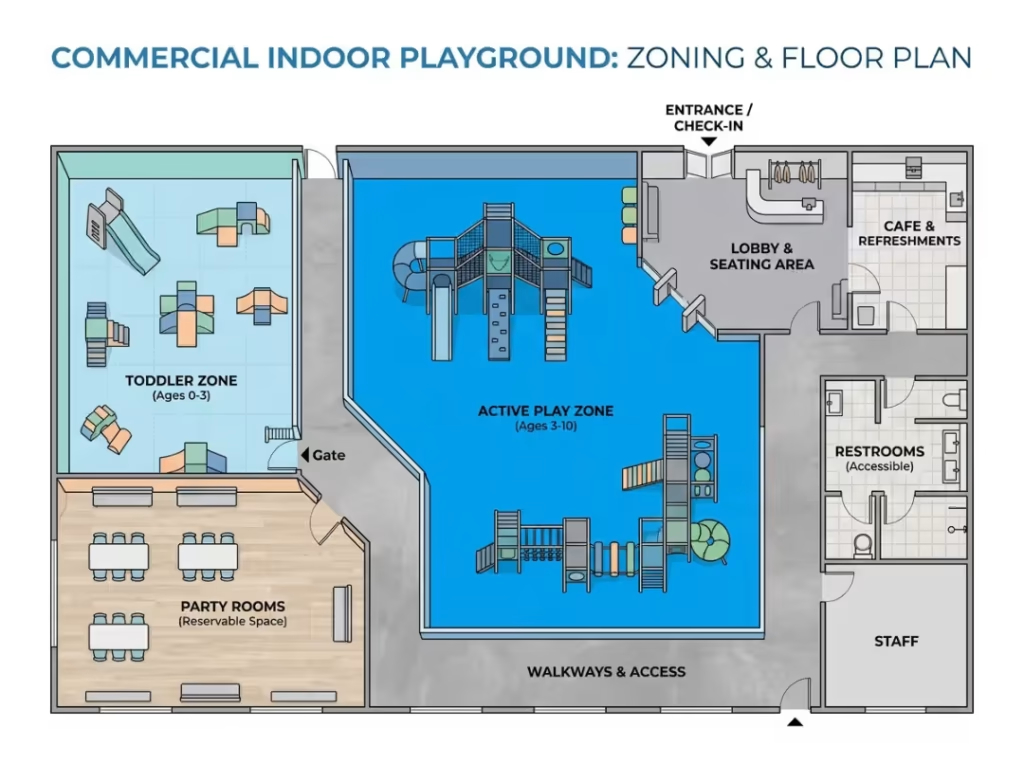
This is where most flooring decisions go wrong. Selecting a single surface for the entire facility, or choosing a material before zone requirements are defined, leads to mid-cycle replacement. Matching material to zone function is what separates operators who get ten years from their flooring from those who don’t.
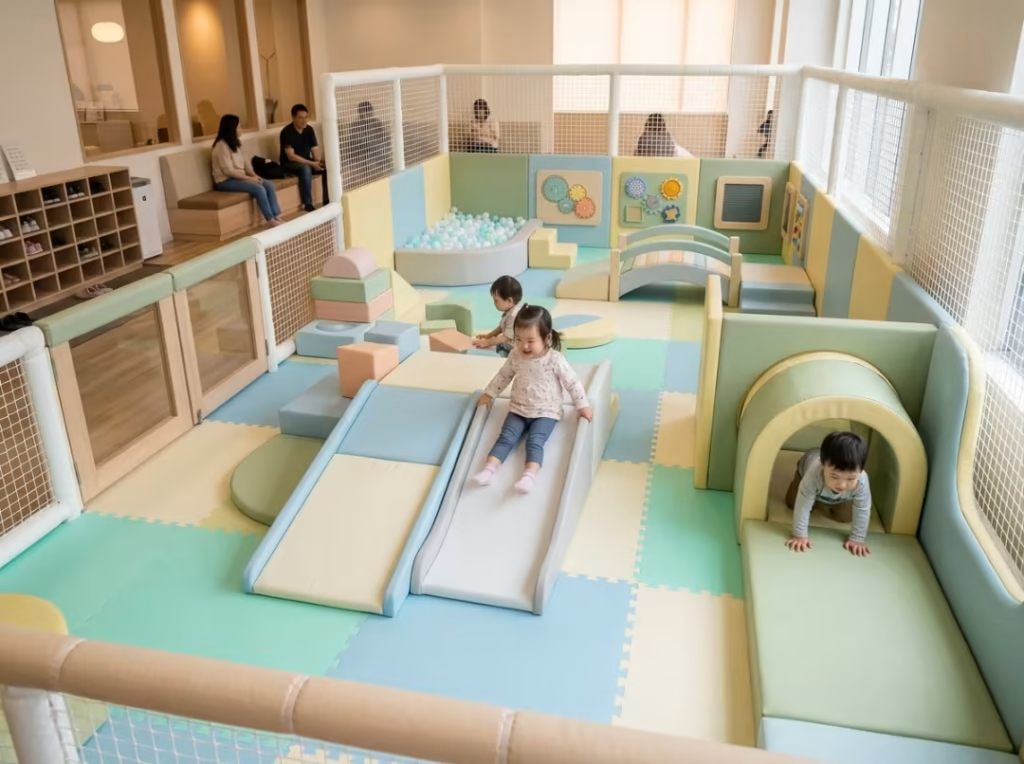
What Flooring Works Best for a Toddler Zone (Ages 6 Months – 3 Years)?
Falls in the toddler zone are frequent and from low heights. The primary concerns are cushioning, hygiene, and ADA accessibility for caregivers accompanying children with mobility aids.
EVA foam tiles are appropriate here given the low CFH requirements. Specify interlocking tiles with beveled edges to reduce trip hazard risk at tile perimeters. Plan for compression and seam maintenance from the beginning — this zone will need monitoring and eventual replacement.
If budget allows, poured-in-place rubber is the superior long-term choice. The seamless surface eliminates seam accumulation entirely and is far more efficient to sanitize under daily commercial use. For a zone that sees crawling, floor-level play, and close adult-child contact throughout the day, that hygiene advantage is material.
Avoid hard rubber tiles in this zone — adequate safety performance, but less comfortable for floor-level play. Vinyl offers nothing here; no attenuation, no cushioning benefit.
What Flooring Is Required for an Active or Climbing Zone (Ages 3–12)?
This is the highest fall-risk zone in the facility. The CFH requirement must be calculated from the tallest accessible point on each structure — not the average height, not a rounded estimate. Every foot matters.
Poured-in-place rubber is the default recommendation for any structure with a maximum accessible height above 6 ft. The combination of seamless installation, high CFH capability, and strong ADA performance makes it the strongest choice for this zone. No other commercially available material delivers the same profile at scale.
Commercial rubber tiles at a minimum thickness of 3.25 inches (approximately 82 mm) are an acceptable alternative for structures where the maximum accessible height falls within the tile’s rated CFH — but verify against the manufacturer’s ASTM F1292 test report for that specific thickness and installation method. General marketing claims are not sufficient.
EVA foam tiles should not be used in the active zone unless the structure’s maximum accessible height is confirmed within the foam’s rated CFH. This mismatch is a common source of compliance failure and typically requires a full zone replacement to correct.
What Flooring Is Appropriate for Walkways and Transition Areas?
In walkways, the priority shifts. Impact attenuation is secondary; slip resistance and ADA compliance are the operative requirements.
Rubber tiles at thinner gauge or slip-rated vinyl work well here. The more important design decision is the transition interface itself. The joint between an active zone surface and a walkway surface is where most post-installation trip hazard findings occur during inspections. The transition must be flush or ramped — never raised. This specification belongs explicitly in contractor agreements, not as an on-site judgment call.
What Flooring Is Best for Party Rooms and Event Spaces?
Low fall risk, high aesthetic and acoustic priority. Carpet tiles or vinyl LVT are both appropriate for this zone. Carpet provides better acoustic absorption — a real benefit in event rooms running multiple parties simultaneously. Vinyl LVT is easier to clean after food and beverage events.
Neither material is appropriate if the room includes any elevated play element. If a party room incorporates even a small climbing feature, the flooring specification under that element must meet the CFH requirement for that structure.
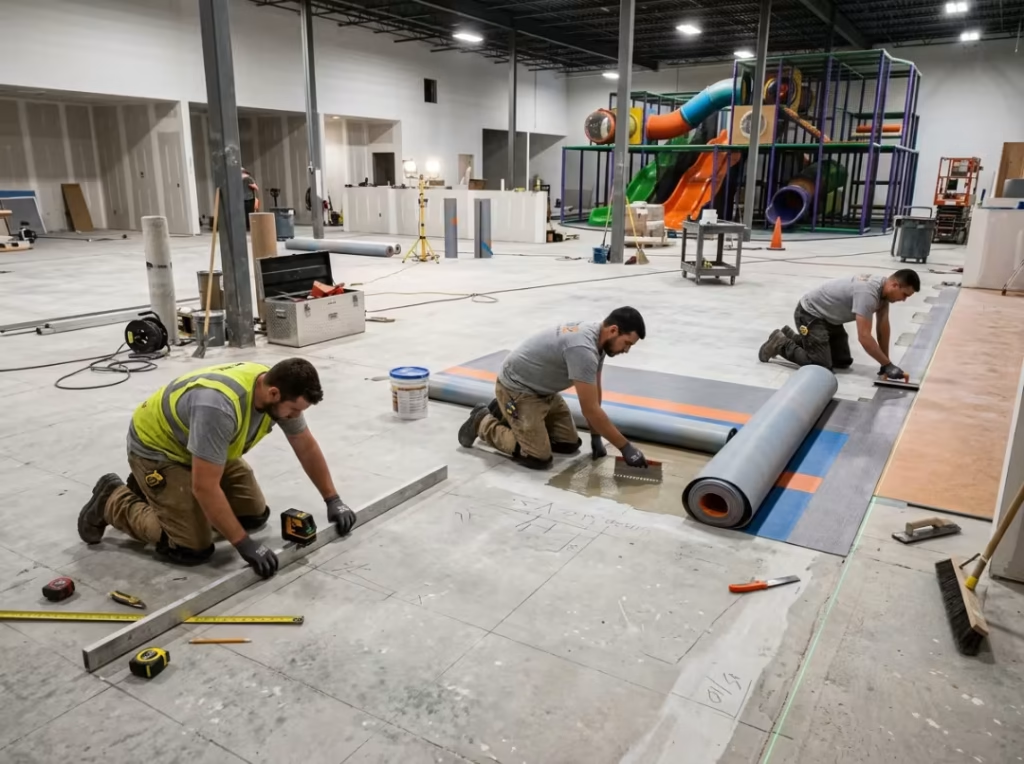
What Do Operators Consistently Underestimate About Installation?
Subfloor Preparation
Every soft flooring system performs only as well as its subfloor. Concrete must be level — typically within ±3mm per 3m for tile systems, with tighter tolerances required for PIP rubber — dry, and free of cracks. Subfloor assessment before budgeting is not optional. It is the most common source of cost surprises in flooring projects, and operators who skip it are pricing against an unknown variable.
Seams, Edges, and Transitions
Improperly aligned tile seams and raised transition strips are the leading causes of post-installation trip hazards. Seam detail and transition specifications must appear explicitly in any contractor agreement — not left to on-site discretion. A proposal that doesn’t address this is incomplete.
DIY vs. Professional Installation
- EVA foam tiles: DIY is feasible for small areas. At commercial scale, professional installation ensures consistent alignment and clean edge finishing.
- Rubber tiles: Professional installation is recommended. Cutting cleanly around columns, walls, and equipment bases requires experience; gaps and raised edges are the predictable result of inexperienced installation.
- PIP rubber: Professional installation only. Mixing ratios, pour depth, and troweling technique directly determine whether the finished surface achieves its rated ASTM F1292 performance.
Post-Installation Field Testing
For climbing zones and high-stakes active play areas, third-party ASTM F1292 field testing after installation is worth budgeting explicitly. A laboratory certification tests the material under controlled conditions. Field testing confirms the installed system — at your subfloor, in your ambient conditions, at your installed depth — performs as required. For any zone where CFH compliance is critical to safety, it’s the only confirmation that actually counts.
How Should Operators Maintain Commercial Indoor Playground Flooring?
Daily Cleaning by Material
- Rubber and PIP surfaces: neutral pH cleaners with a mop or auto-scrubber. Avoid bleach on EPDM wear layers — it degrades the polyurethane binder over time, accelerating surface breakdown.
- EVA foam tiles: wipe each tile and pay particular attention to seams, where pathogen accumulation is highest in commercial environments.
- Carpet tiles: vacuum daily; treat stains immediately. Staining that penetrates the tile backing typically requires full tile replacement.
Deep Sanitizing
Quarterly deep sanitization with commercial disinfectants is standard for high-traffic facilities. Before introducing any new cleaning product, confirm chemical compatibility with the flooring manufacturer. Incompatible chemicals are a documented cause of premature surface degradation.
Monthly Inspection Protocol
Every month, inspect for lifted tile edges, cracked or delaminating PIP surfaces, compressed foam zones, and damaged seam edges. Document findings with dates. A lifted edge that goes unaddressed is not a minor maintenance issue — it is a liability event in progress. The documentation record matters if a claim arises later.
When to Patch vs. When to Replace
- Rubber tiles: individual tiles are replaceable. Maintain a reserve stock from the original production batch — colors drift between production runs, and replacement tiles from a later order may not match.
- PIP rubber: small surface cracks and wear can be addressed with patch kits, but color matching is imperfect. Structural delamination from the subfloor requires professional repair.
- EVA foam: replace individual tiles as needed. If a full zone shows significant compression across multiple tiles, plan for complete zone replacement. Layering new tiles over a compressed base undermines the new material’s CFH performance — you don’t recover attenuation by stacking.
What Does Commercial Indoor Playground Flooring Actually Cost?
Material Cost Ranges by Type
These are directional US ranges. Regional variation, specific product specifications, and site conditions all affect final pricing. Use these for planning; get formal quotes for budgeting.
- EVA foam tiles: $2–$5 per sq ft
- Rubber tiles (commercial grade): $4–$9 per sq ft, depending on thickness
- Poured-in-place rubber: $8–$18 per sq ft installed (material and labor combined)
- Commercial carpet tiles: $3–$7 per sq ft
- Vinyl / LVT: $3–$8 per sq ft
Labor and Subfloor Costs
For tile systems, professional installation typically adds $2–$4 per sq ft. PIP rubber labor is embedded in the installed price range above. Subfloor leveling, crack repair, or moisture barrier installation — if required — adds further cost before any flooring material is purchased. This is the line item most operators don’t budget for, because they haven’t commissioned a subfloor assessment before pricing the project.
Hidden Costs Operators Routinely Miss
- Subfloor remediation (leveling, crack repair, moisture barrier)
- Transition strips and ADA-compliant edge ramps at zone boundaries
- Facility downtime during installation — this is lost revenue, not just labor days
- Third-party ASTM F1292 field testing after installation
- Reserve tile stock for future repairs (budget 5–10% of total material cost)
- Repeated replacement cycle costs for lower-durability materials
Cost-Per-Year Framework
Calculate cost per sq ft divided by expected lifespan in years. A $13/sq ft PIP rubber floor with a 12-year lifespan costs approximately $1.08/sq ft/year. A $3/sq ft foam floor, replaced every 4 years, costs approximately $0.75/sq ft/year in materials alone — but each replacement cycle incurs installation labor, operational downtime, and compliance re-verification. Over a 12-year horizon, the foam floor has been replaced three times. The PIP floor has not.
Total cost of ownership is the correct comparison metric. Cost per square foot at purchase is not.
Frequently Asked Questions About Commercial Indoor Playground Flooring
What CFH rating do I need for my indoor playground climbing structure?
Identify the maximum accessible height on each structure — not average height, the highest point a child can reach. Match that number to the flooring product’s ASTM F1292 test report CFH for the specific thickness and installation method you’re using. The CFH in the test report must be at least equal to the structure’s maximum accessible height.
Can I use the same flooring throughout the whole facility?
No single material performs optimally across all zones. A toddler zone, a climbing zone, a party room, and a reception area have different fall heights, usage patterns, and hygiene demands. The right material for each zone is determined by CFH requirements, age group, function, and maintenance capacity — not by the desire to simplify specification.
Does an ASTM F1292 certification on the product label mean my installation is compliant?
Not automatically. The certification reflects laboratory test performance under controlled conditions. Installed performance depends on subfloor preparation, installation quality, ambient temperature, and wear over time. For high-stakes zones, post-installation field testing by a third-party testing body is the only way to confirm the installed system meets requirements in your specific conditions.
How do I determine what flooring depth I need for my playground?
Consult the manufacturer’s ASTM F1292 test reports, which document CFH ratings for different thicknesses and installation methods. Match the required CFH to the equipment specification. Do not rely on a general category recommendation — different products in the same category produce different CFH ratings at the same thickness.
What should I look for in a flooring contractor’s proposal?
A complete proposal addresses the scope and responsibilities of subfloor preparation, seam and transition detail specifications, the post-installation inspection process, and warranty terms, including what voids coverage. Any proposal that doesn’t explicitly address subfloor preparation is incomplete and should be sent back before signing.
How often should I replace the flooring in a commercial indoor playground?
It depends on material, traffic volume, and maintenance consistency — not calendar time alone. A documented inspection protocol is more reliable than a scheduled replacement date. Monthly visual inspections, compression checks in high-use zones, and seam integrity reviews are better indicators of the need for replacement than elapsed years. Act on inspection findings, not on the installation anniversary.
Start with the CFH. Everything Else Follows.
Flooring is not separable from the equipment installed above it. The surface’s required performance — the CFH rating it must achieve — is set by the structure’s maximum accessible height. That calculation is the starting point. Work outward from there: zone requirements, material selection, compliance verification, and comparative pricing in that order.
There is no single best indoor playground surfacing material. There is the right material for each zone, matched to fall height, age group, function, and long-term operational reality.
Because equipment specifications and flooring requirements are directly linked, both decisions benefit from being made together. If you’re specifying or reviewing the structures that will sit above your flooring, INQILA’s indoor playground equipment page is a practical reference for understanding the structural heights that will drive your CFH requirements — and for ensuring your flooring specification is built around accurate structure data from the start.