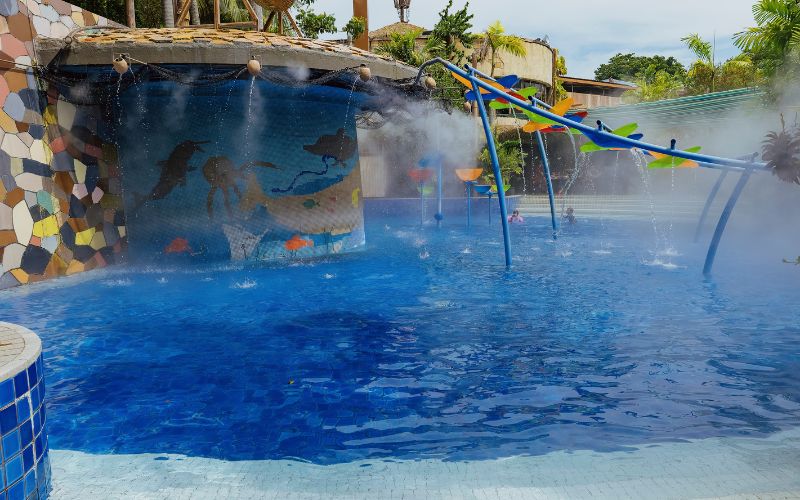
Community water features are becoming increasingly popular among municipalities and urban planners who want an alternative to traditional public pools or empty concrete plazas. This engaging public attraction can offer many transformative benefits to local communities, including significantly increased social interaction, environmental advantages, and substantial economic and cost benefits. Modern community water features come equipped with state-of-the-art safety features to ensure that residents and children can play and relax safely, while your municipality or organization can successfully reduce public liability and operational risks.
This comprehensive community water feature guide will explain everything you need to know about seamlessly adding this captivating attraction to your local public park or urban center. Throughout this guide, you will learn more about the unique features, the myriad of benefits a community water feature can offer your specific metropolitan or suburban location, and how to properly design, fund, and install this refreshing recreational aquatic area for your citizens to enjoy.
What Is a Community Water Feature?
A community water feature, also known as a public aquatic installation or architectural fountain plaza, is a specially designed recreational area that incorporates moving water for aesthetic appeal, environmental cooling, and interactive public play. These dynamic spaces provide a rich sensory experience and facilitate engaging outdoor recreation for residents, while actively working to enhance the local architectural environment. They serve as beautiful focal points that draw people together.
Unlike deep swimming pools, these installations are designed with ultimate accessibility and safety in mind, utilizing advanced engineering to create immersive aquatic environments without the traditional hazards of deep standing water. Whether they are integrated into a bustling downtown square or a quiet neighborhood park, these features are meticulously planned to complement their surroundings. They transform underutilized public areas into vibrant, welcoming destinations that foster community pride and collective ownership.
At the core of these installations is a commitment to sustainability and inclusive civic design. Our modern, commercial-grade community water features incorporate the following essential elements:
- Interactive fountains and dynamic splash zones
- Reflecting pools and decorative architectural water walls
- Eco-friendly designs with advanced water recycling systems
- Zero-depth spaces with non-slip, shock-absorbent flooring
- Inclusive design elements accessible to all ages and physical abilities
- Abundant seating to enable adult interaction and comfortable supervision
- Integration with surrounding natural landscapes and shaded botanical areas
- State-of-the-art programmable water displays intended to captivate audiences
Compared with traditional municipal swimming and wading pools, a community water feature is a significantly safer, more environmentally conscious, and more economical option that still offers tremendous aquatic fun and visual splendor. If you want to incorporate a stunning community water feature or a turnkey public aquatic system at your civic location, turning to dedicated architectural water feature professionals is the ideal first step. Our innovative aquatic equipment can attract families to your district, revitalize your urban core, and help you grow your local economy.
Community Water Feature Benefits
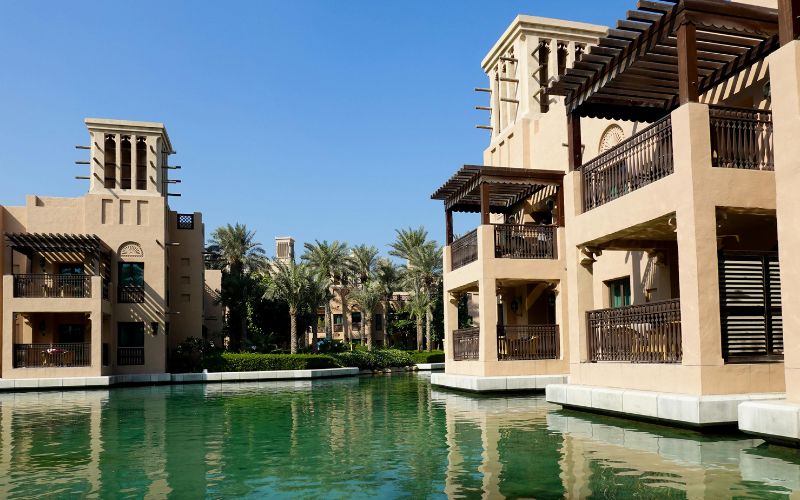
Lush, fun, and engaging aquatic play areas can easily fit your municipal budget, design preferences, and spatial requirements. Consider a community water feature if you want to powerfully add the following benefits to your civic spaces:
Encourage community interaction and recreation: With a well-placed community water feature, you can offer your citizens an inviting aquatic environment that naturally facilitates social interaction. Kids can run through interactive splash jets, neighbors can gather around beautiful reflecting pools, and visitors can wait in anticipation of choreographed fountain shows. These features even enable meaningful interaction across diverse demographics, ensuring they are fun and engaging for the whole community.
Offer incredible versatility: Multiple distinct aquatic zones make community water features highly versatile, so they appeal to absolutely every age group. While children enjoy the active splash areas, adults can relax by serene water walls, making it a multi-purpose destination.
Provide universal accessibility: A well-designed community water feature is fully accessible to people with a wide range of physical and cognitive abilities. Zero-depth entry and smooth, barrier-free surfacing mean that every resident, regardless of mobility level, can safely join in the aquatic fun.
Enhance mental well-being and relaxation: The soothing sounds and sights of moving water have been shown to have psychological benefits. A community water feature can serve as a tranquil oasis in a busy urban environment, helping residents reduce stress, relax, and improve their overall mental health.
Improve urban cooling and air quality with a community water feature, which can effectively cool a formal or urban space. The evaporating water naturally lowers the ambient temperature, helping mitigate the urban heat island effect during peak summer, while also capturing airborne dust and particulates.
Enjoy sustainable water management practices: Modern features are designed to be incredibly efficient. Locating your water feature alongside sustainable infrastructure enables municipalities to use advanced recirculating systems, minimizing water waste and promoting eco-friendly civic practices.
Boost local tourism and business activity: A stunning architectural water feature can become a landmark that attracts visitors from outside the immediate neighborhood. This increased foot traffic directly benefits adjacent local businesses, restaurants, and retail shops, providing a much-needed boost to the local economy.
Tie in your civic branding: Enhance your city’s unique cultural identity by working with design teams to select historically or culturally themed components for your water feature. Custom lighting and structural designs can reflect your town’s heritage.
Generate renewed interest: With universally adaptable nozzles and lighting systems, a city can periodically rotate fountain displays and choreographies. Doing so can renew public interest in the location, encouraging visitors to return frequently for new experiences and helping it stand out from neighboring municipalities.
Enjoy lasting durability: Industry leaders use materials of the absolute highest quality to create these civic installations, ensuring the plumbing, concrete, and interactive components can withstand harsh weather conditions and decades of heavy public use.
Increases property values and community appeal: With the installation of a beautiful community water feature, local governments can dramatically boost nearby residential and commercial property values, making the neighborhood a highly desirable place to live and invest.
Choose from a variety of design options: We offer countless options for community water features. Surface colors, fountain styles, and spray elements come in all shapes and sizes, enabling endless architectural possibilities. You can seamlessly integrate elements from your local ecology or create a bold, modern area that stands out.
With all the profound advantages a community water feature can offer, it’s no surprise that more urban planners and community leaders are becoming highly interested in installing these magnificent public attractions.
Cost Considerations of Community Water Features
Your municipality or organization can also enjoy the following significant cost benefits when you choose to invest in a community water feature rather than traditional aquatic alternatives.
Construction
Compared to a massive municipal swimming pool, the cost of a community water feature’s initial construction is far less burdensome on the public budget. Additionally, a zero-depth water feature doesn’t require many of the expensive security measures mandated at swimming pools, such as large locker rooms, high-security gates, and perimeter fencing. Because modern water features heavily utilize modular, scalable designs and locally sourced materials, they take significantly less time to install, meaning your public space won’t be closed for long, offering another major cost benefit.
Maintenance
After your community water feature is built, the ongoing maintenance costs are significantly less than the heavy maintenance costs associated with traditional public swimming pools. Equipment operating costs are also much lower, especially in systems that use highly efficient water-recycling technology and automated chemical balancing. The reduction in required manual labor translates to massive annual savings for the local parks and recreation department.
If you use a recirculating system with advanced filters, you may need to clean them on a regular schedule, especially if visitors track dirt, grass, or other seasonal debris onto the wet surface. However, seasonal maintenance and standard cleaning are streamlined processes. If you have a complex system, your maintenance team can set an automated schedule that alternates which filtration tank is being cleaned, ensuring zero downtime for the public.
Operations
The operational costs for a community water feature are exponentially lower than the operational costs you’d pay to staff and run a public swimming pool. If you don’t charge visitors for using this open public space, then you absolutely do not need to hire ticket booth personnel or access control staff. Safety concerns are inherently lower due to the design’s zero-depth, which means you are not required to hire and manage expensive, certified lifeguards.
Your operational budget will also be aided by creative civic funding. Community partnerships and local business sponsorships can be utilized for initial funding and ongoing maintenance. Furthermore, establishing local volunteer programs for general aesthetic upkeep, such as sweeping adjacent seating areas, can reduce municipal labor costs while fostering a strong sense of community pride and ownership over the new installation.
Considerations Before Developing a Community Water Feature
If you want to design and build a stunning community water feature, there are several vital considerations you must make beforehand to ensure the project’s total success.
1. Size and Layout
One of the first things you should meticulously consider before moving forward with development is assessing the available space and community needs. You must determine exactly what size and shape you want your aquatic feature to be so it fits the location organically. We can customize our water features to your precise municipal needs, so your installation can be any dimension required. Just clearly outline your vision for the public project, and expert landscape architects will make it happen!
2. Safety Features
The community water features provided by top-tier manufacturers have no deep standing water, which gives residents on your public property a completely safe environment to interact with little to no risk of drowning. Implementing non-slip surfaces and child-safe designs is paramount. Surface options often include flexible rubberized paving, textured concrete, or specialized non-slip aggregate finishes that ensure absolute stability for running children and mobility-impaired adults alike. These surfaces prioritize public safety while looking incredibly appealing.
3. Water and Energy Efficiency
Your community water feature must prioritize sustainability by incorporating rainwater harvesting systems, efficient recirculating tanks, and, where applicable, solar-powered pumps. A major concern for city councils is the impact the feature will have on the municipal water bill. Fortunately, by utilizing advanced filtration and recirculation, your system will require very little new water after the initial fill. High-efficiency variable speed pumps also ensure that the electrical impact remains low and highly affordable.
4. Seasonal Maintenance
As the cold season approaches, you must have a plan to prepare for winter and seasonal changes. Your pipes must be properly blown out and winterized to prevent the underground lines from freezing and breaking. The process requires a standard air compressor to purge the lines. You will also need to remove specific nozzles, cap them securely, and power down the digital control panels. Having a clear, documented seasonal maintenance plan ensures your feature survives harsh winters and opens smoothly in the spring.
5. Community Involvement
Engaging stakeholders and gathering feedback are crucial steps before any concrete is poured. You must present your initial concepts to the public through town hall meetings and digital surveys. Listening to the community’s desires—whether they want more seating, specific artistic elements, or interactive play zones for children—guarantees the final design will be beloved and heavily utilized by the people it is meant to serve.
6. Funding and Financing
How much your community water feature will cost heavily depends on the specific scale of your project. Many civic leaders are rightfully concerned about upfront capital, which is why exploring diverse financing avenues is essential. Municipalities should actively pursue federal and state environmental grants, establish lucrative public-private partnerships with local corporations, and launch grassroots community fundraising campaigns. Comprehensive financial planning will allow you to build an incredible civic asset without heavily burdening local taxpayers.
How to Develop a Community Water Feature
When a community water feature is properly designed and meticulously installed, your municipality will save significant money and time on operational costs and long-term maintenance. Your city will also have the flexibility to upgrade or expand the aquatic space when future budgets allow. If you want a world-class water feature installed on your public property, strictly follow the steps below.
1. Analyze the Site
Your first crucial step is to perform a comprehensive analysis of your chosen site through environmental and feasibility studies. A dedicated project engineer will handle the topographical pre-planning, soil testing, resource forecasting, and any other technical evaluations needed to ensure the land can support the plumbing and structural weight. Ensuring compliance with local zoning and environmental codes at this stage prevents expensive delays later.
2. Evaluate Feasibility
After completing the groundwork, thoroughly assess your budget, available resources, and specific community needs. You must evaluate what to expect for municipal water consumption rates, where the primary electrical supply will be routed, and your exact total budget for both the installation and a decade of maintenance. Choosing the right water management system during this feasibility stage is vital.
3. Engage Stakeholders
Next, you must actively collect input from local residents and neighborhood organizations to determine how well your architectural plans align with the community’s specific priorities. How truly successful your water feature will be depends entirely on this public feedback. By conducting demographic research in advance, you can confidently move forward, knowing the community fully supports the aquatic project.
4. Prepare Designs
To develop a perfect visual representation of your public space, create detailed plans and comprehensive architectural layouts. These engineering drawings should illustrate the overall layout, the exact placement of every fountain nozzle, the underground piping schematics, and the structural seating surrounding the feature. Working with specialized landscape architects ensures the design handles wind overspray and proper drainage.
5. Obtain Permits
To ensure you strictly adhere to all public health and safety regulations, you must ensure compliance with local regulations. Engaging with the local health authority and municipal building departments early will save you money and lead to a much shorter approval process. You must identify and secure all necessary city and state building permits for both the structural concrete and the complex electrical plumbing phases.
6. Hire Professionals
One of the most important steps is to work seamlessly with experienced landscape architects and certified aquatic contractors for the manufacturing and construction process. Hiring specialized professionals to break ground ensures that the intricate plumbing, advanced filtration systems, and aesthetic concrete finishes are executed flawlessly. Their expertise ensures the project stays on schedule and avoids costly amateur mistakes.
7. Celebrate Opening Day
You’ve finally reached opening day! During this exciting final step, host a vibrant community event to launch the feature to local residents of all ages. Expect a massive public turnout—everyone will be eager to see how the civic space turned out. At this point, city officials and planners can proudly sit back and watch their beautiful aquatic project become a beloved community staple for decades to come.
Advocate for Community Water Features in Your City
At the end of the day, we provide vital recreational and architectural infrastructure to urban centers, public parks, historic districts, retail plazas, and municipal squares to beautifully attract families and keep civic pride strong. We have years of dedicated experience in urban planning and aquatic design, making us industry leaders who truly know how to design public spaces that work perfectly for residents, tourists, and local governments alike.
We can completely customize our aquatic projects to fit all municipal budgets, available public spaces, and community aesthetics. Are you ready to passionately advocate for or directly invest in a stunning community water feature for your city? Request a comprehensive consultation today or contact your local urban planning committee for more actionable information.