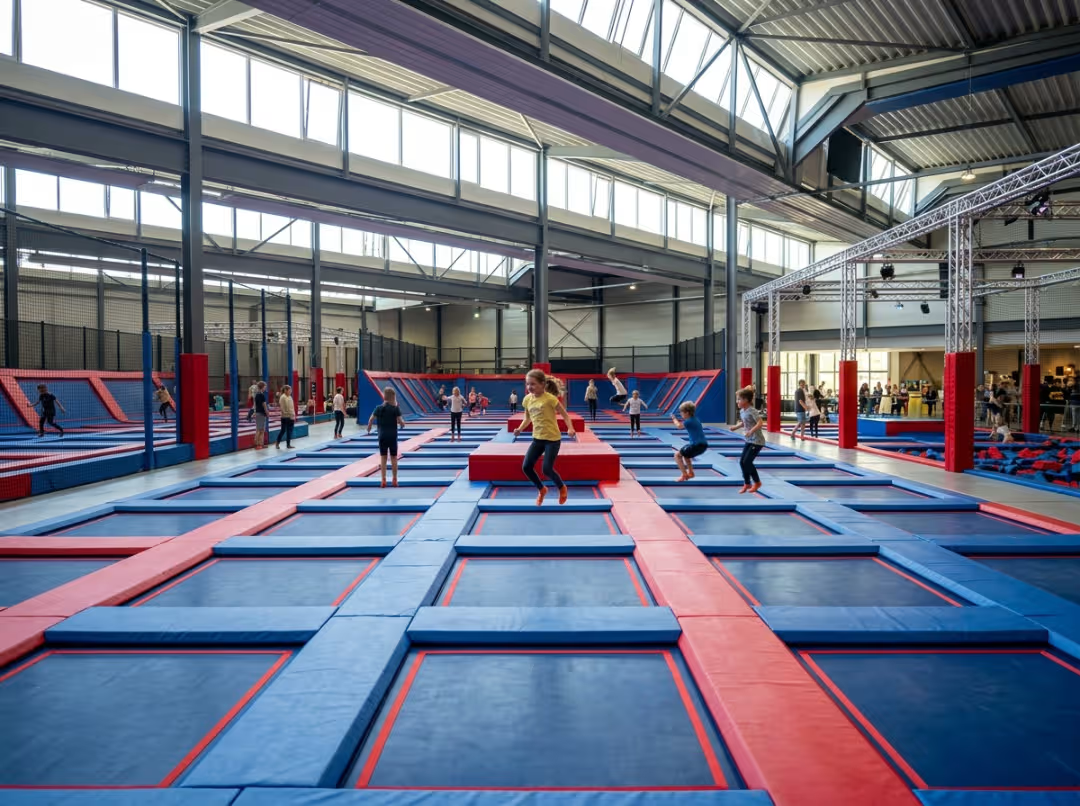
Building a trampoline park typically costs between $1 million and $5 million. Most mid-size parks land in the $2M–$3.5M range. Equipment is rarely what drives that number — the building shell, mechanical systems, insurance, and cash reserves are what most owners underestimate, and what most budgets fail to account for properly.
This breakdown covers where the money actually goes, what pushes costs up or down, and what a realistic budget looks like depending on your park’s size and format.
How Much Does a Trampoline Park Cost to Build?
Total startup costs run $1M to $5M, with mid-size parks typically landing between $2M and $3.5M. The spread exists because cost is driven by four factors: facility type, build-out complexity, attraction mix, and the amount of working capital you hold in reserve before revenue stabilizes.
Two parks at 25,000 square feet can differ by seven figures based on building condition alone. One moves into a former big-box retail space with adequate ceiling height and existing HVAC. The other takes over a warehouse shell that needs new structural steel, upgraded electrical service, and a full mechanical overhaul before a single trampoline goes in. Same footprint, very different project.
Asking “what does the average trampoline park cost?” gives you a number with no judgment attached. The better question is which cost variables apply to your specific site, market, and growth plan — and that’s what the rest of this article works through.
What Actually Drives the Cost Up or Down?
Facility Size and Ceiling Height
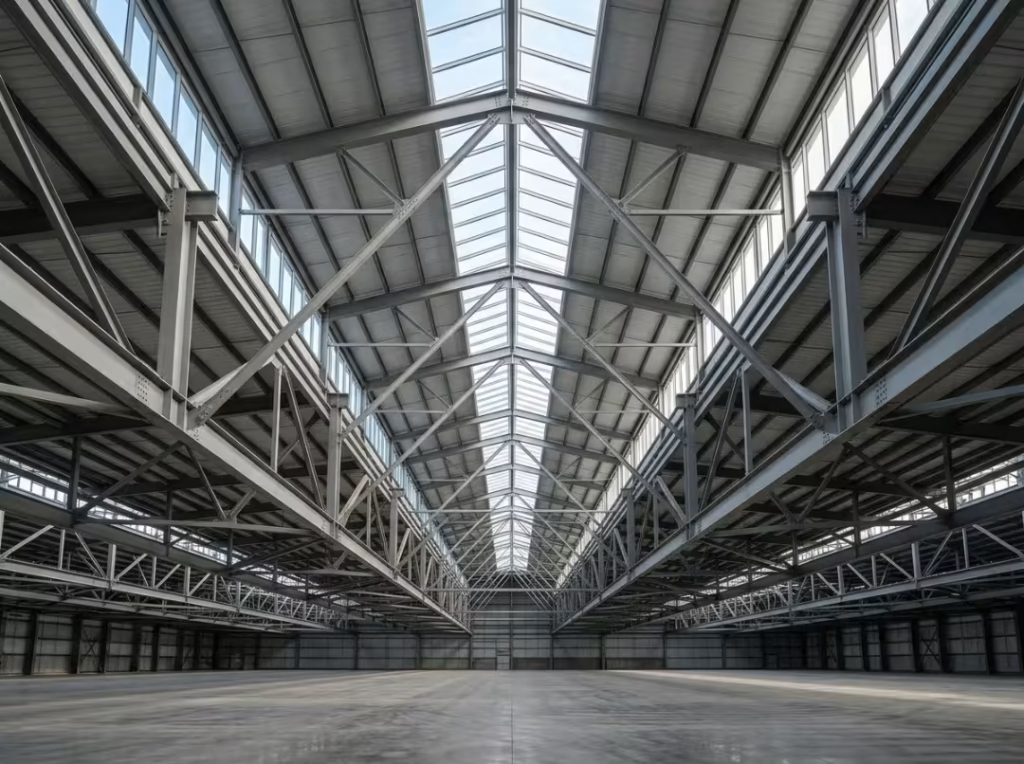
Ceiling height is often a harder constraint than square footage. A building can have ample floor space and still be unusable for certain attractions if clearance is insufficient. Trampoline courts, ninja warrior courses, and climbing walls all require minimum clearances — typically 18 to 24 feet, depending on the attraction. A 14-foot warehouse ceiling doesn’t just limit your options; it forces you to either drop attractions or fund structural modification, both of which change the budget in ways that show up later than expected.
Evaluate ceiling height and column spacing before you fall in love with a floor plan.
Lease-Ready Building vs. Heavy Conversion vs. Ground-Up Build
Each path carries a different cost, speed, and risk profile.
A lease-ready building — typically a former big-box retail or entertainment space — is the fastest and cheapest route. HVAC, electrical service, and structural capacity are already sized for high-occupancy use. A heavy conversion, such as an older warehouse or industrial facility, often looks cheaper on paper due to lower rent, but regularly requires new mechanical systems, upgraded electrical panels, and structural reinforcement that erases the initial savings. A ground-up build gives you full control over ceiling height and layout, but carries the longest timeline — often 18 to 24 months — and the highest upfront cost.
The consistent pattern: a cheap building with the wrong bones costs more than a pricier lease-ready shell once all conversion expenses are totaled. Judge sites on total project cost, not base rent.
Attraction Mix
Every attraction added beyond the main jump court brings costs beyond its equipment price tag. Foam pits require excavation and structural framing for the pit itself, separate from the foam cube volume. Dodgeball courts and slam-dunk lanes require reinforced padding and netting systems. Ninja courses typically require additional ceiling clearance, impact-rated flooring, and dedicated staff supervision. Each addition also increases insurance exposure and ongoing maintenance costs.
Before adding an attraction, price out the full cost of having it: construction, insurance premium impact, and staffing — not just the vendor quote.
Local Market Conditions
Rent, construction labor, insurance rates, and permitting timelines vary enough by region to move a project budget by several hundred thousand dollars. A market with high commercial rents and a slow permit review process adds cost at every phase compared to a lower-cost market with efficient approvals. Research your specific city or county — regional industry averages rarely reflect local conditions closely enough to use in financial planning.
The 5 Biggest Startup Cost Categories
Real Estate and Site Costs
Site costs start with the lease structure. Most commercial leases for entertainment facilities use a triple-net (NNN) format, in which the tenant covers property taxes, insurance, and common area maintenance in addition to base rent. Security deposits typically run two to three months of rent. Tenant improvement (TI) allowances — credits the landlord provides toward build-out costs — are negotiable and can meaningfully reduce upfront cash outlay if secured during lease negotiations.
Site selection is also a revenue decision. Visibility from a main road, easy access, and adequate parking for birthday party drop-off and pickup affect how quickly a park can build a repeat customer base. A location that costs a few thousand dollars more per month but sits on a high-traffic corridor often outperforms a cheaper, harder-to-find space within the first year of operation.
Build-Out, Construction, and MEP Systems
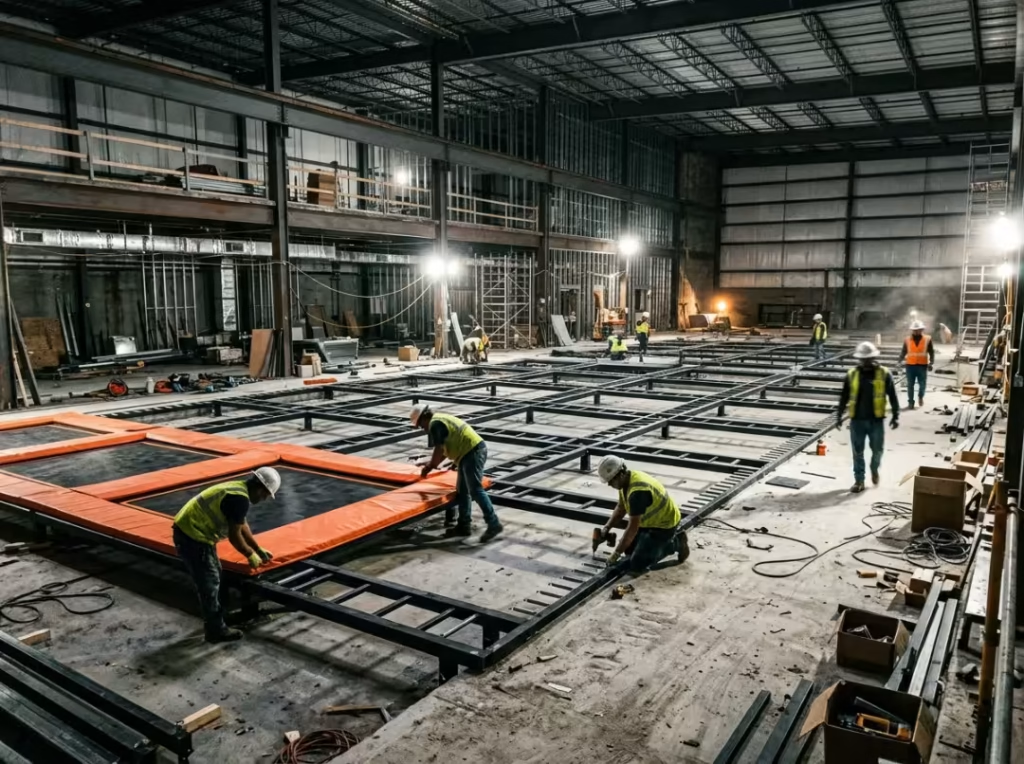
This is where trampoline park budgets most often break. Build-out includes structural and ceiling work to support attractions, slab preparation and leveling, perimeter padding and wall systems, and mechanical, electrical, and plumbing (MEP) systems sized for high-occupancy commercial use. It also covers the guest-facing spaces that don’t generate direct revenue but are operationally essential: restrooms, lobby, party rooms, staff areas, and concession buildout.
MEP systems deserve particular attention. A large open-volume facility requires commercial HVAC sized for high-density occupancy — not the residential or light commercial systems already in many conversion candidates. Electrical capacity needs to support high-wattage lighting, arcade equipment, point-of-sale systems, and security infrastructure simultaneously. Plumbing must meet code-required fixture counts for the expected occupancy, which, in a busy trampoline park, is higher than most operators anticipate.
Budget overruns almost always trace back to the building, not the equipment. Trampoline vendors quote fixed prices for fixed specs. Buildings reveal surprises after construction starts — undersized electrical panels, slab conditions that require correction before padding can be installed, HVAC systems with insufficient capacity. A thorough building inspection and a contractor walkthrough of the space should happen before finalizing any lease or purchase, not after.
Trampolines, Attractions, and Installation
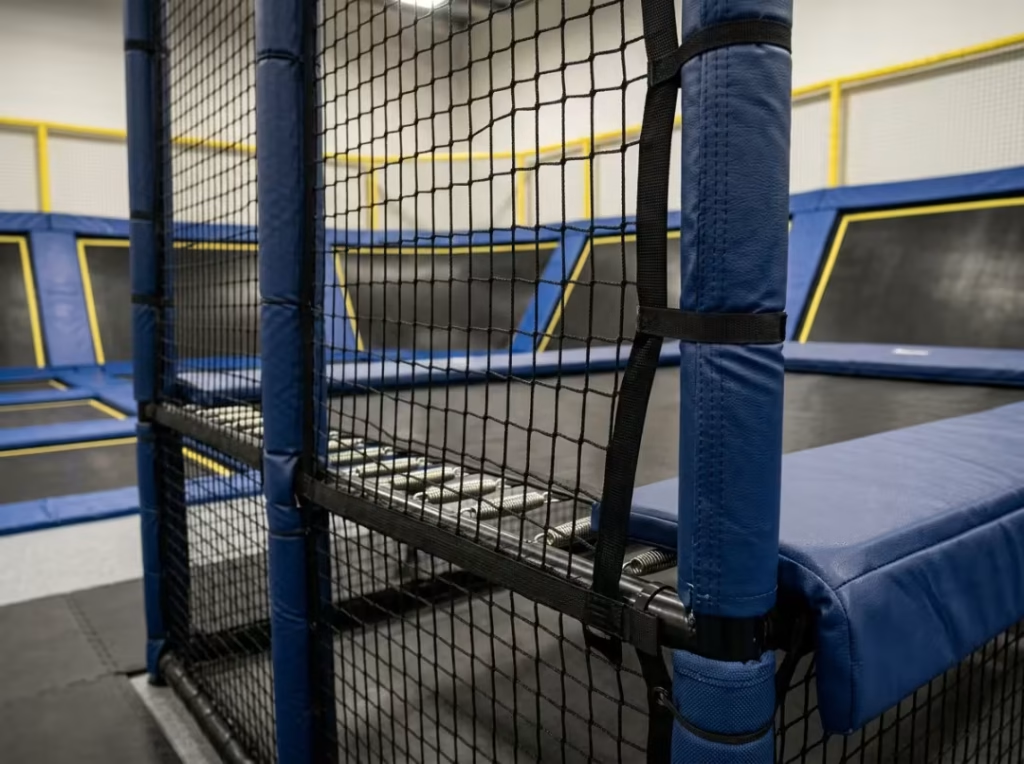
The main jump area runs $25–$50 per square foot installed, covering trampoline beds, spring or bungee systems, and perimeter padding. That range reflects meaningful quality differences — the high end buys better load ratings, tighter tolerances, and stronger manufacturer warranty support.
Common add-ons beyond the core court include foam pits, dodgeball courts, slam-dunk lanes, ninja warrior courses, climbing walls, toddler zones, and arcade areas. Each is priced separately. Foam pits are among the most expensive additions per square foot due to excavation, structural framing, and the volume of foam cubes. Ninja courses require ceiling clearance and an investment in impact flooring on top of the equipment itself.
On new versus used equipment: the practical case for buying new is stronger than it might initially seem. Safety certification requirements, insurer documentation standards, and ASTM compliance all typically require manufacturer-tracked installation and maintenance history. Used equipment frequently lacks that documentation, which complicates both insurance and regulatory compliance. The savings rarely justify the friction.
Permits, Insurance, and Compliance
Permits include building permits, zoning approvals, conditional use permits for amusement facilities, and — in many states — amusement attraction permits that require third-party safety inspections before opening. Timelines vary significantly by jurisdiction; some markets turn permits in weeks, others take months and require multiple revision cycles.
Insurance is the highest recurring cost in this category. A mid-size trampoline park typically pays $50,000 to $150,000 per year in general liability premiums alone, with the exact figure scaling directly with attraction count, visitor volume, and claims history. Adding higher-risk attractions — ninja courses, dodgeball, climbing walls — increases premiums, sometimes substantially. Shop multiple carriers before signing, and get quotes based on the final attraction configuration, not an early draft.
ASTM safety certification for individual attractions, staff safety training documentation, and ongoing maintenance recordkeeping are not optional upgrades. They are baseline expectations for both insurers and regulators, and gaps in any of them create liability exposure that will surface in the worst possible context — after an incident.
Pre-Opening Expenses and Working Capital
This is the most consistently underfunded category in trampoline park budgets, and the one most directly linked to whether a park survives its first year.
Before revenue starts, you’re paying for staff hiring and training (often four to eight weeks before opening), marketing to build awareness ahead of launch, initial inventory and supplies, and a construction contingency that covers change orders and surprises that come with any build-out. Budget a 10–15% contingency on top of your construction estimate — experienced contractors build this in; project budgets that don’t include it tend to get caught short.
More important than the contingency is the operating reserve. Plan for three to six months of full operating expenses in cash before you open. This reserve exists specifically to cover the period after opening-week excitement fades and before group bookings and birthday parties reach a sustainable volume. Most parks don’t fail at their grand opening. They fail four to eight months later, when cash runs out during the first slow season, and there’s nothing left to cover rent and payroll while the business is otherwise still viable.
Startup Cost Is Only Half the Story: Monthly Operating Expenses
A construction budget tells you what it costs to open. It tells you nothing about what it costs to stay open.
Monthly operating expenses include rent and NNN charges, payroll for court monitors, front-desk staff, party hosts, and management, insurance premiums prorated monthly, utilities for a large open-volume space (meaningfully higher than most operators expect), ongoing equipment maintenance and inspection costs, marketing to sustain awareness past the opening period, and software and payment processing fees for booking platforms, waiver systems, and point-of-sale.
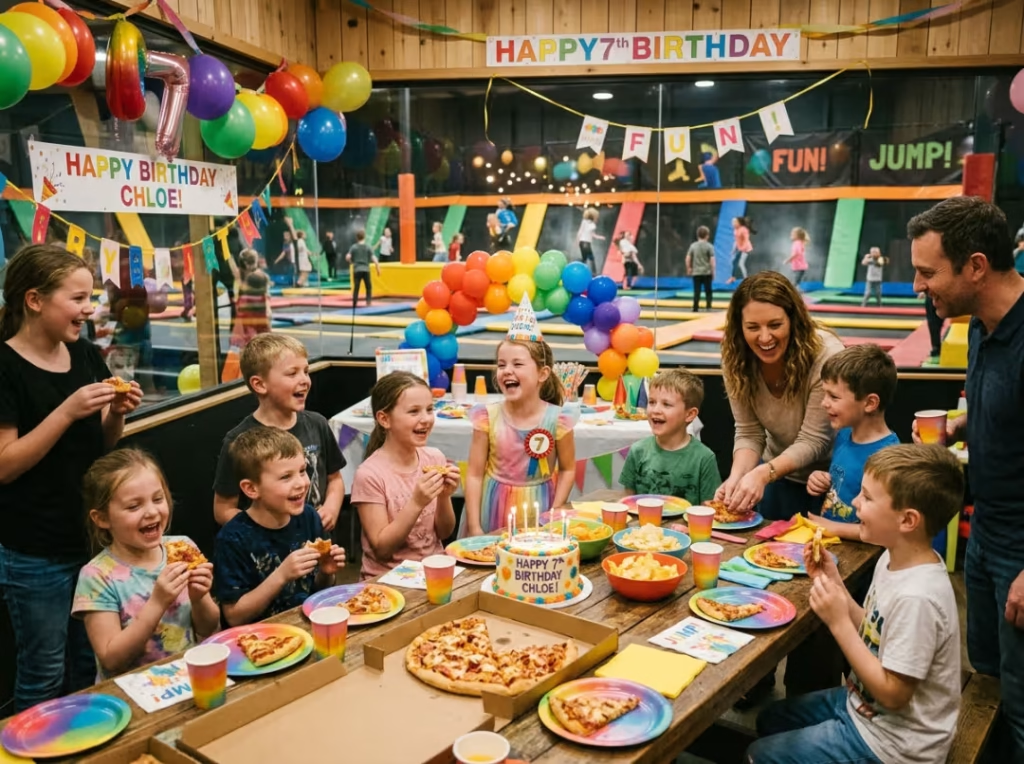
These recurring costs set your break-even line — the revenue threshold the business must hit every single month, regardless of how smoothly construction went. For most parks, birthday party bookings and group events are what cover fixed costs month to month. They generate significantly higher per-visit revenue than walk-in general admission, and they book in advance, which provides cash flow predictability that open jump sessions don’t.
A park that opens on budget but underestimates monthly operating costs — or overestimates how quickly group event bookings will ramp up — can find itself cash-flow negative within months of a successful launch. Build the monthly cost model alongside the startup budget, not as an afterthought once construction is complete.
Budget Scenarios by Park Size
Small Neighborhood Park (15,000–20,000 sq ft)
A small park typically centers on a core jump court with one or two add-ons— such as a foam pit, a dodgeball court, or a toddler zone. Build-out complexity is lower, staffing needs are leaner, and total investment often falls in the $1M–$2M range if the building is lease-ready and the attraction lineup stays focused.
Profitability at this scale depends on repeat local visits and consistent birthday-party volume, not on regional draw. The most common budget mistake here is adding attractions early — before local demand has been established — which raises insurance, staffing, and maintenance costs faster than revenue grows to cover them.
Mid-Size Regional Park (25,000–35,000 sq ft)
This is the most common format for new operators, typically budgeted at $2M–$3.5M. It supports multiple attractions, several dedicated party rooms, and concession service. Group event volume — birthday parties, school field trips, team outings — is what makes the economics work at this scale, since general admission alone rarely covers the fixed cost base of a facility this size.
Common overspending shows up in the variety of attractions. Operators who build out a large, varied attraction lineup before their local market has proven it can fill party rooms consistently end up carrying insurance, maintenance, and staffing costs that the revenue base can’t yet support.
Large Destination Park (40,000+ sq ft)
Large parks budget $4M–$5M and up, with a broad mix of attractions designed to draw visitors from a wider geographic area rather than a single neighborhood. Revenue depends on sustained group event volume and, in many cases, seasonal tourism traffic — the customer base needed to justify this investment is substantially larger than what supports a regional park.
The most common financial risk at this scale is building the full attraction mix and square footage before regional demand has been confirmed. Parks that phase their build-out — opening with a strong core and adding attractions as revenue validates expansion — consistently manage cash flow better than parks that open at full scale on day one.
Where First-Time Owners Underestimate the Budget
- Treating equipment cost as the anchor figure. Trampoline and attraction equipment is quoted at a fixed price, which makes it feel like the most concrete number in a budget. But the building shell, MEP systems, insurance, and working capital are all less predictable and far more likely to run significantly over initial estimates. Equipment is usually the line item that holds closest to plan.
- Pricing insurance before finalizing the attraction list. Insurance premiums are quoted based on a specific attraction configuration. Operators who get an early quote for five attractions and then expand to nine during planning often discover at policy time that their insurance costs have increased by tens of thousands of dollars — sometimes enough to change the economics of the entire project.
- Underestimating working capital needs for the first slow season. Opening month revenue is not a reliable indicator of stable revenue. Birthday party and group booking volume typically takes several months to reach a sustainable cadence. Operators who fund three to four weeks of reserves rather than three to six months run out of room during the first revenue dip — often at a point where the business is otherwise sound and would recover given more time.
- Choosing a site based on rent rather than total project cost. A low monthly rent figure can be offset entirely — and more — by structural modification costs the building requires. Ceiling height, column spacing, electrical service capacity, and HVAC infrastructure all affect the cost of making a building suitable for a trampoline park. A $2-per-square-foot rent discount is not a good trade if the building needs $400,000 in structural work.
- Over-building the attraction mix before proving local demand. It’s tempting to open with the full flagship lineup. But a market that hasn’t yet demonstrated it can fill party rooms and sustain group-event volume may not support the insurance, staffing, and maintenance costs of a large, complex mix of attractions. Start with a focused lineup, prove demand, then expand.
How to Cut Costs Without Creating Bigger Risks
The most effective way to reduce initial investment is to start with a smaller, focused facility and plan a second-phase expansion once revenue proves the market. Adding an attraction to a profitable operation is straightforward. Carrying the cost of an underused one from day one quietly drains cash flow every month.
Negotiate TI allowances during lease talks, not after. Landlords in markets with high vacancy rates are often willing to offer meaningful credits toward build-out in exchange for longer lease terms. That credit reduces the upfront cash requirement at the most capital-intensive point in the project.
Prioritize the building’s structural fit and reliable equipment over variety of attractions. A smaller lineup that runs consistently and passes inspection without issues outperforms a larger one with recurring maintenance problems, higher insurance exposure, and more complex staffing requirements.
For revenue, validate the birthday party and group-event model before spending heavily on peripheral attractions. These bookings are what cover fixed costs. Understanding what your local market will actually book — before making irreversible capital commitments — is the most effective financial risk management available.
One area where cost reduction is not an option: safety systems, insurance, and compliance. Skimping on certified equipment installation, documented safety training, or adequate coverage is not a financial trade-off — it’s a liability that will cost more than it saved, in one form or another.
FAQ
Can you build a trampoline park for under $1 million?
Possible, but uncommon. It requires a small footprint, a lease-ready building with minimal conversion needs, and a tightly scoped lineup of attractions. Most projects that start under $1M encounter building conditions or planning changes that push total cost higher before opening.
Is it cheaper to convert an existing warehouse or build from scratch?
A warehouse conversion is often cheaper upfront, but the final cost depends entirely on the building’s existing condition. If the structure needs significant reinforcement, new mechanical systems, or electrical upgrades, the conversion cost can approach or exceed ground-up construction. Evaluate total project cost — not just base rent or purchase price — before committing.
What is the most expensive part of opening a trampoline park?
Build-out, construction, and MEP systems are typically the largest and most unpredictable cost category. Real estate comes second. Equipment is significant but usually holds closest to its initial quote.
How much does trampoline park insurance cost each year?
Expect $50,000 to $150,000 annually for a mid-size park. The exact figure depends on attraction count, visitor volume, claims history, and regional insurance market conditions. Higher-risk attractions increase premiums. Get quotes based on your final attraction configuration.
How long does it take for a trampoline park to become profitable?
Most operators plan for the first several months to be break-even or negative, particularly through the first slow season. A 3–6 month operating reserve exists precisely to bridge that gap. Timeline varies by market, park size, and how quickly group event bookings ramp up.
The Budget That Actually Holds Up
A trampoline park budget has four components: site, build-out, equipment, and working capital. Of these, site fit and cash reserves — not equipment selection — are what determine whether a park survives its first two years.
Before signing a lease, build one unified financial model that combines equipment vendor estimates, contractor bids, insurance quotes, and a realistic monthly operating cost projection. Run it against a conservative revenue ramp — not your best-case scenario. That model is the difference between a budget that looks right on paper and one that holds up when the slow season hits.