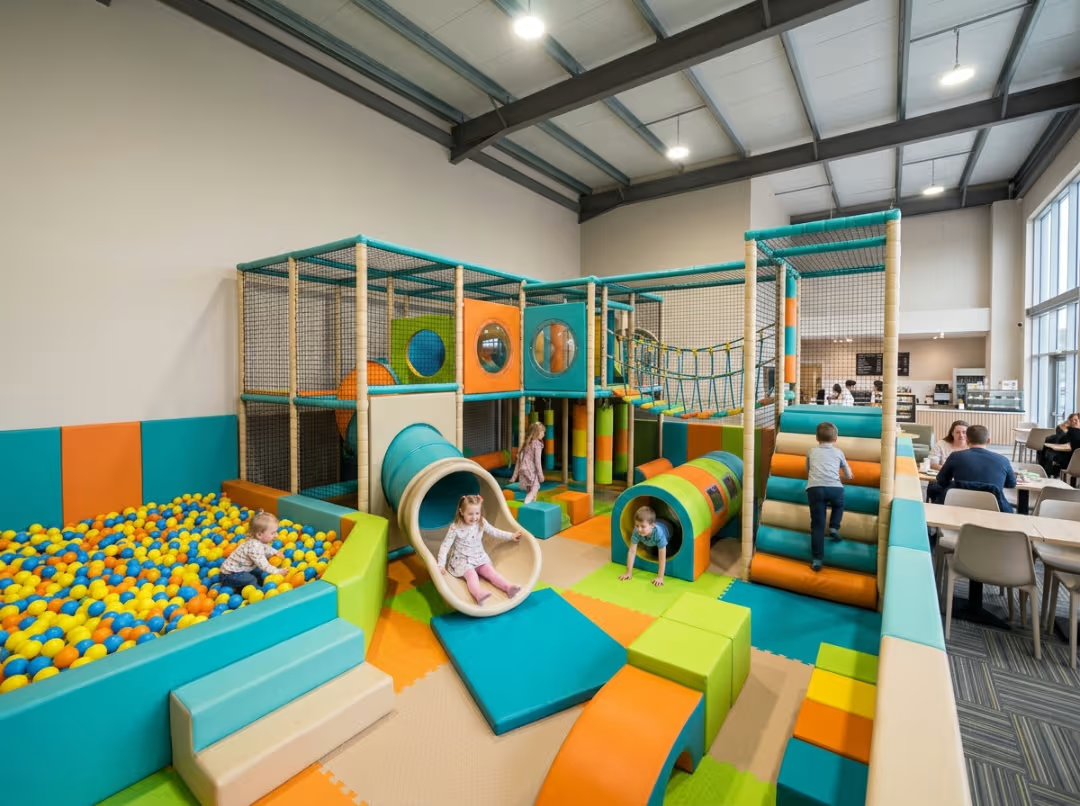
Most soft play purchases go wrong before a single product is compared. Buyers skip straight to catalogs, request quotes, and start comparing prices — then discover the equipment doesn’t fit the room, can’t handle the traffic volume, or fails a licensing inspection. The restart is expensive. It’s also almost always avoidable.
A well-matched purchase follows a sequence: define your space, understand your users, choose the right system type, and verify quality before you commit. That’s the structure this guide follows. Work through each section in order, and you’ll arrive at a purchase decision grounded in your actual requirements — not a supplier’s product availability.
Define Your Space and Users Before Looking at Products
This is where most buyers skip ahead, and where most purchasing mistakes originate. Equipment that doesn’t match the space or the user base isn’t a product problem — it’s a process failure that starts before any product is considered.
Measure your space the way a buyer should
Three measurements determine what’s physically possible: floor area, ceiling height, and doorway widths.
Floor area sets the outer limit on configuration and equipment volume. Ceiling height becomes critical the moment climbing structures or multi-level systems enter the picture — a system engineered for a 4.5-meter ceiling can’t be adapted to a 3-meter room, and this mismatch typically surfaces only after a quote has been accepted. Doorway widths are equally important and almost universally overlooked until delivery day. If the largest panels can’t pass through the entrance corridor, no reassembly workaround will fix it.
Sketch a rough floor plan with all three measurements before speaking to any supplier. It takes thirty minutes. It eliminates an entire category of expensive surprises.
Your user base and business type change the specification entirely
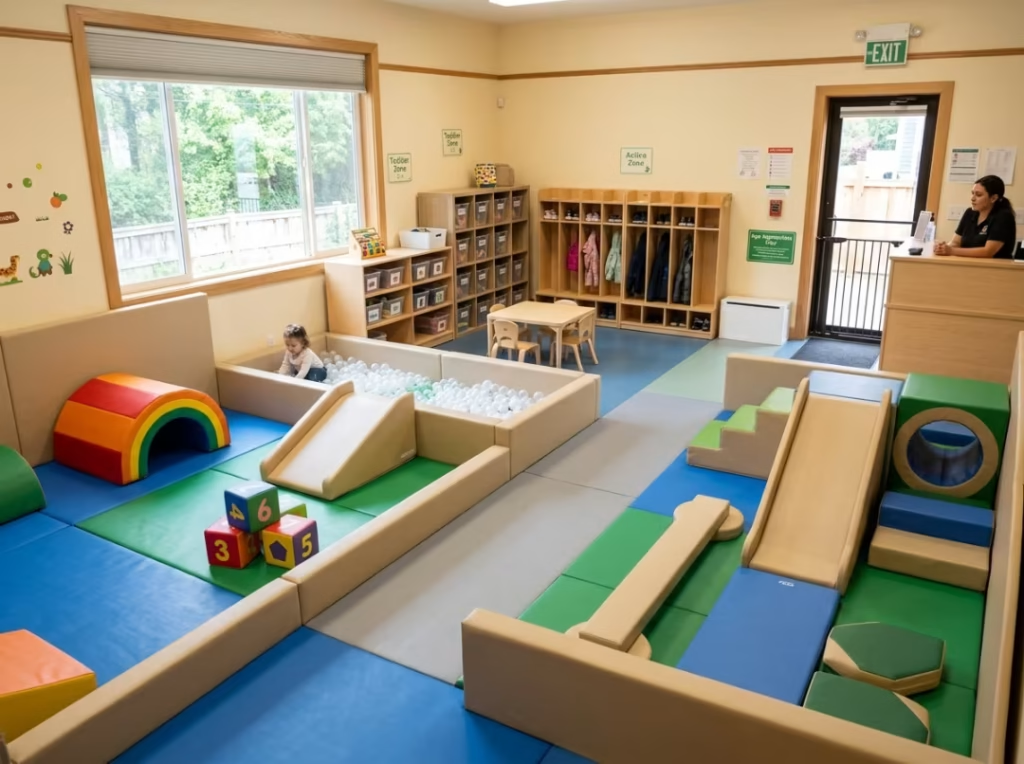
Context determines specification. A church nursery with 200 sq ft and children aged 2–5 has almost nothing in common — from a procurement standpoint — with an FEC running 2,000 sq ft of mixed-age, high-footfall traffic. Here’s how different settings translate into real specification requirements:
- Home playroom (ages 1–3): Low-height, soft-edged equipment at residential-use intensity. Easy cleaning matters more than antimicrobial certification. Budget and aesthetics typically drive the decision.
- Church nursery (ages 2–5, limited weekly hours): Commercial-grade materials are still required — even infrequent use demands covers that can be properly wiped down — but volume tolerance requirements are lower than a full-time facility.
- Daycare (ages 2–6, all-day sessions): Mixed-age challenge levels, commercial foam density, and wipeable covers are non-negotiable. Equipment must survive daily disinfection cycles without cover degradation.
- Family entertainment center (ages 2–10+, high footfall): Modular expandability, heavy-duty foam density, antimicrobial cover treatment, and a manufacturer who still stocks compatible components three years from now. These aren’t premium upgrades — they’re baseline requirements for a viable commercial installation.
Write these parameters down before contacting any supplier. That written brief becomes the filter that eliminates unsuitable options immediately — and keeps supplier conversations from drifting toward whatever inventory they want to move.
Choose the Right System Type
System type shapes everything downstream: cost structure, lead times, long-term flexibility, and replacement planning. It’s a strategic decision, not a cosmetic one.
|
System Type |
Cost Range |
Lead Time |
Flexibility |
Best Use Case |
Expansion Potential |
|---|---|---|---|---|---|
|
Modular |
Mid-range |
Shorter |
High |
Growing businesses, standard spaces |
High — if manufacturer maintains component compatibility |
|
Custom-built |
Higher |
Longer |
Medium |
Unusual floor plans, FEC theming |
Low — no off-the-shelf replacement parts |
|
Inflatable |
Lower |
Shortest |
High |
Temporary setups, mobile operators, home use |
Limited — not suited for permanent commercial use |
What modular soft play systems do well — and where they fall short
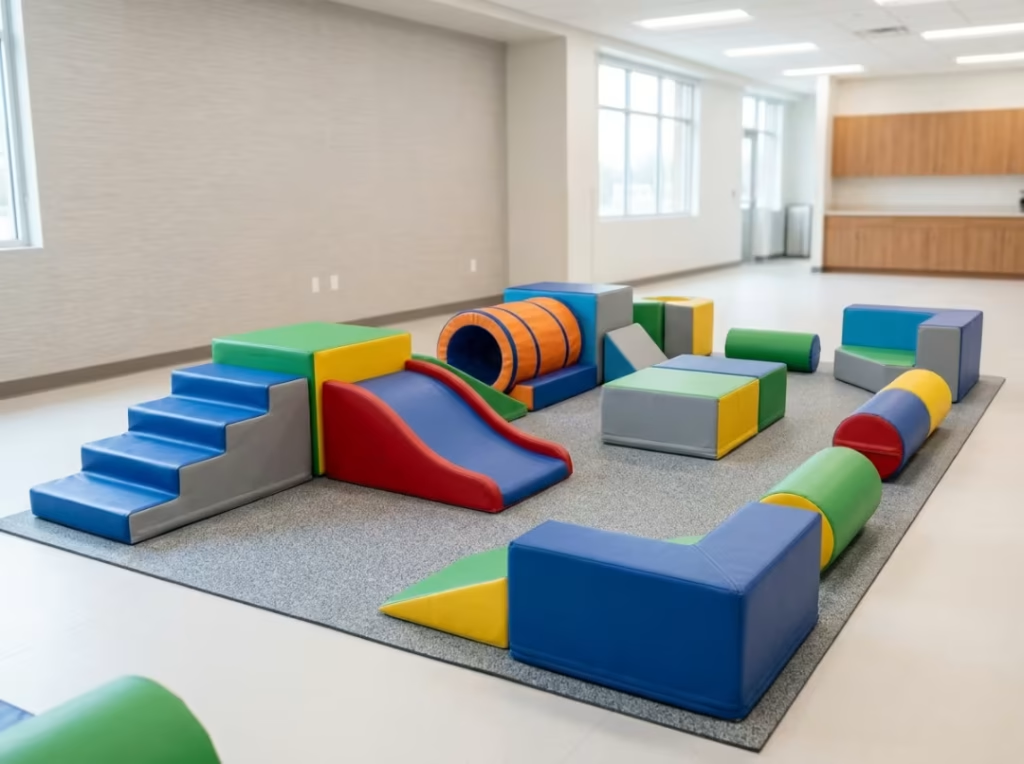
Modular systems use pre-engineered components that configure and reconfigure within a defined space. They suit growing businesses, uncertain space plans, and mid-range budgets. The operational advantage is real: a daycare or church nursery that relocates or expands its program can rearrange or add to a modular installation without starting over.
The risk most buyers miss is compatibility continuity. A modular system sourced from a manufacturer who discontinues that component range in two years leaves the buyer unable to expand — or forces a full replacement. Before committing, ask directly: how long has this component range been in production, and what is your policy on availability for existing customers? A vague answer is useful information.
When a custom-built system is worth the cost
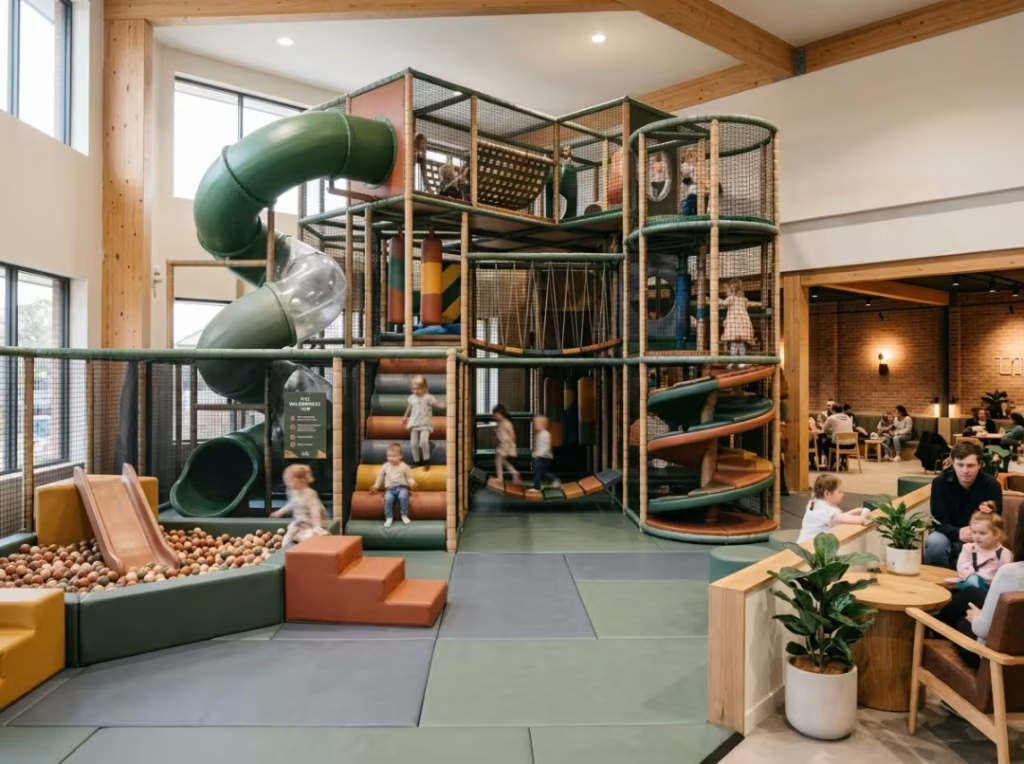
Custom-built systems are engineered from scratch around a specific space or brand identity. They make sense when the floor plan is irregular, when ceiling height rules out standard components, or when an FEC requires themed environments that modular systems simply can’t deliver.
The tradeoffs are real: lead times typically run double those of modular systems, upfront cost is higher, and there are no off-the-shelf replacement parts. If a panel is damaged in year three, the original manufacturer is the only viable source. That’s manageable — but it needs to be built into the buying decision and the maintenance plan from day one.
Custom earns its premium when the specification genuinely requires it. Paying for a custom build to achieve a slightly different color scheme or a marginal layout tweak is rarely the right call.
Where inflatables make sense — and where they don’t
Inflatables suit temporary setups, mobile operators, and low-frequency home use. Some operators use them deliberately to test demand before committing to a permanent installation — a reasonable strategy when the business case hasn’t been fully validated.
What inflatables are not is a cost-saving substitute for permanent commercial installations. The durability gap is substantial: seam integrity degrades under repeated commercial footfall, surface wear accelerates with daily cleaning, and the structural limitations mean inflatables can’t replicate the challenge levels or configurations a commercial system provides. Buyers who choose inflatables to cut costs on a commercial installation typically replace them within 18 months — at which point the savings have long since disappeared.
How to Judge Quality Before You Buy
Most buyers can’t distinguish commercial-grade from residential-grade quality in a product photo. That’s exactly why low-cost suppliers compete so effectively in this market. What follows are the specific indicators that actually predict real-world performance.
Foam density — the specification most suppliers obscure
Foam density, measured in kg/m³ (or lbs/ft³ in the US), determines how long padding holds its shape and absorbs impact under repeated use. Residential foam is manufactured for intermittent home conditions. Under commercial traffic, it compresses and loses its protective properties well before the cover shows any visible wear — meaning equipment that looks fine is no longer performing safely.
For commercial soft play, 45–60 kg/m³ is the appropriate range for load-bearing and impact-absorbing components. Request foam specifications in writing from every supplier. A supplier who can’t or won’t provide the density figure is telling you something important about how they handle technical accountability across the board.
Cover materials — what commercial use actually demands
The commercial baseline is commercial-grade vinyl: wipeable, durable under repeated chemical cleaning, and ideally treated with an antimicrobial finish. Each property has a specific practical basis:
Vinyl durability: Covers in commercial settings are cleaned repeatedly with disinfectant solutions. Lower-grade vinyl and fabric covers crack, peel, and shorten the replacement cycle within years rather than decades.
Wipeable surfaces: In high-turnover environments, cleaning efficiency is a hygiene variable, not a convenience preference. Non-wipeable surfaces accumulate bacteria regardless of cleaning frequency.
Antimicrobial treatment: In childcare environments — particularly for children under 3 — antimicrobial cover treatment is increasingly required by licensing bodies. When evaluating it, confirm whether the treatment is embedded in the material or applied as a surface coating. Surface coatings degrade with repeated cleaning; embedded treatments don’t.
Avoid fabric covers in commercial settings, regardless of how they look in catalog photography. They’re appropriate for home use. They’re not appropriate where daily sanitation is a regulatory requirement.
Construction details that predict lifespan
Sales materials almost never feature these details. They’re also the most reliable predictors of how equipment holds up under real operating conditions:
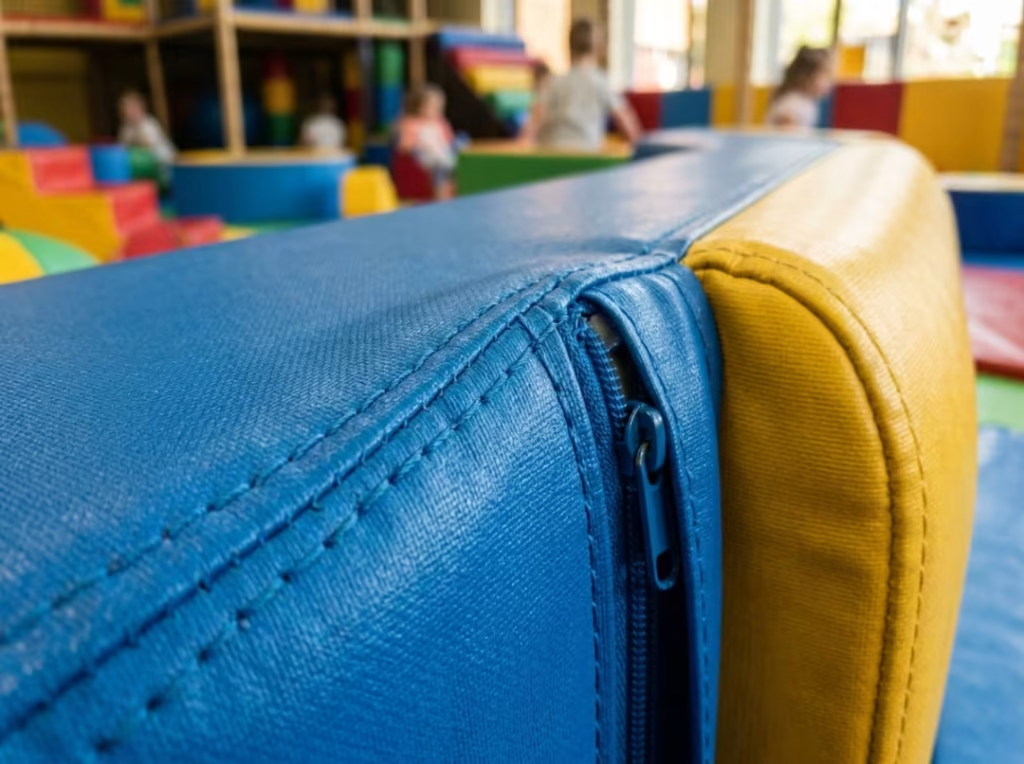
- Double-stitched seams: Single stitching separates under stress, particularly at corners and edges where children apply repetitive lateral force. Double stitching is the commercial construction standard.
- Concealed or recessed zippers: Exposed zippers catch on clothing, create snag hazards, and wear out faster. Recessed zippers extend both safety and service life.
- Removable covers: Non-removable covers make deep cleaning impossible. Over time, odors and bacterial buildup become irreversible without replacing the entire panel. Removable covers allow individual replacement without discarding the foam core — a significant cost difference at scale.
Request physical samples before ordering
Product photos communicate nothing about texture, density, or seam integrity. A physical foam and cover sample lets you assess density by hand compression, examine the vinyl surface finish, and inspect seam and zipper construction directly.
Any serious commercial manufacturer provides samples without hesitation. A supplier who deflects — citing cost, logistics, or order minimums — is communicating something about their confidence in the product. If samples aren’t available, ask to visit a reference installation of comparable size and use type. Eighteen months of real-world wear tells you more than any specification sheet.
How risk changes between new, used, and custom equipment
New equipment from a verified manufacturer carries the lowest risk, provided certifications are current and documentation is available for review.
Used equipment introduces unknowns: foam compression history, cover integrity, and compliance with current standards (which may have been revised since the original manufacture date). Used equipment can make sense in low-risk, low-traffic contexts — a home playroom, for instance — but in a licensed daycare or FEC, the liability exposure typically outweighs any cost savings.
Custom equipment introduces lead time and specification risk. The primary protection is a detailed written specification locked in before production begins, with sample sign-off before the full order is manufactured.
Verify Safety — Documentation, Not Marketing
Safety certification claims appear on virtually every supplier’s website. The only reliable signal is actual documentation — specific, verifiable, and issued by an accredited body.
Which certifications apply to commercial soft play equipment?
Two standards are most relevant for most buyers:
ASTM F2376 (Standard Practice for Classification, Design, Manufacture, Construction, and Operation of Indoor Play Equipment) is the primary US standard for soft contained play equipment. ASTM F1918 addresses soft contained play equipment specifically. Both cover impact attenuation, entrapment geometry, structural load requirements, and operational safety. Compliance is required for commercial installations in most US jurisdictions.
EN 1176 is the European standard for playground equipment and surfacing — structural integrity, impact absorption, entrapment risks, and material safety. Required for commercial EU installations and widely recognized internationally.
One detail that consistently catches buyers: certification applies to the specific product tested, not the manufacturer’s entire product range. A certificate for one model doesn’t cover a similar model sold under the same brand. Confirm that the certification on file applies exactly to the product being quoted.
Material safety requirements for commercial soft play
Three requirements apply across most commercial contexts:
Flame resistance: Required for commercial installations in most jurisdictions. Foam and cover materials must comply with applicable fire safety standards — CPSC requirements in the US, BS 5852 in the UK. Confirm compliance in writing for your specific location and building classification.
Lead-free materials: Required under US federal law for children’s products. Confirm that paints, coatings, and hardware components are lead-free.
Phthalate-free covers: Particularly relevant for under-3 environments. Phthalates — historically used as PVC plasticizers — are restricted in children’s products under both CPSC (US) and REACH (EU) regulations. Confirm phthalate compliance for any vinyl cover materials before purchase.
How to verify what a supplier is actually claiming
A practical documentation checklist:
- Request the full test report — not a certificate image. Reports identify the specific product tested, the applicable standard, the test date, and the accrediting body. A certificate image is a summary; the report is the evidence.
- Verify the testing body’s accreditation. Recognized bodies include SGS, Bureau Veritas, and Intertek. A certificate from an unaccredited lab carries no equivalent standing, regardless of how official it looks.
- Confirm the certified product matches the specification being quoted — not a similar model, not the same model from a different production run.
- Request Material Safety Data Sheets (MSDS) for foam and cover materials, confirming flame resistance classification, chemical composition, and applicable compliance standards.
Manufacturers who meet these standards keep this documentation readily available — they need it for their own supply chain relationships. A supplier who delays or deflects is telling you something.
Budget for the Full Cost, Not Just the Equipment
The equipment price on a supplier quote is consistently the least accurate number in a buyer’s initial budget. The real cost of ownership includes several categories that don’t appear on any product quote.
The costs most buyers fail to account for
Shipping and freight: For international orders, clarify whether quotes are FOB (buyer arranges and pays freight from origin port) or CIF (supplier handles shipping to destination port). Neither includes last-mile delivery from the port to your site. International freight for a medium-sized commercial system adds $1,500–$5,000+ depending on volume and destination.
Installation: Many suppliers quote equipment cost only. Professional installation for a mid-size commercial system typically adds 15–25% to the equipment cost. Some manufacturers include installation; many don’t. Clarify this before comparing quotes — otherwise you’re comparing different scopes against each other.
Floor preparation: Some soft play configurations require specific flooring conditions — impact-absorbing underlays, sealed concrete, or dedicated safety matting. Discovering this after equipment arrives forces either a delayed installation or unplanned capital spend.
Spare covers and replacement parts: Ask every supplier, before purchase, whether replacement covers can be ordered individually and at what lead time. A system where a single damaged panel requires full unit replacement — because individual covers aren’t stocked — compounds maintenance costs substantially over a multi-year lifespan.
Build a total cost of ownership figure before making any supplier price comparisons. A lower equipment quote that excludes installation and carries no parts supply can easily cost more over three years than a higher-priced quote from a manufacturer who covers both.
How to Compare Suppliers Effectively
Why three quotes is the minimum, not the target
Fewer than three supplier quotes makes it impossible to determine whether a price is reasonable, a lead time is competitive, or a specification is standard or exceptional. Two quotes reveal a gap; they don’t tell you which side of it is right. Three gives you a reference range to work from.
Suppliers who actively discourage comparison shopping — through artificial urgency, exclusivity claims, or suggestions that their pricing is unique — are worth treating with additional scrutiny.
What to ask and request from each supplier
Go well beyond the product quote. For every supplier under consideration:
- Request physical samples of foam and cover material — not photos, not catalog swatches, but actual samples you can compress by hand and examine directly.
- Ask for two to three reference contacts at comparable installations and actually contact them. Ask specifically about post-sale support, warranty experience, and how the equipment looks at the 12- to 24-month mark.
- Clarify post-sale support: if a panel is damaged in year two, what is the repair or replacement process? Who bears shipping costs for warranty claims? What is the realistic turnaround?
- Ask whether production lead times are contractually committed or indicative estimates. “Approximately 15–20 working days” and a binding delivery date carry very different consequences when timelines slip.
Direct manufacturer versus reseller — what changes
Resellers often communicate faster, offer local market knowledge, and sometimes appear cheaper on initial quotes. The tradeoff: they have limited control over production specifications, quality consistency, and lead times. Their warranty support depends entirely on their own relationship with the underlying manufacturer.
Direct manufacturers like Inqila Play give buyers more direct leverage on specifications, customization requests, and long-term parts supply. The path from question to decision is shorter. Neither model is categorically superior — but knowing which type you’re dealing with determines how much accountability you can realistically hold them to when things need to change.
Plan for Installation and Maintenance Before the Equipment Ships
Decisions deferred to delivery day become problems on delivery day.
Before equipment ships, confirm site access in writing with the installation team: door widths, stairwell dimensions, elevator capacity where relevant, and any constraints that didn’t surface in the initial site survey. If the dimensions the installer expects don’t match reality, resolve that gap before the freight arrives — not during it.
If delivery is phased, agree on the installation sequence in advance. Each phase needs to be completable without obstructing the next.
At handover, establish a cleaning and inspection schedule. Ask the manufacturer for recommended cleaning products — some disinfectants degrade vinyl covers faster than normal wear, shortening the replacement cycle by years. Confirm who is responsible for the first formal safety inspection and at what interval subsequent inspections are required. In commercial settings, scheduled inspections are typically mandated by licensing bodies. Having this plan in place at handover means compliance is built in from day one.
The Buying Mistakes That Are Easiest to Avoid
These aren’t obscure edge cases. They’re the predictable outcomes of a rushed or under-informed process, and they appear across soft play purchases regardless of business size or budget.
Choosing on price alone. Residential-grade equipment priced 30–40% below commercial alternatives is built for different conditions. Foam that holds up under intermittent home use compresses and loses its protective properties under commercial traffic. The cost difference disappears within 12–18 months when early replacement becomes necessary.
Skipping expansion planning. Buying the minimum configuration without confirming future compatibility creates a hard constraint. If the manufacturer discontinues that component range, expanding the installation means either overpaying for a new system or replacing what’s already in place. Confirm expansion plans and long-term parts availability before signing anything.
Underestimating delivery and setup. A commercial soft play installation involves freight coordination, site preparation, and skilled assembly — not a same-day turnaround. Operators who don’t plan for access requirements, floor prep, and installation time consistently delay their opening date as a result.
Treating certifications as equivalent. A test certificate from an unaccredited testing body carries no equivalent standing to one from SGS, Bureau Veritas, or Intertek. Accepting a certificate image without verifying the issuing body’s accreditation creates both legal and operational exposure.
Not following up on references. Every supplier claims quality. Independent verification from buyers at comparable installations is the only pre-purchase evidence that isn’t self-reported. If a supplier can’t provide references, ask why directly.
The Practical Buying Process, Step by Step
Each step feeds the next. Skipping any one creates a gap that tends to emerge at the worst possible time — usually after a commitment has already been made.
- Document your space — floor area, ceiling height, doorway widths, floor type, and any access constraints.
- Define your user profile — age groups, session intensity, estimated footfall, and business type.
- Determine your system type — modular, custom-built, or inflatable, based on use case, budget, and long-term operational plans.
- Set a total budget — equipment, freight, installation, floor preparation, and a contingency allocation for replacement parts.
- Identify at least three suppliers — request physical samples and complete safety documentation from each.
- Evaluate quotes against quality specifications — foam density, cover material, and construction details — not price alone.
- Verify safety documentation — request full test reports, confirm testing body accreditation, and match the certification to the exact product being quoted.
- Confirm installation logistics and maintenance plan — site access, cleaning protocols, and inspection schedule — before signing.
Inqila Play supports buyers through each of these steps, from initial space planning through post-installation maintenance guidance. If you’re ready to move from research to specification, contact the Inqila Play team with your space dimensions and user profile — and get a recommendation built around your actual requirements.
Frequently Asked Questions
What is the difference between ASTM F2376, ASTM F1918, and EN 1176 for soft play equipment?
ASTM F2376 covers the design, manufacture, and operation of indoor play equipment in the US, including soft contained play structures. ASTM F1918 addresses soft contained play equipment specifically — the foam-padded climbing and play structures. EN 1176 is the European standard for playground equipment and surfacing, covering structural integrity, impact absorption, and entrapment geometry. All three require testing by an accredited body. A supplier’s marketing claim of compliance is not a substitute for a verifiable test report.
How much does commercial soft play equipment cost?
Equipment costs vary considerably by system type, footprint, and complexity. A modular soft play system for a small daycare typically ranges from $5,000–$15,000. A larger custom-built FEC installation can exceed $50,000–$100,000. Neither figure includes shipping, professional installation (typically 15–25% of equipment cost), floor preparation, or ongoing maintenance. Build a total cost of ownership estimate before comparing supplier quotes.
What foam density should commercial soft play equipment have?
For commercial applications, 45–60 kg/m³ is the appropriate density range for load-bearing and impact-absorbing components. Residential foam typically runs 20–28 kg/m³ and degrades quickly under commercial footfall. Always request foam specifications in writing. A supplier who can’t provide the density figure cannot be held to a specification.
Can I use residential soft play equipment in a commercial setting?
No. Residential-grade equipment is designed for intermittent, low-intensity use. Commercial environments — daycares, FECs, church nurseries — involve daily use, heavy cleaning cycles, and greater physical stress. Residential equipment in commercial settings degrades faster, fails safety inspections, and creates liability exposure. The apparent cost saving disappears within 12–18 months.
How do I verify that a supplier’s safety certifications are legitimate?
Request the full test report, not a certificate image. The report should identify the specific product tested, the applicable standard, the test date, and the testing body. Verify that the testing body is accredited — recognized bodies include SGS, Bureau Veritas, and Intertek. Confirm the certification applies to the exact product being quoted, not a similar model. Suppliers who delay or deflect on documentation requests warrant close, specific follow-up.
What soft play system suits a church nursery versus an FEC?
A church nursery with limited weekly hours and children aged 2–5 typically suits a modular system with commercial-grade materials and wipeable covers. Heavy-duty foam density and antimicrobial covers are useful but not critical at lower footfall volumes. An FEC with high daily traffic and mixed ages (2–10+) needs modular expandability, foam density toward the upper end of the 45–60 kg/m³ range, antimicrobial cover treatment, and confirmed long-term component availability. The specification gap between these two contexts is substantial. Applying FEC-level requirements to a church nursery wastes budget; applying nursery-level specification to an FEC produces durability and compliance failures.
How long does commercial soft play equipment last?
Quality commercial soft play equipment — appropriate foam density, commercial-grade vinyl covers, double-stitched construction — can last 8–12 years with proper maintenance under standard commercial conditions. Removable covers extend that lifespan by enabling deep cleaning and individual panel replacement rather than full-unit replacement. Equipment without removable covers, or built with residential-grade foam, typically requires partial or full replacement within 3–5 years under the same conditions.
What should I ask a supplier’s reference customers?
Focus on the post-sale experience, not the initial purchase. Ask: How has the equipment held up after 12–24 months of actual use? Have you needed to make warranty claims, and how were they handled? Were there hidden costs after delivery you weren’t prepared for? Would you buy from this supplier again? These questions reveal the operational reality of the supplier relationship in ways that no specification sheet can.
Make the Right Purchase the First Time
Soft play equipment is a long-term, high-stakes purchase. It will be used by children daily, inspected by licensing bodies, and expected to perform consistently for years. Purchases made without a clear process — jumping straight to price comparison before defining space, users, and quality standards — produce predictable results: equipment that doesn’t fit, fails inspection, or needs early replacement.
The process in this guide addresses each of those risks before they become problems. Define the space. Understand the users. Choose the system type on operational grounds. Verify quality through specifications, samples, and direct references. Confirm certifications with accredited documentation. Build the full cost into your budget before making any comparisons.
Inqila Play manufactures commercial indoor playground equipment and custom-built systems for daycares, FECs, church nurseries, schools, and commercial play spaces globally. When you’re ready to move from research to specification, reach out with your space dimensions and user profile — and get a recommendation grounded in your actual requirements.