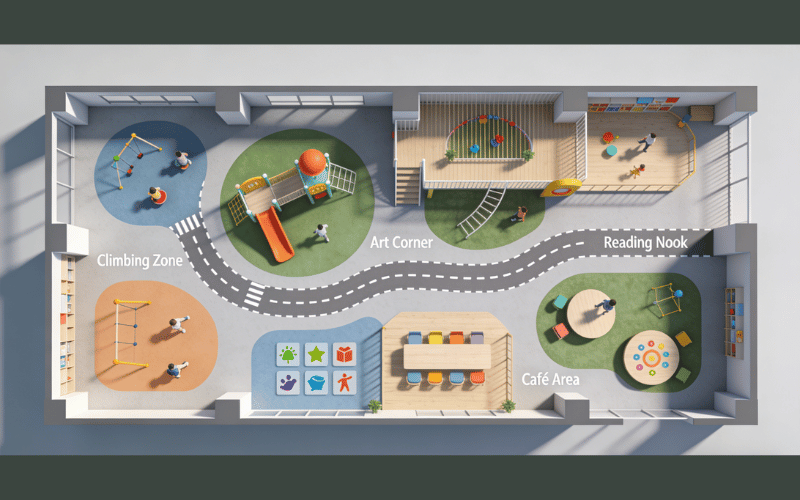
Play is more than just fun and games for children. For many kids, the opportunity to explore, learn, and interact in a safe, clean, and controlled environment is a vital part of their development. Adults see indoor playgrounds as havens where their children can burn off energy, make friends, and develop crucial skills. Children see a world of adventure, ready to be conquered, one slide and climbing wall at a time.
Play is a priority, and your indoor playground design should reflect the importance parents and children place on this experience. A well-designed space fosters physical, cognitive, and social growth.
We understand that the indoor playground planning and design process is complex and demands careful attention to every detail. As a trusted partner in creating engaging play spaces, we are here to offer our advice. We want to help you design an indoor playground layout that is versatile, engaging, and, most importantly, safe for every child who walks through your doors. This guide will cover the key considerations for designing your facility, from initial planning to long-term maintenance.
Key Considerations for Designing a Safe Indoor Playground
Designing a multipurpose indoor playground is a significant undertaking that cannot be rushed. Before you imagine the bright colors and exciting features, it is essential to establish a solid foundation for your project. We recommend you first take a moment to identify your goals, prioritize your needs, and consider how your playground might need to adapt in the future. Planning is the most critical step toward creating a successful and sustainable play space that serves your community for years to come. Here are five key points you should consider when designing an indoor playground:
- Goals and Target Audience: Who are you building this playground for? Defining your primary age group—whether toddlers, school-aged children, or a mix—will dictate your equipment choices, themes, and overall layout. Understanding your goals, such as providing a community hub, a party venue, or a developmental center, will shape every decision you make. A clear vision ensures the final design meets the specific needs of your intended users.
- Safety as a Priority: Safety is non-negotiable. This goes beyond soft flooring and includes equipment standards, regular maintenance schedules, and staff training protocols. From the initial layout to the final inspection, every choice must be viewed through a safety lens. Prioritizing safety builds trust with parents and caregivers, which is the cornerstone of a reputable playground business.
- Versatility and Adaptability: The needs of your community and the interests of children can change. A versatile design allows your playground to evolve. Consider modular play structures, multi-purpose zones, and flexible layouts that can be updated or reconfigured. An adaptable space can host different events, accommodate various age groups simultaneously, and stay fresh and exciting over time.
- Space Optimization: Every square foot of your facility is valuable. Smart design maximizes the use of available space, offering a wide range of activities without feeling cramped or chaotic. This involves vertical thinking, such as multi-level climbing structures, and efficient layouts that create distinct zones for different types of play, ensuring a smooth and enjoyable experience for everyone.
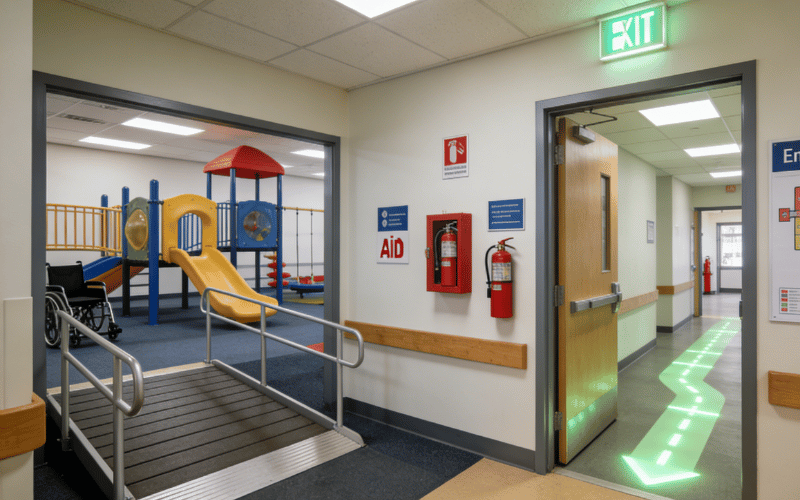
- Accessibility for All Children: An indoor playground should be a welcoming space for every child, regardless of their physical or developmental abilities. This means going beyond basic compliance and embracing inclusive design principles. Incorporating ramps, sensory-friendly zones, and accessible play features ensures that all children have the opportunity to play, learn, and socialize together.
Activities and Features for Your Indoor Playground
The concept of indoor playgrounds has evolved significantly over the years. Gone are the days of simple ball pits and slides. Today’s indoor playgrounds are designed to cater to a wide range of interests and age groups, offering a variety of activities and features that go beyond traditional play areas. From interactive games to creative workshops, these spaces are becoming hubs of entertainment, education, and physical activity.
There is no longer a clear distinction between the activities you need to offer, the features you could include, and the experiences you will want to provide. Families and children crave variety, which means the more diverse your offerings, the more appealing your indoor playground will be. Whether it’s a rainy day or a weekend outing, parents and kids alike will appreciate a space that offers something for everyone. Consider which activities and features your indoor playground could include to maximize its appeal.
Traditional Indoor Playground Features
- Ball pits
- Slides and climbing structures
- Obstacle courses
- Trampolines
- Soft play areas for toddlers
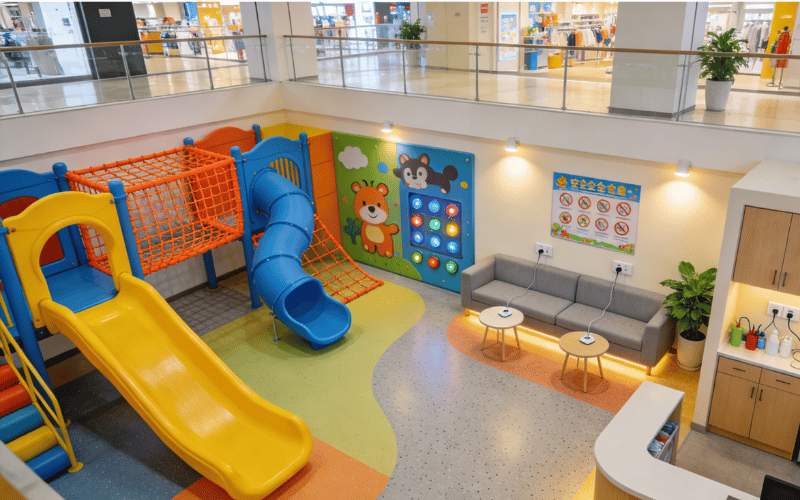
- Interactive play panels
Modern and Interactive Features
- Virtual reality games
- Augmented reality play zones
- Interactive projection games
- STEM activity stations
- Escape rooms for kids
- Sensory play areas
Additional Activities and Programs
- Arts and crafts workshops
- Music and dance classes
- Storytelling sessions
- Fitness programs for kids
- Birthday party packages
- Seasonal events and themed activities
Additional Amenities
- Comfortable seating areas for parents
- Cafeterias or snack bars
- Restrooms with family-friendly facilities
- Nursing rooms
- Lockers for personal belongings
- Free Wi-Fi
Your indoor playground may offer some or all of these features and activities throughout the year, with many even available simultaneously. As you list these diverse offerings, you must also consider how you’ll manage the space and ensure a seamless experience for visitors. Families will use your playground for recreation, education, and celebrations. You can also use the space to host special events, workshops, and private parties. Consider the following questions as you finalize your list of potential features:
- Can you host private events while maintaining access for regular visitors?
- Can any area be designed to accommodate multiple activities? For instance, can a multipurpose room function as a craft workshop during the day and a party room in the evening?
- If a versatile area can host multiple activities, can the equipment and supplies for each activity be moved and stored adequately?
- Will each area be large enough to accommodate the expected number of children and families?
Choosing which activities and features to include in your indoor playground can be challenging. A climbing structure could be designed to double as an obstacle course, while a multipurpose room might serve as both a dance studio and a party space. Once you have an idea of which features you will offer, consider how your playground’s design will cater to children, parents, and visitors who frequent your facility.
Planning for Children, Parents, and Staff
After determining the theme and equipment for your mall playground, you need to design the space with your primary users—the children—in mind. However, before finalizing the layout of slides and climbing structures, consider the other essential areas the play zone requires. Children need safety and engagement, but their guardians are the decision-makers who bring them there. Additionally, your staff needs specific zones to manage operations effectively. Designing a holistic environment means balancing the high-energy needs of kids with the comfort requirements of adults and the functional necessities of your team.
Consider the specific needs of the children who will flood this space daily. Prioritizing child-friendly features is not just about fun; it is about creating a secure environment where they can explore freely. Soft, impact-absorbing surfaces are crucial for preventing injuries during enthusiastic play, while interactive zones with sensory panels keep engagement high. Distinct areas for different age groups ensure that toddlers aren’t overwhelmed by older kids. By focusing on these details, you transform a simple play area into a developmental haven where children feel safe to run, jump, and learn through physical activity.
Parents and guardians require just as much attention in your design planning. They are the ones who determine how long the family stays and whether they will return. Comfortable seating areas with clear sightlines to the play equipment are essential, allowing parents to relax while keeping a watchful eye on their little ones. Amenities like free Wi-Fi and charging stations make the playground a convenient rest stop where adults can catch up on work or social media. Proximity to restrooms and family changing rooms further reduces stress, making the mall visit a pleasant experience rather than a logistical challenge.
While visitors make up the majority of the foot traffic, there is another group you cannot neglect. Your staff members are the backbone of a safe and clean playground environment. Often overlooked in design, their needs are critical for smooth operations. Providing dedicated storage for cleaning supplies and lost-and-found items keeps the area clutter-free. A private break room or designated staff area allows employees to recharge during shifts. Furthermore, integrating clear safety protocols into the design—such as easily accessible emergency exits and first-aid stations—empowers your team to respond quickly and effectively to any situation.
Maximizing Space and Versatility
Space and versatility — without these at your disposal, you either won’t be able to accommodate the diverse range of visitors your mall attracts, or you won’t be able to adapt to the fluctuating flow of foot traffic that characterizes retail environments. Imagine your shopping center is hosting a seasonal holiday kick-off event, a busy weekend family promotion, and a regular influx of Saturday-afternoon shoppers all at the same time. Proper planning means you will have the space and flexibility to accommodate each distinct group seamlessly within your dedicated play area. Poor planning, however, could lead to overcrowding, safety concerns, and frustrated families who leave the premises earlier than intended.
While sprawling shopping centers may have ample square footage to dedicate to expansive play zones, malls with limited floor plans need to be creative in their design approach to maximize value. Thankfully, there are innovative design tools available that can transform any existing space into a versatile, functional space. Movable partitions, lightweight modular play blocks, and reconfigurable seating arrangements are perfect resources that are easy for staff to use and adjust according to your specific daily needs. These flexible elements allow you to transform a static, one-dimensional play area into a dynamic environment that can rapidly evolve with the time of day, season, or the specific event being hosted at the mall.
Modular equipment and flexible barriers are designed to enable mall operators to instantly and effectively separate their playground into designated areas. They can fit any size and shape, making them ideal for spaces that need to accommodate room for different activities and energy levels, such as separating active toddlers from calmer sensory play zones. Imagine rearranging a space from a standard open-play configuration into a secure area for a private birthday party, a storytime session, or a structured workshop with minimal effort. These dividers provide clearly defined boundaries for children and guardians, contain loose play elements, and significantly enhance safety and supervision for everyone involved.
Creative space utilization goes beyond just moving furniture; it involves reimagining how every square foot contributes to the overall customer experience and operational efficiency. By thoughtfully utilizing vertical space for interactive wall-mounted games or compact climbing structures, you can drastically increase visitor capacity without sacrificing valuable floor area needed for circulation. Multi-functional elements, such as custom benches that serve as both perimeter fencing and comfortable seating for parents, maximize utility without cluttering the visual design. This strategic approach allows you to host simultaneous activities—like a puppet show in one corner and active play in another—without the groups interfering with one another, effectively turning a single-use location into a multi-purpose destination.
Ultimately, the ability to adapt your playground layout ensures that you can meet the diverse and evolving needs of your visitors year-round. A versatile space keeps the experience fresh, exciting, and engaging, encouraging repeat visits from local families who might otherwise grow bored with a static, unchanging setup. By prioritizing flexibility and adaptability in your initial design phase, you ensure that your capital investment continues to deliver value and drive foot traffic regardless of changing consumer trends or seasonal demands. Whether it is a quiet Tuesday morning or a bustling Black Friday, a versatile playground ensures every visitor finds a welcoming, safe, and enjoyable place to play.
Indoor Playground Area Requirements
Your indoor playground design plan will depend on the types of play equipment, activities, and age groups you wish to accommodate. When planning, consider how to maximize space while ensuring safety, accessibility, and versatility for a variety of activities. The following guidelines are tailored for indoor playgrounds:
-
Modular Play Structures:
Indoor play structures are often modular to fit within limited spaces. Ensure there is at least 3-5 feet of clearance around climbing walls, slides, and tunnels to allow for safe movement. Ceiling height is also critical — aim for at least 12-15 feet to accommodate larger structures. -
Soft Play Areas:
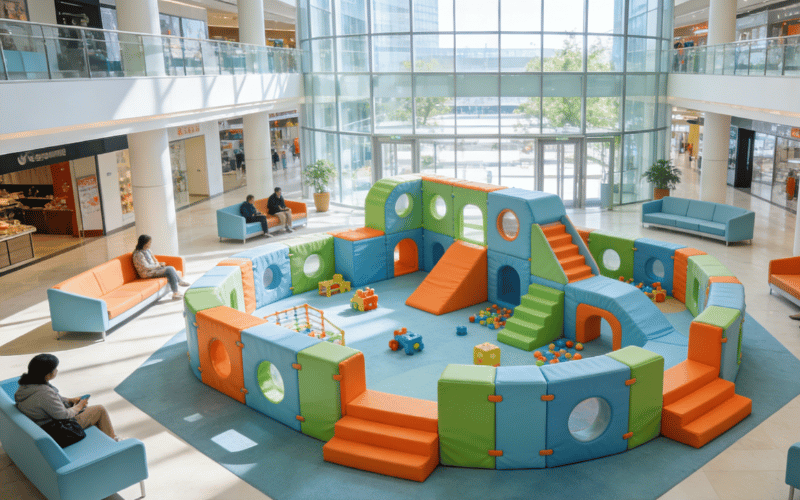
For toddlers and younger children, soft play zones are essential. These areas should include padded flooring, foam blocks, and low climbing elements. A space of 15 feet by 15 feet is typically sufficient for a small soft play area. -
Ball Pits:
Ball pits are a popular feature in indoor playgrounds. A small ball pit can fit in a space of 10 feet by 10 feet, while larger ones may require 20 feet by 20 feet or more. Ensure the pit is surrounded by soft padding for safety. -
Interactive Zones:
Incorporate interactive play elements like sensory walls, digital games, or light-up panels. These features can fit into compact spaces, with each element requiring around 5-10 feet of wall or floor space. -
Open Play Areas:
Open spaces for running, group games, or flexible activities are crucial. For indoor settings, a multipurpose area of 20 feet by 30 feet can accommodate activities such as yoga, dance, or small sports games. -
Trampoline Zones:
If you plan to include trampolines, ensure proper safety measures, such as padded walls and netting. A single trampoline requires about 10 feet by 10 feet, while a trampoline park section may need 30 feet by 30 feet or more. -
Seating and Lounge Areas:
Provide comfortable seating for parents and caregivers. Indoor seating areas can be compact, with 10 feet by 10 feet sufficient for a few chairs and tables. Consider adding charging stations and Wi-Fi for added convenience. -
Cafeteria or Snack Zone:
If you plan to include a snack area, allocate at least 15 feet by 15 feet for tables, chairs, and vending machines. Ensure this area is separate from play zones to maintain cleanliness. -
Storage and Maintenance:
Indoor playgrounds require storage for cleaning supplies, spare equipment, and personal belongings. Plan for a storage room of at least 10 feet by 10 feet. -
Safety and Accessibility:
Use non-slip flooring, rounded edges, and safety padding throughout the playground. Ensure pathways are wide enough for strollers and wheelchairs, and include clear signage for exits and emergency procedures.
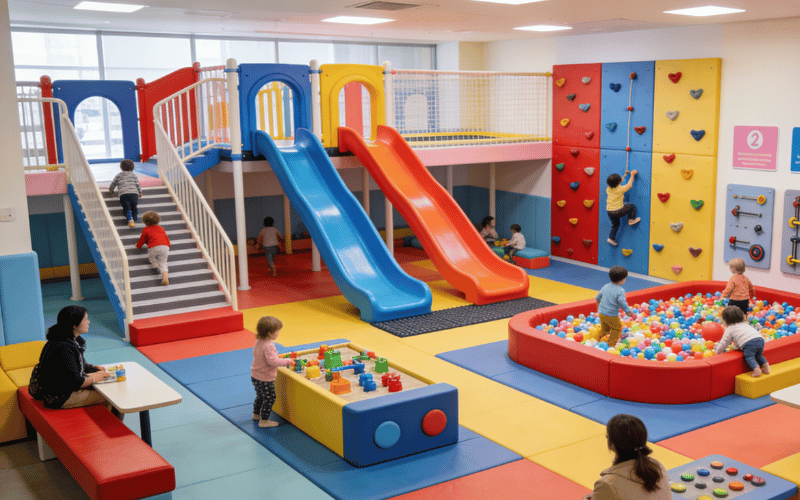
When designing your indoor playground, also consider ventilation, lighting, and soundproofing to create a comfortable environment. Multipurpose indoor playgrounds can also benefit from flexible layouts, allowing you to reconfigure spaces for different activities or events.
Maintaining a Smooth Flow
How your visitors navigate your mall playground is just as important as the equipment they play on. Think about the layout of any high-traffic area, such as a busy airport, theme park, or museum. These environments rely on convenient pathways to guide guests effortlessly to their intended destinations. They are also enhanced with specific amenities placed in strategic locations to serve individuals as effectively as possible. These thoughtful design choices keep the facility’s flow moving smoothly. Your mall playground design needs to maintain this smooth flow to prevent congestion and ensure a positive experience for every family.
A well-planned playground layout correctly flows when it accomplishes three key goals for its users:
- Its design is intuitive and easy to navigate for children and adults of all abilities.
- There is adequate visibility throughout the play area, and clear signage is posted to help parents find entrances, exits, and rules.
- The space is safe and secure in all zones to reduce the chances of collisions or wandering and ensure children are properly supervised.
Your visitors will expect more from your playground than just fun slides and climbing nets. They will want to feel welcomed and comfortable in your space without feeling crowded. Your layout should be influenced by how families will use the different zones of the play area. For instance, the stroller parking area should be close to the main entrance to allow parents to unload quickly without blocking the path. A shoe cubby area should also be near this entry point to reduce clutter in the active zones. Quiet sensory corners should be tucked away from high-energy climbing structures to provide a calm retreat.
As your playground becomes a popular destination, the layout should help guests quickly move between necessities. Ensure that hand sanitizing stations, trash receptacles, and family restrooms are accessible from the play area without requiring a long trek through the mall. You want all guests to have easy access to these essentials, and your maintenance staff should have quick access to cleaning supplies or tools should they need to tend to a spill or repair. By prioritizing logical placement of amenities, you minimize disruptions and keep the focus on safe, uninterrupted play.
Safety First in the Playground Design Process
You should address all child, parent, and staff safety elements throughout the playground design process. Unfortunately, some developers leave safety as an afterthought. They may not consider the specific requirements for fall surfacing or use zones until the end of the project. Many mall operators find out too late the true cost of retrofitting a new play area with proper safety padding or perimeter fencing. Changing orders to accommodate last-minute safety needs can incur high costs, driving the project over budget and delaying its opening.
Remember—even though your ability to provide a fun and engaging attraction for families is your top priority, your efforts will fail if you do not prioritize safety above all else. A playground is a significant investment that you need to rely on for years to attract and retain visitors. Neglecting safety can damage your mall’s reputation, increase liability, and lead to serious injuries. A proactive approach involves integrating safety from day one, from selecting certified equipment to planning for adequate supervision and clear sightlines for parents and guardians.
Whether you’re building a brand-new play space or renovating an existing one, a rigorous maintenance plan is essential. Regular inspections by certified staff are necessary to identify and address potential hazards like loose bolts, worn-out surfaces, or broken components before an accident occurs. This ongoing commitment ensures the playground remains compliant with safety standards long after its grand opening. Don’t let safety neglect blow up your budget, extend your project timeline, or jeopardize the well-being of your youngest visitors. A safe playground is a successful one.
Conclusion
Shanghai Inqila & Playground Equipment Manufacturer can help you strategically plan for the success of your mall playground from the outset of the design process. Our experts will collaborate with you to map your vision, paying close attention to areas where you can maximize space, offer versatile activities, and maintain a smooth flow throughout the facility. By prioritizing thoughtful design elements like safety zones, age-appropriate structures, and parent-friendly amenities, you transform a simple play area into a powerful engine for customer engagement and retention. A well-executed playground isn’t just an attraction; it is a vital component of the modern family shopping experience.
We offer a comprehensive range of playground solutions, including custom indoor and outdoor equipment, stainless steel slides, freestanding swing sets, and water park equipment, all tailored to your exact needs. We can take any space and make it the perfect setting for the joy and activity you desire. Our product line—ranging from spiral slides to outdoor musical instruments—provides the versatile tools needed to create a unique destination. Shanghai Inqila has worked with commercial centers of all sizes to accommodate a full spectrum of play styles. Call us today and let us help you create a safe and innovative playground design that will exceed your expectations!