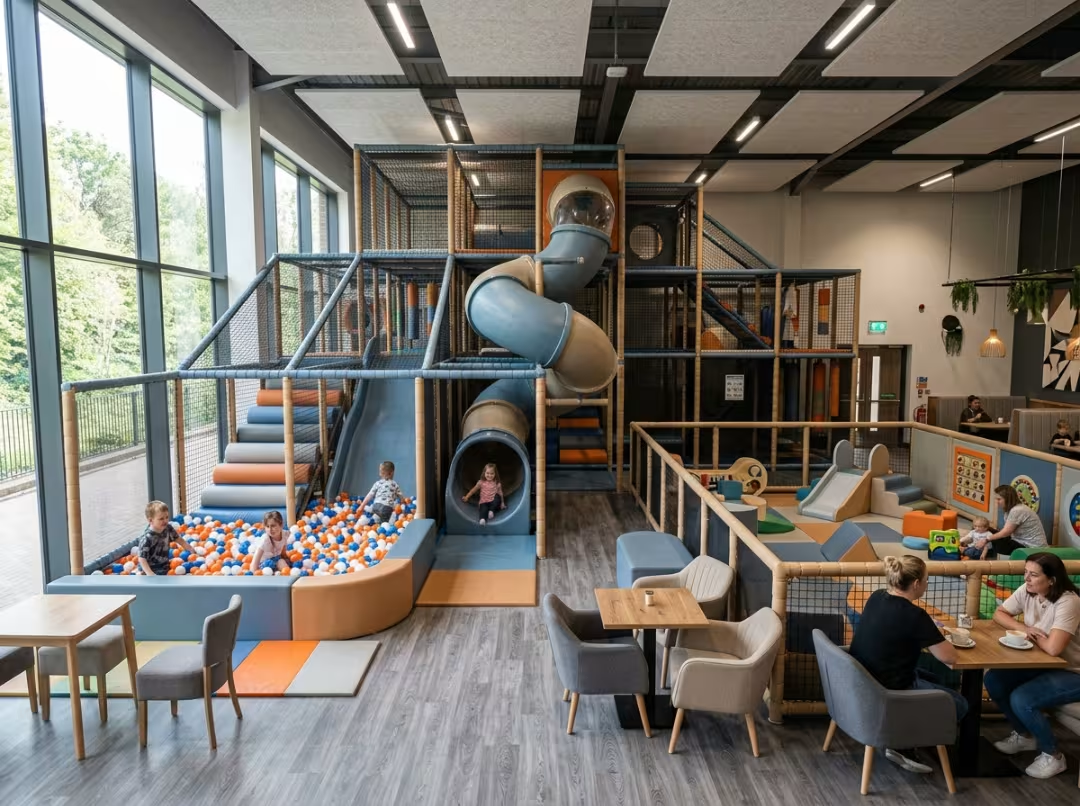
Quick answer: Opening a commercial indoor playground typically costs $100,000–$300,000 depending on venue size, market, and equipment tier. Success depends on validating local demand before signing a lease, choosing certified equipment that earns back its cost, and building multiple revenue streams — not just walk-in admissions — from day one.
The families are out there. The demand is real. What separates a commercial indoor play center that thrives from one that closes in 18 months isn’t the equipment catalog or the color of the slides — it’s a handful of decisions made before the doors open.
This guide focuses on four of those decisions: validating whether your market can actually support the traffic, understanding the real startup costs (including the surprises that blindside first-timers), choosing certified indoor playground equipment that pays back, and building a revenue model that holds up through a slow February. If you’re close to signing a lease or selecting a supplier, this is where to start.
Is the Market Ready? How to Validate Before You Commit
Why the market call matters more than the build
Most indoor play centers don’t fail because the slides were wrong. They fail because the trade area couldn’t support the traffic, or because the lease was signed before anyone counted the qualifying households. The market decision is the one you can’t undo cheaply — every other call downstream depends on it.
Operators who skip market validation and go straight to space-hunting are essentially building a financial model on an assumption. That assumption might be right. But if it’s wrong, no amount of good equipment or smart programming fixes it.

How to judge local demand for a commercial indoor playground
Your real market isn’t total population. It’s families with children in your target age range who live within a 15–20 minute drive. The difference between 15,000 qualifying households in that catchment and 3,000 isn’t a rounding error — it’s the difference between a viable membership base and a fragile one.
Where to find the actual numbers: local school enrollment data, census age and income breakdowns, and planning records showing new residential developments. New subdivisions and apartment complexes often concentrate young families in areas with few established play amenities. That gap is a genuine opening.
Income matters too. Walk-in admissions sustain basic operations, but the models with strong margins — memberships, birthday parties, camps — depend on discretionary spending. A high-density catchment with low household incomes tends to produce fewer visitors and lower membership uptake, which makes the financial model significantly harder to sustain.
How to map competition by quality, not count
The wrong instinct is to count competitors and decide whether there’s “room.” The right instinct is to assess them. A tired facility with a 3.4-star rating, thin weekday traffic, and no party program isn’t a wall — it’s an opening.
When you visit competitors, look for: age-range coverage gaps (particularly the under-3 and over-8 segments, which many venues underserve), pricing structure, peak-hour crowding versus weekday emptiness, party and membership program maturity, and complaint patterns in reviews. Read what parents say, not just the star average. Those complaints are your positioning brief.
Find the gap they’ve left — an underserved age band, a weak café, no real toddler zone — and build your model around it.
What makes a location commercially viable
Foot traffic from a busy retail corridor matters less than proximity to your customer’s weekly routine. Grocery anchors, pediatric clinics, and daycares generate the kind of habitual travel that turns into repeat visits. A well-located play center near a pediatrician’s office fills Tuesday afternoons. One in an industrial park does not.
Practical access is non-negotiable. Parents arrive with a stroller, a toddler, and a snack bag. If parking is a friction point, you lose visits before they start.
Lease terms deserve the same scrutiny as rent per square foot. Length, HVAC responsibility, improvement allowance, co-tenancy and exclusivity provisions, and renewal options all affect whether the space is genuinely viable over five years. A great space on a bad lease traps the business. Before signing anything, have a lawyer review it.
What It Really Costs to Open a Commercial Indoor Playground
Where first-timers get the indoor playground cost wrong
Most first-time operators budget equipment and rent, then get blindsided by build-out complexity, HVAC requirements, insurance specifics, and the working capital gap between opening day and steady cash flow.
A modest but viable commercial indoor playground — functional, properly equipped, and insured — typically opens for roughly $100,000–$300,000. The range is wide because market conditions, raw space conditions, venue size, and equipment choices all substantially affect the number. What’s consistent is which costs get underestimated.
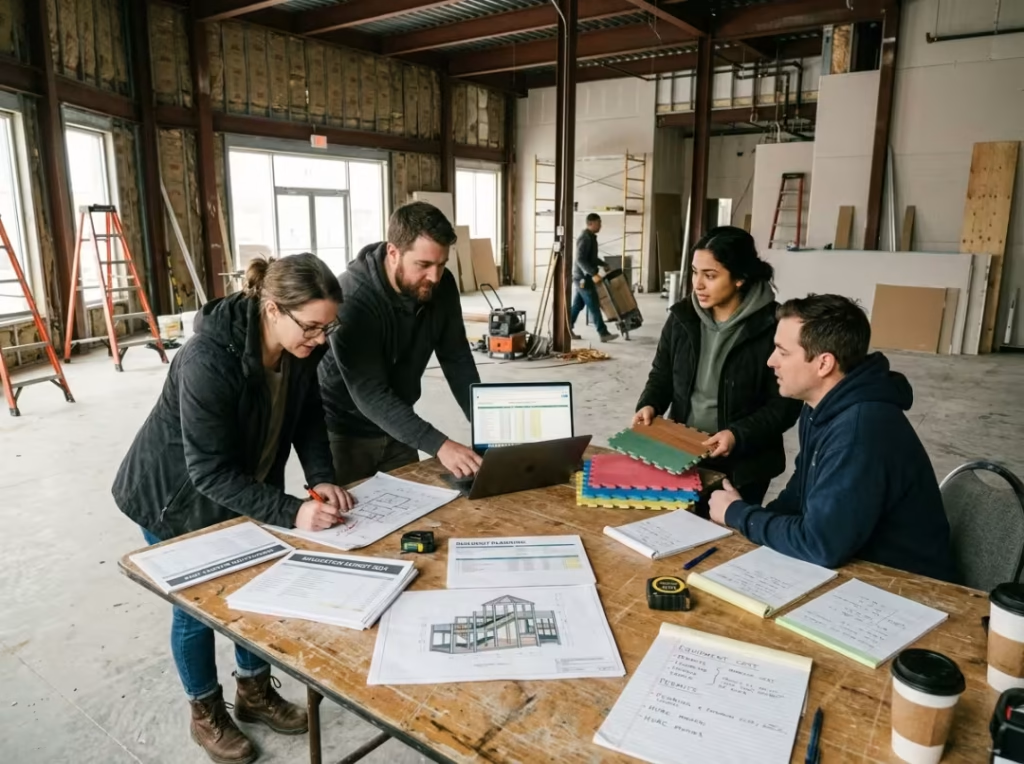
Lease and facility costs
Viable venues typically occupy 3,000–8,000 sq ft. Rent varies widely by market and location type, but the lease structure matters as much as the headline rate.
Triple-net (NNN) leases pass property taxes, insurance, and common-area maintenance on top of base rent. That gap between “listed rent” and “actual monthly occupancy cost” surprises operators who’ve only negotiated gross leases before.
The deeper trap: a cheap per-square-foot rate in a raw shell space often costs more in total than a higher-rent space requiring minimal build-out. Run the full numbers — lease cost plus build-out — before comparing sites.
Equipment costs
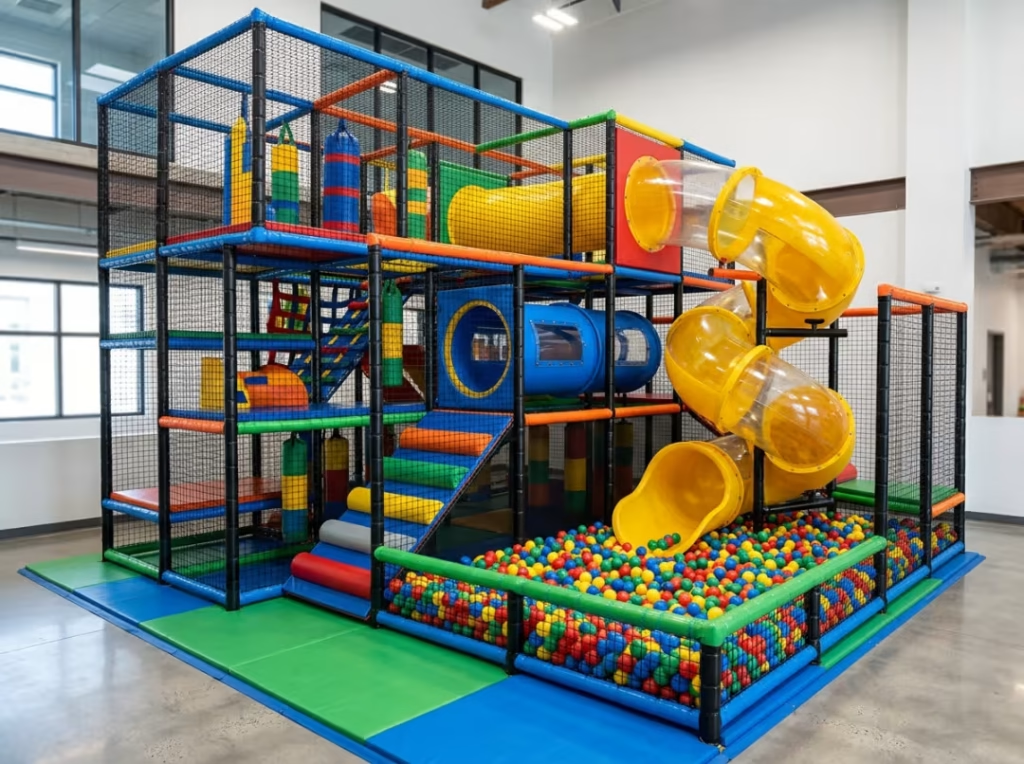
Commercial indoor playground equipment ranges from roughly $30,000 for a basic setup to $150,000 or more for a large or custom multi-level structure. Budget by component rather than as a single line item:
- Main multi-level play structure: typically the highest cost and the longest lead time
- Toddler soft play zone: lower cost per square foot, but a distinct purchase with its own strategic value
- Add-ons (climbing walls, sensory panels, ball pits): priced separately and usually optional at opening
Equipment is a capital expenditure, not an operating cost. The cheapest quote often carries hidden downstream costs — proprietary replacement parts, long lead times, limited maintenance documentation. Evaluate total cost of ownership, not just purchase price.
Build-out, HVAC, and renovation
Build-out costs cover flooring (impact-absorbing surfaces are required, not optional), electrical work, plumbing, restroom upgrades for families, theming and wayfinding, and acoustic treatment. Depending on the space condition, this line can rival the equipment budget.
HVAC deserves separate emphasis. A sealed play space with 30–50 active children generates a serious heat, humidity, and CO₂ load. Standard light-commercial HVAC is frequently inadequate — and it’s routinely absent from initial contractor bids unless you specifically ask. Get HVAC specced independently by a mechanical engineer before you sign the lease. An HVAC surprise post-signing is expensive to fix and nearly impossible to negotiate away.
Insurance, permits, and professional fees
General liability insurance for a commercial play facility isn’t standard retail coverage. It requires a play-facility endorsement, and brokers unfamiliar with entertainment risk tend to undersell or miswrite the policy. Budget roughly $5,000–$15,000 per year, and use a broker who knows the sector.
Permits — occupancy, health (if you’re serving food), fire — typically run a few thousand dollars in fees. The higher cost is time: permit and inspection lead times frequently add 3–6 months to the project timeline. If your lease starts ticking from signing, that’s rent paid during construction with no revenue coming in.
Marketing and pre-opening budget
Keep this proportionate. A realistic pre-opening spend — a functional website with online booking, grand-opening marketing, local awareness, and signage — runs roughly $5,000–$20,000. Don’t over-scope the launch campaign at the expense of working capital.
Working capital — the cost that actually sinks people
Opening the doors is not the same as reaching steady cash flow. Membership bases take months to build. Birthday party bookings take time to fill the calendar. Walk-in traffic in month one rarely reflects what month six looks like.
Hold a cash reserve covering at minimum the first several months of rent, payroll, and core operating costs — as actual cash, not a hoped-for credit line. This is the single most common reason a venue that had everything else right closes in year one.
|
Cost Category |
Approximate Range |
|---|---|
|
Lease deposit + first months |
Varies by market |
|
Commercial indoor playground equipment |
$30,000–$150,000+ |
|
Build-out, flooring, HVAC, renovation |
$30,000–$100,000+ |
|
Insurance (annual) |
$5,000–$15,000 |
|
Permits and professional fees |
$3,000–$10,000 |
|
Marketing and pre-opening |
$5,000–$20,000 |
|
Working capital reserve |
3–6 months of operating costs |
|
Total (modest viable venue) |
~$100,000–$300,000 |
Choosing Equipment That Pays Back
Start with your model, not the catalog
The most common equipment mistake is shopping features before defining the business model. A neighborhood venue serving mostly toddlers and under-5s needs different equipment than a destination family entertainment center targeting ages 3–12. Both are valid models. Buying for the wrong one wastes capital.
For every piece of equipment, ask one question before purchasing: what behavior does this enable, and how does that translate to visit frequency, dwell time, or an upsell? If the answer is vague, the payback will be too.
The core categories and what each one does for the business
Multi-level play structure. The anchor piece and typically the single largest line item. A well-designed multi-level structure is the primary driver of dwell time — and dwell time directly correlates with F&B spend, likelihood of rebooking, and overall visit satisfaction. This is the one place where quality materially affects revenue, not just appearance.
Toddler soft play zone. Lower cost per square foot than the main structure, but don’t underestimate its strategic value. The under-5 segment generates your highest-frequency, most membership-prone visitors. Parents with toddlers visit more often, stay longer relative to admission cost, and are more likely to convert to members. A weak or absent toddler zone leaves that segment to whoever builds one nearby.
Climbing and active play. Engages the 6–12 age range that multi-level structures sometimes underserve. Relatively low maintenance, strong engagement with older kids, and a reasonable justification for a premium admission tier or an activity add-on.
Sensory and supporting elements. Ball pits, sensory panels, and role-play areas carry high perceived value for parents. One honest note on ball pits: the cleaning cost and time commitment are consistently underestimated at the buying stage. Budget the maintenance before purchase, not after.
For a full view of certified options across these categories — including multi-level structures, soft play systems, and modular configurations — Inqila’s indoor playground equipment range covers the main product types with EN1176, CE, and ISO 9001 compliance documentation available per model.
What certifications should you require for commercial indoor playground equipment?
Three standards matter in commercial indoor play:
- ASTM — the US safety standard for play equipment
- IPEMA — a third-party body that independently verifies ASTM compliance
- EN1176 — the European standard, rigorous and widely recognized internationally
ASTM and EN1176 are not interchangeable. They use different test protocols and criteria, and a product meeting one does not automatically meet the other.
The rule is simple: any supplier should provide current test documentation for the specific model you’re purchasing, not just certification logos on a website. A logo without supporting documentation is a liability exposure. If a supplier can’t produce the test docs, move on.
Durability and maintenance realism matter as much as certifications. Ask about foam replacement cycles, cleaning protocols, spare-part availability, and lead times for replacement components. A structure with proprietary parts on a six-week international lead time is more expensive than a slightly pricier one with locally available spares — because downtime during busy weekends has a direct revenue cost.
Modular vs. custom: which is right for a first-time operator?
Custom structures look compelling in renderings, and for an experienced operator refreshing a venue, they can make sense. For first-timers, they carry meaningful risk: longer lead times, more expensive modifications if the layout doesn’t work in practice, and harder-to-source replacement parts years later.
Modular equipment from a certified supplier is the lower-risk opening path. You can open faster, reconfigure based on actual usage patterns, and expand systematically. Take on custom when you know what your customers actually use — not before.
What first-time buyers consistently get wrong
- Buying too much square footage of main structure and leaving no budget for seating, a café area, or working capital
- Underinvesting in the toddler zone while overbuilding for older children
- Ignoring the ongoing maintenance burden at the point of purchase
- Choosing equipment based on visual impact rather than payback relative to cost
The payback math is worth stating plainly: a ~$60,000 anchor structure driving 50 visits per day at a ~$12 admission pays back within two years with healthy utilization. The math on uncertified or poorly supported gear rarely holds — because downtime, replacement costs, and insurance complications quickly erode the apparent savings.
Revenue Streams: Where the Money Comes From
Why admission alone leaves a play center fragile
Operators who rely primarily on walk-in admission are the most exposed — to weather, to school holidays that cut weekday traffic, to a new competitor opening nearby, or to a single slow month. The indoor play centers that maintain strong margins run three to four interlocking revenue streams. Each one strengthens the others.
Admission and memberships
Admission by age tier and session is the entry mechanism — the product that introduces a family to the venue. Dynamic pricing (weekday versus weekend, peak versus off-peak) is a straightforward yield lever that most venues implement late rather than early.
Memberships are the financial stabilizer. Even 100 active members at $40/month generate $4,000 in predictable, recurring monthly revenue before a single walk-in arrives. What makes memberships sticky: priority booking for birthday parties, guest pass benefits, F&B discounts, and early access to camps and events. When a member has two or three of those hooks, churn drops significantly.
Birthday parties — the highest-margin revenue stream in indoor play
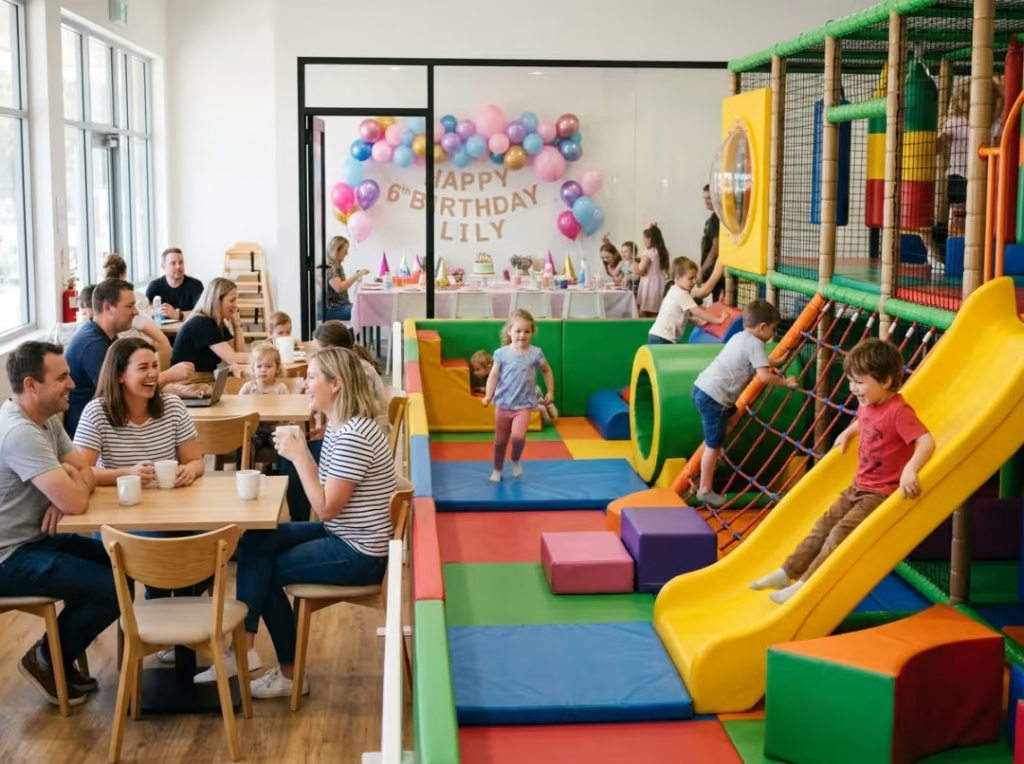
Birthday parties generate the highest margins in the indoor play model and deserve the most operational attention. Party packages typically run $300–$800, with gross margins of 60–70% when structured well. A venue running eight weekend parties at a $450 average generates meaningful revenue from two days, with predictable cost of goods.
A well-structured party package includes a dedicated room, a host, food or F&B credit, setup and clean-up, and defined session times. Tiered packages capture different budgets without requiring custom quotes for every booking.
A firm deposit policy eliminates most no-shows, standardized packages allow staff to execute consistently under pressure, and a party flow that doesn’t disrupt general admission is worth planning before your first booking — not after your tenth.
Food and beverage
The concessions model — coffee for parents, simple food and snacks for kids — rather than a full restaurant operation. Low complexity, decent margin (typically 60–70% on beverages), and direct dwell-time impact. Parents who have a comfortable place to sit and a decent coffee stay 30–45 minutes longer than those who don’t.
One administrative note: food service triggers a separate health permit in most jurisdictions. Budget for it and build the timeline into your opening schedule.
Camps, classes, and group bookings
Structured camps and classes fill the weekday hours that many play centers struggle with. A five-day school holiday camp at $150 per child with 15 participants generates $2,250 in a week that would otherwise be thin. Daycare and school group rates create a steady B2B revenue stream during off-peak windows — and those groups frequently convert parents into individual members.
Why customer lifetime value is the real metric
A family that visits on open admission, converts to a membership, books a birthday party, and spends on F&B over 12 months is worth 5 to 10 times any single transaction. The revenue streams aren’t independent — they reinforce each other. A weak party program suppresses membership conversion. Poor F&B keeps dwell times short. Every stream that underperforms drags the others.
Is a Commercial Indoor Playground Actually Profitable?
What does a realistic revenue model look like?
A 5,000 sq ft venue, averaging roughly 80 visitors per day at an average admission spend of ~$10, generates approximately $24,000/month in admission revenue alone. Layer in memberships (100 members at $40/month = $4,000 MRR), birthday parties (six to eight parties per weekend at $400–$500 average), and F&B, and a realistic gross revenue target for a well-run venue sits between $35,000–$55,000/month. The range is wide because party utilization and membership depth substantially affect the number.
Where the money goes: operating expense benchmarks
|
Expense Category |
Typical % of Revenue |
|---|---|
|
Rent and occupancy |
25–35% |
|
Labor |
25–35% |
|
Insurance and maintenance |
8–12% |
|
Marketing |
5–10% |
|
COGS and supplies |
5–8% |
Rent and labor together consume 50–70% of revenue. If either runs high — an over-leased space or a staffing model not scaled to demand — the margin disappears quickly. Everything else is a rounding error by comparison.
Margins, break-even, and what the numbers actually mean
Well-run commercial indoor play centers typically achieve 55–65% gross margins and 15–25% net margins. Operators consistently below ~10% net are usually either carrying too much rent relative to their revenue or haven’t built a strong membership and party base.
Operational break-even — covering all monthly costs — typically lands at 12–18 months. A full return on the initial investment usually takes 3–5 years. These are not pessimistic projections; they’re what the business model produces when the fundamentals are sound.
What separates profitable venues from struggling ones
Same square footage, same market, very different outcomes. The variables that determine it: lease discipline (not signing for more space than the market supports), an early-built membership base rather than a retrofitted one, strong party utilization on weekends, and staffing scaled to actual demand. Venues that struggle almost always have at least two of those four working against them.
Build a three-scenario financial model — conservative, base, optimistic — before signing anything. The conservative scenario should still be survivable.
Mistakes That Kill Indoor Playground Businesses Early
Picking a location on rent instead of fit
Cheap rent in a weak trade area is the most expensive decision a new operator makes. The short-term savings on monthly costs are erased by the permanent gap in qualified visitors. Validate the catchment — qualifying household count, proximity to routine destinations, competition quality — before the lease, not after.
Underestimating build-out and insurance
These are the two costs that most reliably blow the budget. HVAC in a sealed play environment is almost always more complex and expensive than a standard contractor bid suggests. Insurance for a commercial play facility needs a play-specific endorsement, not a generic retail policy. Use a broker who knows entertainment and family-venue risk, get HVAC specced independently, and add a contingency buffer of at least 15% to the build-out budget.
Overbuying equipment
An impressive main structure, surrounded by empty floor space, with no café and no working capital reserve, is not a strong opening position. Buy to pay back and demographic fit. Leave room in the budget to reconfigure based on what customers actually use. Venues that open with a tighter equipment buy and strong F&B and seating consistently outperform those that spent everything on the structure.
Relying on admission alone
Walk-in admission is a discovery mechanism, not a business model. One slow season — or one new competitor opening two miles away — is enough to create a cash crisis if memberships and parties aren’t already running. Build those streams from day one. A party program added in year two isn’t worth half what it would have been at opening, because you’ve already lost two years of compound referrals and repeat bookings.
Frequently Asked Questions
How much does it cost to open a commercial indoor playground?
A modest but viable commercial indoor playground typically costs $100,000–$300,000 to open. The range depends on market, venue size, space condition, and equipment tier. The most commonly underestimated costs are build-out and HVAC, insurance with a play-facility endorsement, permit lead times, and working capital reserves.
What certifications should commercial indoor playground equipment have?
The three primary standards are ASTM (US safety standard), IPEMA (third-party ASTM verification), and EN1176 (European standard). CE marking and ISO 9001 are also relevant indicators of quality management. These standards are not interchangeable — ASTM and EN1176 use different test protocols. Any supplier should provide current test documentation for the specific model purchased, not just certification logos on a website.
How profitable is a commercial indoor playground business?
Well-run commercial indoor play centers typically achieve 55–65% gross margins and 15–25% net margins. Venues with net below approximately 10% are usually over-leased or haven’t developed strong membership and party revenue. The most profitable venues run multiple interlocking revenue streams — admission, memberships, birthday parties, and food and beverage — rather than relying on walk-in traffic alone.
How many square feet do I need for a commercial indoor playground?
3,000–8,000 sq ft is the typical viable range. Size should align with the business model: a toddler-focused neighborhood venue can operate well at a lower scale, while a destination family entertainment center targeting a broader age range generally needs more space. Don’t size up speculatively — lease only what the revenue model can support.
Can I open a commercial indoor playground in a leased retail space?
Yes, most commercial indoor play centers operate in leased retail or light-industrial spaces. Key lease terms to scrutinize: HVAC responsibility, improvement allowance, exclusivity or co-tenancy clauses, and lease length. Budget for 3–6 months of permit and inspection lead time before opening, and have a lawyer review the lease before signing.
How long does it take to break even on a commercial indoor playground?
Operational break-even — covering all monthly costs — typically takes 12–18 months for a well-run commercial indoor playground. Full return on the initial investment usually takes 3–5 years. Venues that build memberships and birthday party programs early tend to reach that point faster than those that rely primarily on walk-in admissions.
Before You Tour a Space or Talk to a Supplier
The operators who build profitable commercial indoor play centers aren’t necessarily those with the largest budgets. They’re the ones who stress-tested the market, ran the real numbers, and had a revenue model in place before they signed anything.
The most useful first step isn’t touring equipment showrooms or visiting commercial spaces — it’s mapping the qualifying households and existing competitor quality in your target trade area. If the density is there, the competition has a gap, and the catchment supports a membership model, you have something to build on. If those conditions aren’t in place, no amount of good design or quality equipment changes the underlying math.
Start there.