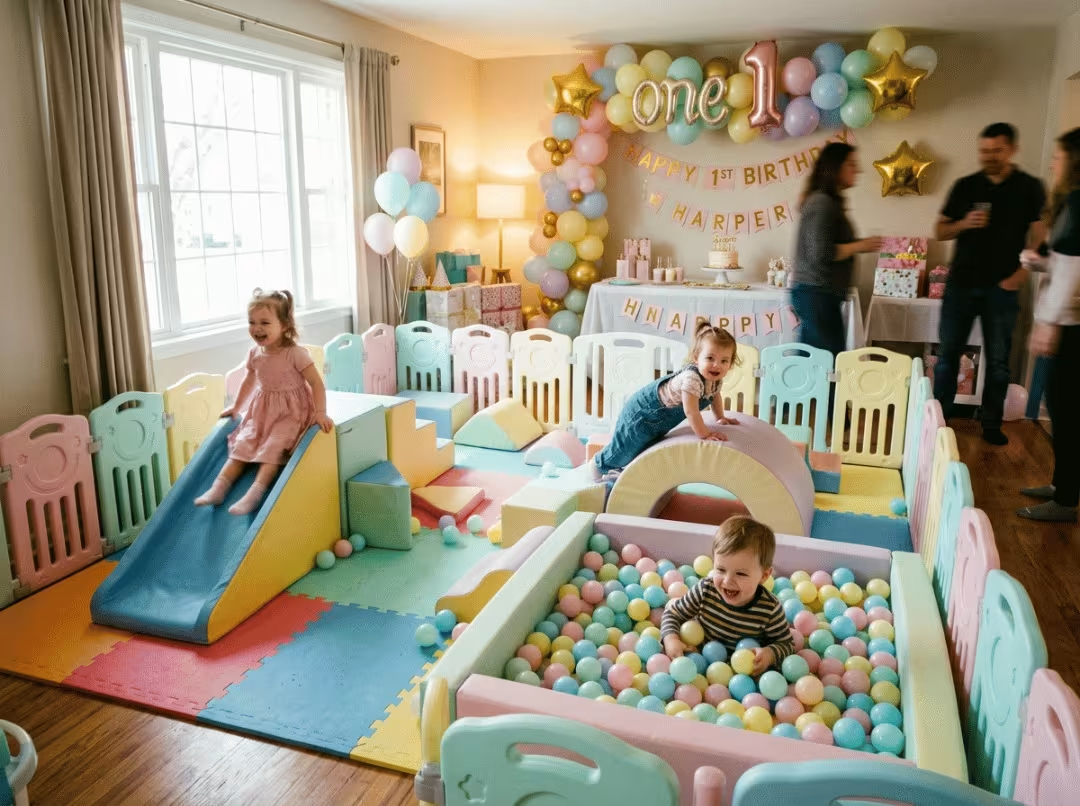
Soft play rental is one of the few service businesses where you can realistically launch for under $5,000, work mainly on weekends, and recover your investment in a few months. But “low barrier to entry” doesn’t mean easy money. The operators who build sustainable income in this space aren’t just the ones with the prettiest setups—they’re the ones who price correctly, manage turnaround time, and build a referral engine early.
This guide works through the decisions that actually determine whether this business is worth starting, and how to structure it so it earns.
1. What Is a Soft Play Rental Business?
A soft play rental business delivers portable, foam-based play equipment to events—birthday parties, baby showers, church gatherings, corporate family days—then sets it up, supervises nothing, and hauls it away. You’re providing a contained, cushioned play space for toddlers and preschoolers, typically ages 1 to 6.
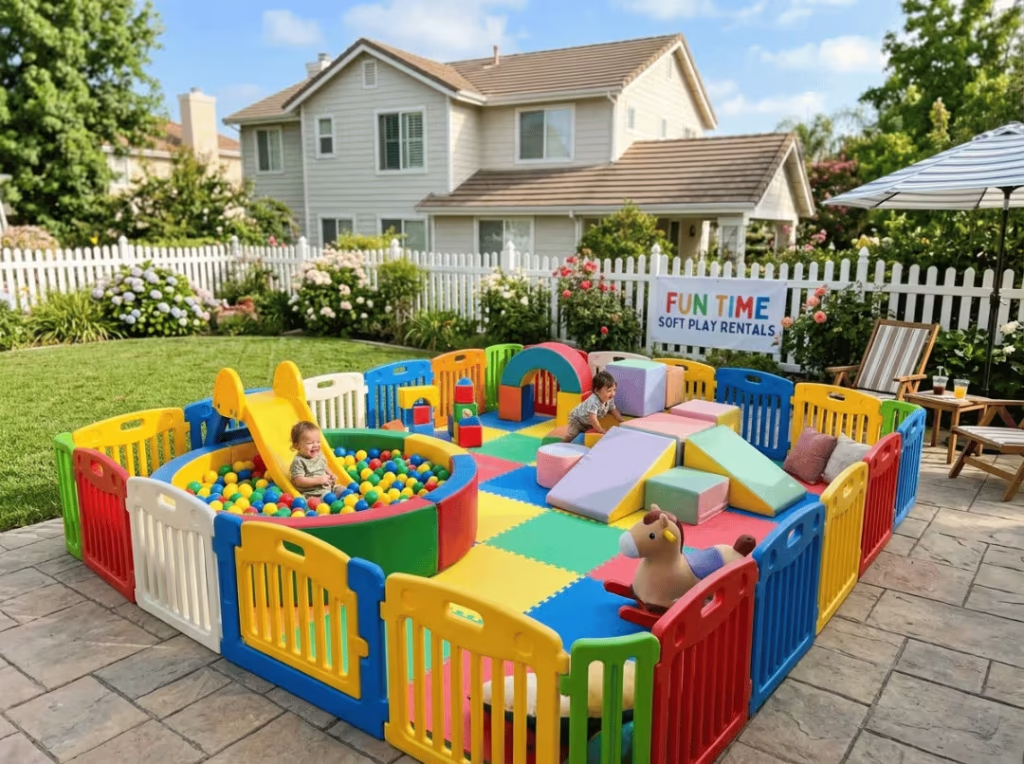
If you want to understand what soft play actually covers as a category, the equipment typically includes ball pits, foam climbers, mini slides, soft blocks, tunnels, and gated enclosures. The key distinction from an indoor play center is the model: no fixed location, no daily overhead, no staff on the clock between jobs. You run lean, work event windows, and scale by adding sets.
Parents like it because it keeps young children contained and entertained. That’s the core value proposition—it solves a real problem at parties.
2. Is It Worth Starting?
This is the question most startup guides skip, so let’s answer it directly.
The profitability case is real. A single equipment set, priced correctly, can gross $250–$450 per event. Your per-event cost is low—fuel, cleaning supplies, and a proportional share of insurance runs roughly $20–$40. That leaves strong margins on individual bookings.
Here’s what a realistic single-set operation looks like at 8 events per month:
- Average package price: $325
- Monthly revenue: $2,600
- Monthly costs (fuel, supplies, insurance allocation, light marketing): ~$500
- Monthly profit: ~$2,100
At 16 events a month with two sets, you’re looking at $4,000–$5,000+ in monthly profit, working mostly Saturdays and Sundays. Most operators recover their startup investment within 3 to 6 months if they market consistently from the start.
The real constraints are time and logistics, not capital. Each event requires loading, travel, setup, breakdown, and thorough cleaning. If you underestimate how long that cycle takes, or set your service radius too wide, you’ll work hard for margins that look worse on paper than they should. More on that in the pricing and logistics sections.
If you’re comparing this to other low-overhead service businesses, soft play rental holds up well—particularly because repeat clients and referrals compound quickly in the birthday party market.
3. Startup Cost Breakdown
Most people overestimate what they need to start and then buy too much equipment before they’ve proven local demand. Here’s what startup actually costs, split into two realistic scenarios.
|
Item |
Lean Start |
Comfortable Start |
|---|---|---|
|
Soft play equipment (1 set) |
$2,500 |
$6,000 |
|
Vehicle (van/SUV or trailer) |
$0 (use your own) |
$4,000 |
|
Storage (garage vs. small unit) |
$0 |
$150/mo |
|
Liability insurance |
$500/yr |
$800/yr |
|
Cleaning & sanitizing supplies |
$150 |
$300 |
|
Website + booking system |
$200 |
$600 |
|
Initial marketing budget |
$300 |
$1,000 |
|
Business license & LLC filing |
$150 |
$300 |
|
Total to launch |
~$4,000 |
~$13,000 |
A few things worth noting:
Start with one set. The mistake most new operators make is buying two or three sets before they’ve landed consistent bookings. Your first set teaches you which configurations parents actually want, which pieces wear fastest, and how long your real turnaround time is. That knowledge shapes every equipment purchase after it.
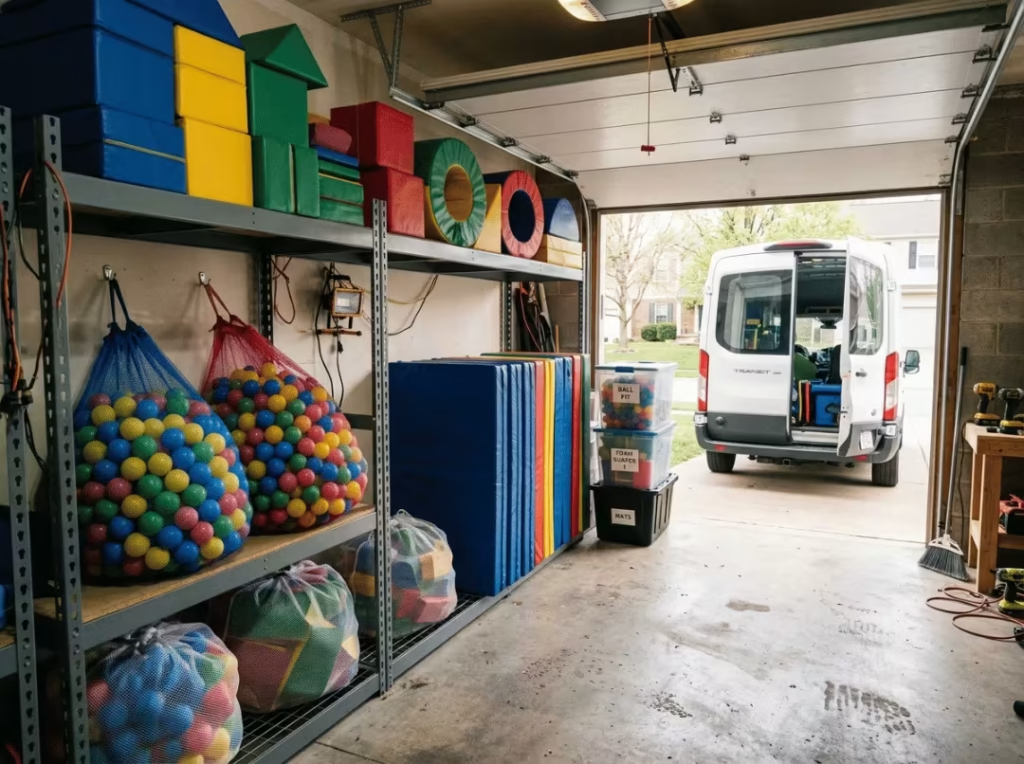
Storage is an easy cost to delay. A dry, clean garage handles one or two sets without issue. Don’t rent storage until you’re running enough volume that a longer drive to retrieve gear is costing you time and money.
Don’t skip insurance. It runs $500–$800 per year. That’s your cheapest line item by far relative to what a single injury claim could cost if you’re uninsured.
4. What Equipment Do You Actually Need First?
Commercial-grade equipment is non-negotiable. Consumer-grade sets from general retailers look similar in photos but fail quickly under event conditions—foam compresses, seams split, and vinyl stains in ways that are hard to clean. Parents notice. So do Google reviewers.
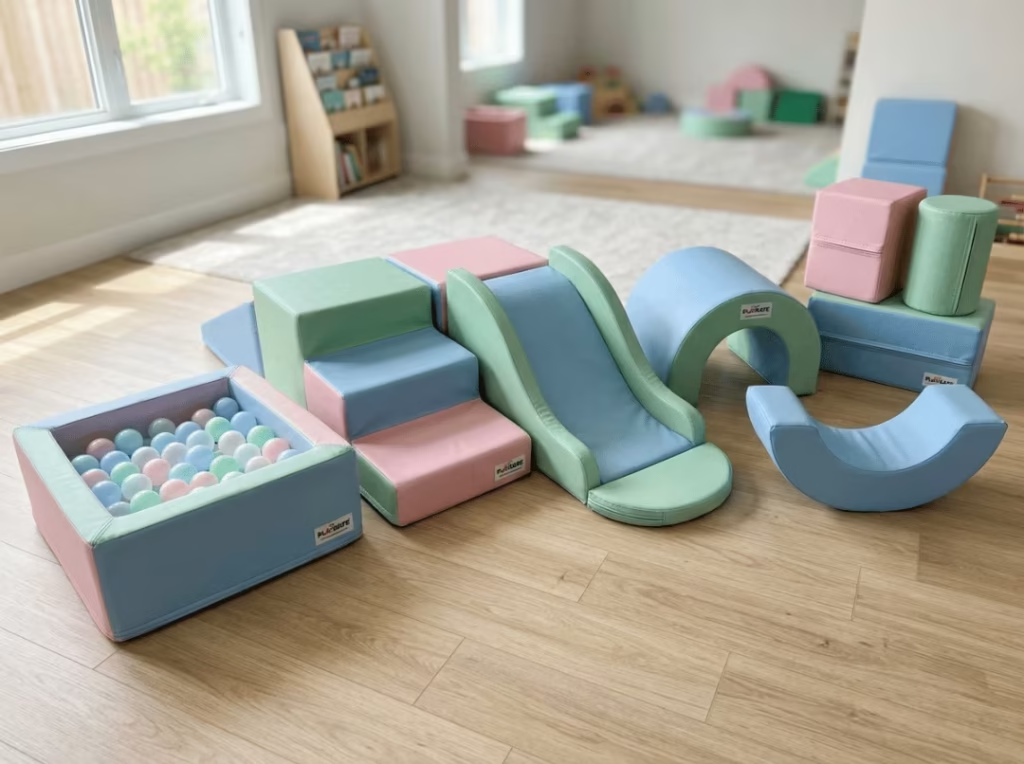
When sourcing indoor soft play equipment, look for commercial-grade vinyl, reinforced seam stitching, non-toxic materials, and certifications that confirm the equipment meets recognized safety standards (ASTM is the relevant benchmark in the US market).
A solid starter set includes:
- Ball pit with 500–1,000 balls
- Soft foam climber and mini slide
- Soft play blocks—rockers, steps, arches
- Play mats or foam floor tiles
- Safety gate or enclosure fence
That enclosure matters more than most new operators expect. It defines the play zone clearly, contains toddlers who wander, and gives parents visible confidence that the setup is managed.
Optional add-ons for upselling later: ride-on toys, a bounce area, themed backdrops.
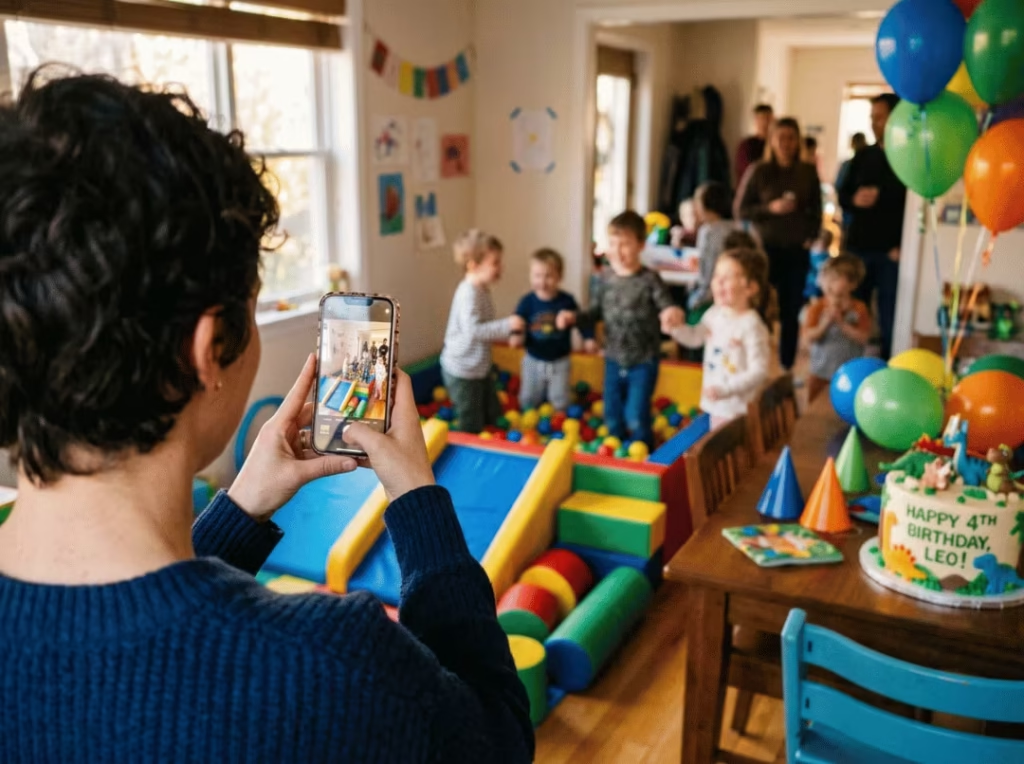
One practical note: buy your ball pit balls in a consistent color palette. Setups that look cohesive in photos are more shareable. Every photo a parent posts at an event is free reach into their local network.
Budget for a backup supply of balls as well. You will lose some, and after certain spills, the right decision is to replace rather than re-sanitize.
5. How to Price Your Packages
Pricing is where most new operators make their most expensive mistake, and it usually goes in the same direction: too low. Low pricing doesn’t just reduce margin—it tends to attract clients who are harder to work with, less likely to leave reviews, and more likely to push back on policies.
Don’t price to win on cost. Price to win on reliability and cleanliness.
Here’s a workable base pricing structure:
Base package = (equipment cost × 10%) + your labor time + travel buffer
In practice, most US markets support:
- Basic set (2-hour rental): $250–$300
- Deluxe set (soft play + ball pit + extras): $350–$450
- Premium themed setup: $500–$700
Add-ons are where margins improve significantly
- Extra hours: $50–$75/hr
- Delivery beyond 15 miles: $2–$3/mile
- Themed decor packages: $75–$150
- Soft play + bounce combo: +$100
- Custom backdrop or balloon garland: $100–$200
Many operators earn 20–30% of their monthly revenue from add-ons alone. Build them into your packages from the start rather than introducing them later.
Weekend and holiday pricing
Your high-demand slots cost you the same to operate but generate disproportionate demand. Price accordingly:
- Weekend premium: +15–20%
- Major holiday weekends: +25%
- December: +20% across the board
Require a deposit of 25–50% at booking. It reduces no-shows, filters out non-serious inquiries, and signals that you run a professional operation.
One number to know before you set any price
Add up your full cost for one event: equipment allocation, cleaning time at your honest hourly rate, fuel, insurance share, and any marketing spend. That number is your floor. Every package price needs margin above it. Operators who skip this step routinely undercharge for years without realizing why the business feels like hard work for thin results.
6. Legal Setup and Insurance
Handle the legal foundation before your first event. This section is short because the decisions are straightforward.
Form an LLC. It separates your personal assets from business liability. Filing costs $50–$300 depending on your state. Do it before you start taking deposits.
Get an EIN from the IRS website. Free, takes minutes. You’ll need it for your business bank account and taxes.
Check local permit requirements. Mobile entertainment services sometimes require a vendor license. Requirements vary significantly by city and county. Call your local office directly—don’t assume.
Carry general liability insurance with at least $1M coverage. Budget $500–$800 per year. Many venues and event planners require proof of insurance before they’ll work with you. An operator without it is an operator who loses referral opportunities.
Use a signed rental agreement for every booking. It should cover:
- Rental duration, pricing, and payment terms
- Delivery, setup, and pickup logistics
- A liability waiver signed by the client
- Supervision requirements (a responsible adult must be present with the equipment at all times)
- Damage and misuse fees
Use an e-signature tool so clients can sign from their phone. It’s faster, it’s professional, and it keeps documentation in one place.
7. Logistics and Cleaning as Profit Drivers
Most operators treat logistics and cleaning as operational chores. The smarter way to think about them: these are the variables that determine your effective hourly rate.
Turnaround time is your real constraint on volume. If setup takes 45 minutes, teardown takes 30, cleaning takes 40, and you drive 45 minutes each way, a single Saturday event consumes most of your available work window. Two events in one day is possible with tight logistics; three is rarely realistic without a second vehicle or team member.
Service radius is the other lever that gets ignored until it hurts. A 30-mile radius sounds reasonable until you’re driving 45 minutes each way for a booking that nets $280. Define your core zone—typically 20–25 miles—and charge per-mile fees beyond it. The fee isn’t just about revenue; it filters for bookings where the travel is actually worth your time.
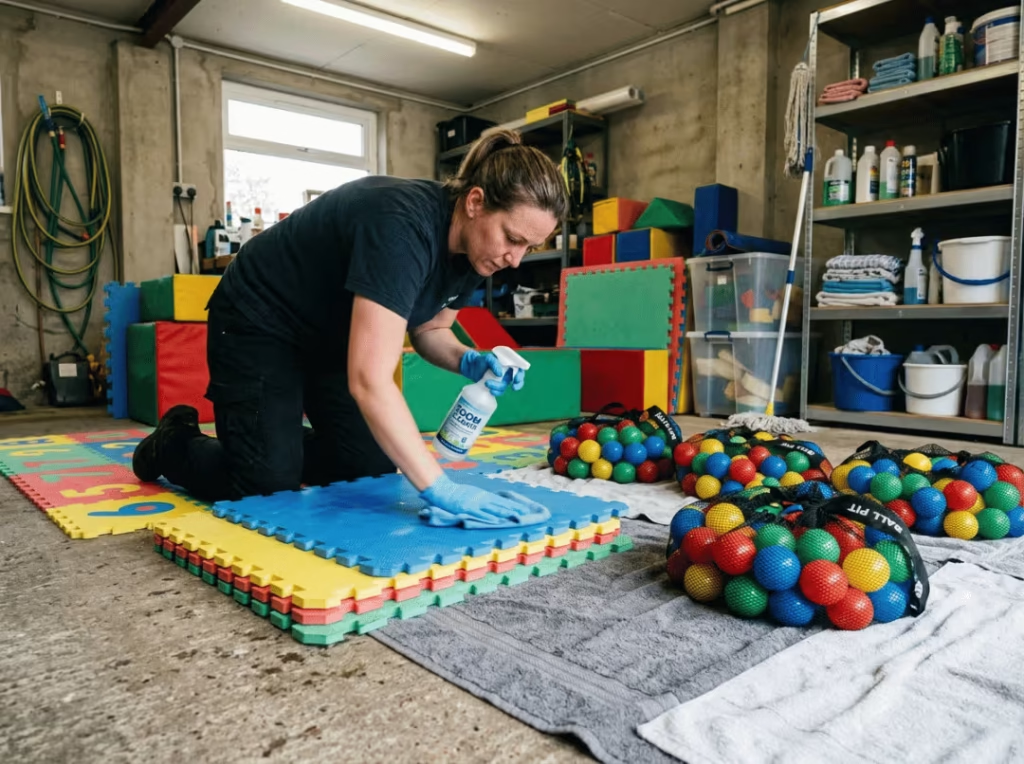
Storage: a dry, organized space—even a well-managed garage—protects your investment. Foam and vinyl degrade from moisture and heat. Keep equipment off the ground, in mesh bags or bins, and load the vehicle the night before events to eliminate morning scrambling.
Cleaning protocol: build a standardized routine you run after every single event. Use hospital-grade, child-safe disinfectant on all foam surfaces, mats, and the ball pit enclosure. Batch-clean balls in mesh bags. Dry everything fully before storing. Parents who see clean equipment tell other parents. Dirty equipment generates reviews that follow your business name in search results for years.
The practical standard: 30 minutes for setup, 20 minutes for teardown, and a cleaning protocol you’ve timed and can repeat without cutting corners on a tired Sunday afternoon. If you can hit those numbers consistently, two events per day becomes operationally feasible.
8. How to Get Your First Customers
The first ten bookings require a different approach than the next hundred. Don’t spend money trying to scale before you’ve proven the product locally.
Google Business Profile is the highest-leverage free tool available. Set it up before your first event. Add photos, define your service area, collect reviews from every client. “Soft play rental near me” is a high-intent search—you want to appear for it.
Local Facebook groups drive real bookings in this market. Search for parenting, moms, and birthday planning groups in your city. Share photos of your setups. Don’t pitch—just show what the experience looks like. Parents in these groups book from recommendations and from seeing an attractive setup.
Party planners and event venues are multipliers. One planner who refers you consistently can generate a dozen bookings a year. Reach out to local party planners, children’s venues, and community centers. Offer a referral commission—10% is standard and worth it.
Offer your first five clients a discount in exchange for photos and a review. Not a steep discount, but enough to reduce the friction for someone who’s never used your service. The photos and reviews those early clients generate are your marketing infrastructure for months.
Referral incentives pay for themselves. $25 off a future booking, or a small cash reward for a booking referral, turns satisfied clients into an active sales channel. Birthday party parents talk to each other constantly.
Daycares, churches, and parent groups book repeat events throughout the year—not just birthdays. These relationships take longer to build but produce more predictable volume.
One thing that trips up new operators: spending energy on Instagram while neglecting Google and direct outreach. Visual content matters, but discovery still happens through search and personal recommendation first.
9. Common Mistakes That Hurt New Operators
These aren’t edge cases. Most of them show up in the first six months.
Underpricing to win early bookings. It works once, then it’s your rate. Clients refer you at your price point, and raising prices later creates friction with the base you’ve built. Price where you want to be from the start.
Buying too much equipment before proving demand. Two or three sets sounds like a growth move. In practice, you’ll be running one set consistently for months while the others sit in storage. Every dollar tied up in idle equipment is capital that could be in your account.
Ignoring service radius discipline. Far-flung bookings feel like revenue until you account for fuel, time, and wear on your vehicle. Build your radius policy and communicate it clearly before you start taking bookings—not after a bad experience.
Skipping the contract. The first time a client disputes a damage charge or demands a refund after the event, you’ll understand exactly why every booking needs a signed agreement. Don’t learn this one the hard way.
Poor cleaning turnaround time. A set that smells or shows visible residue from a previous event is a reputation problem, not just an operations problem. Reviews stay online. Build cleaning time into your schedule and your pricing.
Not photographing every setup. Each event is a photography opportunity. A clean, well-configured setup in a real home or venue photographs better than a studio shot. Those images drive bookings more directly than any other marketing asset.
10. FAQ
Is a soft play rental business profitable?
Yes, if priced and operated correctly. Most single-set operators working consistent weekends earn $1,500–$2,500 monthly in net profit after costs. Two sets, managed efficiently, can reach $4,000–$5,000+ per month. The limiting factors are turnaround time, service radius, and booking consistency—not the margin structure.
How much does it cost to start?
A lean start runs roughly $4,000: one commercial-grade equipment set, liability insurance, basic website, and initial marketing. A more complete setup with a dedicated vehicle and storage runs $10,000–$13,000. Most operators start lean and reinvest early profits into a second set.
Do I need insurance before my first event?
Yes. General liability coverage with a $1M minimum is the standard. Many venues and event planners won’t work with operators who can’t provide proof of coverage. Budget $500–$800 per year. Don’t treat this as optional.
How do I clean soft play equipment properly?
Use a hospital-grade, child-safe disinfectant on all foam surfaces and mats. Batch-clean ball pit balls in mesh bags after every event. Inspect for damage during cleaning. Dry everything fully before storage. Build the cleaning time into your schedule and your pricing—it’s not a task you can consistently rush.
What age group does soft play serve?
Children aged 1 to 6, primarily toddlers and preschoolers. Enforce age limits. Older children can damage equipment and create safety risks for the younger kids the equipment is designed for.
Can I run this business from home?
Yes. Most operators start from a garage or spare room and use their personal vehicle. A home base is fine until volume justifies dedicated storage. There’s no need for a commercial location to build a profitable operation.
What’s the biggest factor in whether a soft play rental business succeeds or fails?
Consistency across two things: cleanliness and reliability. Parents who get a spotless setup delivered on time, set up properly, and collected without hassle refer you without being asked. That referral flywheel is the actual engine of growth—not social media reach or the number of equipment sets you own.