With families constantly seeking reliable entertainment options, indoor playgrounds have emerged as a hugely popular choice for communities everywhere. These dynamic spaces provide a safe, engaging, and weather-independent environment where children can play, learn, and burn off excess energy year-round. Whether it is pouring rain or scorching hot outside, an indoor play center guarantees uninterrupted fun. However, before diving into such an exciting business venture, you must clearly understand the financial commitment required. Turning an empty commercial space into a vibrant children’s paradise requires careful planning. Assessing your available capital and understanding the true costs of setting up an indoor playground will ensure you are perfectly prepared to launch a successful, long-lasting, and profitable entertainment facility.
Whether your vision involves a compact play corner or a massive multi-level entertainment center, this comprehensive guide will help you plan and budget effectively. We will break down every essential expense, from the initial core equipment and safety surfacing to ongoing maintenance and facility upgrades. You will learn exactly where your investment goes and how to make smart purchasing decisions that maximize both safety and return on investment. By exploring various cost factors, material choices, and optional facility enhancements, you can tailor your project to meet your specific budget requirements. This detailed roadmap goes a long way to enhance your understanding of the industry, ensuring you feel confident and fully equipped to bring your ultimate indoor playground vision to life without any unexpected financial surprises.
How Much Does an Indoor Playground Cost?
If you are looking for accurate indoor playground costs, you have certainly landed in the right place. An indoor playground requires a substantial initial investment, but the exact price tag varies dramatically based on your facility’s size, the type of equipment you select, and the level of customization you desire. A small, basic play structure for a local cafe might cost just a few thousand dollars, while a massive, custom-designed family entertainment center can easily exceed half a million dollars. When mapping out your budget, you cannot simply look at the price of the slides and climbing frames. You must actively budget for essential elements like professional installation, rigorous safety compliance inspections, specialized flooring, and ongoing maintenance. Understanding this broad spectrum of expenses is the first step toward building a realistic financial plan for your business.
Several crucial factors will directly influence your final project costs, starting with the geographic location and size of your commercial building. Larger spaces naturally require more equipment to fill them, instantly driving up your baseline budget. The quality and origin of your materials also play a massive role; importing premium, custom-molded plastics or highly durable structural steel will cost significantly more than purchasing standard, off-the-shelf components. Furthermore, you must consider the additional features that elevate a standard playground into a premium destination. Incorporating dedicated toddler zones, interactive digital play elements, comfortable parent seating areas, and fully equipped private party rooms will increase your upfront costs. However, these distinct additions also drastically boost your facility’s appeal, helping you attract a wider demographic and ultimately generate higher long-term revenue.
| Indoor Playground Component | Average Cost |
|---|---|
| Small Soft Play Structure (Under 1,000 sq ft) | $15,000 – $35,000 |
| Medium Play Structure (1,000 – 3,000 sq ft) | $40,000 – $80,000 |
| Large Custom Structure (Over 3,000 sq ft) | $100,000 – $250,000+ |
| Interactive Digital Play Equipment | $5,000 – $20,000 |
| Safety Flooring (per sq ft) | $3 – $8 |
| Themed Decorations and Customization | $10,000 – $40,000 |
Last updated: May 2025
Our costs are ballpark averages – consult with a playground manufacturer to quote now
Cost Breakdown for Different Indoor Playground Features
Soft Play Equipment
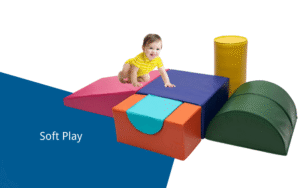
Soft play equipment forms the absolute core of any modern indoor playground facility, providing the primary source of entertainment and physical activity for children. This category includes a massive variety of engaging components, such as multi-level climbing structures, twisting tube slides, deep ball pits, foam building blocks, and interactive obstacle courses. Manufacturers design these pieces specifically to absorb impact, featuring sturdy steel frames completely wrapped in thick, high-density foam and covered with durable, brightly colored vinyl. This specialized construction ensures that children can run, jump, tumble, and explore freely without facing the risks associated with hard outdoor playground materials.
Because soft play environments offer endless configurations, the cost ranges for this equipment vary widely based on scale and complexity. For a modest, standalone soft play corner suitable for toddlers, you can expect to spend between $5,000 and $15,000. Mid-sized structures featuring multiple levels, bridges, and basic slides generally range from $20,000 to $60,000. If you plan to build a massive, multi-story adventure zone packed with intricate mazes, specialized ball blasters, and custom-themed elements, your equipment budget will easily stretch from $100,000 to $250,000 or more.
Flooring Options
When designing an indoor play area, installing safe, shock-absorbing flooring is arguably the most critical decision you will make. Proper surfacing protects children from serious injuries during inevitable trips and falls, ensuring your facility meets strict legal safety standards. You cannot simply build a playground on bare concrete or standard commercial carpet. Instead, you must invest in specialized materials like interlocking high-density EVA foam mats, poured-in-place rubber surfacing, or heavy-duty padded artificial turf. These materials not only provide essential fall protection but also add vibrant colors to your design while offering excellent sound insulation to reduce the chaotic noise levels typical of busy play centers.
The cost of specialized playground flooring depends entirely on the material you select and the total square footage of your facility. Basic interlocking foam mats represent the most budget-friendly option, typically costing between $1.50 and $3.00 per square foot. While affordable, they may require more frequent replacement in high-traffic areas. Premium padded artificial turf generally runs between $4.00 and $7.00 per square foot, offering a highly durable and aesthetically pleasing finish. For the ultimate in durability and seamless design, poured-in-place rubber flooring costs approximately $8.00 to $15.00 per square foot, which represents a higher upfront investment but delivers exceptional longevity.

Additional Features
To truly stand out in a competitive market, successful indoor playgrounds incorporate additional features that cater to the comfort and specific needs of the entire family. Parents appreciate well-designed seating areas with clear sightlines, fast Wi-Fi, and access to premium coffee or snacks. Meanwhile, offering dedicated, enclosed private party rooms allows you to host lucrative birthday events, creating a highly dependable secondary revenue stream. Furthermore, integrating specialized sensory zones with soothing lighting, tactile panels, and quiet spaces makes your facility more inclusive for children with neurodivergent needs, significantly broadening your potential customer base.
Adding these premium features requires careful budgeting, as they add substantial amounts to your initial build-out costs. Constructing and furnishing a comfortable parent lounge or café seating area typically costs between $5,000 and $15,000, depending on the quality of the furniture and fixtures. Building and heavily decorating private birthday party rooms usually runs about $3,000 to $8,000 per room. Finally, designing and equipping a dedicated, high-quality sensory play zone with specialized, low-stimulation equipment will require an additional investment ranging from $10,000 to $25,000.
How to Create a Low-Maintenance Indoor Playground
Durable Materials
Choosing highly durable materials from the very beginning serves as the most effective strategy for reducing your long-term playground maintenance costs. While cheaper plastics and thin vinyl coverings might save you money during the initial purchase, they quickly degrade, tear, or snap under the relentless daily use of energetic children. This leads to constant repair bills, safety hazards, and extended equipment downtime. By investing in premium, commercial-grade materials like heavy-duty galvanized steel tubing, high-density polyethylene (HDPE) plastics, and tear-resistant PVC vinyl, you guarantee your play structures will withstand years of intense wear and tear without requiring constant replacement.
The financial commitment for these durable materials naturally sits higher on the pricing spectrum, but the long-term savings heavily outweigh the initial shock. Commercial-grade PVC vinyl designed for high-traffic soft play areas generally adds 15% to 20% to the total cost of standard equipment but lasts twice as long. Similarly, upgrading to thicker, UV-stabilized and anti-static plastics will cost roughly $2,000 to $5,000 more for a mid-sized structure. Choosing these robust materials minimizes future emergency repair expenses, significantly protecting your bottom line.
Easy-to-Clean Surfaces
Maintaining impeccable hygiene stands as a top priority for any indoor playground, making easy-to-clean surfaces an absolute necessity. Facilities that utilize non-porous, smooth materials drastically reduce the time and effort required for daily sanitization routines. By avoiding highly textured fabrics or complex crevices where dirt and bacteria easily hide, your staff can wipe down the entire play area swiftly and efficiently, maintaining a pristine environment that parents trust.
Opting for these hygienic surfaces involves specific material choices during the design phase. High-gloss PVC vinyl covers and smooth plastic slides typically come standard, but upgrading to antimicrobial-treated surfaces adds approximately 10% to the cost of those specific components. Seamless poured rubber flooring, which eliminates the dirt-trapping joints found in foam tiles, costs around $8.00 to $15.00 per square foot but dramatically reduces daily floor-cleaning labor.
Modular Designs
Embracing a modular design philosophy allows you to build an incredibly flexible playground that adapts easily to future needs and changing trends. Modular systems consist of standardized, interchangeable parts that link together quickly. This means that if a specific slide or climbing panel is damaged, you can simply unbolt that single piece and replace it, rather than dismantling the entire surrounding structure.
The cost of modular play equipment is highly competitive, typically matching the pricing of traditional fixed structures while offering far greater flexibility. A mid-sized modular soft play frame ranges from $30,000 to $60,000. When it comes time to upgrade your facility, purchasing a new modular expansion kit to add fresh obstacles or an extra level typically costs between $5,000 and $15,000.
Additional Costs to Consider
Installation and Labor Costs
Hiring professional, certified installation teams is absolutely crucial when building your indoor playground. You cannot afford to cut corners by using inexperienced labor or attempting a massive DIY project when children’s safety is directly at stake. Professional installers possess a deep understanding of complex structural engineering, weight limits, and rigorous industry safety compliance standards. They ensure that every single bolt is perfectly tightened, every piece of foam is tightly secured, and all netting is properly tensioned to prevent dangerous entrapment hazards. A flawless installation protects your business from devastating liability claims and ensures your facility passes initial safety inspections with ease.
The financial breakdown for professional installation depends heavily on the size of your structure and the complexity of the design. Most professional playground installation companies charge a fee that equates to roughly 15% to 25% of your total equipment cost. For a standard $50,000 play structure, you should budget between $7,500 and $12,500 specifically for labor and professional assembly. Complex, multi-level installations or locations with difficult building access may incur additional daily labor fees, which generally range from $1,500 to $2,500 per day for a full crew.
Maintenance and Repairs
Consistent, proactive maintenance is the absolute lifeblood of a safe and successful indoor playground facility. You must implement strict daily, weekly, and monthly inspection routines to identify and address minor wear and tear before it evolves into a major safety hazard. Regularly checking netting tension, sanitizing ball pits, inspecting high-traffic sliding surfaces, and replacing worn-out foam padding help ensure the longevity of your equipment and protect the children using it.
Budgeting for these ongoing maintenance tasks helps keep your business running smoothly without unexpected financial hits. You should typically allocate around 3% to 5% of your initial equipment cost annually for routine repairs. This means setting aside $1,500 to $2,500 per year for a standard facility. Common tasks like professional ball pit cleaning cost roughly $300 to $500 per session, while replacing damaged vinyl safety padding usually costs around $50 to $100 per panel.
| Service Type | Average Cost |
|---|---|
| Professional Installation | 15% – 25% of equipment cost |
| Annual Routine Maintenance | $1,500 – $2,500 |
| Professional Ball Pit Cleaning | $300 – $500 per session |
| Safety Netting Repair | $200 – $600 per section |
| Vinyl Padding Replacement | $50 – $100 per pad |
FAQs
Do I need permits to build an indoor playground?
Yes, you absolutely need permits. You must secure standard commercial building permits, fire marshal approvals, and specific local zoning permits before beginning any construction. Depending on your location, you may also need specialized amusement licenses or health department approvals if you plan to serve food and beverages in your facility.
What safety standards should I follow?
You must strictly adhere to the guidelines set by ASTM International (specifically ASTM F1918 for soft-contained play equipment) and the Consumer Product Safety Commission (CPSC). Working with certified manufacturers and professional installers ensures your equipment meets or exceeds these vital regulatory requirements.
How can I reduce costs without compromising quality?
Focus on highly modular designs that allow you to start with a smaller footprint and expand later as your revenue grows. Additionally, selecting durable, easy-to-clean materials slightly increases upfront costs but drastically reduces your long-term maintenance and replacement expenses, effectively saving you money over time.
What is the average ROI for an indoor playground business?
While returns vary widely by location and business model, a well-managed indoor playground typically sees a full return on investment within 18 to 36 months. Facilities that aggressively market birthday party packages and offer café services generally reach profitability much faster than those relying solely on daily admission fees.
Conclusion
Building a thriving indoor playground is a deeply rewarding venture, but it requires meticulous financial planning and a comprehensive understanding of the associated expenses. From navigating the broad price ranges of massive soft play structures and specialized safety flooring to carefully calculating the hidden costs of professional installation and ongoing maintenance, every single dollar matters. By breaking down your budget strategically, prioritizing high-quality, durable materials, and acknowledging the importance of engaging additional features, you establish a remarkably strong foundation. Thoroughly budgeting for these components guarantees you will avoid sudden financial roadblocks and successfully deliver a premium entertainment experience.
Now that you possess a clear, detailed picture of what an indoor playground truly costs, you can confidently take the next vital steps toward launching your business. Begin by assessing your available capital, securing a prime commercial location, and reaching out to reputable playground manufacturers for exact quotes. Do not hesitate to consult with industry professionals and financial advisors to refine your specific business plan. Armed with the right budget, a focus on uncompromising safety, and a vision for spectacular fun, you are perfectly positioned to build an incredible space that will bring joy to children and families for many years to come.