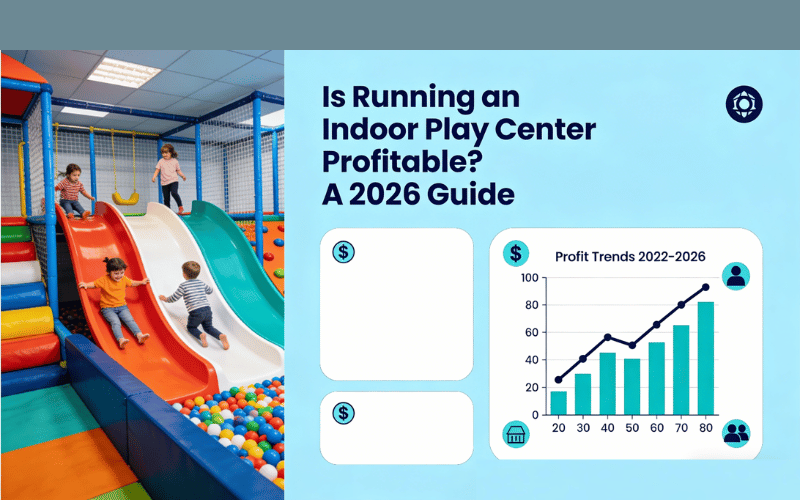
You’ve likely noticed them popping up in your neighborhood or heard parents raving about the newest spot in town: indoor play centers. But what exactly is driving this trend in the family entertainment industry? If you are an entrepreneur looking to start your own business, is it worth investing in a dedicated space for children’s active play? What are the current market trends that can help you make an informed decision?
Key Takeaways
- An indoor play center is a specialized facility that offers a safe, weatherproof environment for children’s physical activity and social development.
- Market trends indicate a growing demand for safe, hygienic, and engaging spaces for families, with parents willing to pay a premium for high-quality experiences.
- Integrating technology, such as online booking systems and check-in apps, is crucial for operational efficiency.
- Startup costs vary significantly by size and location, ranging from moderate investments for small soft-play cafes to substantial capital for large-scale entertainment complexes.
What is an Indoor Play Center?
An indoor play center is a dedicated commercial facility designed for children’s recreation, featuring soft play structures, interactive games, and secure environments that operate year-round.
Unlike traditional outdoor playgrounds or general community centers, indoor play centers focus intensely on safety, hygiene, and developmental play. They are often divided into specific zones catering to different developmental stages—from sensory areas for infants to multi-level climbing frames for older children.
These centers prioritize the customer experience for both the child and the parent. For children, the focus is on “edutainment”—activities that combine education and entertainment. For parents, the appeal lies in a secure environment where they can relax or work while their children play within sight.
The business model has evolved from simple “ball pits” to sophisticated entertainment hubs. Modern centers often incorporate themes, high-quality food and beverage services, and party hosting capabilities. A shift in consumer behavior drives this evolution; millennial parents are seeking cleaner, safer, and more community-oriented spaces for their families. Consequently, indoor play centers have become a staple in the modern family’s weekly routine.
Key Features of Indoor Play Centers
Indoor play centers distinguish themselves through specialized amenities designed to enhance the visitor experience and extend dwell time. Key features typically include:
- Multi-level Soft Play Structures: Padded climbing frames, slides, and tunnels designed to minimize injury risk.
- Dedicated Toddler Zones: Enclosed areas with age-appropriate equipment to ensure safety for the youngest visitors.
- Parent Comfort Amenities: High-speed Wi-Fi, comfortable seating, and quality café options serving premium coffee and healthy snacks.
- Party Rooms: Private spaces designed specifically for hosting birthday parties and events, often a primary revenue driver.
- Interactive Technology: Projection games, interactive floors, or educational touch screens that merge physical and digital play.
Why Indoor Play Centers Are Gaining Popularity
The demand for indoor play centers is surging globally, driven by urbanization, climate factors, and a cultural shift toward structured play. As urban living spaces shrink and outdoor play areas become less accessible or perceived as less safe, parents are actively seeking secure alternatives.
Furthermore, weather unpredictability—whether extreme heat, cold, or pollution—makes outdoor play unreliable. Indoor centers offer a consistent, climate-controlled environment where physical activity is guaranteed year-round. This reliability creates a loyal customer base that views membership or regular visits as essential for their children’s physical health and social interaction.
5 Reasons to Start an Indoor Play Center
In the competitive landscape of family entertainment, indoor play centers have carved out a resilient niche. They attract a steady stream of families by combining safety, convenience, and community—three pillars that modern parents value highly.
How do successful centers maintain this appeal? The secret lies in creating a frictionless experience that serves the needs of the entire family unit, not just the children. By leveraging modern design principles and digital tools, these businesses address parents’ pain points while delivering joy to kids.
Below, we dive into the core reasons why starting an indoor play center is a compelling business opportunity in the current market.
1. Parents Value Safe and Engaging Environments
Just as fitness enthusiasts seek expert guidance, parents prioritize safety and supervision above all else. Indoor play centers thrive by offering a controlled environment staffed by trained professionals who ensure equipment is maintained and rules are followed.
This emphasis on safety allows parents to relax, knowing their children are in a secure space designed to prevent injury. Unlike public parks, which can be unpredictable, indoor centers offer peace of mind through gated entries, hygiene protocols, and staff visibility. This trust builds a strong emotional connection with the brand, fostering repeat visits.
2. Technology Enhances the Customer Experience
Modern play centers utilize digital tools to streamline the family experience, making visits hassle-free.
- Online Booking Systems: Parents can reserve play slots or party rooms in advance to guarantee entry.
- Digital Waivers: Fast, paperless check-in processes reduce lines at the door.
- CRM Integration: Automated emails for birthday discounts or membership renewals make customers feel valued.
- Mobile Apps: Loyalty programs tracked via phone encourage frequent returns.
Digitization allows business owners to track peak times and customer preferences, optimizing staffing and inventory while providing a seamless, modern experience for tech-savvy parents.
3. Families Prefer Smaller, Intimate Spaces
While massive trampoline parks exist, there is a strong trend toward smaller, “boutique” style play cafes. Families often find massive warehouses overwhelming and loud. Instead, they gravitate toward spaces that feel manageable and community-focused.
In these intimate settings, parents can easily keep an eye on their children while socializing with other local parents. This setup fosters a “village” atmosphere, encouraging social connections that turn casual visitors into a tight-knit community of regulars. It transforms the business from a mere facility into a social hub.
4. Tailored Experiences for Different Age Groups
Successful indoor play centers don’t offer a “one size fits all” solution. They curate specific zones that cater to distinct developmental needs—sensory play for babies, imaginative role-play villages for toddlers, and challenging obstacle courses for school-aged kids.
This segmentation ensures that older children don’t overrun a 2-year-old, and an 8-year-old isn’t bored by simplistic toys. By offering tailored experiences, centers maximize their reach, appealing to families with children of varying ages and ensuring every child has a high-quality experience.
5. Premium Pricing for High-Quality Experiences
Given the value provided—cleanliness, safety, climate control, and active entertainment—indoor play centers can command premium pricing compared to free public alternatives.
Parents are increasingly willing to pay higher entry fees or monthly memberships for facilities that guarantee high standards of hygiene and maintenance. They view this expenditure not just as “playtime,” but as an investment in their child’s development and their own peace of mind. This willingness to pay for quality supports higher revenue margins for operators who maintain excellence.
Is It Profitable to Run an Indoor Play Center?
Is the family entertainment business financially viable? Running an indoor play center can be a highly profitable venture if managed with a focus on diversified revenue streams and operational efficiency. The industry has shown resilience even in economic downturns, as parents rarely cut spending on their children’s happiness and development.
Revenue Potential
Indoor play centers benefit from multiple revenue streams that stabilize cash flow.
- General Admission: Daily entry fees provide a steady income, especially on weekends and holidays.
- Memberships: Monthly recurring revenue from memberships builds a financial safety net.
- Birthday Parties: This is often the most lucrative aspect. Hosting exclusive, all-inclusive parties allows centers to charge premium rates for convenience and experience.
- Café Operations: Food and beverage sales can account for a significant portion of total revenue, with high margins on coffee and snacks.
By combining these streams, a well-run center maximizes the lifetime value of every customer.
Profit Margins and Costs
Profit margins for indoor play centers can be healthy, typically ranging between 15% to 35% depending on the business model and location. While “play” is the product, the margins on ancillary services like party packages and food are often higher than the admission fees themselves.
However, potential owners must account for significant overheads. Rent for extensive square footage is a primary cost, along with mandatory insurance premiums for this industry. Staffing costs are also a consideration, though many roles are entry-level. Initial investment is capital-intensive—often ranging from $100,000 to over $500,000—due to the cost of commercial-grade play structures and kitchen equipment.
Challenges and Market Saturation
While profitable, the industry faces challenges. Market saturation in family-dense suburbs can split the local clientele. To survive, a center must differentiate itself—perhaps through better coffee, cleaner facilities, or unique classes.
Hygiene is another critical operational challenge; a single outbreak or reputation for uncleanliness can devastate a business. Furthermore, the company is highly seasonal and weekend-dependent. Successful operators must find creative ways to monetize quiet weekday mornings, such as hosting “mommy and me” classes or co-working sessions.
Global Market Trends for Indoor Play Centers
The global family entertainment centers market is on a robust growth trajectory. Analysts project continued expansion through 2030, driven by rising disposable income among millennial parents and a growing focus on child development.
Integration of Education: The concept of “Edutainment” is reshaping the market. Centers that combine physical play with STEM learning or creative arts are seeing higher engagement.
Sustainability: Eco-friendly play structures and sustainable café practices are becoming selling points for environmentally conscious families.
Asia-Pacific Growth: Rapid urbanization in regions such as China and India is driving massive demand for indoor recreation, mirroring trends seen in North America and Europe.
Subscription Models: The industry is moving toward the “gym model,” in which families pay a monthly fee for unlimited access, thereby securing consistent revenue for operators.
FAQ About Indoor Play Centers
Is an indoor play center a sound business investment?
Yes, it can be very profitable. With high demand for safe family activities and multiple revenue streams (entry, food, parties), successful centers can see strong returns, provided they manage overheads and maintain strict hygiene standards.
How does an indoor play center differ from a daycare?
A daycare is a childcare facility where parents drop off their children for supervision. An indoor play center is an entertainment venue where parents typically stay on-site while their children play, though some offer “drop-off” events.
What are the highest costs in running a play center?
Rent and insurance are typically the most significant ongoing expenses. Staffing and utilities (heating/cooling an ample space) are also substantial, alongside the initial capital for play equipment.
How much space do I need to open one?
Size varies by concept. A small play café might need only 1,500–2,500 square feet, while a full-scale entertainment center with large slides and party rooms typically requires 5,000–10,000+ square feet.