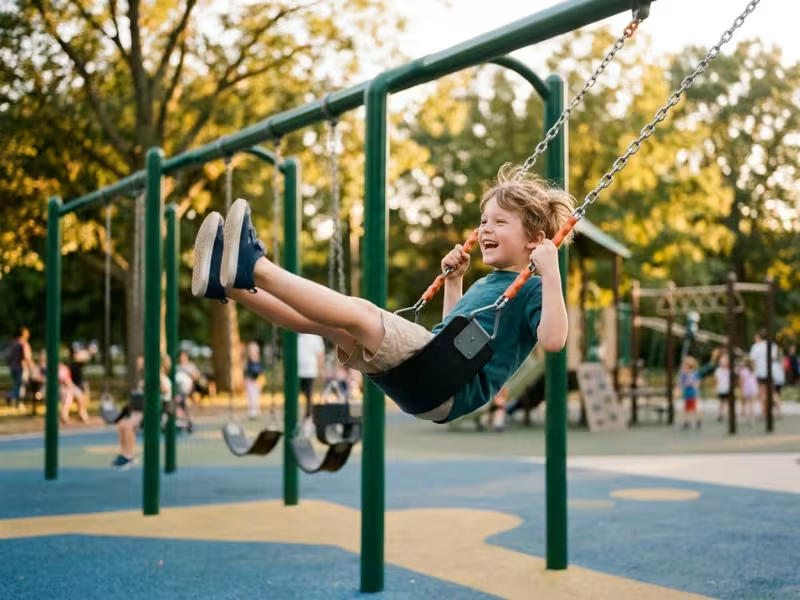
Your child pumps hard, leans back, and gives the swing one last big kick. Then they hop off and race toward the slide.
Many parents notice this moment. Few know what it can show.
That final push is more than play. It can hint at your child’s leg strength, coordination, and body awareness. It can even reveal their mood. Watched closely, it often shows details parents miss at first glance.
But one push proves nothing. Kids have off days. They get tired, excited, or distracted. The pattern you see over weeks and months tells the real story.
Here’s how to read this small moment, what’s typical at each age, and when it deserves a closer look.
Why This Small Playground Moment Matters
Kids show you different things in different settings. In a sports class, an adult sets the task and the child follows the steps. You mostly see what they can copy.
Free play works differently. Nobody tells your child how to move, so they rely on their own strength, timing, and judgment. That’s why ten minutes at the park can reveal more than a formal checklist. Kids stop performing and start solving problems.
The swing stands out among the different types of playground equipment. It asks your child to do several hard things at once:
- Push with their legs. They need to create real force, not just kick wildly.
- Find a rhythm. They have to time each pump with the swing’s motion.
- Hold their core steady. Their trunk keeps them upright while the seat moves.
- Balance and judge risk. They decide how high feels safe and when to ease off.
A slide or sandbox might test one of these skills. The swing tests all four, over and over, in one repeating motion.
So when your child begs for “just one more swing,” you’re looking at a natural window into how their body and mind work together. You don’t need special tools. You just need to know where to look.
What the Last Push Can Actually Show
That last kick packs a lot into one second. Movement specialists usually look for four things in it: power, timing, balance, and mood. Each one offers a different clue.
Power: Can They Turn Effort Into Height?
Strong kids don’t always swing high. What matters is whether your child turns effort into motion.
Watch the swing, not the face. A child with good force control stretches both legs fully and gets a clear lift in height. A child who strains and flails may work twice as hard for almost nothing. That gap usually means they haven’t learned to channel their strength yet. It doesn’t mean they lack it.
Timing: Do They Kick at the Right Moment?
Pumping a swing is a timing puzzle. Legs stretch out on the way forward. Legs tuck under on the way back. The upper body leans the opposite way.
Kids who have figured this out move with the swing, almost like a dance. Kids still learning often kick at random points, and the swing wobbles or slows. On that last push, notice whether your child waits for the right moment. Waiting shows planning.
Balance: Do They Feel Where Their Body Is?
Your child can’t see their hips or feet mid-swing. They have to feel them. Therapists call this body awareness, or proprioception.
Look at how your child sits after a big push. Do they stay centered? Do their hands keep a steady grip? A child who slides sideways or grabs the chains in a panic may still be learning how their body moves through space. A child who rides the peak calmly has a good internal map.
Mood: What Is the Push Saying?
Sometimes the last push has little to do with skill. Kids move their feelings through their bodies.
- A wild, joyful kick often means excitement.
- A hard, jerky one can signal frustration or a rough day.
- A rushed push may mean they can’t wait to reach the slide.
- A dramatic finish plus a glance around usually means showing off.
- A slow, half-hearted kick sometimes means “I don’t want to leave yet.”
Read the push in context. A bad mood can make a skilled swinger look clumsy for a day.
What’s Typical by Age, and What to Watch For
Swing skills grow in stages, and each stage looks messy before it looks smooth. A four-year-old and an eight-year-old can both give a big final push, yet they show you very different things.
Use the guides below as rough ranges, not deadlines. Many kids move ahead in one area and lag a bit in another.
Ages 2–3: Riding Along
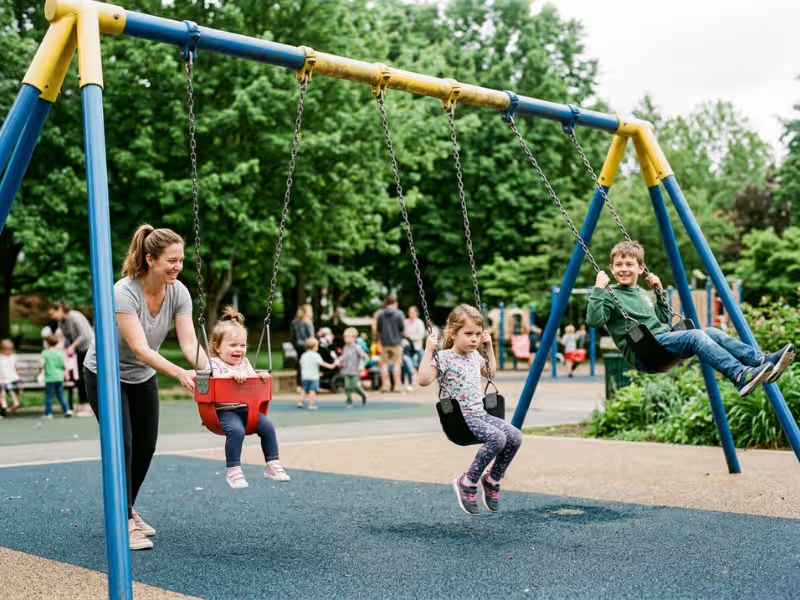
At this age, you do most of the work. Your toddler sits in a bucket seat while you push. Very few kids this young pump on their own, and that’s fine.
What’s common: Giggling at the motion, asking for “higher!”, kicking with no real purpose, and wanting to stop suddenly.
What to watch: Forget pumping for now. Focus on the basics:
- Does your child sit upright without slumping to one side?
- Do they hold the chains or handles, even loosely?
- Does their head stay steady as the swing moves?
- Do they settle into the motion after a few swings?
What’s worth a closer look: Some toddlers feel nervous at first, and gentle swings help. If your child stays truly distressed by any motion week after week, or struggles to keep their head and trunk upright in a supported seat, mention it at the next checkup.
Ages 4–5: All Effort, Little Rhythm
Many kids start trying to swing on their own at this age. It’s also when things look the most awkward.
Clumsy is normal at this stage. Your child is learning a skill that needs strength, timing, and balance all at once.
What’s common: Kicking at the wrong moment, leaning the wrong way, and pumping hard while barely moving. Many still ask for a starter push. The final kick often shows lots of energy and little control.
What to watch: Look past the height and notice the attempts.
- Do they try to move their legs on their own?
- Do they sometimes stretch forward and tuck back, even if the rhythm slips?
- Do you see small gains from month to month?
Progress often comes in bursts. A child might struggle for weeks, then suddenly “get it” in one afternoon.
What’s worth a closer look: If your five-year-old shows no interest in trying, seems unusually weak, or also struggles with running and climbing, keep an eye on it. One skill rarely tells you much. A cluster of struggles tells you more.
Ages 6–8: Finding the Groove
By this stage, many children can keep a steady rhythm and climb higher without help. The swing turns from a challenge into a place to experiment.
What’s common: Smooth pumping, racing friends to the highest arc, and talk of jumping off. The final push usually looks more deliberate.
What to watch: This is where the last push gets interesting.
- Rhythm over time. Can they pump steadily for a minute or more, gaining height?
- Adjustments. As the swing gets faster, do they change their timing or tighten their grip at the peak?
- Controlled power. On the final push, do they add force cleanly with a centered body? Or do they thrash and twist?
A strong, controlled last push shows that strength and timing have started working as a team.
What’s worth a closer look: If your seven- or eight-year-old still can’t keep a basic rhythm, falls off often, or avoids the swing while other kids flock to it, take note. Check how they handle bikes, monkey bars, and running games too.
Ages 9 and Up: Skill Meets Social Life
Older kids usually swing well. What changes now is why they swing the way they do. The playground becomes a social stage.
What’s common: Leaps off the seat, contests with friends, standing on the swing, or declaring swings “for little kids.”
What to watch: The final push often carries a message:
- Showing off: A dramatic kick, then a quick look to see who noticed.
- Copying peers: Trying a move because a friend just did it.
- Testing limits: Going higher than usual to see how it feels.
- Signaling “I’m done”: One last kick before moving on.
All of these are normal parts of growing up.
What’s worth a closer look: Don’t confuse boldness with skill. Watch the landing. Do they plan it, land on both feet, and stay balanced? Control matters far more than daring.
A quick safety note: Jumping off or standing on a swing raises the risk of falls. Kids still need supervision, a soft impact surface, and equipment suited to their age and size. Praise control, not dare.
Normal Learning or Something More? How to Tell the Difference
Sooner or later, every parent wonders whether their child is still learning or whether something is off. One simple rule helps: look at the direction, not the snapshot.
A child who moves forward slowly is usually fine. A child who stays stuck, or pulls away from movement altogether, deserves more attention.
More Likely Typical
- They keep trying. They climb back on or test a new trick. Willingness matters more than skill.
- You see small gains. Compare today with two months ago. Fewer starter pushes still count as progress.
- Skills look uneven. They might swing well but freeze on the climbing wall. Most kids have strong and weak spots.
- Bad days come and go. A tired or hungry child swings worse. If the skill returns after rest, the dip means nothing.
More Worth Watching
- Steady avoidance. They skip swings, climbing, and jumping games for months.
- Stiff or panicked movement. Their body locks up long after the first few tries.
- A clear gap with peers. Kids their age move easily while yours works much harder.
- Trouble across the board. Running, hopping, catching, or stairs all seem hard too.
- Fast, intense frustration. They quit the moment something feels tricky, again and again.
One sign alone rarely means much. Two or three that last for months deserve real attention.
Here’s a helpful habit. After each park trip, jot a short note on your phone: what your child tried, what went well, and what they avoided. After six to eight weeks, read it back. The pattern usually becomes clear.
When to Talk to a Pediatrician or Therapist
One wobbly afternoon tells you nothing. Neither does one great one. What matters is a pattern that lasts several months, shows up in more than one activity, and doesn’t improve with practice.
If your notes keep pointing to the same struggles, ask for an expert view. Asking doesn’t mean something is wrong. It means you want a clearer picture.
Signs Worth Raising
Treat these as reasons to ask questions, not as answers:
- Basic swinging still won’t come together by early school age, and your child also lags in running, hopping, or climbing.
- Your child trips, bumps into things, or loses balance far more than peers.
- They avoid moving equipment for months, even with gentle encouragement.
- They always favor one side, or one side looks floppy or stiff. Unusual tiredness or pain after ordinary play belongs here too.
- Teachers or coaches raise the same concerns you have.
Who Can Help
- Pediatrician: Your first stop. They check overall health and refer you when needed.
- Physical therapist: Focuses on strength, balance, and coordination.
- Occupational therapist: Looks at body awareness, motor planning, and how your child handles sensations like spinning or height.
Bring your notes and a short video of your child swinging or climbing. Real examples help far more than “they just seem clumsy.”
Wide variation is normal. Many kids turn out to be right on track, just moving at their own speed.
How to Make Playground Time Count
Most parents spend park visits pushing, cheering, and calling out tips. A few small changes can turn those same 30 minutes into real practice for your child and a clearer view for you.
Regular access helps too. In a park, school, or residential play area, a well-designed freestanding swing set gives kids the chance to practice often, which matters more than practicing long.
Watch Before You Coach
Give yourself five to ten minutes of quiet watching first. The early swings rarely show much, since kids need time to find their rhythm.
Pick one thing to notice, like when they kick or how they sit after a big push. One focus beats ten scattered tips.
Comment on What You See
Commands like “Kick harder!” often make kids tense up. Try describing instead:
- “That one looked smoother.”
- “You leaned back earlier that time.”
- “Did that feel higher than last week?”
These comments turn your child’s attention to their own body. That awareness sticks longer than any command.
Let Repetition Do the Work
Kids rarely learn to pump because someone explained it well. They learn by trying, missing, and trying again, often hundreds of times.
So resist the urge to fix every wobble. Short, frequent park visits help more than one long weekend session.
Rotate Playground Challenges
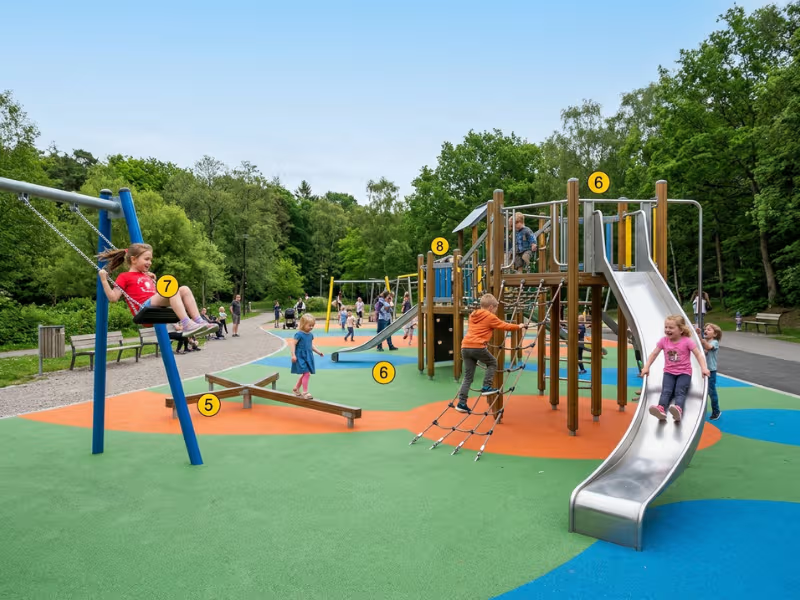
The swing builds great skills, but it’s only one piece. The best playgrounds offer a mix:
- Climbing builds grip, arm strength, and planning.
- Balance beams sharpen body awareness and core control.
- Low jumps train power and safe landings.
- Slides help kids adjust to speed and position changes.
Each skill feeds the others. In larger park or school projects, custom playground equipment can bring swinging, climbing, balancing, and sliding together for different age groups.
Two Common Park Scenes
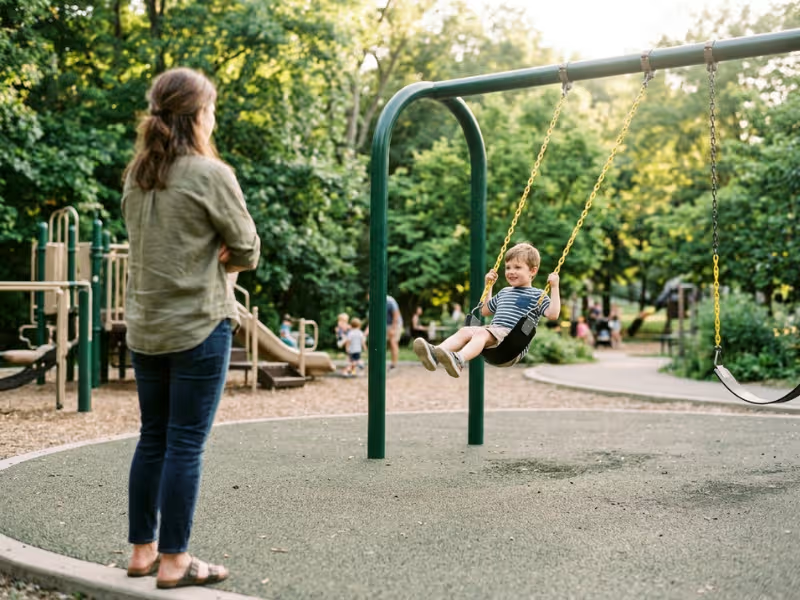
Your child always wants you to push. Give two or three starter pushes, then step aside where they can still see you. Say, “Show me how high you can go on your own.” Most kids try more when they feel safe, not pressured.
The last push is always very forceful. Check three things. Is the kick controlled, with a centered body? Does it happen when they’re tired, upset, or rushing to leave? Does the force add height, or just shake the swing? Control and context tell you more than raw power.
Swing Myths That Trip Up Parents
Myth: An early swinger is a future athlete. Some kids pump at four, others at six. That head start doesn’t predict sports talent. Athletic skill depends on practice, interest, growth, and enjoyment.
Myth: A cautious swinger is a delayed swinger. A child who refuses to go high usually shows temperament, not delay. Careful kids often have strong body awareness. They sense the risk and choose their comfort zone.
Myth: Siblings and classmates make a fair yardstick. Each child brings a different body, personality, and amount of practice. A better comparison is your child today versus three months ago.
Myth: More playground time fixes everything. Free play works wonders for many kids. But if your child avoids movement, extra park trips can mean extra time on the sidelines. Try small steps instead. Start with a low swing and your hand on the chain. Next week, invite two pumps on their own. Celebrate each small win.
FAQs
At what age can most children start pumping a swing on their own?
Many children begin trying between ages 4 and 6, and many find a steady rhythm by 6 or 7. The range is wide, and both early and late learners are normal.
Why does my child push extra hard right before stopping?
Usually for one last thrill. The push can also burn off energy, show off a trick, or express mild frustration about leaving. If it looks controlled, they’re enjoying a skill they’ve built.
Is it normal for a child to be afraid of swings?
Yes. Height, speed, and that “stomach drop” unsettle many young kids. Start low and slow, and let your child decide when to go higher. If intense fear lasts for months and spreads to most moving equipment, mention it at the next checkup.
Does swinging skill predict athletic ability?
Not really. It shows where strength, timing, and balance stand today, not where your child will end up.
When should I worry about motor development?
Talk with your pediatrician if your child:
- Struggles with many physical activities, not just the swing
- Shows little progress over several months
- Falls far more often than peers
- Favors one side or tires unusually fast
Trust your instincts too. An early conversation can bring answers or simple reassurance.
The Real Story Is in the Pattern
That last swing push is a small window, not a verdict. A tired Tuesday or a thrilling Saturday can change it completely.
What matters is the trend. Over weeks and months, you’ll see whether your child keeps trying, gains control, and moves with more confidence.
So stop grading each swing, and start noticing growth.
This week, spend 10 quiet minutes watching your child on the swing. Don’t coach. Don’t cheer. Just watch. Then write down one thing they do better than a month ago, like smoother timing, a steadier grip, or a calmer ride at the top. Small notes like this add up to a clear picture.