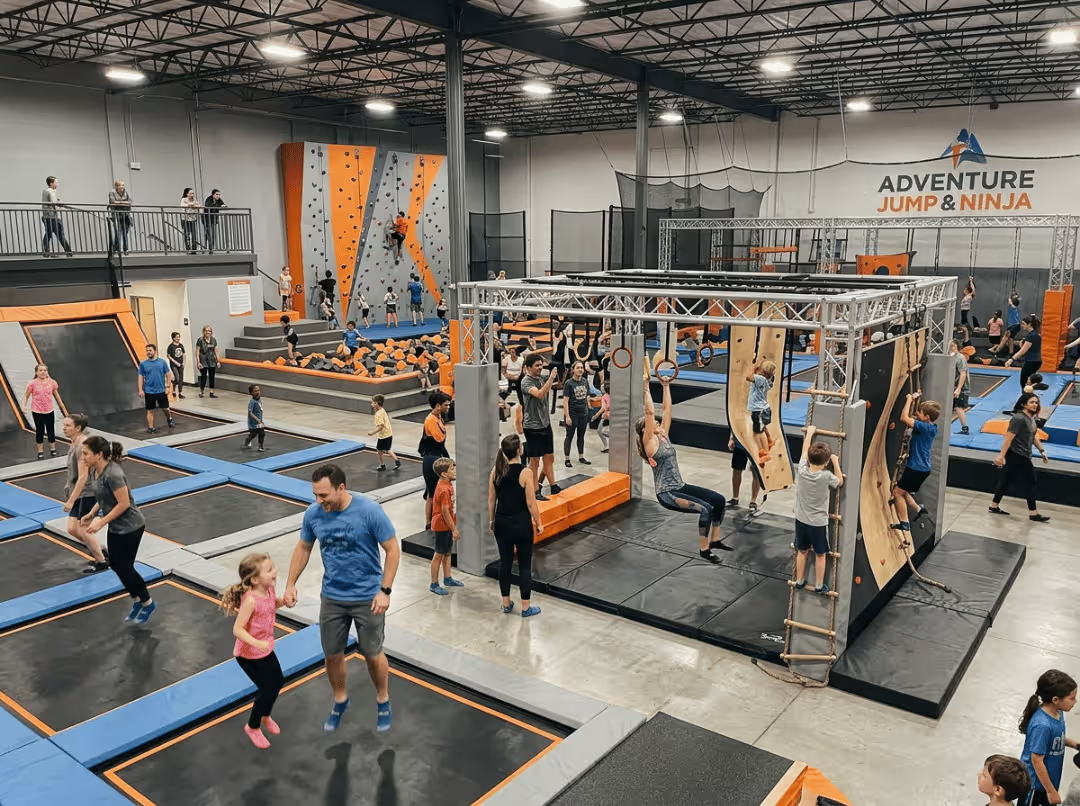
Yes — but not in all of them, and not without a few things lining up first. Some venues are engineered for full-grown bodies and welcome adults without hesitation. Others are sized for toddlers, rated for children, and will turn you away at the door.
The useful question isn’t just “am I allowed in?” It’s two questions together: am I allowed, and is this actually a good idea for me? This article answers both — where adults are welcome, when it makes sense to go, when it doesn’t, and how to make a real visit work.
The Short Answer: Yes, But Not Everywhere
Adults use indoor play venues every day — on trampoline courts, ninja courses, climbing walls. The question isn’t whether adults can play. It’s whether the specific venue was built for them.
That distinction matters because “indoor playground” is a wide label. It spans from a padded toddler corner tucked behind a restaurant to a warehouse-scale action park built for adults doing backflips. Treating them as interchangeable is where most of the confusion starts.
What drives most restrictions is the equipment, not anyone’s age. A small soft-play structure is rated for light bodies — its rules exist for engineering reasons, not to be unwelcoming. A trampoline park is built for adult loads from the start and has no reason to keep you out.
That leaves a clean three-part test for any venue: Is it built for adults? Is it safe for you specifically? Does the policy allow it? A yes on all three and you’re good. Miss one and it’s worth a second thought.
What Determines Whether Adults Are Allowed?
Access isn’t arbitrary. It follows a logic you can read before you ever call ahead — once you know what operators are actually weighing.
It Starts With Equipment Design
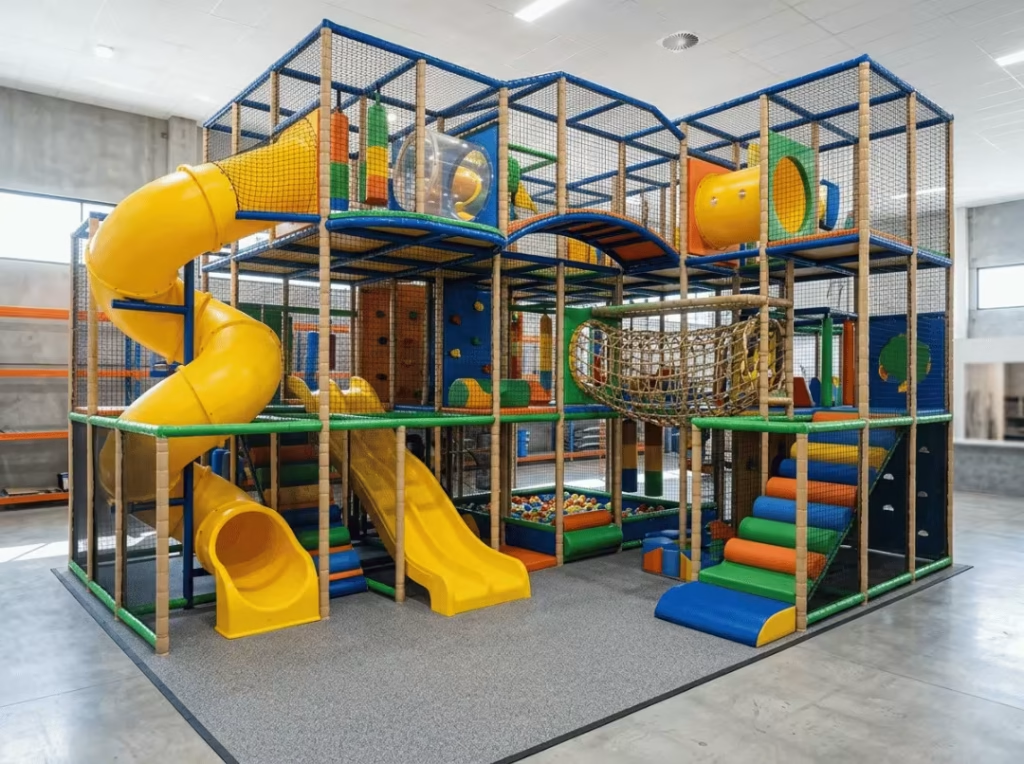
Most indoor play equipment is designed around a child’s body, and that single fact accounts for more restrictions than any posted sign. Venues typically divide their space into bands: toddler zones for roughly ages 1 to 4, junior areas for ages 5 to 12, and open zones with no cap.
Those bands aren’t decorative. Tube diameters, net gaps, and platform heights are all sized for smaller frames. An adult might be technically “allowed” in a junior area and still not fit through it safely or comfortably. The physical-fit question comes before the policy question every time — and it’s the one adults most often overlook.
Safety Ratings and Liability Drive the Rules
Even when an adult would physically fit, the deciding voice is usually the equipment’s load rating and the venue’s insurer — not the manager’s discretion. Every commercial structure has a rated weight capacity set by its manufacturer. Exceeding it voids warranties and compounds liability fast.
Insurers frequently dictate who can access what, which is why venue policy can feel stricter than the staff seems to want it to be. When adults are turned away from a small structure, the venue is usually protecting its coverage. Worth keeping in mind before arguing with whoever’s working the front desk.
Which Venues Welcome Adults — and Which Don’t
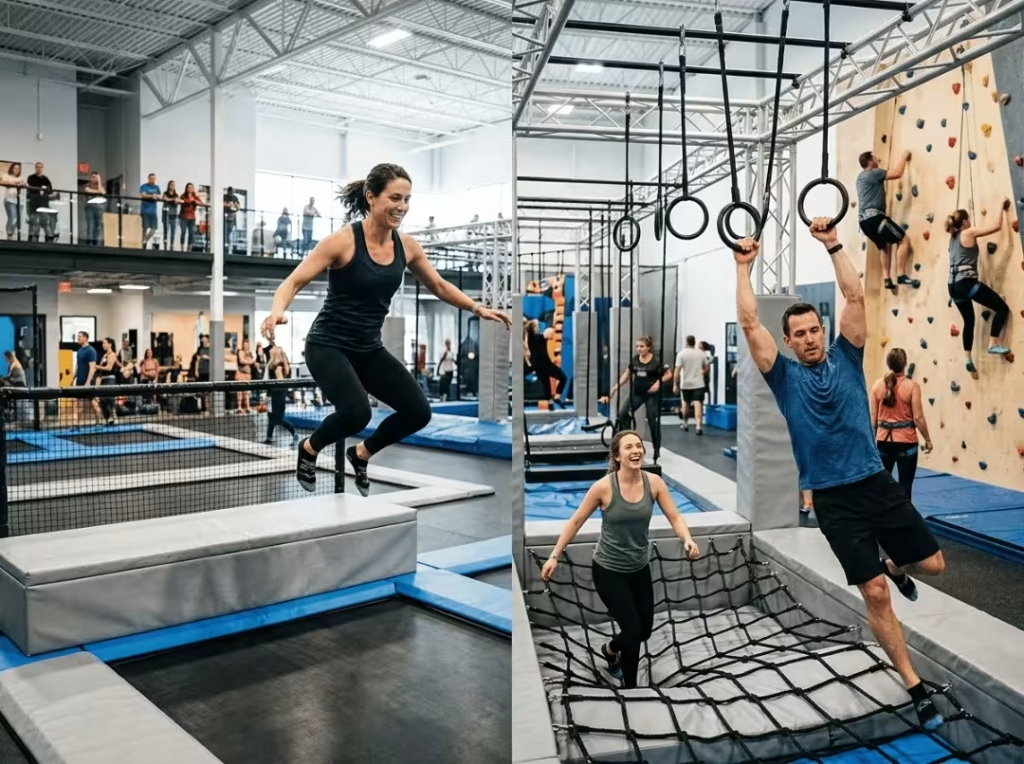
Once you understand the design and liability logic, most venues become predictable. Reliably adult-friendly: trampoline parks, ninja warrior courses, climbing gyms, indoor ropes courses, and venues running dedicated adult-only sessions. These spaces are built for adult loads, so welcoming grown-ups poses no risk to them.
Usually restricted: fast-food playlands, small mall toddler zones, school-style soft play centers. Their indoor playground equipment isn’t rated for adult weight. Some venues bridge the gap with family nights or designated adult hours — often the cleanest option for parents who want to join their kids on the equipment without bending any rules.
When Playing as an Adult Actually Makes Sense
Adults don’t end up at a trampoline park by accident. A few clear motivations bring them in, and each points toward a different kind of visit.
For Movement, Fitness, and Breaking Routine
An hour of climbing, swinging, and balancing works the body in ways a standard gym circuit rarely touches — coordination, grip strength, stabilizing muscles that machines tend to ignore. For people burned out on the gym or returning to activity after time off, play has a quiet practical edge: it doesn’t feel like a chore, so people tend to keep doing it.
If you’d rather take your movement outdoors, outdoor fitness equipment offers a similar range of functional movement in a more open setting — a useful alternative when you want the physical variety without the indoor-playground context.
For Family Participation, Not Just Supervision
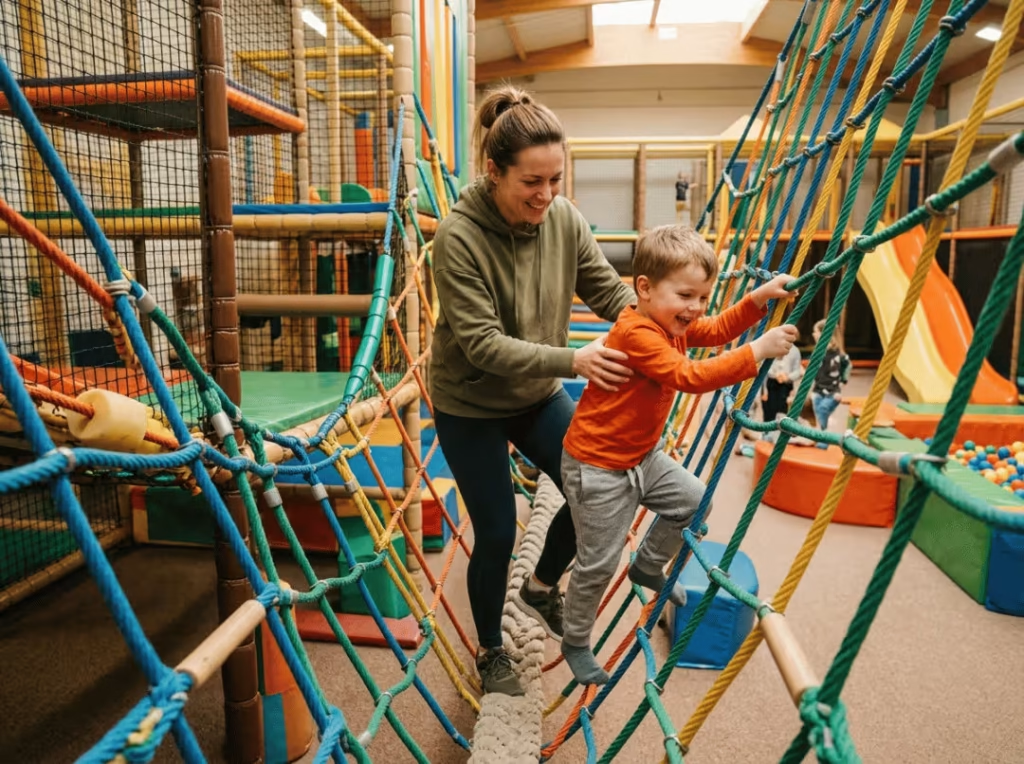
There’s a real gap between watching your kid play and playing alongside them. Sitting on a bench is supervision. Climbing the same net is participation — and kids notice the difference.
Extended family fits here too. Grandparents can join younger relatives on gentler features, and the shared activity builds something that sideline-watching never quite does.
For Fun, Stress Relief, and Simple Enjoyment
Not every adult motivation needs to justify itself as fitness. Fun is a legitimate reason in its own right. Unstructured physical play offers a genuine break from screens, deadlines, and the low hum of daily pressure.
There’s also a focus effect: lining up a jump or crossing a balance beam takes just enough concentration to crowd out anxious background noise for a while. Adult-only nostalgia nights exist because a lot of people feel that pull, and there’s nothing to apologize for in answering it.
When It Is a Bad Idea
Knowing when to skip it is as useful as knowing where you’re welcome. A few situations reliably turn an adult visit from fun into a mistake — better to spot them in the parking lot than from inside a jammed tube slide.
If the Equipment Is Sized for Children
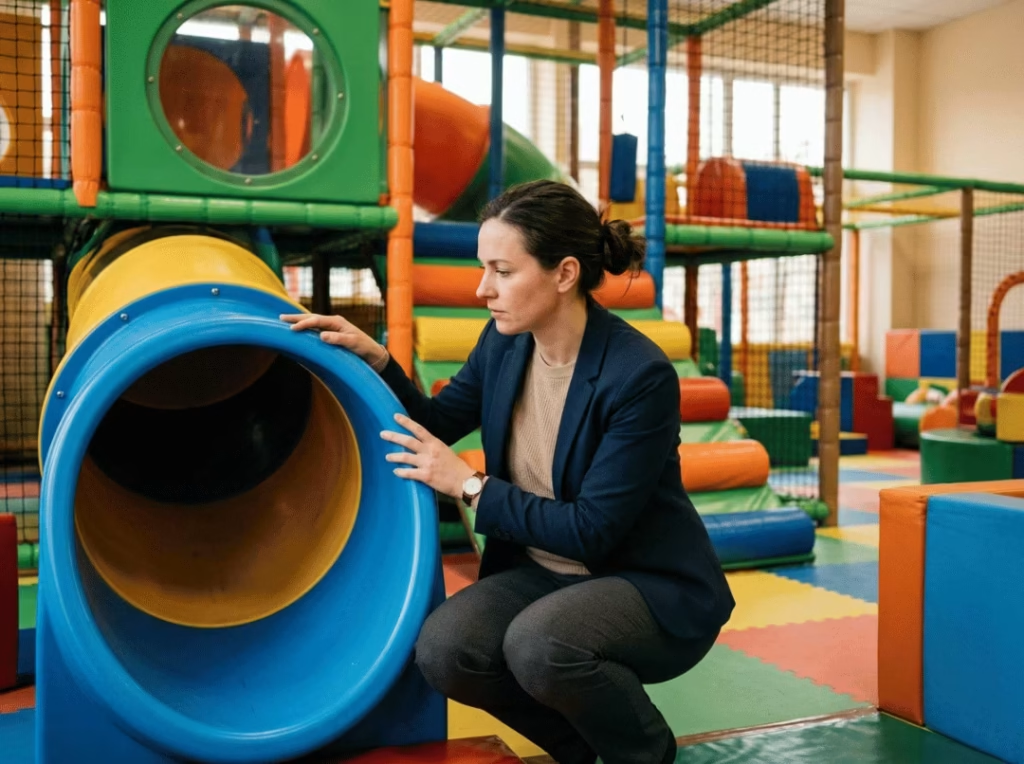
If you have to squeeze, duck, or fold to use a feature, it wasn’t made for you. Narrow tube slides and net tunnels have internal dimensions that scrape, snag, or trap adult bodies. Fitting the weight limit says nothing about fitting the space.
Forcing it produces the worst outcomes available: getting stuck, damaging equipment, or injuring yourself somewhere help is awkward to reach. If a feature plainly wasn’t designed for your size, walk past it.
If Weight, Mobility, or Health Limits Are Being Ignored
The riskiest adult on any play floor is usually the one who’s decided the posted limits don’t apply to them. Ignoring a load rating puts everyone below the structure at risk, not just the person over the limit.
Joint problems, heart conditions, and recent surgeries all call for honest self-assessment before you climb. Pregnancy, vertigo, and balance disorders are real reasons to stay off high-impact features entirely. If there’s genuine doubt, a conversation with your doctor is a better option than a hard landing.
If Your Presence Changes the Experience for Kids
Sometimes the equipment can handle you physically, but your being there still takes something from the children it was built for. A crowded toddler zone is the wrong place for an adult looking for a workout.
When an adult monopolizes a slide or settles into a narrow tunnel, kids end up waiting or drifting away. If your presence visibly reshapes how the children around you play, move to a zone meant for you.
If You’re Counting on the Venue to “Probably Allow It”
An unclear policy isn’t a green light. Assuming access would waste your trip and put staff in the uncomfortable position of turning you away in front of your kids. Call ahead, ask directly, and if the answer is vague, treat it as a no until you hear otherwise.
Safety Checks Adults Should Make Before Playing
A few quick checks at the start separate a good afternoon from a long drive home nursing a sore ankle. None take long, and all matter more for an adult than for the kids bouncing nearby.
Check Weight Limits and Clearance Space
Before climbing anything, find the posted load rating — usually displayed at the structure itself or near the entry. Then check the actual space, not just the number. Confirm you clear the tube diameters, tunnel widths, and platform heights. Anything requiring you to squeeze through an opening built for a ten-year-old isn’t worth testing. Passing the weight threshold and fitting the physical space are two different questions.
Understand How Impact Lands on an Adult Body
Adults absorb landings differently than children — the difference is mostly in the joints. A heavier frame generates more impact force on every drop.
Ankles, wrists, and shoulders take the worst of it: sprained ankles from awkward landings, shoulder strains from overhead holds, wrist injuries from catching a hard fall. Adult joints are less forgiving and recover more slowly. Ease into high-drop features like warped walls and tall rope swings rather than going straight for the hardest option on the floor.
Warm Up Before You Start
Cold muscles and sudden jumping don’t mix. Five minutes beforehand — light jogging, arm circles, leg swings — primes the joints and wakes up the muscles you’re about to load. Adults skip this far more than kids do, and they pay for it more often. Five minutes of mild effort is a reasonable trade.
Know When to Stay on the Ground
Some visits are better spent doing less than planned. Surgery recovery, ongoing joint problems, and cardiac conditions call for medical clearance before high-impact activity. Pregnancy, vertigo, and balance disorders point toward the quieter end of the venue — foam pits, low-key climbing, walking features.
Take breaks and drink water. Adults push harder than their bodies signal for more often than they realize. There’s no prize for the biggest jump.
How to Make the Visit Work
Once you’ve picked a venue that fits, a few practical choices determine whether the visit runs smoothly or turns into a source of frustration.
Choose the Right Time and Format
When you go matters more than most people expect. Adult-only sessions and late-night open gyms offer uninterrupted play without young children underfoot. Family nights are designed for parents to join their kids on the equipment.
For general admission, weekday mornings and evenings tend to be quieter. Weekends and school holidays pack the place — more waiting, less room to move. Check the event calendar or ask which sessions work best for adults before you show up.
Dress for Movement, Not for Hanging Around
Wear clothes that allow a full range of motion: flexible pants or shorts, a fitted top. Many trampoline parks require grip-soled socks and sell them at the counter, so factor that in. Remove jewelry, watches, and anything with a hard buckle or clasp that could snag netting or dig in during a fall.
Play Without Dominating the Space
Adults move fast and land hard, so the practical rule is simple: yield to the kids. Give younger children priority on slides and in tunnels, keep your movements predictable near smaller users, and respect zone restrictions.
There’s a real difference between being a playmate and monopolizing the equipment. The goal is neither extreme — not dominating the space, nor retreating entirely to the bench.
Start With Adult-Friendly Features
Begin with features sized for adult bodies before testing anything ambitious. Trampoline courts, foam pits, rope climbs, balance beams, rock walls, and ninja obstacles are the natural starting points. Narrow tube slides, toddler ball pits, suspended net tunnels, and spinning bars are worth approaching carefully — or skipping.
A sensible first visit is short: jump or climb, try one new thing, and honestly assess how your body responded before going further.
Best Indoor Play Spaces for Adults
The fastest way to choose is to match the venue tier to what you actually want from the visit.
Best fit: trampoline parks, ninja warrior gyms, climbing gyms, indoor ropes courses. These are built for full adult use and run all-ages sessions, adult-only nights, and corporate events without hesitation. If the goal is a real workout or a genuine evening of play, start here.
Sometimes okay: large family entertainment centers and venues offering family play windows. Quality depends heavily on timing. The right session works well; the wrong one gets swamped by birthday parties. Call ahead and book the adult-friendly slot when it exists.
Usually not worth it: toddler soft play, mall micro-playgrounds, restaurant play areas. Even where adults aren’t officially barred, the equipment is small and light-rated, and there’s very little for an adult to actually do.
Match the tier to your goal. A workout or social outing points to the top tier. Playing alongside a toddler points to a family window in the middle — where equipment fit matters less than simply being there together.
Frequently Asked Questions
Do indoor playgrounds have a maximum age limit?
Some do, most don’t. Toddler and junior zones often cap by age or height because the equipment is built for smaller bodies. Trampoline parks and ninja courses typically welcome all ages. Check the posted limits or call ahead — enforcement varies considerably between venues.
Can parents go into indoor playgrounds with their children?
Usually, yes. Most venues allow parents to accompany young children onto the equipment, and some require an adult on the floor for supervision. A few restrict grown-ups to spectator areas. Confirm the venue’s specific rule before planning to climb alongside your child.
Are trampoline parks considered indoor playgrounds?
Broadly, yes — and they’re among the most adult-friendly venues in the category. Their structures are rated for adult loads, which is why they regularly run all-ages sessions, adult-only nights, and corporate events that smaller soft-play venues can’t safely offer.
Do any indoor playgrounds have adult-only hours?
Yes. Trampoline parks and larger action venues frequently run adult-only sessions, late-night open gyms, and private bookings. Check the event calendar or ask at the front desk. These sessions offer the most uninterrupted experience for adult visitors.
Are there weight restrictions adults should check before visiting?
Yes. Every commercial structure has a manufacturer-set load capacity, usually posted at the equipment or the entrance. Read it before you climb. Fitting the weight rating doesn’t mean fitting the physical space — check clearance too.
What is the best way to find adult-friendly indoor play spaces?
Start with venue types built for adults — trampoline parks, ninja gyms, climbing centers, ropes courses — then check their websites for adult sessions or all-ages hours. A quick call to confirm the current policy is faster than showing up and finding out on the spot.
Play Smart, and the Age Barrier Mostly Disappears
Adults aren’t too old for indoor play — they’re just a poor fit for the wrong venues. In a space built for larger bodies, used within its design, adult play is entirely reasonable and often genuinely good for you.
What shapes the experience isn’t age. It’s venue design, how well the space suits your body, and how you conduct yourself around the people sharing the floor. The “indoor playground” label tells you almost nothing on its own. The venue tier tells you nearly everything.
Start with a place built for adults. Warm up before you jump. Stay honest about your limits. The real obstacle was never age — it was a mismatch between user, equipment, and venue, and that’s entirely avoidable with one phone call and a little honest judgment.