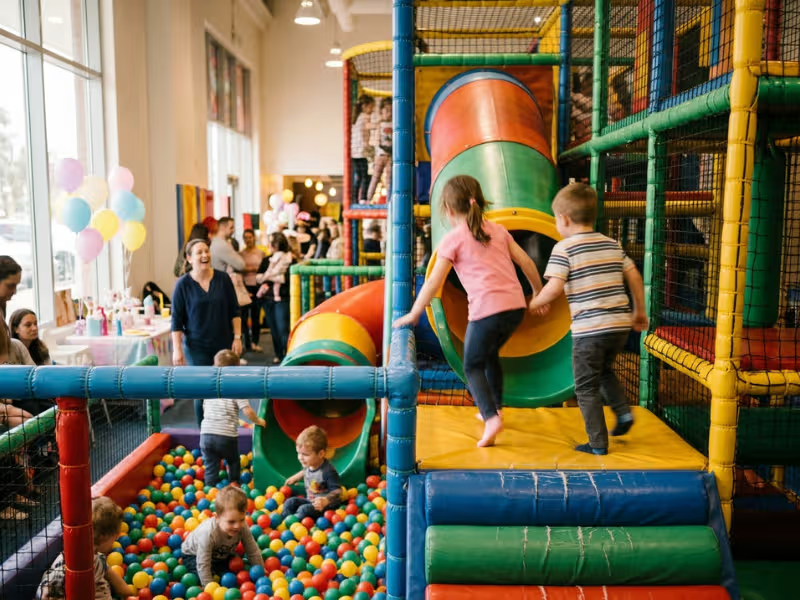
Many party venues look almost the same online. The photos are bright, the prices are close, and the promises sound identical. Choosing one can feel like a coin toss.
Booking websites rarely show the details that make or break a party. I’ve helped many families plan birthdays, and those hidden details cause most of the stress.
This checklist covers safety, staff, layout, food, flexibility, and value for kids ages 1 to 12. You’ll know what to look for, what to ask, and what to skip. Many of these standards also guide venue owners as they plan their spaces, from room layout to choosing safe, durable indoor playground equipment.
Why the Right Venue Makes or Breaks a Kids’ Party
A party venue does more than hold a room full of kids. It sets the pace for the whole day. When it works, you barely notice it. When it fails, you feel every minute.
I’ve walked through many party rooms and watched how parents react on the big day. In many cases, the difference between a calm parent and a frazzled one comes down to the venue, not the cake or the decorations.
Let’s start with what goes wrong, because those moments show you what to avoid.
What a Poor Venue Choice Looks Like on Party Day
Most party-day stress starts before anyone walks through the door. Picture this: your guests arrive at 2:00, and the lot is full because two other parties start at the same time. Families circle the block. Some park far away and juggle toddlers and gifts. Your party starts 15 minutes late, and nobody gets that time back.
Crowding causes the next headache. Some venues book parties back to back in shared spaces. Your group of 12 kids mixes with another group of 20. You lose track of who belongs to you. The birthday child ends up waiting in line for the slide at their own party.
Unclear rules finish the job. I’ve seen parents learn on the day that they can’t light candles, bring balloons, or stay past the two-hour mark. One mom I worked with brought homemade cupcakes, then heard the venue required its own cake. She spent the first 20 minutes at the front desk instead of greeting her guests.
Each problem seems small alone. Together, they turn a celebration into a logistics job.
What a Great Venue Handles for You
A strong venue flips that script. It takes the heavy lifting off your plate so you can actually watch your child have fun.
Setup. Good venues set tables, lay out plates and napkins, and hang basic decorations before you arrive. You walk in 10 minutes early, drop off the cake, and you’re ready.
Entertainment. A dedicated host runs games, guides the group between activities, and keeps energy high without letting it boil over. A skilled host knows how to pull a shy 4-year-old into the fun and settle a rowdy pack of 9-year-olds.
Timing. The best hosts follow a clear flow: play, food, cake, gifts, and goodbyes. They watch the clock so you don’t have to. When I review a venue, I always ask for a sample party timeline. If the staff can’t hand you one, they likely don’t follow one.
Cleanup. At the end, you grab the gifts and leftover cake and walk out. Staff deal with the trash, spills, and torn wrapping paper. After two hours with a dozen kids, that alone feels priceless.
Of course, that convenience comes with a price tag.
DIY or Pay for Convenience? A Quick Look at Cost
A home party usually costs less on paper. You might spend $150 to $300 on food, decorations, and a few activities for 12 kids. A venue package for the same group often runs $300 to $600 or more, depending on your area and what the package covers.
But home parties carry hidden costs. You buy supplies, clean before and after, plan every activity, and supervise every child yourself. Many parents tell me they lose a full weekend to a two-hour party.
Here’s a simple way to decide:
- Add up what you would spend at home.
- Put an honest value on your time and energy.
- Compare that total with a venue quote.
If the gap feels small, the venue likely wins. If your child wants a small, low-key gathering, home may suit you better. Either way, know exactly what you’re paying for. A cheaper venue that skips setup, hosting, or cleanup can cost you more stress than it saves.
Safety and Cleanliness: The Non-Negotiables
Bounce houses and themed rooms grab your attention fast. Look past the fun stuff first. If a venue cuts corners on safety or cleaning, nothing else on this checklist matters.
The good news is that you can check most of this yourself in a 20-minute visit.
Safety Standards You Can Actually See
A safe venue doesn’t hide its paperwork. It shows it off.
Licensing and insurance. Ask to see the current business license and proof of liability insurance. Many venues post them near the front desk. Check the expiration date. A license that expired last spring tells you a lot about how the place runs. Ask how much liability coverage they carry. A solid venue can usually answer in seconds.
First-aid-trained staff. Ask a simple question: “Who on today’s shift holds current first aid and CPR certification?” You want a name, not a shrug. Ideally, at least one certified staff member stays on the floor during every party, not in a back office. Ask where they keep the first-aid kit and the AED, if they have one.
Age-appropriate equipment. Toddlers and 10-year-olds need different play spaces. Look for a separate toddler zone with low platforms, soft blocks, and no big kids racing through. Check the floors under climbing structures. You want thick padded mats or rubber flooring, not thin carpet over concrete. Enclosed play zones with netting and gated entrances keep little ones from wandering toward exits.
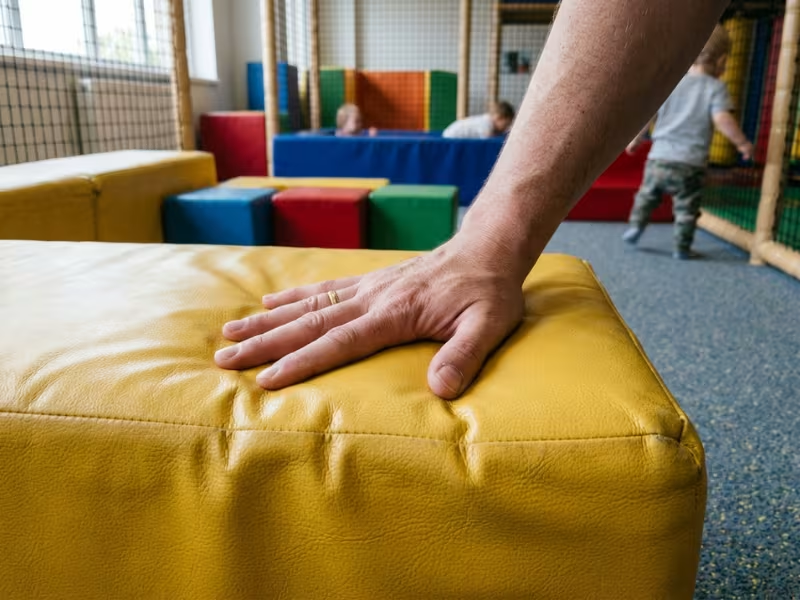
Press on the padding with your hand. If it feels flat, or you spot torn vinyl and exposed foam, the venue likely doesn’t replace worn equipment often enough.
Clear sightlines. Sit in the parent seating area and look around. Can you see the slide, the climbing frame, and the exit door without standing up? I’ve toured beautiful venues with tunnel mazes that swallow kids for five minutes at a time. Good layouts let you watch your child while you sip your coffee.
One more detail many parents miss: does the main exit have a staff member or a latched gate? A 3-year-old can slip out faster than you think.
Once safety checks out, look at something photos rarely capture: how clean the place really is.
Cleanliness Signals to Check During Your Visit
Anyone can make a space look spotless for a photo shoot. A real visit tells the true story.
Restrooms first. I always start here. If the restroom has empty soap dispensers, overflowing trash, or sticky floors on a slow weekday, imagine it on a busy Saturday. Look for a sturdy changing table and a cleaning log on the door with recent sign-offs.
Eating areas. Run your hand along a table edge and check under a chair. Crumbs from earlier parties, dried juice rings, or sticky high chairs often mean staff rush between bookings. The floor near the food area reveals the truth fast.
Soft play surfaces. Ball pits and foam mats trap germs. Ask how often staff clean the ball pit and what products they use. A strong answer sounds like, “We wipe surfaces daily and fully clean the ball pit every week.” A weak answer sounds like, “Pretty often.”
Cleaning between parties. Ask how much time the venue blocks between bookings. Around 30 minutes typically gives staff room to wipe tables, sanitize high-touch surfaces, and vacuum. Ten minutes usually means a quick trash grab and little else. Ask who handles the reset and whether they follow a checklist.
Sanitization schedules. Ask these questions directly:
- What do you clean after every party?
- What gets a deep clean each night or each week?
- Which products do you use, and are they safe for kids?
- Can I see your cleaning checklist?
A confident manager will happily walk you through every answer.
Sick-child policies. This one protects your guests. Ask whether the venue tells families to keep kids home with a fever, vomiting, or a rash. Find out what staff do if a child gets sick mid-party. Do they close off the area and clean it right away? Ask about staff illness, too. A worker with a bad cold shouldn’t serve pizza to your guests.
Trust your gut. If you hesitate to let your own child touch something, other parents will feel the same way.
Staff Quality: The Detail Photos Never Show
A venue’s website shows you slides, party rooms, and smiling kids. It never shows you the person who will run your party. That person shapes the day more than any bounce house.
I’ve watched two parties run side by side in the same building. One host had the kids laughing and moving on schedule. The other stood by the door checking her phone. Same room, same package, very different day.
You can’t judge staff from photos, but you can judge them with the right questions. Start with the numbers.
How Many Staff, and Do They Stay?
Ask how many staff members work your party, and how many kids each one covers.
Here’s a common rule of thumb I share with parents:
- Ages 1 to 3: One staff member for every 4 to 6 kids, plus parents on hand
- Ages 4 to 7: One staff member for every 8 to 10 kids
- Ages 8 to 12: One staff member for every 10 to 12 kids
Many venues assign one host no matter the group size. That works for 10 kids. It tends to fall apart at 25.
Next, ask a question most parents skip: “Does the host stay with our party the whole time?” Some venues share one host across two or three parties. Your host runs off to cut someone else’s cake while your kids wait. A good venue assigns a dedicated host from arrival to goodbye.
Numbers tell you how many people show up. How they act under pressure tells you much more.
Meltdowns, Bumps, and Shy Kids
Every kids’ party has a tough moment. Someone cries, someone falls, someone hides behind a parent’s leg. Great staff handle all three without drama.
Meltdowns. Ask, “What does your host do when a child melts down?” A strong answer sounds like this: “We move the child to a quiet corner, get down to their level, and bring in a parent.” A weak answer sounds like, “We let the parents handle it.”
Injuries. Ask what happens if a child gets hurt. You want to hear three steps: staff give first aid, tell the parent right away, and write an incident report. If they don’t track injuries, they don’t learn from them.
Shy kids. This one shows true skill. A good host never forces a shy child into the spotlight. Instead, they give the child a small job, like handing out game tokens or helping with the music. I’ve seen a quiet 5-year-old go from clinging to Mom to leading the conga line in 15 minutes.
Good instincts usually come from good training, so find out what happens behind the scenes.

Training, Turnover, and One Host From Start to Finish
Ask how the venue trains new hosts. The best venues use a written training plan. New hires shadow experienced hosts for several parties before they lead one alone. They also learn first aid, group games, and how to keep a party on schedule.
Then ask about turnover: “How long has your average host worked here?” If most staff stay a year or more, that’s often a sign the venue treats people well. Those hosts know the building, the timeline, and the tricks that keep kids engaged. If the venue hires new staff every month, you might get someone on their second party ever.
One more question matters a lot: “Will the same host handle setup, the party, and cleanup?” Hand-offs cause mistakes. The setup crew forgets your allergy note. The cleanup crew tosses the leftover cake you wanted to keep. One host who owns the whole party catches these details.
You can spot many of these issues before you ever visit. Just listen closely on the phone.
Red Flags on the Inquiry Call
Your first call with a venue works like a job interview. You’re the one hiring.
Watch for these warning signs:
- Short answers to direct questions. You ask about ratios, and they say, “We have plenty of staff.” That’s not a number.
- “It depends” with no follow-up. Fair answers explain what it depends on.
- Rushing you to book. A good venue answers your questions before it asks for a deposit.
- No one knows the details. If the person on the phone can’t explain the party flow, staff training may fall short too.
- Defensiveness. Questions about injuries or cleaning should never annoy them.
Green flags look just as clear. The staff member answers with specifics, offers details you didn’t ask for, and invites you to visit during a live party.
A venue that treats your questions with care will likely treat your kids the same way.
Layout, Space, and Flow: How the Room Shapes the Party
A venue can pass every safety check and still feel wrong on party day. The problem is often the layout. Kids bump into tables, adults stand against the wall, and the gift pile ends up next to the pizza.
When I tour a space, I picture the party moving through it, from the front door to the last goodbye. You can do the same. Start with the biggest choice: inside or outside.
Indoor or Outdoor? Plan for the Weather Either Way
Outdoor venues like parks, farms, and backyard-style party spaces give kids room to run. They also leave you with a big unknown: the weather.
Ask every outdoor venue this first: “What happens if it rains?” A good answer names a specific backup, like a covered pavilion or an indoor room held for your time slot. Find out if that backup costs extra and when they make the call. I tell parents to push for a decision at least 24 hours ahead. That gives you time to text your guests.
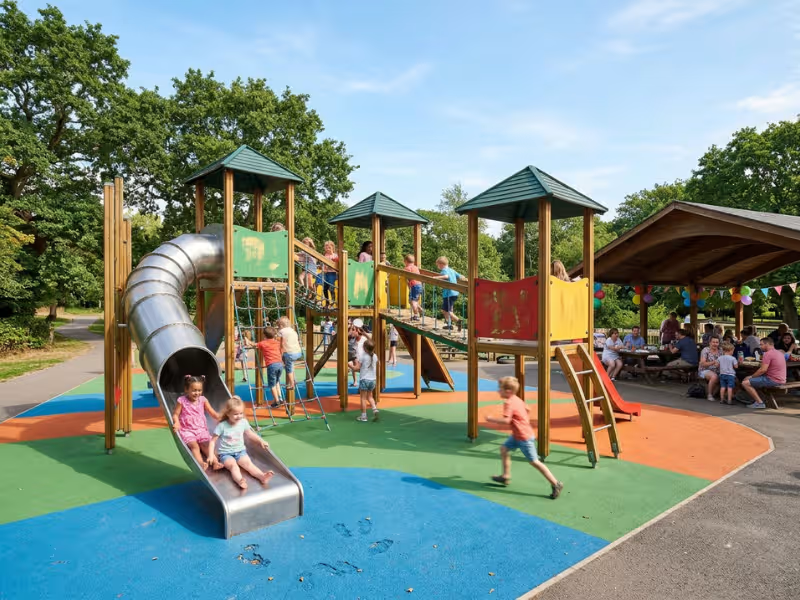
Heat matters too. For summer parties, look for shade, easy access to water, and a cool spot where toddlers can take a break. At outdoor venues, clear play zones and well-designed outdoor playground equipment also make supervision easier, since parents can see every area from one spot.
Indoor spaces remove the weather worry, but they bring their own issues. Check these three things during your visit:
- Climate control. Twenty kids running for an hour heat up a room fast. Ask what temperature they keep the party room. Around 68 to 70°F typically works well. Feel for air coming from the vents.
- Noise. Stand in the party room during a busy time. If you have to shout to talk to the staff, your guests will too. Rooms with carpet, sound panels, or a door to the main play floor tend to stay much calmer.
- Lighting. Bright, even light helps you spot your kids and makes photos look great. Dim, neon-themed rooms look fun, but they make it hard to track a 3-year-old. Your cake photos will come out grainy, too.
Once you know the setting, look at how the space is divided.
Room to Move, Room to Sit
The best party spaces work like a well-run kitchen. Everything has its place, and people don’t trip over each other. Behind the scenes, that flow often comes from careful planning. Many venues use custom playground equipment sized to their room, their main age group, and the way kids move between play and food areas.
Separate zones. Look for clear areas for play, food, and gifts. When play and food share the same space, kids run past with pizza, and juice ends up on the floor. A gift table near the exit keeps presents safe and makes loading the car easy.
Seating for grown-ups. Many venues count chairs for kids and forget about the adults. For kids under 5, expect close to one adult per child, and sometimes more. Older kids bring fewer parents, but grandparents and siblings add up fast. Ask how many adult chairs come with the room. If you invite 15 kids and 20 adults show up, six folding chairs along the wall won’t cut it.
Private room or shared space. A private room gives you control. You pick the music, your decorations stay up, and your guests don’t mix with strangers. Shared open spaces often cost $50 to $150 less, but your party blends into the crowd.
For kids under 5, or kids who get overwhelmed easily, I usually suggest a private room. For 8- to 12-year-olds who just want to run, a shared space often works fine. Just make sure you get a private table for food and cake.
One more tip: ask for a photo of the room set up for a party your size. Empty rooms almost always look bigger than they really are.
The party doesn’t start at the party room door, though. It starts in the parking lot.
Parking, Strollers, and Drop-Off
Arrival sets the mood for everyone. A smooth first five minutes means guests walk in happy instead of flustered.
Ask the venue these questions:
- How many parking spaces do you have, and how many parties run at the same time?
- Is there overflow or street parking nearby?
- Can I pull up near the entrance to unload the cake and supplies?
Stroller access matters for families with babies and toddlers. Look for ramps, wide doors, and a spot to park strollers inside. A second-floor party room with no elevator turns arrival into a workout for every parent carrying a car seat.
For older kids, ask about drop-off. Can parents leave kids at the door? Does the venue check kids in and out? A good venue keeps a simple sign-out list, so every child leaves with the right adult.
Walk the route yourself, from the car to the party room and back. If it feels easy with empty hands, picture it with a toddler, a diaper bag, and a sheet cake. That test tells you more than any brochure.
Party Packages: What’s Actually Included
Party packages love big, cheerful names like “Ultimate Bash” or “Deluxe Celebration.” The name tells you nothing. The list underneath tells you everything.
I read package sheets the way some people read car contracts, slowly and with a pen. Many surprise bills I see come from one line a parent skimmed.
Reading the Fine Print
Start by sorting every item into two columns: included or extra. Venues often tuck add-ons into smaller text or onto a separate page.
Here’s what to check, plus add-on prices I commonly see:
- Food: “Pizza included” might mean one slice per child. Extra pies often cost $15 to $25 each.
- Cake: Some packages include a basic sheet cake. Others charge $30 to $60 for one.
- Decorations: “Themed decor” may mean a tablecloth and five balloons. Ask for a photo.
- Invitations: Many venues send digital invites for free. Printed ones usually cost extra.
- Goodie bags: These typically run $5 to $12 per child as an add-on. You can often build your own for less.
Next, check the clock. Most packages run 90 minutes to two hours. Ask how that time splits between play and the party room. A “two-hour party” might give you only 45 minutes for food and cake.
Then ask about overage charges. Some venues bill $50 to $100 for every extra 15 minutes. Others end your party right on time because the next group is waiting at the door. Either way, you want to know before the day arrives.
Setup and teardown windows matter too. Ask:
- When can I arrive to drop off the cake and decorations?
- Does setup time count against my party time?
- How fast do we need to clear out at the end?
Finally, look at guest counts. Most packages set a minimum, often 8 to 12 kids. If the minimum is eight and only six kids RSVP, you still pay for eight. Packages also set a cap, and each extra child usually costs $15 to $30. Ask whether younger siblings and adults count toward the total.
One family I helped invited 10 kids, and four little siblings tagged along. The venue counted all 14. A $350 party turned into a $470 one.
Get every answer in writing. A friendly phone promise won’t help you at checkout.
Food is the next place where small details grow into big problems, especially with allergies.
Food, Allergies, and the Birthday Cake
Menu flexibility. Ask for the full party menu, not just the package highlight. Can you swap pizza for chicken nuggets or a veggie tray? Do they offer gluten-free crust? A flexible venue says yes and gives you a price. A rigid one says, “Pizza is what we do.”
Outside-food policies. Many venues ban outside food because of health codes and insurance rules. Some allow it for a fee. Others allow only the cake. Ask about toddler snacks, homemade treats, and catered food. If you plan to bring anything, get approval in writing first.
Allergy handling. This is where I push parents hardest. Ask these questions:
- Where and how do you prepare allergy-safe food?
- Do you wipe tables down before our party starts?
- Can staff show me ingredient labels for the pizza and cake?
- Who checks the allergy list on party day?
Strong venues write allergy notes on the party sheet and brief the host before guests arrive. They serve the allergic child’s food first, on separate plates. A weak venue says, “Just let us know,” and stops there.
For severe nut allergies, ask whether the venue serves nuts anywhere in the building. A nut-free table helps, but kids still share the play areas.
Where the cake fits. Ask three things. Is cake included, or can you bring your own? Is there a cake-cutting or plating fee? These often run $1 to $3 per guest. Will staff handle candles, singing, and cutting?
Then ask about timing. Many venues schedule cake in the last 20 to 30 minutes. If you also plan to open gifts, that window gets tight fast. I usually tell parents to save gifts for home. It frees up about 15 minutes and keeps the party focused on fun.

Flexibility and Customization: Making the Party Fit Your Child
Every child has a different idea of a perfect birthday. One wants dinosaurs everywhere. Another wants a craft table and three close friends. A great venue bends to fit your kid, not the other way around.
I judge flexibility with one simple test: how often the staff say, “Yes, and here’s how.” Rigid venues run every party from the same script. Flexible ones treat the script as a starting point.
Themes and Decorations: Ask Before You Shop
Most venues offer a short list of themes, such as princesses, superheroes, sports, or unicorns. Ask what each theme actually includes. Sometimes you get matching plates and a banner. Sometimes you get a costumed host and themed games. Ask for photos from a real party, not a catalog.
If your child loves something off the list, like trains or a favorite cartoon, ask if you can bring your own decorations. Then nail down the details:
- Can you use tape, or only free-standing items?
- Do they allow latex balloons, or only foil?
- Can you use confetti, glitter, or sparkler candles?
- How early can you decorate, and does that time cut into your party?
Many venues ban confetti and glitter because cleanup takes forever. Some charge a $25 to $50 decorating fee. Ask before you hit the party store, and you’ll save money and a few tears.
Decorations are easy to change. Dates are harder.
Rescheduling and Cancellations: Plan for the Bad Day
Kids get sick. Storms roll in. A flexible policy turns these moments into a quick phone call instead of a lost deposit.
Ask for the cancellation policy in writing and check these points:
- Deposit terms. Many venues ask for $50 to $200 upfront. Find out if they refund it, credit it, or keep it.
- Notice window. Many venues allow free rescheduling with 7 to 14 days’ notice. Inside that window, fees often kick in.
- Illness clause. The best venues let you reschedule with a same-day call if the birthday child wakes up with a fever. Rigid ones treat it like a no-show.
- Weather clause. For outdoor parties, ask who makes the rain call and when. For indoor venues, ask about snow days and power outages.
- Headcount changes. Ask how late you can adjust your final guest count.
I tell parents to ask one blunt question: “If my child gets sick the morning of the party, what happens to my money?” A clear answer tells you a lot. A vague one tells you more.
Mixed Ages: When Siblings Join the Fun
A 7-year-old’s party rarely stays at age 7. Little brothers, big sisters, and cousins tag along. Some venues handle this well. Others design every activity for one narrow age group.
Ask if the venue has a toddler area for younger siblings. Check for age or height limits on the main attractions. Trampoline parks and laser tag often set a minimum age of 5 to 7. If half the siblings can’t play, you’ll end up with a crowd of bored kids by the snack table.
Ask how the host adapts games, too. A skilled host can run a scavenger hunt where 4-year-olds find colors and 9-year-olds solve clues. Also confirm whether siblings count toward your guest total.
Kids With Disabilities or Sensory Needs
Every child deserves to enjoy the party, from the birthday kid to every guest. Raise accommodations early, even before you know every guest’s needs.
For physical needs, look for ramps, wide doors, accessible restrooms, and play equipment a child in a wheelchair can actually use. Ask whether the host can adapt games so everyone joins in.
For sensory needs, ask:
- Can you lower the music and lights during our party?
- Do you have a quiet room or calm corner?
- Do you offer sensory-friendly hours with smaller crowds?
- Can my child visit ahead of time?
Many venues now run sensory-friendly sessions on weekday mornings or early Sundays. A pre-visit helps a lot. Walk your child through the room, show them where the cake goes, and let them meet the host. That small step can turn an overwhelming day into a happy one.
Good venues welcome these questions. If the staff hesitate or brush them off, keep looking.
Entertainment and Activities: Where the Real Memories Happen
Kids won’t remember the paper plates. They’ll remember the games, the giggles, and the moment the host called their name. Entertainment is the part your child will talk about for weeks.
When I review a venue, I ask staff to walk me through a party minute by minute. Their answer shows me how they keep kids busy, happy, and out of trouble. Start with one big question: how much structure does your child need?
Structured Games or Free Play? Let Age Decide
Structured activities follow a plan. A host leads games, crafts, or a dance-off. Free play lets kids roam the play area on their own. Most good parties mix both, but the balance should shift as kids grow.
Ages 1 to 3. Toddlers can’t follow group games for long. Their attention often lasts just a few minutes. Free play in a soft, enclosed zone usually works best. Add one short activity, like bubbles or a song circle, and keep it under 10 minutes.
Ages 4 to 7. This group loves a leader. Freeze dance, parachute games, and treasure hunts keep everyone together and cut down on wandering. I suggest a roughly 50/50 split between hosted games and free play. Without a host guiding them, kids this age tend to scatter.
Ages 8 to 12. Older kids want freedom and a real challenge. Laser tag, team relays, escape-room puzzles, or a pizza-making class hit the mark. They’ll roll their eyes at “baby games,” so ask what the host does for this crowd.
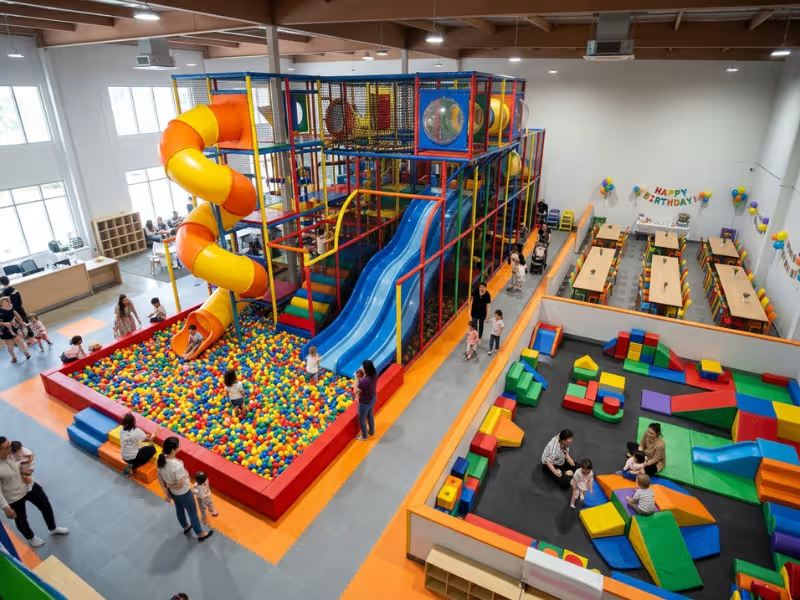
Ask each venue for its party plan for your child’s age. The play space itself matters here, too. Venues with distinct zones for toddlers and older kids make it much easier for hosts to run age-appropriate activities side by side. If a venue hands every age group the same script, the host probably runs on autopilot.
Included Entertainment vs. Add-On Costs
“Entertainment included” can mean almost anything. One venue gives you a full hour with an energetic host. Another gives you a coloring sheet and a high-five. Ask for a specific list.
Many mid-range packages include a host who leads games for 20 to 45 minutes. Some add a simple craft, like decorating crowns or cupcakes. Ask how long the host actually runs activities and what craft supplies come with the package.
Add-ons stack up fast. Here are prices I commonly see:
- Mascot or costumed character visit: $50 to $150 for 10 to 20 minutes
- Face painting or balloon artist: $75 to $200 per hour
- Premium craft kits: $5 to $10 per child
- Arcade cards or game tokens: $5 to $15 per child
- Extra laser tag rounds or attractions: $8 to $15 per child, per round
A quick word on mascots. Many 2-year-olds burst into tears when a six-foot bear waddles toward them. For kids under 4, I suggest skipping the mascot or asking for a short, gentle visit near the end.
Also ask who runs each add-on. Some venues bring in outside performers who show up late or leave early. Find out whether the performer works for the venue and what happens if they don’t arrive.
Downtime: The Stretch Between Arrival and Cake
Few parents plan for this part, yet it shapes the whole mood. Guests rarely arrive at once. The first 15 to 20 minutes usually bring a slow trickle of families. Ask the venue what early arrivals do while everyone else finds parking.
Strong venues run a warm-up activity. Kids decorate name tags, color at a craft table, or jump straight into free play. Weak venues leave the first three guests sitting in the party room, staring at empty pizza boxes.
Watch for two more danger zones:
- Waiting for food. Ask how long pizza takes to arrive. A good host fills that 10-minute wait with a quick game or a round of trivia.
- Moving between spaces. Pulling 15 kids off a trampoline takes skill. Good hosts use a countdown, a song, or a follow-the-leader line. Poor ones shout across the room.
Here’s a sample flow I like for a two-hour party:
- 0:00–0:15: Arrivals and warm-up activity
- 0:15–1:00: Hosted games, then free play
- 1:00–1:30: Food in the party room
- 1:30–1:45: Cake and singing
- 1:45–2:00: Goodie bags and goodbyes
If you can, watch a live party during your visit. Don’t just watch the games. Watch the gaps. A host who fills those quiet moments with energy will keep your party moving from the first guest to the last slice of cake.
Value: Comparing Venues Beyond the Sticker Price
Two quotes land in your inbox. One says $249. The other says $475. The cheaper one looks like an easy win, but often it isn’t.
I’ve sat with many parents as they lined up quotes side by side. The lowest number rarely stays the lowest. Fees, add-ons, and guest caps change the math fast.
Turn Every Quote Into a Cost Per Child
Venues price parties in different ways. One charges a flat rate. Another charges per kid. A third adds fees you only see at checkout. To compare them fairly, boil each quote down to one number: total cost per child.
Use this simple formula:
- Start with the base package price.
- Add every extra you plan to buy, such as cake, extra pizza, goodie bags, and decor.
- Add the fees: service charges, cake-cutting fees, cleaning fees, and tax.
- Add a tip for your host. Many parents give $20 to $40.
- Divide the total by the number of kids attending.
Ask each venue for an itemized quote based on your real guest count. Drop the numbers into a notes app or a simple spreadsheet. In about 10 minutes, you’ll see what each party truly costs.
Watch closely for service charges. Some venues add 15% to 20% to the bill and only mention it if you ask. So ask directly: “Is there a service fee, and does it go to the host?”
Budget Venue vs. All-Inclusive: A Side-by-Side Example
Here’s an example I often walk parents through. Both venues host 15 kids for two hours.
Venue A: Budget package at $249
- Covers 10 kids. Five more kids at $18 each: +$90
- Pizza for 10 only. Three more pies at $20 each: +$60
- Cake not included: +$45
- Goodie bags at $7 per child: +$105
- 18% service fee on the package, extra kids, and pizza: +$72
- Shared play space, with a host who splits time between two parties
Total: $621, or about $41 per child
Venue B: All-inclusive package at $475
- Covers up to 16 kids
- Pizza, drinks, cake, and goodie bags included
- Private room and a dedicated host
- Setup, cleanup, and service fee included
Total: $475, or about $32 per child
The “cheap” party costs $146 more. On top of that, you still have to pick up the cake and fill the goodie bags yourself.
Budget venues aren’t always a bad deal, though. If you’re inviting eight kids or fewer and they just want free play, Venue A could easily win. Compare totals, not headlines.
Deposits, Payment Schedules, and Refunds
Most venues ask for a deposit to hold your date. Expect roughly $50 to $200, or 25% to 50% of the package. Before you pay, check these points:
- Does the deposit count toward your final bill? It should. Some venues treat it as a separate booking fee.
- When is the balance due? Some want full payment 7 days ahead. Others collect it on party day.
- When do they lock your headcount? Many set a deadline 3 to 7 days out. After that, you typically pay for every child on the list, even no-shows.
- Refund or credit? Many venues offer only a credit toward a future party. A credit doesn’t help if you move or switch plans.
Get every term in writing. I also suggest paying with a credit card, since it often adds a layer of protection if a venue closes or won’t honor your booking.
When Paying More Upfront Saves You Later
A higher price can be the smarter buy. Here’s when I tell parents to spend the extra money.
When you’re inviting a big group. All-inclusive packages often cap the price for up to 15 or 20 kids. Per-child pricing climbs fast as RSVPs roll in.
When your guest list is still growing. If your class has 22 kids and siblings may tag along, a flat-rate package protects your budget from surprise headcounts.
When your time is tight. One mom I worked with picked a budget venue to save $80. She spent Saturday morning at the bakery and the party store. Then she paid a $75 overtime fee because the shared room ran late. Her savings vanished by 4:00.
When you’re booking peak dates. Saturday afternoons in spring and fall tend to fill up fast. Booking early at a fixed rate shields you from price hikes later.
The best value isn’t the smallest number on the quote. It’s the party that costs what you expected and lets you spend the day with your child, not your calculator.
How to Vet a Venue Before You Book
By now, you know what a great venue looks like on paper. The next step is proving it in real life. Websites and phone calls only tell you what the venue wants you to hear.
I never recommend a venue I haven’t walked through myself. A 30-minute visit and an hour of online digging catch problems a glossy brochure hides.
The Site Visit Checklist
This list pulls the earlier sections into one page you can save on your phone. I split every visit into three parts: look, ask, and test.
Look at:
- Restrooms, tables, and soft play areas for grime or wear
- The party room set up for a group your size, not empty
- Exits, gates, and whether staff watch the doors
- How the current host interacts with kids at a live party
Ask about:
- Staff-to-child ratios and who will host your party
- The full party timeline, from arrival to goodbyes
- Every fee not listed on the package sheet
- Allergy handling and the cancellation policy, in writing
Test:
- Sit in the parent seating area and see if you can spot the play zones
- Walk from the parking lot to the party room with a stroller or a heavy bag
- Stand in the room and talk at a normal volume
- Ask a staff member a tricky question and see how they respond
That last test matters more than most parents think. A host who answers with patience on a random Tuesday will likely show the same patience with your kids.
Visit at your party time. Don’t tour on a quiet Wednesday morning if your party falls on a Saturday at 2:00. A venue on a weekday morning and the same venue during the weekend rush can feel like two different places. Saturday afternoons show you the real parking situation, the real noise level, and how staff handle back-to-back parties. If the lot overflows and the restrooms run out of paper towels during your visit, expect the same on party day.
Reviews, References, and Word of Mouth
Online reviews help, but only if you read them the right way. Star ratings alone tell you very little. A 4.6 average can hide a serious problem buried in the 3-star comments.
Read for patterns, not one-offs. One angry review about a late pizza doesn’t mean much. Five reviews from the past six months that mention late pizza tell a story. I scan reviews for three themes:
- Punctuality. Do parties start and end on time? Look for phrases like “the room wasn’t ready” or “we got rushed out.”
- Staff. Do parents mention hosts by name? Praise for a specific person usually signals a strong team. Complaints about “teenagers on their phones” signal the opposite.
- Hidden fees. Watch for words like “surprise,” “extra charge,” or “not what we were quoted.” Repeated mentions suggest the venue isn’t upfront about pricing.
Sort reviews by “newest” first. A venue that shined two years ago may have new owners or new staff now. Also check how management replies. A calm, specific response to a complaint beats a defensive one every time.
Ask for a recent parent reference. Most parents never do this, and good venues welcome it. Ask, “Could you connect me with a family who held a party here in the last month or two?” A confident venue will pass along a name or ask a past client to reach out.
Keep that conversation short. Ask what went well, what they’d change, and whether the final bill matched the quote. That last answer alone can save you a headache.
If a venue refuses or stalls, take note. It doesn’t always mean trouble, but it rarely means confidence.
Tap into local parent groups. Neighborhood Facebook groups, school parent chats, and local forums give you honest, unfiltered opinions. Post a simple question: “Has anyone held a party at [venue name] recently? How was it?” Parents love to share, and they’ll tell you things no review site will.
Check real party photos. Search the venue’s location tag or hashtag on Instagram. Look at photos from actual parties, not marketing shots. You’ll see the true size of the party room, the real decorations, and how crowded the play area gets. If the tagged photos look nothing like the website, trust the tagged photos.
When what you see on your visit lines up with what other parents say, you’ve likely found a venue worth booking.
FAQs
How far in advance should I book a kids’ party venue?
For most dates, 6 to 8 weeks ahead is typically enough. For Saturday afternoons in spring, fall, or December, aim for 2 to 3 months. Friday evenings and Sunday mornings often open up with just 2 to 3 weeks’ notice, sometimes at a lower rate. Book the venue before you send invitations, which usually go out 3 to 4 weeks before the party.
What questions should I ask before signing a venue contract?
Get these answers in writing:
- What’s the total price for my guest count, including tax, service fees, and extras?
- Do siblings and adults count toward the total?
- When do you lock in the final headcount?
- Is the deposit refundable, or do you offer only a credit?
- What happens if my child gets sick or bad weather hits?
- Who hosts my party, and does that person stay the whole time?
- How much do you charge if we run over time?
If the contract doesn’t match the answers you got, ask the venue to fix it before you sign.
How much should a kids’ party venue cost per child?
In many areas, families pay around $25 to $45 per child once fees and extras are added. Simple play spaces and community centers can drop to $15 to $25, while trampoline parks, laser tag arenas, and premium venues often reach $40 to $60. Prices tend to run higher in big cities, so always compare the all-in cost per child.
Is a private party room worth the extra cost?
For kids under 5, or kids who get overwhelmed easily, it’s often worth the typical $50 to $150 extra. You control the music and decor, and you can spot your kids at a glance. For older kids who spend most of the party on the play floor, a shared space with a private food table usually works fine.
What is a reasonable guest count for a party venue?
A common rule of thumb is your child’s age plus one, which works well for ages 3 to 6. Older kids often want the whole class, so 15 to 25 guests is common. Expect roughly 70% to 80% of invited kids to show up, and close to one adult per child at toddler parties.
Can I bring my own food and cake to a party venue?
Cake is usually fine, though some venues charge a cake-cutting fee of $1 to $3 per guest and a few require you to buy their cake. Other outside food is often banned due to health codes and insurance rules. If a guest has food allergies, many venues will allow safe snacks, but get approval in writing.
What happens if my child gets sick before the party?
It depends on the venue’s illness clause, so read it before you pay a deposit. Flexible venues let you reschedule with a same-day call, while stricter ones may require 7 to 14 days’ notice. Call as soon as you know, ask for a credit if a refund isn’t offered, and text your guests right away.
How long should a kids’ party at a venue last?
For most ages, 90 minutes to 2 hours works well. Toddlers ages 1 to 3 usually do best with 60 to 90 minutes, before naps and meltdowns take over. Parties that run past 2 hours often bring cranky kids and overtime fees, so end while the energy is still high.
Bringing It All Together: Pick the Venue That Lets You Be There
Every venue looks great in photos. Now you know how to look past them.
I’ve watched parents walk into party day tense and walk out drained. I’ve also watched parents sit down with a slice of cake and actually see their kid blow out the candles. The difference usually comes from a few smart choices made weeks earlier.
Here’s the whole checklist in one quick pass:
- Safety: Current license and insurance, first-aid-trained staff on the floor, padded age-appropriate equipment, and clear sightlines.
- Cleanliness: Stocked restrooms, wiped tables, a real cleaning gap between parties, and a clear sick-child policy.
- Staff: One dedicated host, ratios that fit your child’s age, and calm answers about meltdowns and injuries.
- Layout: Separate zones for play, food, and gifts, enough adult seating, a weather backup, and an easy walk from the car.
- Packages: Every inclusion in writing, clear time limits and overage fees, and a solid allergy plan.
- Flexibility: Theme options, fair illness and weather clauses, room for siblings, and support for kids with sensory or physical needs.
- Value: True cost per child, including fees, add-ons, tips, and deposit terms.
A good venue checks most of these boxes without breaking a sweat. A weak one tends to wobble by your third question.
See Two or Three Venues Before You Decide
Here’s the one step I push every parent to take: visit two or three venues in person before you pay a deposit.
One visit gives you nothing to compare. Six visits wear you out, and the details start to blur. Two or three give you a clear contrast. You’ll notice that one host made eye contact with the kids while another never looked up, or that one party room fit 15 kids while another barely held 10.
A few habits make these visits count:
- Bring the checklist and work through it on your phone.
- Take quick photos of the party room, the restroom, and the play area.
- Score each venue in the car. Rate the seven areas from 1 to 5 before you drive away, while details are fresh.
- Ask for an itemized quote before you leave, then compare cost per child at home.
Pay attention to how each place makes you feel, too. If you’d relax and let your child run free, that’s a good sign. If you keep hesitating, listen to that.
The Real Payoff
A great venue does more than give you a room. It gives you your afternoon back.
Picture the day. You arrive 10 minutes early and hand over the cake. The host greets each child by name and gets the games going. Pizza shows up right on time. You’re not refilling cups or hunting for napkins. You’re standing next to the other parents, watching your kid laugh with their friends.
When the last guest heads home, you grab the gifts and walk out. No trash bags, no sticky floors, no lost weekend.
Do the homework now, and the venue handles the details. You get to do the best part: enjoy the party with your child.