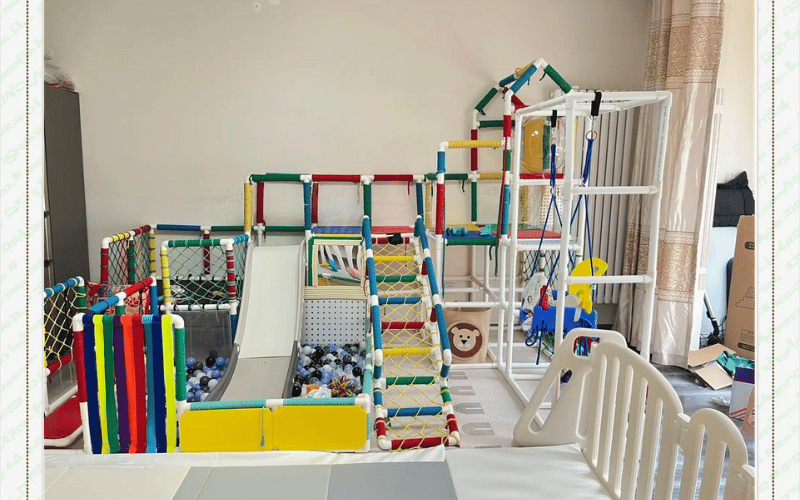
Looking to create an active and engaging play space for children, regardless of the weather? An indoor jungle gym is an excellent solution. With their growing popularity in homes, schools, and commercial play centers, these structures offer a fantastic way for kids to burn off energy, develop crucial skills, and have fun in a safe environment. But with so many options available, choosing the right one can feel overwhelming. It is essential to consider factors such as safety, material quality, size, and age appropriateness before making a purchase.
This guide outlines 10 key considerations to help you choose the perfect indoor jungle gym. We will cover the benefits for child development, the different types available, and the critical safety features you should never overlook. Whether you are a parent looking to enhance your playroom or a business owner creating a new family entertainment center, this comprehensive guide will provide the actionable insights you need to make an informed and confident decision.
10 Things to Consider When Buying a Children’s Indoor Jungle Gym
1. How Can an Indoor Jungle Gym Benefit Children?
With the rise of screen time, providing opportunities for physical activity is more important than ever. Indoor jungle gyms have become essential tools for promoting healthy development in children. Hours spent in front of screens can contribute to a sedentary lifestyle, but a well-designed play structure encourages active, imaginative play.
Here’s how an indoor jungle gym can help:
- Improves physical development: Climbing, swinging, and balancing build strength, improve gross motor skills, and enhance coordination.
- Boosts mental stimulation: Navigating a jungle gym encourages problem-solving, spatial awareness, and creative thinking as children invent new games and challenges.
- Encourages social interaction: In a group setting, jungle gyms promote teamwork, sharing, and communication as children learn to take turns and play together.
- Provides a safe play environment: An indoor gym offers a controlled space for children to be active, away from outdoor hazards such as traffic or inclement weather.
- Builds confidence: Mastering a new climbing route or conquering a slide gives children a sense of accomplishment and self-esteem.
2. Types of Indoor Jungle Gyms
Indoor jungle gyms come in various types, categorized by their structure and designed to meet different space and play requirements. Whether you’re looking for a simple climbing frame for a corner of a room or a large, multi-activity structure for a commercial play center, each type serves different needs.
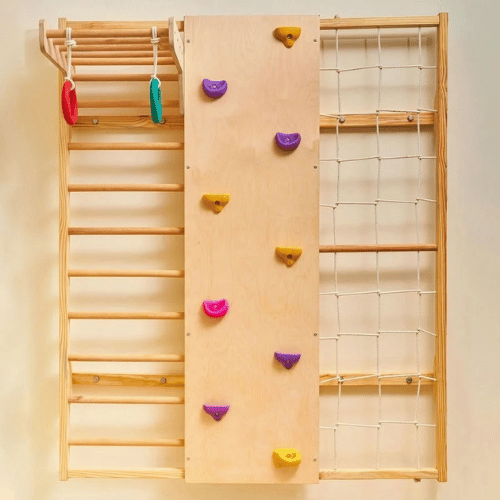
a. Wall-Mounted Jungle Gyms
Wall-mounted units, often called Swedish ladders, are ideal for setups with limited floor space. They are securely fixed to a wall, providing a stable structure for climbing and often include attachments such as pull-up bars or rings. While they are great space-savers, they are fixed in place and require a sturdy, load-bearing wall for safe installation.
b. Freestanding Jungle Gyms
This type is a versatile, all-in-one structure that doesn’t need to be attached to walls or ceilings. They are perfect for renters or for spaces where drilling into walls is not an option. Freestanding gyms can be moved around if needed, though larger models can be heavy and difficult to relocate. They often come in various sizes, from small toddler-focused climbers to larger, more complex structures.
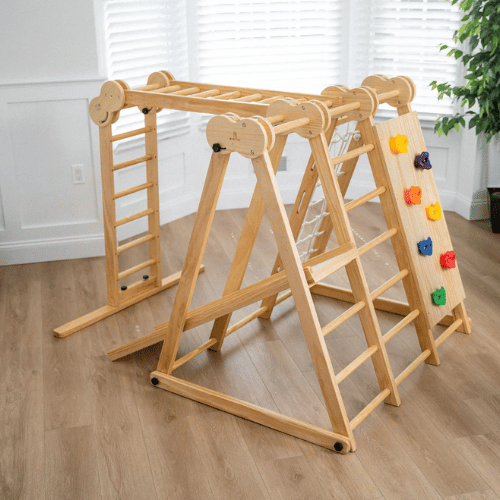
c. Modular Jungle Gyms
Modular systems offer the ultimate in customization. These jungle gyms consist of various components that can be connected in different configurations to suit your space and needs. You can start with a basic setup and add new elements like slides, monkey bars, or climbing walls as your children grow or your budget allows. This flexibility makes them a great long-term investment.
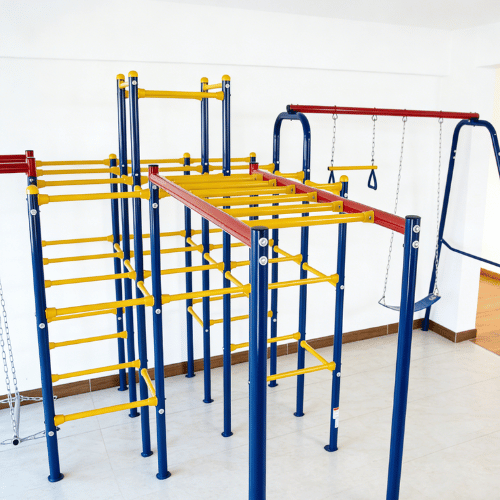
d. Multi-Functional Jungle Gyms
Multi-functional gyms are designed to be an all-in-one play destination. These comprehensive structures often combine several play features, such as a climbing wall, slide, swing set, monkey bars, and rope ladder. They are perfect for keeping multiple children engaged with a variety of activities and are a popular choice for dedicated playrooms and commercial centers.
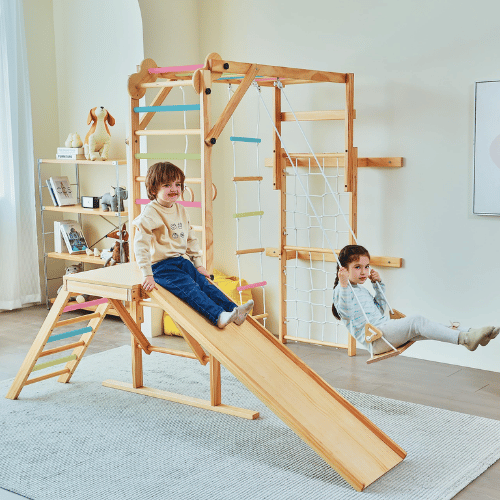
3. Material and Build Quality
The safety and longevity of an indoor jungle gym depend heavily on its material and construction. Both wooden and metal jungle gyms rely on quality craftsmanship and strong hardware to ensure stability. As long as the materials are high-quality and the construction is solid, both options provide a durable, safe play experience.
Common materials include solid wood (such as pine or birch), powder-coated steel, and high-density polyethylene (HDPE) for components like slides. When evaluating materials, ensure they are non-toxic and free of harmful chemicals such as lead and phthalates. The build quality should be robust, with smooth, sanded edges and secure connections. In terms of user experience and lifespan, a well-built gym from any of these materials will support years of active play.
4. Space and Installation Requirements
When deciding whether to install an indoor jungle gym, it’s important to evaluate your available space. Measure the length, width, and, most importantly, the ceiling height of your room. Always leave a safe perimeter of at least a few feet around the gym to prevent children from bumping into walls or furniture.
a. Wall-Mounted Installation
If you choose a wall-mounted jungle gym, ensure the wall is structurally sound and has studs to anchor into. Avoid installing on drywall alone. This method is permanent but offers excellent stability and saves floor space, making it ideal for smaller rooms or multi-use areas.
b. Freestanding Installation
For freestanding models, installation is generally simpler as no drilling is required. You simply assemble the unit according to the manufacturer’s instructions. Ensure you have a level floor surface to prevent wobbling. The main consideration is ensuring there is enough floor space for the gym’s footprint plus the required safety zone.
c. Ceiling-Suspended Options
Some jungle gyms include elements like swings or rings that must be suspended from the ceiling. This requires locating and securing mounts in ceiling joists to ensure they can support a child’s weight and motion. This type of installation is more complex and may require professional assistance to guarantee safety.
5. Avoiding Installation Pitfalls
Before purchasing an indoor jungle gym, double-check your space for the following potential issues to ensure a secure and stable installation.
a. Structural Integrity
For wall-mounted or ceiling-suspended units, the integrity of your walls and ceiling is paramount. Installing heavy equipment on hollow-core doors, plaster walls without studs, or weak ceiling joists can lead to equipment failure and serious injury. Always use a stud finder and follow manufacturer guidelines for anchoring.
b. Unsuitable Surfaces
Avoid installing any type of jungle gym on fragile or uneven surfaces. Placing a heavy freestanding unit on an unstable floor can cause it to tip. Drilling into surfaces like glass, tile, or brick without the proper tools and expertise can cause irreversible damage and create an unsafe mounting point.
c. Reinforcement Needs
If you have doubts about the strength of your walls or ceiling, consider using reinforcement plates or adding blocking between studs to distribute the load. While these add an extra step to installation, they provide crucial peace of mind and ensure the structure remains secure during vigorous play.
6. Safety Features to Look For
VESA is a standard for TV mounts, but for jungle gyms, safety standards are set by organizations such as ASTM International (in the US) and EN standards (in Europe). A reputable manufacturer will state their compliance with these safety standards. Ensure the product has been tested for structural integrity, material safety, and design features that prevent common injuries.
However, there are exceptions and extra features to watch out for:
- Rounded Edges and Guardrails: All corners and edges should be rounded and smooth to prevent cuts and scrapes. Platforms and slides should have high guardrails to prevent falls.
- Non-Toxic Finishes: Ensure all paints, stains, and finishes are certified non-toxic and lead-free. Children often touch surfaces and then put their hands in their mouths, so this is critical.
- Secure Fastenings and Covered Hardware: All bolts, screws, and other hardware should be recessed or covered with plastic caps to prevent snagging clothing or causing injury. Check that all connections are secure and do not wobble.
- Anti-Slip Surfaces: Steps, rungs, and platforms should have an anti-slip texture or coating to provide a secure grip for little feet, especially when wearing socks.
7. Choosing the Right Weight and Age Specifications
When choosing the right indoor jungle gym, it’s crucial to check its maximum weight capacity and compare it with your children’s needs. You can typically find this information in the product specifications. Keep these factors in mind:
a. Total Weight Capacity
The weight limit applies to all children. Consider whether multiple children will be playing on the structure at the same time. A jungle gym intended for home use might have a lower weight limit than one designed for a commercial play center. Always choose a model that can safely accommodate the expected number of users.
b. Age-Appropriateness
A jungle gym designed for toddlers will have lower heights, smaller steps, and simpler activities than one designed for older children. A structure that is too advanced can be dangerous, while one that is too simple will be boring. Look for the manufacturer’s recommended age range and ensure it aligns with your children’s developmental stage.
c. Planning for Growth
Children grow quickly. If you are investing in a jungle gym, consider one that can grow with them. Modular gyms are excellent for this, as you can add more challenging elements over time. Choosing a gym with a slightly higher age and weight limit ensures you will get more years of use out of it.
8. Key Factors for Adjustability and Customization Options
When choosing the right jungle gym, it’s crucial to check its adjustability and customization options to ensure it remains engaging as your children grow. Static play structures can quickly become boring.
a. Adjustable Components
Look for jungle gyms with adjustable features. Can the slide be swapped for a climbing wall? Can the height of the swing or gymnastic rings be easily changed? This versatility allows you to adjust the challenge level and keep the gameplay fresh and exciting.
b. Modular Designs
Modular jungle gyms are the gold standard for customization. They allow you to reconfigure the layout or add new sections entirely. This is perfect for adapting the structure to a new space if you move, or for expanding the play area to accommodate more children or more advanced activities.
c. Personalization and Accessories
The ability to add accessories greatly enhances play value. Look for models compatible with accessories like rope ladders, knotted ropes, disc swings, or even play tents that can be attached to the frame. Some manufacturers also offer different color schemes or themes to personalize the gym’s look.
9. Preventing Wear and Tear
One of the most common issues users face after purchasing a jungle gym is hardware that loosens or wears in high-traffic areas. This typically occurs in two key areas:
- Joints and Connections: The points where different components connect can loosen over time due to vibrations from active play.
- Surfaces: Slides, steps, and handgrips can show signs of wear from constant use.
How to Maintain Your Jungle Gym
To resolve these issues, first, regularly inspect all hardware and tighten any loose screws or bolts. This simple check can prevent wobbling and ensure the structure remains stable. Avoid overtightening, as it could damage the wood or metal components. If you notice significant wear on surfaces, check the manufacturer’s maintenance guidelines. Some wooden gyms may need occasional resealing, and plastic components should be checked for cracks.
Choosing Durable Jungle Gyms
Lower-priced jungle gyms often use thinner materials or basic hardware that may wear out faster. Consider investing in products made from solid wood or thick-gauge steel with high-quality, locking hardware. These designs provide greater resistance to the stresses of active play, ensuring longer-lasting performance and safety.
10. Budget and Value for Money
Proper cable management is for office setups, but for jungle gyms, proper financial planning is essential. The ability of a jungle gym to provide long-term value requires an initial investment that strikes a balance between cost and quality. Here’s what to keep in mind:
Initial Cost vs. Long-Term Value
- For budget-conscious buyers: It may be tempting to choose the cheapest option, but this often means lower-quality materials and a shorter lifespan. A slightly higher initial investment in a durable, certified-safe product will provide better value and peace of mind over time.
- For long-term investment, look for jungle gyms with strong warranties and positive customer reviews. A manufacturer that stands behind its product is more likely to use quality materials. Modular designs also offer great long-term value, as they can be expanded rather than replaced.
Included Features
The price of a jungle gym often reflects the features it includes. A basic climbing frame will be much cheaper than a multi-functional unit with a slide, swings, and monkey bars. Consider which features will provide the most play value for your children and choose a model that fits both your budget and your space.
Conclusion
We’ve covered the key questions to ask when selecting an indoor jungle gym, from developmental benefits and material quality to space requirements and safety standards. Choosing the right play structure is a significant decision that affects your child’s safety and development. By prioritizing durable materials, certified safety features, and age-appropriate design, you can create a fun and enriching environment that provides countless hours of active play.
If you’re looking for a reliable, high-quality option, consider a trusted brand like Inqila. Our jungle gyms are designed with safety and durability as top priorities, ensuring they can withstand years of energetic play. By making an informed choice, you are not just buying a piece of equipment; you are investing in your child’s health, happiness, and growth.