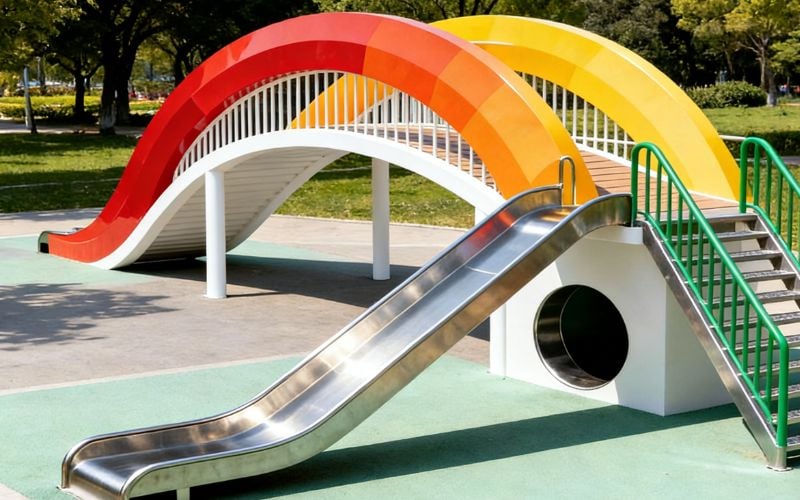
Discover the true cost of building a playground with this detailed guide. We provide real price ranges and thorough explanations to help you find the best fit for your community, school, or backyard. Playgrounds serve as vibrant hubs for childhood development, a place for imaginative adventures, and a cornerstone of community joy for all.
But since you’re here, you must be wondering: “How much does a playground actually cost?”
As a long-time manufacturer of commercial play equipment, we get asked this question constantly. We’ve seen projects of all shapes and sizes, from small neighborhood tot lots to sprawling, custom-themed adventure parks. With that in mind, we keep a close watch on pricing across the playground industry and are ready to share that knowledge to help you prepare your budget.
In this article, we will examine the key factors that influence the total cost of a playground. We will also provide general price ranges for different types of equipment and installations to help you start planning your project with confidence.
4 Factors That Go Into the Cost of a Playground
Here are the four main factors that influence how much a playground will cost:
Type of Playground
The number one factor that affects the cost of a playground is the type of structure you choose. Different designs serve different age groups, developmental goals, and community aesthetics, all of which impact the final price tag.
Here are some of the different types of commercial playgrounds with typical price ranges:
- Traditional Post-and-Deck Playgrounds: $10,000 – $100,000+
- Themed Playgrounds (e.g., castles, pirate ships): $30,000 – $250,000+
- Inclusive & Accessible Playgrounds: $25,000 – $300,000+
- Natural Playgrounds (using wood, boulders, plants): $15,000 – $200,000+
- Fitness-Focused/Obstacle Course Playgrounds: $20,000 – $150,000+
While we provided price ranges for various playground types, let’s dive deeper by comparing a traditional structure to a more complex inclusive playground.
Traditional Playground Cost vs. Inclusive Playground Cost
Why is an inclusive playground often more expensive than a traditional one? The answer lies in the specialized design and engineering required to accommodate children of all abilities. An inclusive playground is proven, through extensive research and user feedback, to be the most welcoming and developmentally beneficial type of play space.
The main reasons for the higher cost include:
- Inclusive playgrounds require wider ramps, transfer stations, and ground-level accessible components, which increases the material footprint and manufacturing complexity.
- They often integrate sensory play elements like musical panels, tactile surfaces, and quiet retreat zones, which are specialized products.
- The surfacing must be a unitary material, such as poured-in-place rubber or turf, which is more expensive than loose-fill options like wood chips but is necessary for wheelchair accessibility.
- Designers must adhere to strict ADA (Americans with Disabilities Act) guidelines, which require more thoughtful, often more spacious layouts.
For these reasons, you should expect to pay more for a truly inclusive playground. The primary driver for choosing a traditional structure is often a limited budget. As a general rule, If you go with a basic, traditional playground, you may save money upfront but potentially exclude children with mobility or sensory challenges. If you choose an inclusive playground, you will get a more equitable and higher-quality play space, but it will require a larger investment.
Our advice: Clearly define the goals for your play space and establish your total budget before you begin shopping. These factors will guide you toward the ideal playground for your community’s unique needs.
Quality of Materials
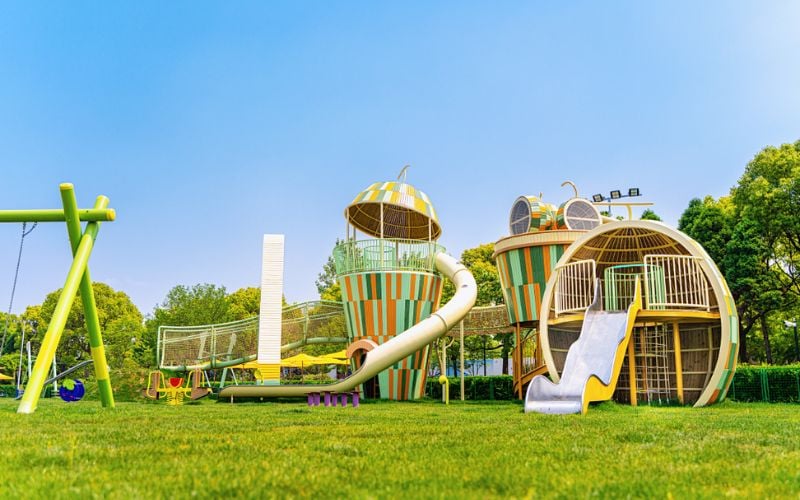
Another critical factor that significantly affects the cost of a playground is the material it is made of. While many playgrounds might look similar from a distance, the commercial-grade materials used in their construction determine their safety, durability, and lifespan. A playground built with a robust, powder-coated galvanized steel frame and UV-stabilized rotational-molded plastic will cost more than one constructed with thinner steel or less durable plastic components.
There are several key components you need to look at when assessing the quality of materials:
- The structural posts and hardware: Look for galvanized steel with a thick powder-coating finish to resist rust and corrosion. All hardware should be stainless steel and tamper-resistant.
- The plastic components (slides, panels, climbers): High-density polyethylene (HDPE), rotationally molded, is the industry standard for durability. Ensure it has UV inhibitors to prevent fading and cracking from sun exposure.
- The decking and ramps: Coated steel decks provide superior strength and slip resistance compared to plastic or wood alternatives.
The quality of these materials plays a huge role in determining the overall safety and longevity of a playground. A structure built from high-quality, commercial-grade materials will withstand years of heavy use and harsh weather, reducing long-term maintenance and replacement costs. Cheaper materials may save money initially, but often lead to safety hazards and a much shorter product lifespan. Investing in quality from the start is the most cost-effective decision in the long run.
Design of the Playground
The design of the playground is another factor that influences cost, and it goes far beyond its aesthetic appeal. Design also describes how the playground is engineered for safety, play flow, and developmental value. For instance, one design might feature a simple post-and-deck layout, while another incorporates a complex, multi-level structure with integrated shade systems and unique climbing challenges.
Playground safety remains the most pressing concern for any school, municipality, or community group purchasing a playground. The more that safety and thoughtful design are incorporated into the structure, the more expensive the playground will be.
Safety features like appropriate use zones, guardrails at the correct heights, and layouts that prevent user congestion are critical. Look for designs that adhere to the latest CPSC (Consumer Product Safety Commission) and ASTM International safety standards. A well-designed playground not only minimizes risk but also maximizes play value by encouraging a natural flow of movement and providing a variety of age-appropriate challenges. A custom-themed design, such as a pirate ship or a nature-inspired treehouse, will also be more expensive due to the additional engineering and unique molds required for manufacturing.
Size of the Playground
The last major cost factor involves the physical size and capacity of the playground. A small structure designed for a daycare with a capacity for 5-10 children will be significantly less expensive than a large, multi-component structure designed for a regional park that can accommodate 50-100 children at once.
To see this in context, here are a few examples of how size and component count influence cost:
- A small, single-deck structure for toddlers (ages 2-5): $8,000 – $15,000
- A medium multi-deck structure for elementary schools (ages 5-12): $25,000 – $60,000
- A large, sprawling community park structure with multiple zones: $70,000 – $200,000+
As you can see, the larger the footprint and the more play activities included, the more expensive the playground will be. When discussing size, however, it’s important to think about the long-term needs of your community. It is often more cost-effective to invest in a slightly larger, more versatile structure upfront than to add on components later. Buying a playground that children can grow with ensures its relevance and value for many years, saving you money on a larger structure down the road.
Playground size isn’t just about the physical dimensions. You also need to consider the required safety-use zone—the clear space around the equipment to prevent injury from falls. Larger structures with tall slides and swings require a much larger use zone, which increases costs for site preparation and safety surfacing.
3 Other Playground Cost Factors
Playground equipment, surfacing, installation, and maintenance can all affect how much you ultimately pay for your playground. Below is a breakdown of each:
How Much Do Playground Accessories Cost?
Playground accessories, or freestanding components, are a fantastic way to enhance play value and cater to a wider range of interests. Just like the main structures, accessories can vary dramatically in cost depending on the type and quality.
Let’s look at a few examples of common freestanding accessories:
- Commercial Swing Bays (2 seats): $1,500 – $5,000+
- Spring Riders: $500 – $2,000+
- Stand-Alone Slides: $2,000 – $10,000+
- Geodesic Climbers or Rock Walls: $3,000 – $15,000+
- Merry-Go-Rounds or Spinners: $2,500 – $8,000+
The quality of the accessory, meaning how strong and durable its materials are, plays a huge part in its price. For example, an inclusive spinner that is flush with the ground for wheelchair accessibility will cost significantly more than a traditional cone spinner due to its complex bearing system and precision engineering.
Most playground accessories are designed to complement a larger structure, but they can also be purchased individually to refresh an existing play space or fit into a smaller area. If adding accessories is part of your plan, consider purchasing them with your main structure to ensure a cohesive design and potentially save on shipping and installation costs. However, you can always add freestanding components later as your budget allows.
How Much Does Playground Assembly Cost?
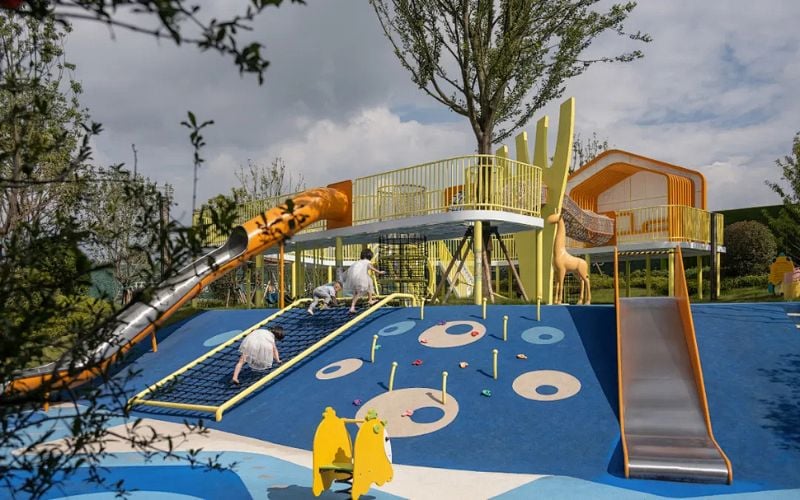
Another high cost you must account for is the assembly of your playground. Installing commercial playground equipment is a complex, labor-intensive process that requires specialized knowledge and tools to ensure it meets safety standards.
Professional playground assembly is highly recommended and often required to validate the manufacturer’s warranty. The cost for professional installation typically ranges from 30-50% of the equipment cost. For example, installing a $40,000 playground structure could cost between $12,000 and $20,000.
Installation costs can vary based on your location, site accessibility, soil conditions, and the complexity of the equipment. A community-build, where volunteers from your organization work under the guidance of a certified installer, can sometimes reduce labor costs. However, this is not always an option and still requires professional supervision to ensure every bolt is tightened and every footing is poured correctly. A DIY installation is generally not recommended for commercial equipment due to the immense safety liability and risk of improper assembly.
How Much Does Playground Maintenance Cost?
Maintenance for your playground is the final cost consideration and a crucial long-term investment. Regular cleaning and inspections can help prevent costly repairs and extend the life of your equipment. Basic cleaning with soap and water is usually all that is needed.
However, if your playground needs replacement parts due to vandalism or extreme wear, such as a new slide section or swing chains, you could see costs in the hundreds or thousands of dollars. Before you order replacement parts, check your product’s warranty. Commercial playgrounds often have extensive warranties, with some offering lifetime guarantees on steel posts and 10-15 years on plastic components. A strong warranty can significantly reduce your long-term maintenance costs.
If you periodically inspect your playground for loose hardware, signs of wear, and surfacing issues, your maintenance costs should be manageable. We recommend creating a maintenance fund and setting aside 1-3% of the total project cost annually for future repairs and upkeep.
Which Playground Is Best for You?
The cost of a playground is multifaceted, and the best choice mainly comes down to your community’s goals, budget, and space.
If you’re just looking for the cheapest option to fit a tight budget, you can find smaller, basic structures for under $10,000. However, these often have limited play value and may not meet the long-term needs of a growing community. The cheaper the product, the greater the chance of premature breakdown and higher lifetime maintenance costs.
If you want a safer, longer-lasting, and more engaging playground, you can expect to pay in the tens or even hundreds of thousands of dollars, depending on the factors discussed earlier. The better the product and the more inclusive the design, the more it’s going to cost.
Now that you have a complete understanding of the total cost of owning a playground, you can begin to make an informed decision. Start by defining your project’s goals, identifying your target age group, and establishing a realistic budget. This will empower you to find the perfect playground to bring joy and excitement to your community for years to come.