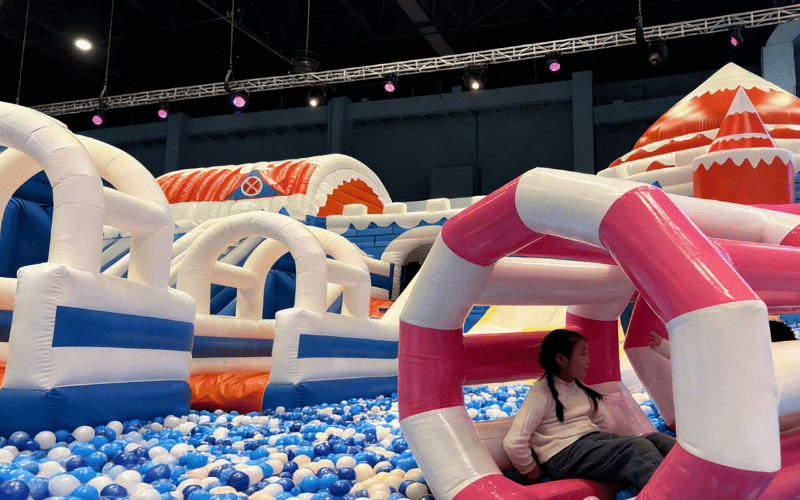
With families constantly searching for engaging activities for their children, the demand for safe, year-round entertainment has never been higher. Indoor playgrounds offer a perfect solution, providing a secure and stimulating environment where kids can play, explore, and socialize regardless of the weather outside. This makes them a popular attraction for communities and a promising venture for entrepreneurs.
Whether you’re a community leader looking to enhance local amenities or an investor aiming to start a new family entertainment business, creating an indoor playground is a significant undertaking. Investing in a high-quality play space is a great approach to meet this growing demand. A successful project requires careful budgeting and planning to create a fun, safe, and profitable facility that delights children for years to come.
| Indoor playground example | Average cost |
|---|---|
| Main Play Structure (per sq. ft.) | $15 – $40 |
| Soft Play Flooring (per sq. ft.) | $3 – $8 |
| Ball Pit (per unit, 10×10 ft) | $1,500 – $3,500 |
| Climbing Wall (per sq. ft.) | $30 – $80 |
| Toddler Area (per sq. ft.) | $10 – $25 |
| Interactive Projection Game (per unit) | $3,000 – $6,000 |
| Theming & Decoration (per sq. ft.) | $5 – $20 |
Last updated: January 2026
Our costs are ballpark averages – get a local professional to quote now
How Much Does an Indoor Playground Cost?
If you’re looking for indoor playground costs, you’ve certainly landed in the right place. Here’s our guide to the average costs of building an indoor playground, so you can plan and budget for your dream play space. The total investment can vary widely based on several key factors, including the size of the facility, the complexity of the design, the quality of materials, and your geographic location. Labor, permits, and theming also play a significant role in the final price tag.
As a general guideline, a small, basic indoor playground might cost between $5,000 and $20,000. A medium-sized playground with more diverse equipment and some light theming could range from $20,000 to $75,000. For a large, custom-designed commercial playground featuring elaborate themes, multi-level structures, and interactive elements, costs can easily exceed $100,000 and climb much higher depending on the project’s ambition.
These figures provide a ballpark estimate, but for an accurate budget, it is essential to consult with professional playground suppliers and contractors. They can provide detailed quotes based on your specific vision, venue constraints, and local safety regulations. A thorough consultation will help you understand all associated expenses and make informed decisions to bring your project to life without unexpected financial surprises.
Customizing Your Indoor Playground
Just because a space is indoors doesn’t mean it can’t be a world of adventure. There are countless ways that playground designers can work with an empty building to create an interesting, functional, and inviting environment for children. From multi-level play structures and interactive games to elaborate themes and essential safety features, you’ll be amazed at how a simple space can be transformed into a vibrant play paradise.
Play Structures and Equipment
The core of any indoor playground is its play structures. These are often the biggest line items in the budget. A multi-level structure with a variety of activities is key to attracting and retaining visitors. The cost depends on the size, complexity, and materials. Simple slides, tunnels, and climbing nets are more affordable, while custom-molded slides, intricate obstacle courses, and electronic interactive game panels will significantly increase the price. For example, a standard spiral slide might cost a few thousand dollars, whereas a large, themed slide could be five times that amount. Ball pits, trampolines, and dedicated toddler areas also add to the overall cost, with each component priced based on its size and features. It’s important to balance exciting features with your budget to create a compelling and cost-effective play experience.
Flooring Options
Safe and durable flooring is non-negotiable for an indoor playground. It not only contributes to the aesthetic but is also a critical safety component. There are several options available, each with different price points and benefits. Poured-in-place rubber flooring is a popular, seamless choice that offers excellent impact absorption, but it is also one of the more expensive options, often costing $15 to $25 per square foot installed. Interlocking foam tiles are a more budget-friendly option, priced at around $4 to $8 per square foot, and are easy to install or replace. Commercial-grade carpet tiles offer another solution, providing some cushioning and good aesthetics, but they may not offer the same level of fall protection as rubber or foam without a proper underlayment. The choice depends on your budget, target age group, and the required fall-height safety ratings for the equipment listed above.
Themed Designs
A unique theme can set your playground apart and create a memorable experience that encourages repeat visits. The cost of theming can range from minimal to substantial. A simple color scheme with wall decals might add only a few thousand dollars to the project. However, elaborate themes such as a jungle, castle, outer space, or an underwater world require custom-fabricated elements, murals, special lighting, and sound effects, which can add tens of thousands of dollars to the budget. For example, creating a custom-sculpted tree or a pirate ship facade as a centerpiece is a significant investment. While a strong theme can greatly enhance marketability and justify higher admission fees, it’s crucial to weigh the additional cost against the potential return on investment.
Safety Features
Ensuring children’s safety is the top priority, and the associated costs should be factored into your budget from the start. This goes beyond just soft flooring. All play structures must be surrounded by adequate safety netting, which is priced by the linear foot. Posts and hard surfaces must be covered with high-quality, impact-absorbing padding. Strategic placement of barriers and guardrails is essential to prevent falls from elevated platforms. These features must comply with industry standards (like ASTM in the US). While these elements add to the overall cost, they are essential for minimizing risks, securing insurance, and building trust with parents. Cutting corners on safety is not an option and can lead to serious consequences.
How to Create a Low-Maintenance Indoor Playground
Creating a low-maintenance indoor playground will instantly make your facility much easier to manage and more profitable in the long run. Reducing daily upkeep and long-term repair costs ensures that your staff can focus on customer experience rather than constant cleaning and fixing. This doesn’t mean your playground needs to look bland and boring – far from it! By making smart choices in materials, design, and maintenance routines, you can build a vibrant and durable play space.
Durable Materials
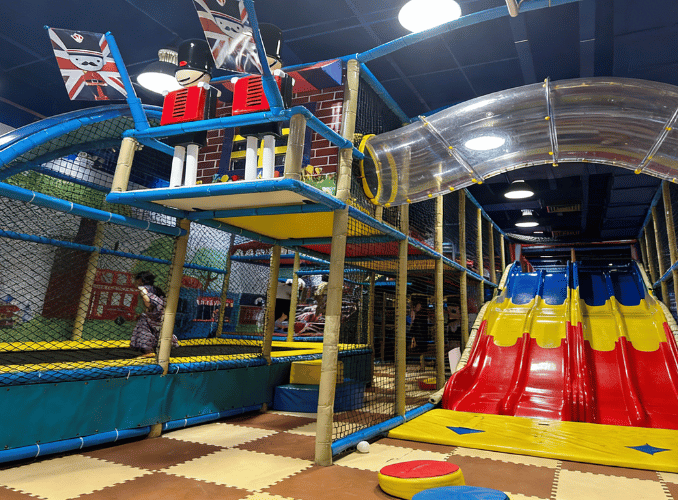
Choosing the right materials from the outset is crucial for minimizing maintenance. Opt for high-quality, commercial-grade plastics, galvanized steel, and vinyl-coated padding that are designed to withstand heavy use. These materials are not only more resistant to wear and tear but are also easier to clean and sanitize. For example, using rotationally molded plastics for slides and tunnels ensures a seamless, crack-resistant surface that wipes down quickly. Similarly, choosing high-density foam padding with durable vinyl covers will prevent rips and make cleaning spills simple. While these premium materials may have a higher initial cost, they save significant money over time by reducing the need for frequent repairs and replacements, ensuring your playground looks great for years.
Modular Designs
A modular design is a strategic way to create a low-maintenance playground. Modular systems consist of interchangeable components that can be easily replaced or reconfigured. If a specific element, like a climbing panel or a tunnel, becomes damaged, you can simply swap out that single piece instead of having to repair or replace a large, integrated structure. This flexibility not only simplifies repairs but also allows you to update or expand your playground over time without a complete overhaul. You can introduce new play features to keep the experience fresh for repeat visitors. This approach future-proofs your investment, making it easier and more cost-effective to manage maintenance and upgrades as your business grows.
Regular Maintenance Tips
Proactive maintenance is key to longevity and safety. Implement daily, weekly, and monthly cleaning and inspection schedules. Daily tasks should include sanitizing high-touch surfaces, cleaning restrooms, and inspecting for any immediate hazards. Weekly, conduct a more thorough cleaning of the entire play structure, including ball pits, and check all hardware to ensure bolts and connectors are tight. A monthly deep inspection should look for signs of wear on netting, padding, and structural components. Keeping a detailed log of inspections and repairs helps track the condition of your equipment and ensures you are in compliance with safety standards. This disciplined approach prevents small issues from becoming costly problems.
Additional Costs to Consider
When budgeting for your indoor playground, it’s crucial to account for expenses that go beyond the play equipment itself. These additional costs can significantly impact your total investment. For instance, you will likely need to secure building permits from your local municipality before construction can begin. There are also costs for business licenses and liability insurance, which are essential for protecting your business from accidents. Professional inspections during and after installation are often required to verify that the playground complies with all safety codes.
Furthermore, don’t overlook the logistics of getting the equipment to your location. Delivery and shipping fees, especially for large, custom pieces, can be substantial. The installation process itself is another major cost. While some components may be DIY-friendly, large structures require a team of certified installers to ensure they are assembled safely and correctly. Hiring a professional crew is an investment in safety and longevity.
Beyond the initial build, there are several other potential costs to factor in:
- Lighting and HVAC: Your building may require upgraded lighting to create a bright, welcoming atmosphere or adjustments to the heating, ventilation, and air conditioning system to meet capacity.
- Restrooms and Party Rooms: Building or renovating restrooms to be family-friendly and creating dedicated party rooms are common additional expenses.
- Point-of-Sale (POS) System: A system to manage admissions, concessions, and party bookings is essential.
- Initial Inventory: This includes any food and beverage for a snack bar, merchandise, and cleaning supplies.
- Signage and Marketing: Budget for exterior and interior signage, as well as an initial marketing campaign to announce your opening.
FAQs
Do I need permits to build an indoor playground?
In general, most indoor playground installations don’t require permits, including for setting up play equipment, soft play areas, or modular structures. That said, there are some occasions when you will need to apply for permits, such as:
Structural modifications – If your indoor playground involves structural changes to the building, such as removing walls, adding new rooms, or altering load-bearing structures, you will likely need a building permit. Some examples include:
- Adding mezzanine levels or elevated play areas
- Installing large climbing walls or slides that require anchoring to the building
- Making changes to fire exits or emergency access routes
Electrical and plumbing work – Permits are often required if your playground includes electrical installations (e.g., lighting, interactive play equipment) or plumbing work (e.g., water play areas, restrooms). Ensure all work complies with local building codes.
Commercial use – If the indoor playground is for commercial purposes, such as a business or daycare, additional permits may be required. These could include:
- Zoning permits to ensure the location is approved for commercial use
- Health and safety inspections to meet local regulations
Fire safety compliance – For larger indoor playgrounds, especially those in commercial spaces, fire safety regulations may apply. This could include installing fire alarms, sprinklers, or ensuring proper fire escape routes.
If in doubt, consult your local building authority before starting any construction or installation work to confirm whether permits are required.
What are the best materials for indoor playground flooring?
The best flooring material depends on your budget and safety needs. Poured-in-place rubber is considered the gold standard for safety and durability due to its seamless surface and excellent impact absorption, but it is the most expensive. Rubber tiles offer similar safety benefits and are easier to install. For a more budget-conscious option, interlocking foam tiles provide good cushioning and are simple to replace if damaged. The key is to choose a surface with a fall-height rating that matches or exceeds the height of your play equipment.
How can I save money on my indoor playground project?
There are several ways to save money without compromising safety. Start by choosing a pre-designed playground model instead of a fully custom one, as this can significantly reduce design and fabrication costs. Buying from a reputable manufacturer during off-season sales can also yield discounts. Consider a phased approach, starting with a core set of attractions and adding more features later as your business grows. Finally, obtaining multiple quotes from different suppliers is essential to ensure you are getting a competitive price for your equipment and installation.
Conclusion
Investing in an indoor playground is a fantastic way to provide your community with a valuable resource and build a successful business. From the joy on a child’s face as they go down a slide to the peace of mind parents feel in a safe, clean environment, the benefits are clear. A well-planned playground can become a beloved local destination for years of fun, laughter, and active play.
The journey from an idea to an open-for-business playground involves careful planning, detailed budgeting, and smart decision-making. By understanding all the associated costs, from equipment and theming to safety features and maintenance, you can create a space that is not only magical for kids but also financially sustainable. Now is the time to take the next step. Consult with industry professionals, finalize your budget, and start building the playground of your dreams.