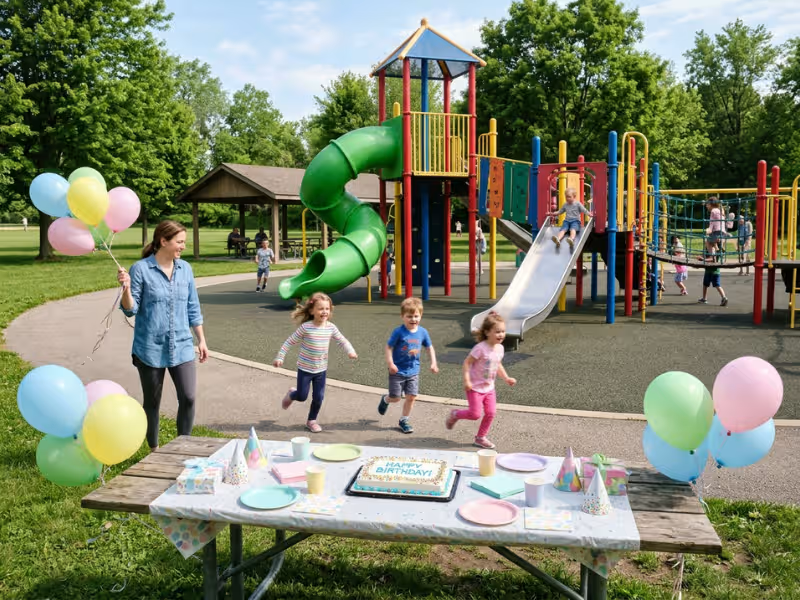
The cake sits on the picnic table. Guests arrive, and within two minutes, every kid scatters. Some race to the slide. Others vanish behind the swings. You stand there holding balloons, wondering how to pull the group back together.
Playground parties are easy to set up. They are also easy to lose control of.
I help parents plan parties that run smoothly. The secret isn’t more games. It’s the right flow, the right age match, and steady pacing.
This guide shows you how to pick activities, put them in order, and avoid the chaos most parties hit.
Why Playground Parties Work So Well
When parents ask me where to host a birthday for young kids, I often point them to a good local playground. The space does half the work for you.
The entertainment comes built in. Slides, climbers, swings, and open grass keep kids busy from the moment they arrive. That only works well when the park has a good mix of outdoor playground equipment, with enough variety to spread kids out instead of pulling everyone into one crowded spot. You don’t need to rent a bounce house or hire a party host to fill the first hour.
Your budget stretches further. Many indoor play venues charge $20 to $35 per child, plus a room fee. A park pavilion often costs under $100 to reserve, and some parks charge nothing at all. Put that savings toward a better cake or nicer favors.
Cleanup takes minutes, not hours. Frosting on the grass won’t stain anything. Crumbs won’t end up in your carpet. Bring a few trash bags, wipe down the table, and you’re done.
Kids already know how to use the space. Most children have climbed a slide or pumped a swing a hundred times. Shy guests warm up faster in a familiar setting, and you spend less time explaining where to go.
Each of these strengths has a flip side, though. Open space lets kids scatter. Familiar equipment pulls them away from your games. With no walls and no venue staff, nobody holds the group together except you.
That’s why a smooth playground party doesn’t start with a list of games. It starts with a plan built around flow.
Plan the Party Around Flow, Not Just Activities
Most party trouble doesn’t come from bad games. It comes from bad timing. A game starts while half the guests are still parking. Cake shows up after the kids are already tired and cranky.
Before you pick a single activity, decide three things: when the party happens, what order things go in, and where each part takes place. Get those right, and the games almost run themselves.
Pick the Right Time and Keep It Short
Morning usually wins. A 10 a.m. start gives you kids with fresh energy, cooler equipment, and a quieter park. By early afternoon, slides heat up in the sun, crowds grow, and toddlers start running into nap time.
If you must host later, aim for after 3:30 p.m. on cooler days. Avoid the 1 to 3 p.m. window, especially in summer.
Length matters just as much. I keep most playground parties to:
- 90 minutes for ages 2 to 5
- Up to 2 hours for ages 6 and up
Past that point, energy crashes and kids start drifting off on their own. Print a clear end time on the invitation. Parents will thank you, and pickup will go much smoother.
Build a Simple Party Sequence
A good sequence follows the kids’ energy. It starts loose, peaks early, and winds down before cake. Here’s the 90-minute plan I use most often:
- 0:00–0:20 | Arrival and free play. Guests trickle in. Let them hit the slides and swings. Don’t start a group game until most kids have arrived.
- 0:20–0:35 | One active group game. Burn off energy while the group is fresh and together.
- 0:35–0:50 | One easier activity. Pick something calmer, like bubbles or chalk, to bring heart rates down.
- 0:50–1:10 | Cake and snacks. Kids eat better once they’ve run and then settled.
- 1:10–1:30 | Final free play and favors. Hand out favors at the very end. If you hand them out earlier, kids play with the favors instead of each other.
Notice the plan includes just one game per slot. Keep a backup game in your bag, but don’t add more. Too many transitions make kids restless.
Before each switch, give a two-minute warning. A bell, a whistle, or a simple “Bubbles in two minutes!” pulls kids back faster than shouting their names across the park.
Let the Park Layout Shape the Plan
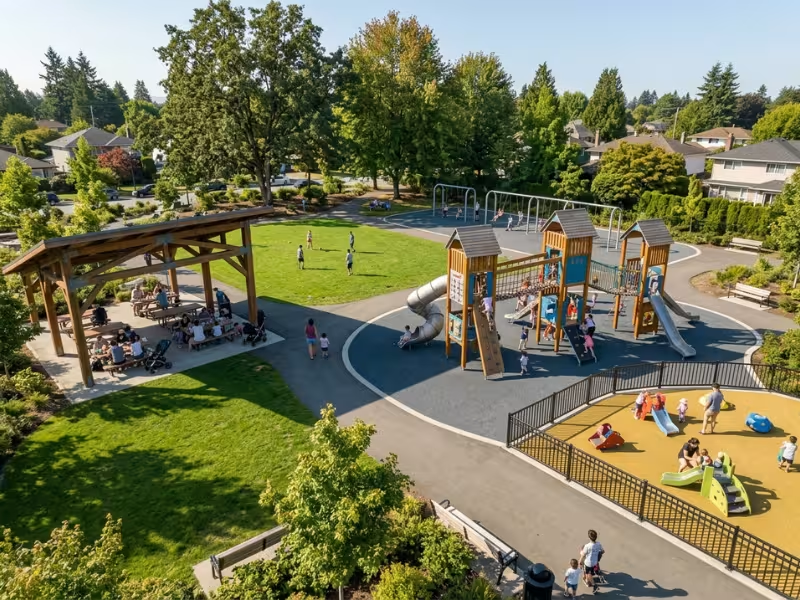
Every playground has its own quirks. Visit about a week before the party, at the same time of day, and walk the space with this checklist:
- Open field: Running games need flat grass away from the play structure. Pick a spot where a fast kid can’t sprint into a swing path.
- Climbing structure: Treat it as your free-play anchor, not a game zone. Other families will use it too.
- Swings: Swings pull kids out of games like a magnet. Set up your activities where the swings sit out of direct view.
- Pavilion or picnic area: Make this your home base for cake, gifts, and bags. Reserve it early if your park allows bookings.
- Restroom distance: If the walk takes more than two minutes, assign one adult to handle restroom trips so the party doesn’t stall.
- Shade: Note where the shadows fall at your party time. Put the cake, drinks, and youngest guests in the shade.
That layout matters more than many parents expect. Spaces built with custom playground equipment often handle mixed ages and party traffic better because the play zones feel more intentional from the start.
Sketch a rough map on your phone with three zones: home base, game area, and free play. Share it with your helper adults. When everyone knows where the party “lives,” you spend the day enjoying it instead of chasing it.
The Best Playground Birthday Party Activities
You don’t need 15 games. You need three or four that fit the moment.
I sort my favorite activities by when they work best. A game that thrills kids at minute 20 can flop five minutes before cake. For each one, you’ll see who it suits, how much prep it takes, and where it usually goes wrong.
Best Activities for the First 20 Minutes
Guests arrive in waves. So your early activities should let kids jump in anytime. Skip anything that needs the full group.
Playground Scavenger Hunt
Hand each child a card with 8 to 10 things to find, such as a red slide, a pinecone, a bench, or something round. Give pre-readers picture cards instead of words.
- Ages: 4–9
- Group size: Any
- Setup: Low
- Best location: Around the play structure and nearby grass
- What goes wrong: Fast kids finish in four minutes and get bored. Add two bonus items, and give every finisher a sticker so nobody “loses.”
Red Light, Green Light
This game needs zero gear, and late arrivals can join mid-round.
- Ages: 3–7
- Group size: 5–20 kids
- Setup: None
- Best location: Flat, open grass
- What goes wrong: Kids pile into each other at the finish line, and the same child keeps winning. Mark a wide finish line with shoes or cones. Let each winner become the next caller.
Simple Relay
Split kids into two teams and race to a cone and back. Mix in hopping, crab walks, or bear crawls. Keep relays off the slides, since other families need them too.
- Ages: 5–10
- Group size: 8–16 kids
- Setup: Low
- Best location: Flat grass away from the structure
- What goes wrong: Uneven teams lead to tears. Run three short rounds and reshuffle the teams each time.
Best Activities Once the Group Settles
Once most guests have arrived, you can run games with real rules. This is your peak-energy window, so use it.
Freeze Tag With a Twist
Plain tag gets old fast. Try shadow tag, where kids tag a friend’s shadow, which works best on sunny mornings. You can also play toilet tag, where a frozen player holds out one arm until a friend “flushes” them free.
- Ages: 5–10
- Group size: 8–20 kids
- Setup: None
- Best location: Open grass with clear boundaries
- What goes wrong: Tags turn into shoves, and runners drift toward paths or parking lots. Set cone boundaries and make one rule clear: two-finger tags only.
Treasure Hunt With a Map
Draw a simple map with three or four stops. The last stop leads to the goodie bags or a small prize box.
- Ages: 5–10
- Group size: 6–15 kids
- Setup: Medium (about 30 minutes of prep)
- Best location: The whole playground edge
- What goes wrong: Strangers find the treasure first, or wind carries off a clue. Hide everything that morning. Tape clues down, and keep an adult near the final stop.
Capture the Flag
This game shines with older kids who want real competition. You’ll need two bandanas and a few cones.
- Ages: 8–12
- Group size: 10–20 kids
- Setup: Low
- Best location: A large field at least 40 yards long
- What goes wrong: Kids argue over tags, and kids under 7 get lost in the rules. Name one adult as referee. If your field feels cramped, skip it.
Simon Says, Playground Edition
Turn the equipment into commands: “Simon says touch something blue,” or “Simon says sit on the bottom step.”
- Ages: 3–7
- Group size: 5–15 kids
- Setup: None
- Best location: Beside a low structure with a clear view
- What goes wrong: Kids crowd one ladder at the same time. Mix in ground commands like hopping or spinning. Instead of eliminating young players, make them your helpers.
Best Activities Before Cake or Wind-Down Time
After the big games, kids need to slow down before they eat. These calmer activities bring heart rates down and keep the group close to home base.
Bubble Station
Set out wands and a bubble machine, then hold a contest for the biggest bubble.
- Ages: 2–8
- Group size: Any
- Setup: Low
- Best location: Shaded area downwind of the cake table
- What goes wrong: Tubs spill and benches get slippery. Use spill-proof tubs, and bring one wand per child plus a few extras.
Sidewalk Chalk Mural
Outline a giant birthday cake on the pavement. Each guest adds a candle, sprinkle, or drawing. It makes a great photo backdrop.
- Ages: 3–10
- Group size: 4–15 kids
- Setup: Low
- Best location: A paved spot near home base, away from walkways
- What goes wrong: Kids draw across shared paths. Check park rules first, and mark your drawing zone with chalk.
Craft Table
Paper crowns and sticker scenes work for younger kids. Friendship bracelets suit ages 7 and up.
- Ages: 4–10
- Group size: Up to 10 at a time
- Setup: Medium
- Best location: A shaded picnic table
- What goes wrong: Wind grabs the paper, and glue gets everywhere. Pack a kit for each child in a zip bag, choose stickers over glue, and keep small beads away from toddlers.
Group Photo Scavenger Hunt
Give teams a photo list, like “everyone on the slide” or “make the letter B with your bodies.” Each team uses one adult’s phone.
- Ages: 7–12
- Group size: Teams of 3–4
- Setup: Low
- Best location: The whole playground, within sight of home base
- What goes wrong: Teams wander too far. Set a 10-minute limit, then share the funniest photos over cake.
Pick one activity from each group and pack one backup. That gives you a full party without turning it into a schedule nobody can follow.
Match the Activities to the Age Group
A game that delights a 3-year-old can bore a 9-year-old in minutes. Before you lock in your plan, check which group most of your guests fall into. If ages mix, plan around the youngest kids, and give older ones a helper role.
Ages 2 to 4: Keep It Short and Simple
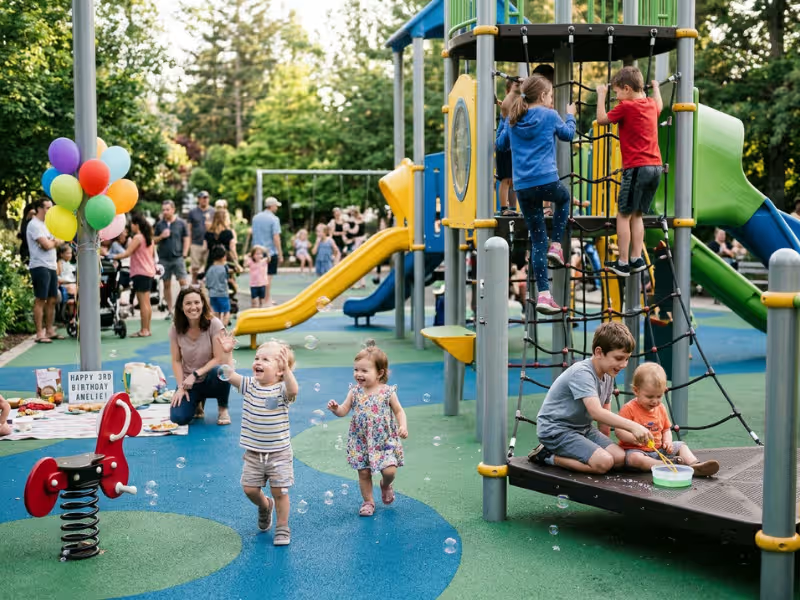
Toddlers and young preschoolers tend to play near each other rather than with each other. Rules with more than two steps fall apart fast.
- Keep each activity to 5 to 10 minutes.
- Use one rule at a time, like “Walk on green, stop on red.”
- Plan one adult for every three or four kids.
Bubbles, sidewalk chalk, and a mini scavenger hunt with four or five picture cards work best. Skip relays, team games, and anything with clear winners and losers. Expect a few kids to drift back to a parent’s lap. That’s normal at this age.
Ages 5 to 7: The Sweet Spot for Party Games
This group is the easiest to plan for. Kids can follow simple rules, wait their turn, and enjoy a little friendly competition.
Red Light, Green Light, Simon Says, freeze tag with a twist, and short relays all work well here. A map-based treasure hunt feels like a real adventure.
Keep the competition light. Run short rounds, reshuffle teams often, and give every child a sticker at the end. A 15-minute craft break between active games helps too, because many kids this age run out of energy all at once.
Ages 8 to 12: Give Them Challenge and Space
Older kids notice right away when a party feels “little kid.” Bubbles and Simon Says can earn an eye roll.
Choose games with strategy and teamwork instead:
- Capture the flag on a large field
- Clue hunts with riddles instead of picture cards
- Photo scavenger hunts in teams of three or four
Give them some independence. Set clear boundaries and a time limit, then step back. Let them pick team names or help referee. Kids this age stay engaged longer when they feel trusted.
What to Bring, Serve, and Keep Simple
Outdoor parties punish fussy food. Heat, wind, and sticky hands can wreck a fancy spread in minutes. So I keep everything grab-and-go.
Serve food kids can hold in one hand. Individually wrapped snacks, juice boxes, fruit cups, and cheese sticks work best. Skip anything with mayo, sliced fruit that browns, or dips that tip over. Keep drinks and cold items in a cooler with ice packs until snack time.
Treat the cake like the guest of honor. Choose a sheet cake or cupcakes over a tall layered cake. Set it flat on the car floor, not the seat, and run the AC on the drive. Once you arrive, keep it in the shade or the cooler until candle time.
You don’t need a proper serving setup. Cut a sheet cake into squares right in the box with a long knife, and slide each piece onto a plate. Cupcakes skip the cutting entirely.
Pack one party bag the night before. Check off these items:
- Tablecloth and clips, because wind loves a loose tablecloth
- Plates, napkins, a cake knife, and a lighter
- Extra candles
- At least three trash bags
- Wet wipes and hand sanitizer
- Sunscreen
- First aid kit with bandages and an ice pack
Keep favors cheap and playground-ready. Bubbles, sidewalk chalk, sticker sheets, mini bouncy balls, and kids’ sunglasses all cost under $5 per child. Kids can even use them before they leave. Skip candy bags on warm days. Chocolate melts, and lollipops pick up grass.
Pack two or three extra favors. A younger sibling almost always tags along.
Common Playground Party Problems and How to Handle Them
Even a well-planned party hits a few bumps. The same four problems show up at almost every playground party, and each one has a simple fix.
Kids Scatter Instead of Joining the Game
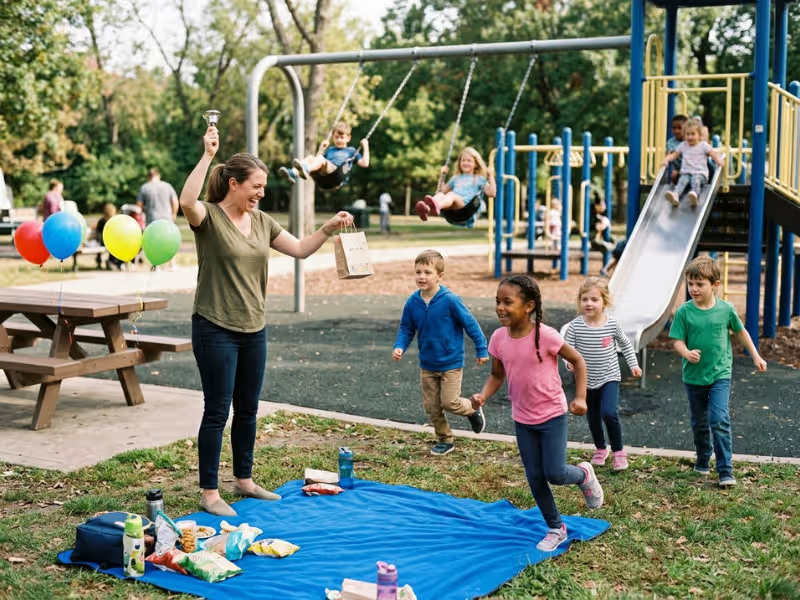
Shouting names across the park rarely works. Pick one gather point before guests arrive, like a bright blanket or the end of the picnic table. Show it to each child as they arrive.
When it’s game time, ring a bell and walk to that spot. Hold up something kids want to see, such as a prize bag, a stack of bandanas, or a giant bubble wand. Kids come to a visible prop much faster than they come to a voice.
Keep instructions under 30 seconds. Explain one rule and start playing. Kids pick up the rest as they go.
Too Many Kids Want the Same Equipment
Ten kids and one tire swing spell trouble. Set a simple rotation, like five pushes each or one turn per song. Name one adult as “swing captain” so you don’t referee every turn yourself.
For games, split the group into two teams and give each team its own station. If the structure still draws a crowd, move the game to the grass. Ground games like tag and relays give every child a turn at once.
The Playground Is Shared With Other Families
A public park belongs to everyone. Claim your home base, but leave the main structure open.
Mark your zone with a colored tablecloth, a few balloons tied to the table, or a small “Happy Birthday, Maya!” sign. Other families will steer around it, and your guests will know where to return.
Run group games on open grass, not on the slides. If a child from another family wants to join a bubble round, let them. A small kindness keeps the whole park friendly.
Weather or Energy Drops Mid-Party
Check the forecast the night before, and find the nearest pavilion or covered spot. If clouds roll in, move the cake and gift bags there first. Then move the kids.
Energy crashes look like whining, wandering, and clinging to parents. Don’t push another running game. Switch to something calm: bubbles, a chalk drawing, early snacks, or a quick group photo task.
Pack a small rescue bag with bubbles, chalk, and a printed photo list. Ten calm minutes often reset the whole group.
A Quick Planning Table for Busy Parents
This table puts the key planning choices in one place, so you can map out the party in minutes.
Find the age group that covers most of your guests. Then read across to see which activities fit, what to skip, how long to run the party, and how many adults to recruit.
If ages mix, follow the youngest group’s row for length and supervision. Older kids can handle a shorter party. Toddlers can’t handle a longer one.
|
Age Group |
Best Activity Types |
Avoid |
Ideal Party Length |
Supervision Level |
|---|---|---|---|---|
|
Ages 2–4 |
Bubbles, sidewalk chalk, mini picture scavenger hunts, simple one-rule games like Red Light, Green Light |
Relays, team games, multi-step rules, small craft beads, anything with clear winners and losers |
60–90 minutes |
High: 1 adult for every 3–4 kids, with parents staying close |
|
Ages 5–7 |
Simon Says, freeze tag with a twist, short relays, map-based treasure hunts, a 15-minute craft break |
Long elimination games, complex strategy games, back-to-back running games with no rest |
90 minutes to 2 hours |
Medium: 1 adult for every 5–6 kids, plus one game leader |
|
Ages 8–12 |
Capture the flag, riddle-based clue hunts, team photo scavenger hunts, friendly competitions |
Bubbles, Simon Says, and anything that feels “little kid” |
Up to 2 hours |
Lighter: 1 adult for every 8–10 kids, with set boundaries and a time limit |
Pick the row, choose one activity from each part of the party, and you have a plan that fits your crowd.
Common Parent Questions
Parents ask me these questions before almost every playground party. Here are short, straight answers.
How long should a playground birthday party last?
Plan 90 minutes for ages 2 to 5. Go up to 2 hours for ages 6 and up. Past that point, energy crashes and kids start wandering.
Print a clear end time on the invitation so pickup runs smoothly.
Do I need a permit or reservation?
It depends on your park. Most parks let small groups use open play areas without a permit. Pavilions and picnic shelters often need a reservation, and popular weekend slots fill weeks ahead.
Call your city parks department or check its website at least a month out. Ask about group size limits, decoration rules, and whether it allows bounce houses or music speakers.
How many adults should help supervise?
Match the ratio to the age group:
- Ages 2–4: 1 adult for every 3–4 kids
- Ages 5–7: 1 adult for every 5–6 kids
- Ages 8–12: 1 adult for every 8–10 kids
Give each helper one job, such as game leader, restroom runner, or cake table. A clear job keeps adults alert instead of chatting on the bench.
What is the best age for a playground birthday party?
Ages 4 to 8 hit the sweet spot. Kids this age love the equipment, follow simple game rules, and don’t need constant hand-holding.
Toddlers enjoy playground parties too, but plan for more adults and a shorter party. Many kids over 10 want more challenge than a standard playground offers.
What if it rains?
Pick a backup spot before you send invitations. A reserved pavilion, a library meeting room, or your own living room all work.
Add one line to the invitation: “If it rains, we’ll meet at [backup spot].” Make the call by 8 a.m. on party day, and text every family.
How much should I budget?
A simple playground party for 12 kids often runs $130 to $300. Here’s a typical breakdown:
- Pavilion reservation: $0–$100
- Cake or cupcakes: $30–$60
- Snacks and drinks: $40–$60
- Favors: $3–$5 per child
- Plates, tablecloth, and game supplies: $20–$30
Skipping the venue fee gives you the biggest savings. Spend a little of it on a better cake.
Keep the Plan Simple and Let the Playground Do the Rest
A great playground party doesn’t need a long list of games. It needs a clear flow, activities that fit your guests’ ages, and steady pacing from arrival to cake.
Kids remember the fun, not the game count. Start loose, burn energy early, slow down before cake, and end on time. That rhythm holds the group together better than any extra activity.
So start small. Pick three activities: one for arrivals, one for peak energy, and one to wind down. Pack one backup for when the mood shifts. Then call your parks department to confirm pavilion bookings, group limits, and decoration rules.
Do those three things this week, and the playground will handle the rest.