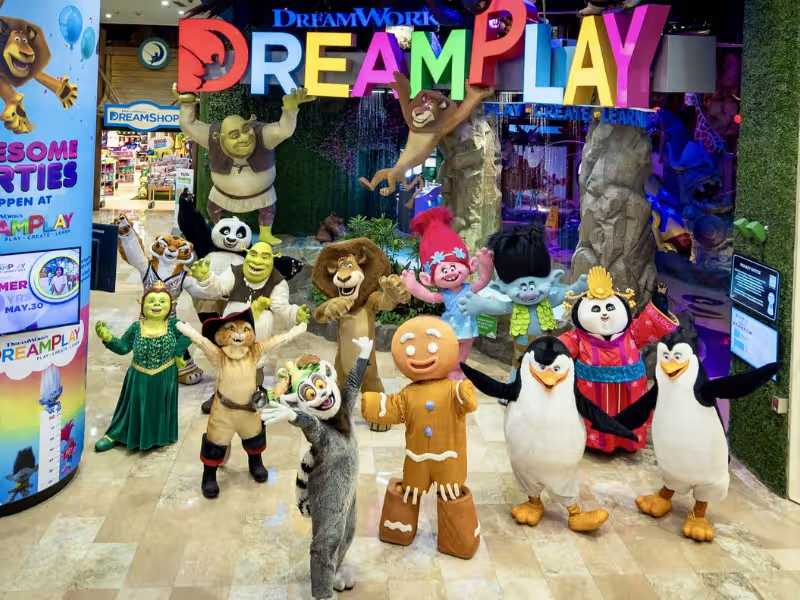
Manila is one of Southeast Asia’s most active markets for indoor family entertainment. Tropical weather, a dense mall culture, and a growing middle class with disposable income have created conditions where indoor playground businesses don’t just survive—they thrive. The venues scattered across Metro Manila’s shopping centers have collectively served millions of visits, refined their layouts through real customer feedback, and developed operational models that work.
For entrepreneurs, investors, and commercial project planners, that makes Manila’s indoor playground scene something worth studying seriously. Each venue on this list represents a set of deliberate decisions: what equipment to install, how to zone a space, how to price entry, how to attract repeat visitors, and how to differentiate in a crowded market. Some of those decisions paid off. Some reveal gaps that a smarter operator could fill.
This article breaks down ten of Manila’s most prominent indoor playground venues, with a business-owner perspective on each. It also identifies the shared traits that separate consistently successful venues from those that plateau, and closes with a practical framework for applying these lessons to your own project.
Quick Comparison: 10 Indoor Playgrounds in Manila
|
Name |
Location |
Best For |
Key Features |
Age Group |
Standout Factor |
|---|---|---|---|---|---|
|
Fun City |
Multiple SM malls |
Mixed-use family entertainment |
Arcade games, rides, ball pits |
All ages |
Revenue diversification across attraction types |
|
Kidzoona |
Multiple SM malls |
Imaginative, screen-free play |
Role-play zones, soft play structures |
Toddlers–young kids |
Japanese-inspired pretend play concept |
|
SuperPark Philippines |
BGC, Taguig |
High-capacity, multi-zone activity |
Trampolines, ninja course, mini golf |
All ages |
Large-scale format with zone variety |
|
DinoLand |
Various malls |
Themed immersive experience |
Dinosaur displays, themed slides, ball pits |
Young kids |
Full thematic commitment |
|
Fantasy World |
Various malls |
Storybook-style play |
Castle structures, slides, soft play |
Toddlers–young kids |
Coherent fairy-tale design language |
|
Jolly Land |
Various malls |
Accessible, repeat-visit play |
Ball pits, trampolines, basic climbing |
Toddlers–young kids |
Low-barrier pricing model |
|
Kevin’s Toys and Library |
Select malls |
Quiet, educational play |
Reading corners, building blocks, puzzles |
Toddlers–young kids |
Calmer, learning-focused niche |
|
Kid’s Box |
Various malls |
Compact, efficient play spaces |
Slides, ball pits, small climbing frames |
Toddlers–young kids |
Optimized use of limited floor space |
|
Active Fun |
Various malls |
Sport-style active play |
Trampolines, climbing walls, obstacle courses |
Young kids–tweens |
Targets an underserved older age bracket |
|
Cheeky Monkeys |
Select malls |
Brand-led, social-ready play |
Themed photo zones, soft play, ball pits |
Toddlers–young kids |
Strong visual branding and social media pull |
10 Indoor Playgrounds in Manila: Venue Breakdown and Business Lessons
1. Fun City
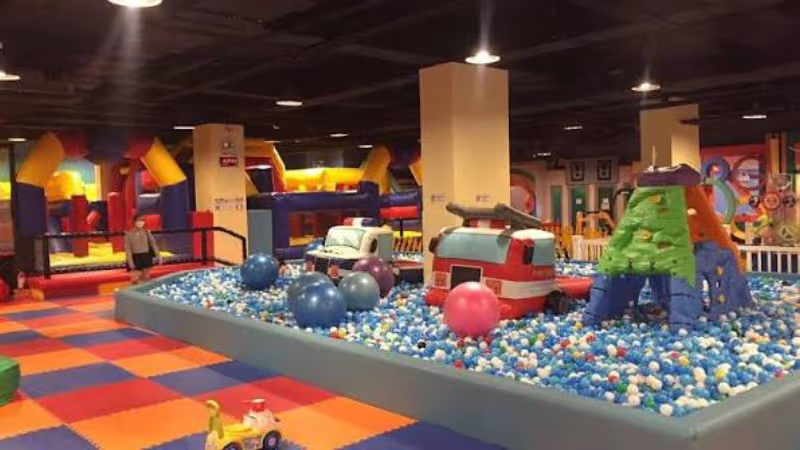
Fun City is one of the most widely distributed indoor play concepts in the Philippines, with branches inside SM malls across Metro Manila. Rather than centering around a single attraction type, it spreads engagement across arcade machines, mechanical rides, token-based games, and ball pits — a deliberate breadth that serves multiple demographics in the same visit.
Location: Multiple SM mall branches, Metro Manila.
Key equipment: Arcade machines, mechanical rides, ball pits, token-based game stations.
Target age group: All ages.
Business lesson: Venue concepts built around a single attraction type are vulnerable to shifts in consumer preference. Fun City’s multi-stream model — where arcade revenue, ride revenue, and play area entry fees operate independently — creates resilience. For operators planning a new venue, layering complementary revenue sources into the design from the start is a more defensible business model than betting on one breakout attraction.
2. Kidzoona
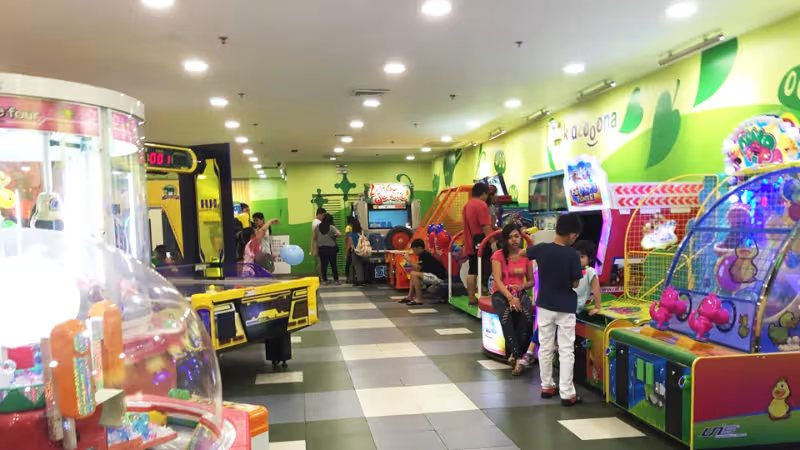
Originating from Japan, Kidzoona is built around the concept of role-play as a developmental tool. Children take on professional roles — chef, shop cashier, doctor — inside scaled-down environments, which turns play into something more structured and purposeful than typical physical play zones. The concept has strong repeat-visit appeal because children build on previous storylines and discover new scenarios each time.
Location: SM Megamall, SM North EDSA, and additional SM branches.
Key equipment: Role-play station sets (kitchen, supermarket, hospital themes), soft play structures, mini slides, sensory toy areas.
Target age group: Toddlers to young children.
Business lesson: Role-play zones generate long dwell times without requiring constant staff input, because children self-direct their play. For venues with limited staffing budgets, this is a meaningful operational advantage. It also drives repeat visits more reliably than purely physical attractions, since the imaginative element evolves with each session.
3. SuperPark Philippines
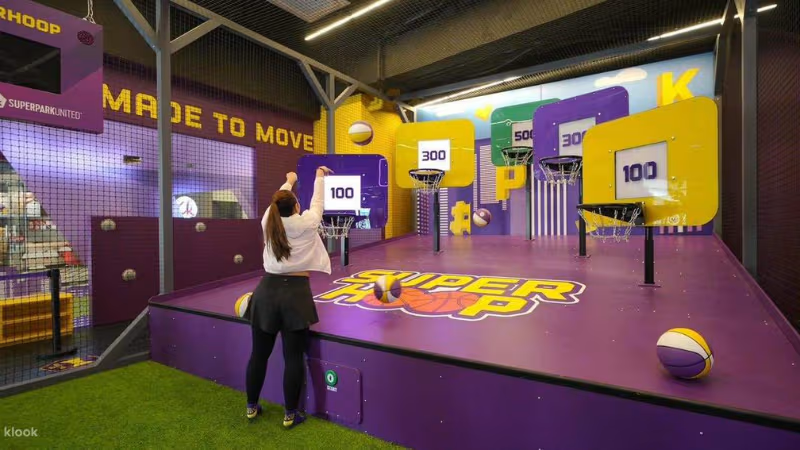
SuperPark operates on a fundamentally different scale than most Manila indoor playgrounds. Positioned in BGC, it functions more like a full indoor activity park than a mall play zone, with distinct areas covering trampolining, ninja warrior-style obstacle challenges, mini golf, and bumper cars. It serves an age range that many smaller venues either ignore or underserve: older children and teenagers who have outgrown toddler-centric soft play.
Location: Bonifacio Global City (BGC), Taguig.
Key equipment: Trampoline park, ninja obstacle course, climbing structures, mini golf, bumper cars.
Target age group: All ages, with particular appeal for tweens and teens.
Business lesson: The family entertainment market typically skews its design toward toddlers and young children. SuperPark shows that a venue intentionally built for an older demographic—with corresponding equipment, pricing, and a larger footprint—can command premium admission and capture a segment most competitors simply aren’t competing for.
4. DinoLand
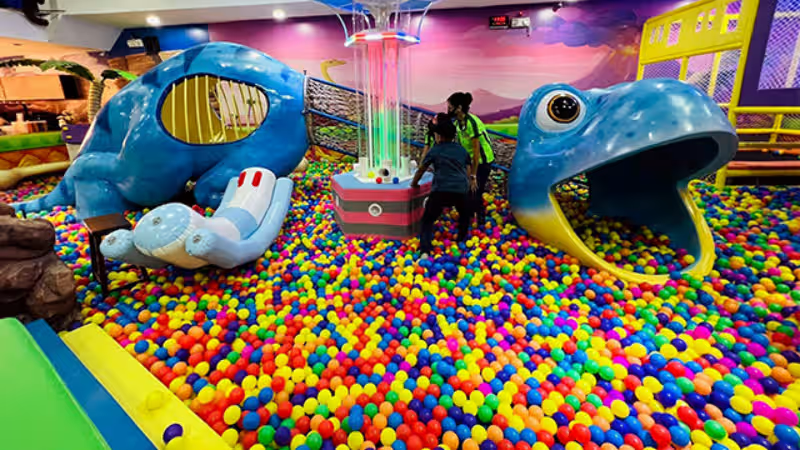
DinoLand’s most distinguishing feature is its commitment to a single concept. The dinosaur theme is not a surface-level branding choice; it runs through the physical structures, the decor, the signage, and the play equipment itself. For a young child already fascinated by prehistoric animals, walking into DinoLand feels genuinely different from a standard play area.
Location: SM City North EDSA, Quezon City (and select SM mall branches across Metro Manila).Key equipment: Dinosaur-themed slides and climbing structures, ball pits, soft play mounds, animatronic and static dinosaur displays.Target age group: Young children.
Business lesson: A deeply executed theme creates a stronger emotional memory than a layout defined purely by equipment type. That memory is what drives parents to bring children back and what prompts word-of-mouth recommendations. Half-committed theming — a logo and a color scheme without structural follow-through — rarely produces the same effect.
5. Fantasy World
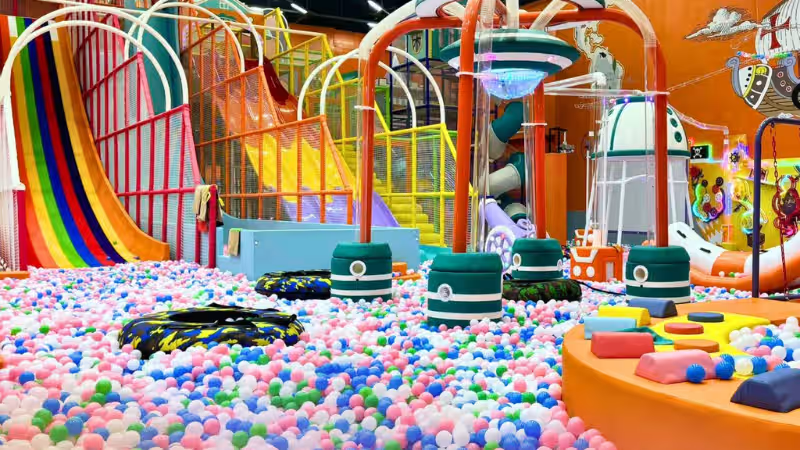
Fantasy World applies a fairy-tale aesthetic through its physical architecture, using castle-shaped structures, turrets, and pastel palettes to create a recognizable visual world. The design targets the imaginative developmental stage that many toddlers and younger children occupy, where the boundary between story and reality is productively blurred.
Location: Ayala Malls locations including One Ayala (Makati) and Market! Market! (Taguig), among other Metro Manila branches.Key equipment: Castle-shaped play structures, multi-level slides, soft play areas, dress-up zones.Target age group: Toddlers to young children.
Business lesson: Consistent design language does more than create a pleasant visual environment. It helps children intuitively navigate the space — the castle entrance signals the boundary of the play zone; the turret indicates where climbing begins — reducing the cognitive load on both children and accompanying adults, and making the venue feel larger than its square footage.
6. Jolly Land
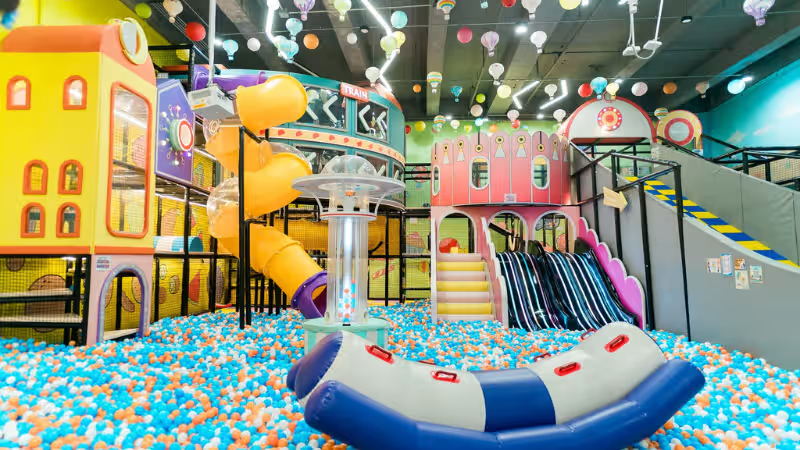
Jolly Land occupies a deliberate market position: accessible, uncomplicated, and affordable enough for regular visits rather than special-occasion trips. The equipment mix is functional rather than spectacular, and the pricing reflects that. What it sacrifices in novelty, it makes up for in frequency—families who might visit a premium venue once a month may visit Jolly Land every weekend.
Location: Various Metro Manila malls.
Key equipment: Ball pits, basic trampolines, small climbing structures, simple rides.
Target age group: Toddlers to young children.
Business lesson: Not every successful indoor playground competes on premium equipment or immersive theming. Jolly Land shows that a clearly defined value positioning—affordable, reliable, and easy to access—can build a loyal customer base precisely because it doesn’t overreach. Visit frequency often matters more to long-term revenue than peak admission price.
7. Kevin’s Toys and Library
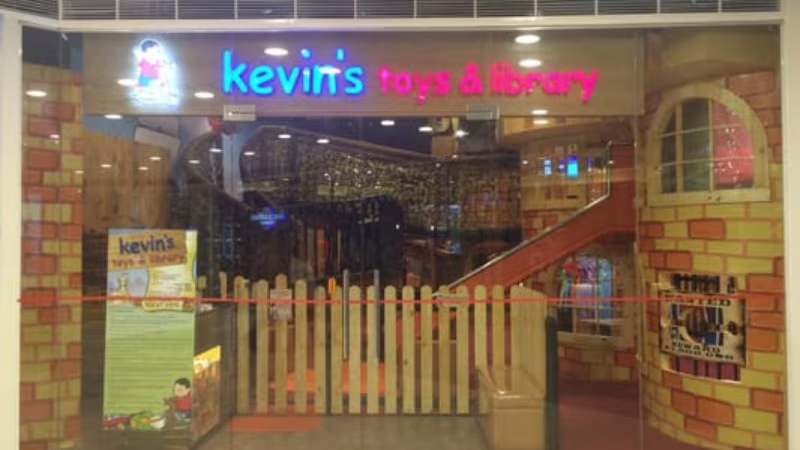
Kevin’s Toys and Library is a deliberate counterpoint to the high-energy play venues that dominate most mall play zones. It integrates bookshelves, reading corners, puzzles, and building block stations into a quieter environment for parents who want their children’s playtime to have an educational dimension.
Location: Select Metro Manila malls.
Key equipment: Children’s book collections, reading nooks, building blocks, puzzle stations, educational toy sets.
Target age group: Toddlers to young children.
Business lesson: A quieter niche is not a smaller opportunity — it’s a different one. Kevin’s serves a segment of parents underserved by venues oriented exclusively around noise and physical activity. Venues that carve out a clear, calm identity often face less direct competition than those competing on the same high-energy format as everyone else in the same mall.
8. Kid’s Box
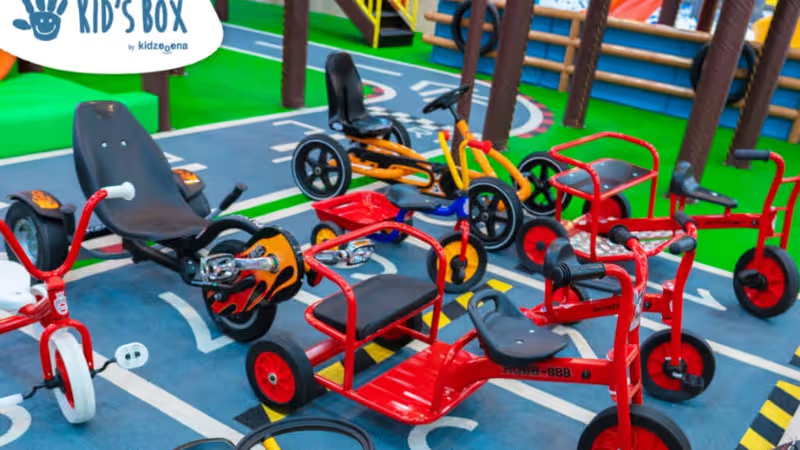
Kid’s Box operates in the kind of compact mall footprint that many operators would consider too small to develop into a meaningful play venue. Instead, it turns that constraint into an asset by choosing modular, vertically-oriented equipment that maximizes the sense of activity per square meter.
Location: Various Metro Manila malls.
Key equipment: Compact slide systems, ball pits, small climbing frames.
Target age group: Toddlers to young children.
Business lesson: Equipment selection directly affects space efficiency. For operators entering the market with tighter budgets or smaller available floor areas, modular play structures that stack vertically can create a richer play environment than sprawling horizontal layouts. Kid’s Box is a practical example of how constraints, when designed around intelligently, can become a commercial advantage.
9. Active Fun
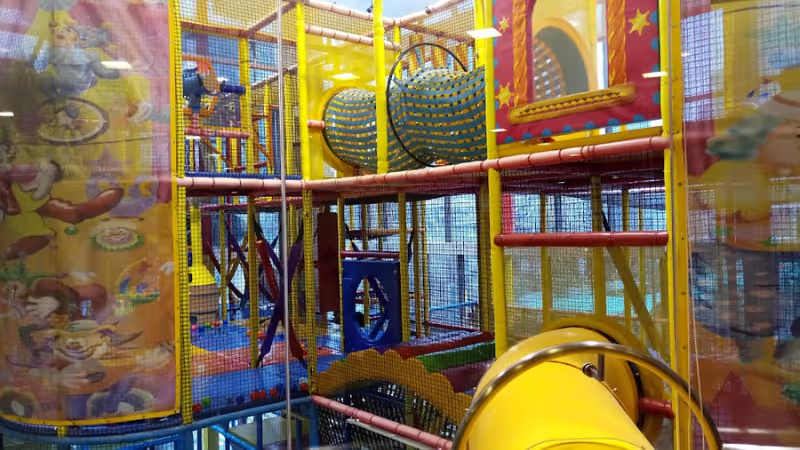
Active Fun is one of the few Manila indoor playground concepts designed primarily for children who have outgrown soft play. Its equipment — trampolines, climbing walls, obstacle courses — requires coordination, strength, and spatial awareness that younger children typically lack. That focus positions it in a competitive gap that most other venues on this list don’t address.
Location: SM Megamall (Mandaluyong) and BGC-area mall branches, Metro Manila.Key equipment: Trampoline zones, rock-climbing walls, multi-stage obstacle courses.Target age group: Young children through tweens.
Business lesson: The indoor playground market in most cities is heavily weighted toward toddler and early-childhood equipment. Active Fun’s model shows that a venue explicitly targeting the 7–12 age range can attract families with multiple children and command repeat visits from a demographic that would otherwise age out of play venues entirely.
10. Cheeky Monkeys
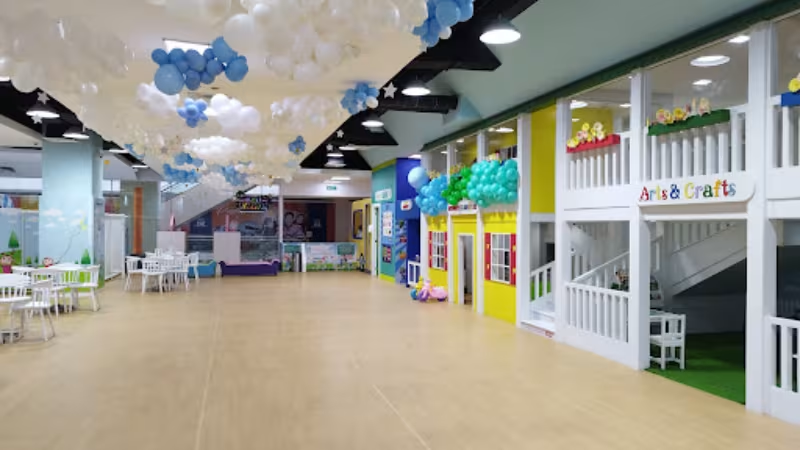
Cheeky Monkeys has built its market presence as much through visual branding as through its play equipment. Colorful, deliberately photogenic backdrops — designed with the understanding that parents will photograph their children and share those photos — have made it a recurring feature in Manila parenting content online. The play equipment supports the experience; the environment creates the demand.
Location: Metlive Mall (Pasay City) and Ayala Malls Manila Bay (Parañaque), Metro Manila.Key equipment: Themed photo zones, soft play structures, ball pits.Target age group: Toddlers to young children.
Business lesson: Word-of-mouth marketing in the family entertainment sector increasingly happens through social media rather than personal recommendation. A venue designed with shareable visual moments built into the physical space generates organic marketing at scale, at no incremental cost per post. This measurable return on investment is worth factoring into the design brief from the start.
What Manila’s Best Indoor Playgrounds Have in Common
Across these ten venues, a clear pattern separates those with consistent repeat-visit traffic from those that attract a curious first visit and lose the follow-through.
Full thematic commitment. Venues like DinoLand and Fantasy World don’t apply a theme as a cosmetic layer — they build it into the structures, equipment shapes, and spatial flow. A fully realized theme creates a memorable experience. A partial one registers as generic.
Deliberate age zoning. Clear physical separation between toddler areas and zones built for older, more physically capable children isn’t a luxury — it’s a safety requirement and a comfort factor for parents. Every high-performing venue on this list has handled this to some degree, even if the approach varies.
Balanced play modes. The strongest venues mix sensory, imaginative, and high-energy play rather than concentrating exclusively on one mode. This broadens the venue’s relevance across a child’s developmental stages and across energy levels on any given visit.
Parent experience as a design priority. Comfortable seating with unobstructed sightlines, accessible amenities, and a layout that reduces parental anxiety during play directly affects visit length. Longer visits mean higher average spend. Venues that treat parents as passive bystanders rather than active participants consistently underperform on this metric.
Mall co-location as a traffic strategy. The near-universal choice to operate inside shopping malls isn’t coincidental. Mall placement provides built-in footfall, reduces standalone marketing costs, and lets families combine a play visit with other errands—lowering the activation energy required for a spontaneous visit.
Visible safety standards. Padded surfaces, certified equipment, clear signage, and appropriately trained staff are consistently present in the venues that build long-term customer trust. Parents watch for safety cues, and a venue’s visible commitment to standards affects both the initial choice to visit and the decision to return.
Designed-in shareability. Beyond Cheeky Monkeys, most successful venues have at least one photogenic element—a themed backdrop, a signature color palette, an interesting structural shape—that parents capture and share online. This is not accidental.
Equipment Planning Lessons for Commercial Buyers
Each attraction category carries distinct implications for budget, safety compliance, spatial requirements, and audience appeal. The choices these venues have made reveal practical guidance for operators sourcing equipment for a new build.
Ball pits offer a high engagement-to-cost ratio and broad age appeal. They work well as an anchor attraction for smaller venues or as a supporting element in larger ones.
Soft play structures are essential for toddler and early-childhood zones and require particular attention to material certification — ASTM and EN standards govern the composition, finish, and structural integrity of equipment that young children contact directly.
Trampolines significantly increase average dwell time by providing a high-energy outlet, but they require safety netting, padded edge systems, and dedicated supervision protocols. Their structural and spatial requirements are more substantial than most other attraction types.
Climbing walls serve older children and tweens effectively, with height-graded difficulty levels extending their usability across a wider range of ability. Fall padding specifications and anchor certification are non-negotiable.
Ninja courses have emerged as a strong differentiator in markets where trampolining has become standard. Their novelty supports premium pricing and attracts an age group — older children and teens — that many venues do not cater for.
Role-play zones generate some of the highest repeat-visit rates of any attraction type because children’s engagement evolves with each visit. Setup and maintenance costs are lower than structural equipment, and their footprint can be compressed into tighter spaces.
Toddler-specific areas need to be physically separated from high-impact zones, with surface materials, equipment scale, and sightlines all calibrated to the developmental needs of children under three.
The venues on this list that perform consistently well have invested across multiple categories rather than concentrating budget in a single attraction. Variety is not just a customer preference — it’s a risk management strategy.
A Practical Framework for Planning Your Own Indoor Playground
The lessons from Manila’s market apply far beyond the Philippines. Whether you’re developing a venue in Southeast Asia, the Middle East, Europe, or North America, the fundamentals remain the same.
Start with your audience, not your equipment list. The clearest predictor of a focused, well-designed venue is a clearly defined target demographic. Age range, income bracket, and the specific occasion driving the visit all shape equipment selection, layout, and pricing strategy.
Zone before you fill. Lay out age zones and traffic flow before selecting specific equipment. Determine the physical separation of toddler areas, active zones, and quieter play areas by the space and the audience, not by what happens to fit.
Make safety certification non-negotiable from day one. ASTM F1487 and EN 1176 compliance are standard requirements in most regulated markets. More importantly, certification directly affects your ability to obtain commercial insurance and operate without interruption. A manufacturer that can’t provide documentation for every piece of equipment isn’t a viable partner.
Design for parents as deliberately as you design for children. Seating, sightlines, and amenity access affect average visit length. Average visit length affects per-visit spend. The math is direct.
Build in at least one designed-for-sharing moment. A signature visual element — a distinctive color palette, a themed structure, a branded photo spot — costs relatively little to design into a build and generates disproportionate organic marketing value over the life of the venue.
Source through a manufacturer who can handle design, production, and installation in sequence. Fragmenting these stages across separate vendors introduces delays, responsibility gaps, and coordination costs that affect both your build timeline and your final budget. An integrated supply partner with demonstrated experience in commercial playground projects is the most reliable path from concept to opening day.
Planning an Indoor Playground Project? Talk to Inqila.
Venues in Manila succeed because their operators made smart decisions at the planning stage—about layout, equipment, safety, and the customer experience they were trying to create. Those same decisions are available to any operator in any market, as long as they have the right manufacturing partner from the start.
Inqila Industrial (Shanghai) Co., Ltd. has over 15 years of experience designing and manufacturing commercial indoor and outdoor playground equipment for clients across Asia, Europe, the Middle East, and beyond. All equipment meets ASTM and EN safety standards. The company offers turnkey project services—from initial layout consultation and custom design through production and installation support—so operators work with a single accountable partner rather than managing multiple vendors across different stages.
Whether you’re planning a compact mall play zone, a large-scale multi-attraction venue, or a fully themed custom build, Inqila’s team can develop a solution around your specific floor plan, budget, and audience.
Browse the Indoor Playground Equipment range to see current product lines, or contact the Inqila team directly to request a catalog, project quote, or consultation. We welcome serious inquiries at any project stage.
Frequently Asked Questions
What is the typical investment required to open a commercial indoor playground?
Project costs vary significantly based on venue scale, equipment specification, and fit-out requirements. A compact mall play zone with standard equipment and a modest fit-out falls into a different budget tier than a large-scale, fully themed multi-zone venue. For accurate planning figures, request a custom quote based on your available floor space, target audience, and equipment requirements.
What equipment is essential for a commercial kids’ indoor playground?
The baseline for most family-focused venues includes soft play structures for younger children, ball pits, and at least one active attraction — trampolines or a climbing structure — for older age groups. The appropriate configuration depends on your floor area, target demographic, and the experience you’re designing for. A manufacturer with commercial project experience can advise on the equipment mix for your specific brief.
How long does a commercial indoor playground project typically take from order to installation?
Timelines depend on design complexity, whether equipment is standard or custom-built, and the logistics of shipping to your location. Working with a manufacturer who manages design, production, and installation logistics as an integrated service typically compresses the overall timeline compared to coordinating separately across multiple vendors.
What safety certifications should indoor playground equipment carry?
ASTM F1487 (North American standard) and EN 1176 (European standard) are the primary benchmarks for commercial playground equipment. These cover material safety, structural integrity, and play safety requirements. Request and verify certification documentation for every equipment component before purchase, especially for items in direct contact with children.
What commercial profiles are best suited to an indoor playground investment?
Indoor playground businesses suit operators with access to high-footfall retail or mall locations, the ability to meet the upfront equipment and fit-out investment, and a long-term view on customer retention through repeat visits. The model works well for entrepreneurs entering the family entertainment sector, as well as for investors adding a play venue to an existing retail or hospitality property. Mall operators and family entertainment center developers are also natural fits for this business model.
Read More: How Much Does It Cost to Build an Indoor Playground in the Philippines?