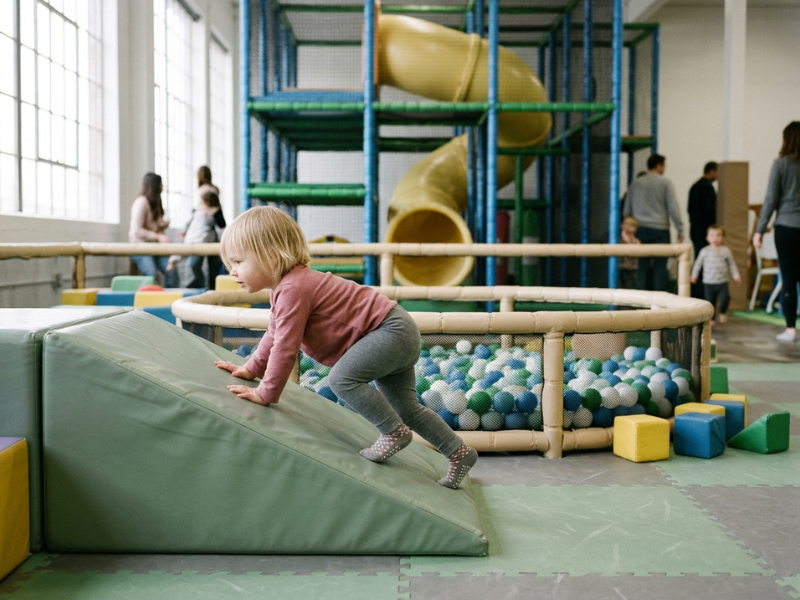
Rain taps the window. Your toddler has climbed the couch five times before 10 a.m. You need a safe place where they can run.
So you search for an indoor playground. But not every play space suits a two-year-old. Some feel packed and loud. Some have sticky floors and worn padding. Others let big kids race through the toddler area.
I’ve walked through many indoor play centers. The best ones share a few clear traits.
Here are nine signs of a great toddler playground. You’ll also get a quick way to judge any place before you pay for a pass or membership.
Why Picking the Right Indoor Playground Matters for Toddlers
Many parents treat an indoor playground like a backup plan. If it has a roof and some foam, it seems good enough. For a six-year-old, that might work. For a toddler, it often doesn’t.
Toddlers don’t play like smaller versions of big kids. Their balance is still new, and they fall often. They need softer landings under every climb. They need low platforms they can scale and step down from alone. A three-level tube maze looks fun, but a two-year-old can get stuck halfway up and panic.
Layout matters too. Toddlers do best in simple, open spaces where the next thing to do is easy to see. Too many tunnels, lights, and sounds can overwhelm them fast.
Then there’s age separation. A 40-pound eight-year-old sprinting down a slide can flatten a toddler who wanders into the landing zone.
This happens more often than parents expect. Picture a busy Saturday. A little boy toddles toward the ball pit just as three older kids dive in headfirst. Nobody means harm. But he spends the next hour on his mom’s lap, too shaken to play.
That’s the real cost of a poor choice. It shows up in a few ways:
- Bumps and overwhelm: Equipment built for bigger kids raises the risk of falls and collisions. Noise and crowds can end a visit in tears within minutes.
- Germ exposure: Toddlers mouth toys, rub their eyes, and crawl everywhere. Weak cleaning habits hit them harder than older kids.
- Wasted money: A three-month membership feels like a deal until your child refuses to go back after week two.
So don’t pick the closest place or the one with the biggest climbing frame. Choose the one built and run with toddlers in mind. That takes a few minutes of careful checking, and the signs below show you exactly what to look for.
The 9 Signs You’ve Found a Great Indoor Playground for Toddlers
Great toddler spaces rarely shout about it. You spot them in small details that most visitors walk right past.
Some of these signs take one glance to check. Others need a few minutes of quiet watching. Together, they show you whether a place truly works for kids ages one to four.
1. A Truly Separate Toddler Zone
This sign matters most, so start here.
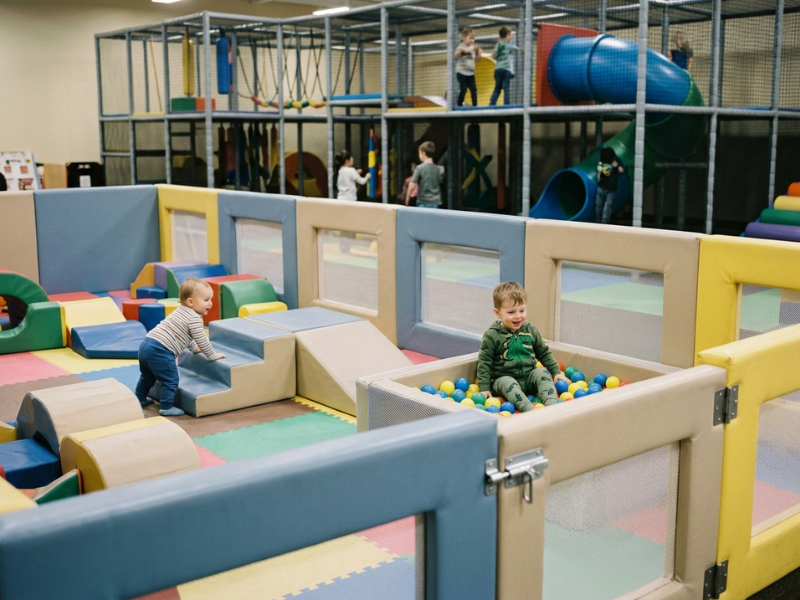
A real toddler zone has a physical barrier. Look for a low wall, a gate, or a padded fence with one clear entrance. Inside, you should see low climbers your child can scale and step down from alone. Soft foam shapes, gentle ramps, and a shallow ball pit all belong here.
The best zones also have a guardian. A staff member notices when a seven-year-old wanders in and walks them back out.
Why it matters: toddlers move slowly and unpredictably. Big kids move fast and rarely look down. A wall keeps those two speeds apart.
What to look for: a rug and three foam blocks in a corner beside the trampolines don’t make a toddler zone. Stand nearby for five minutes. If older kids cut through more than once or twice, the barrier exists in name only.
2. Equipment Looks Clean and Well Maintained
This sign is about the condition of the equipment itself. Clean and maintained sound alike. They aren’t.
A freshly mopped floor tells you someone cleaned this morning. Intact padding tells you the owner invests in upkeep. You want both.
Get close to the indoor playground equipment. Press a cushion with your hand. Check the seams, corners, and the base of the slides. Good facilities replace torn vinyl quickly and keep bolt covers snug.
Then pay attention to the smell. A light, fresh scent is normal. A musty odor often means foam has soaked up moisture inside its cover, and wiping the surface won’t fix that.
Red flags:
- Duct tape over a split cushion
- Frayed netting or loose bolt caps
- Cracked plastic on slides or steps
- Shiny floors next to worn, peeling mats
A place that relies on taped repairs often delays proper maintenance too.
3. Safety Rules Exist and Staff Enforce Them
This sign is about how the floor runs day to day. Almost every play center hangs a rules sign by the door. That sign proves very little. Watch what happens on the floor instead.
Strong facilities hold firm on a few basics:
- A sock policy. Grip socks or plain socks for everyone, kids and adults alike. No shoes inside the play structure.
- Entry and exit control. Wristbands that match each child to an adult, and a staff check at the exit.
- Capacity limits. They stop admitting families when the floor fills up, even on a rainy Saturday.
You should also see staff out in the play area, not just behind the front desk.
Why it matters: rules only protect your toddler when someone backs them up.
What to look for: kids in sneakers on the climbers, an exit door anyone can push open, or every staff member scrolling a phone at the counter. Any one of these tells you the rules live on the wall, not on the floor.
4. You Can See Your Toddler Without Chasing Them
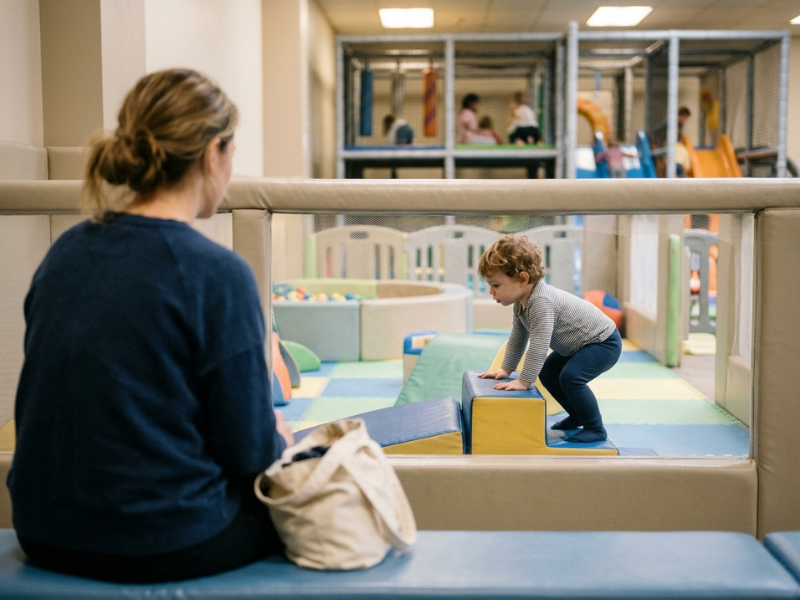
A useful way to judge this is a simple seat test. Sit down in the seating closest to the toddler zone. Can you spot your child from your chair, without standing up?
If you can, the facility planned its layout well.
Good layouts use low walls, mesh panels, and open floor space. In larger family entertainment centers, custom playground equipment makes it easier to build separate toddler zones, clear sightlines, and an age-appropriate flow from the start. Well-planned spaces place parent benches facing the toddler area, just a few steps away. They skip enclosed tubes and hidden tunnels in the under-four section.
Exits matter here too. Look for a gate or a buzzer system that stops a quick toddler from slipping out while you tie a sibling’s sock.
Why it matters: toddlers can disappear in seconds. Clear sightlines let you relax a little without losing track.
Red flag: a parent café tucked behind a solid wall, or a toddler maze where your child vanishes around every corner.
5. Age and Height Guidelines Are Clear and Real
This sign is about whether age limits actually hold. Great play centers post clear limits. You’ll see signs like “Ages 0–3” or “Under 42 inches” at the toddler zone entrance. Older climbers and stainless steel slides should list their own minimums clearly too.
But the sign only counts if staff act on it.
Some facilities treat every area as open to every child. It sounds friendly. In practice, toddlers usually lose the protection they need most.
What to look for: a staff member who politely tells a nine-year-old, “This area is for little ones,” and points them toward the big structure. If you watch that happen once, you’ve learned a lot. If you see the opposite, with big kids playing tag under an “Under 4” sign while staff shrug, keep looking.
6. Hygiene Is Visible, Not Just Promised
This sign is about cleaning routines you can actually see. Many websites say “We clean daily.” That claim costs nothing. Real hygiene leaves evidence.
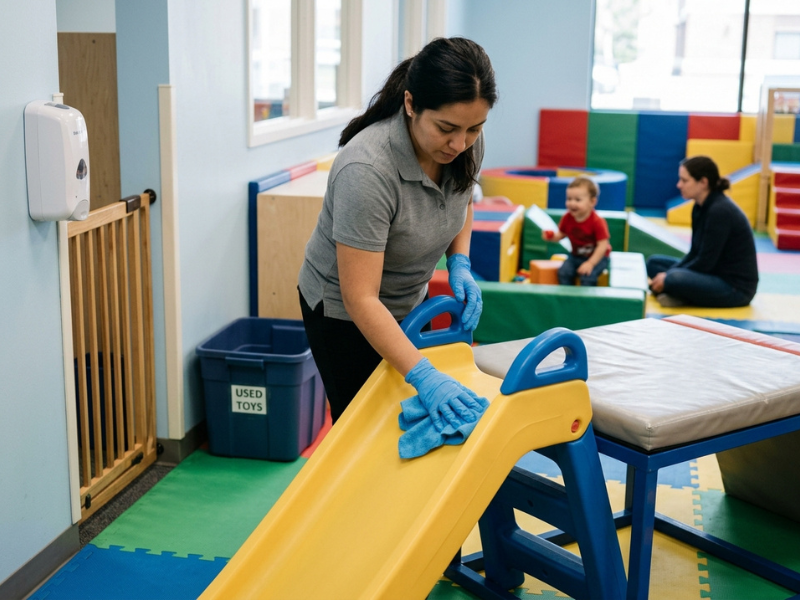
Look for sanitizer stations at the entrance and exit, and ideally one by the toddler zone. Watch for staff who wipe slides, handrails, and ride-on toys during open play, not only after closing.
One of the strongest signs is a “mouthed toys” bin. Toddlers chew on everything. A good facility gives parents a place to drop a slobbered-on toy so staff can sanitize it before the next child grabs it.
Some places also pause play for a midday cleaning break. That’s another good sign.
Finally, ask about their sick-child policy. Great facilities post it clearly and turn away kids with fevers or obvious symptoms.
Red flag: sticky balls, grimy handrails, or a staff member who can’t answer when you ask how often they clean.
7. Staff Feel Present, Calm, and Toddler-Aware
Good staff don’t hover, and they don’t hide. They move around the floor, watch the busy spots, and step in when a child needs help.
You learn the most when something goes wrong.
Picture a two-year-old who loses sight of her dad and starts to cry. A toddler-aware staff member kneels to her eye level, speaks softly, and helps her find him. Or picture two toddlers tugging on the same foam block. A skilled staff member offers a second block or a new idea. They don’t scold either child.
Not every squabble needs an adult. But toddlers can’t solve problems the way older kids can, so they need gentle support nearby.
What to look for: whistles, raised voices, or staff who ignore a crying child for minutes. These habits usually point to weak training, and training shapes almost everything else on this list.
8. Pricing Is Easy to Understand Before You Pay
You shouldn’t need a calculator at the front desk. A well-run facility posts its prices online and at the entrance, and it answers these questions up front:
- What does a drop-in visit cost?
- Do adults pay, or do they enter free?
- Do siblings get a discount?
- Does the toddler zone cost extra?
- Do you need to buy grip socks?
The best places also let you try a single visit or a short pass before you commit to a membership.
Red flag: vague answers like “It depends, ask at the desk,” pressure to sign up on your first visit, or memberships that renew automatically without clear notice.
9. The Small Extras Show the Place Understands Families
Small comforts reveal whether the owner has ever visited with a toddler in tow.
Look for a nursing room or a quiet corner where an overstimulated child can calm down. Check for stroller parking near the entrance and changing tables in every restroom, not just the women’s room. Bathrooms close to the toddler zone save you a frantic sprint.
Online details count too. Great facilities keep hours, open-play times, and toddler-only sessions current on their website.
None of these extras makes a playground safe on its own. But together, they show that the people running this place have thought about your day, not just your ticket.
What to look for: no changing table, no seating near the restrooms, or a website that still lists last year’s holiday hours.
How to Do a 10-Minute Walkthrough Before You Buy a Pass
The nine signs help most when you can check them quickly. Most front desks will let you look around before you pay, so ask. A confident facility says yes right away.
Give yourself ten minutes and split them into three short steps.
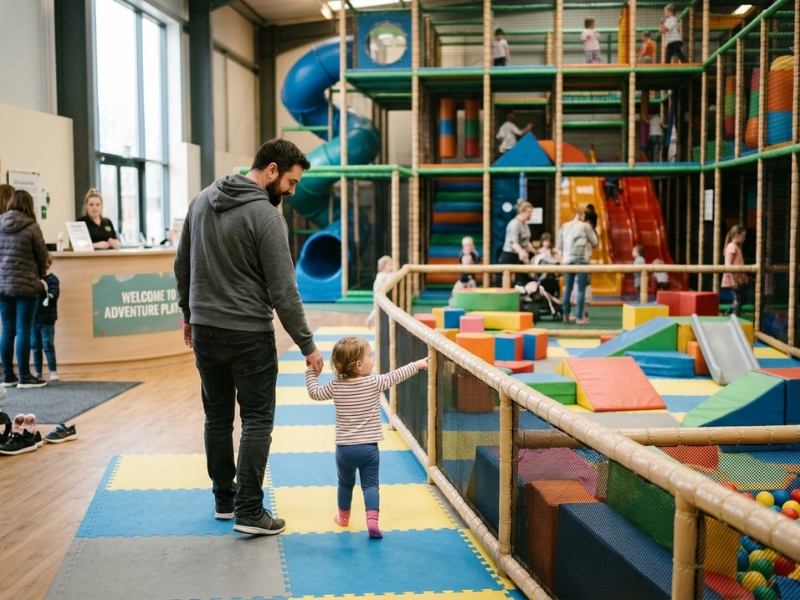
What to Scan in the First Two Minutes
Start at the door. Breathe in. Fresh air or a light cleaner scent is normal. A heavy musty smell or a wave of bleach often hides a bigger problem.
Next, watch how families enter. Do staff check wristbands and greet kids, or does everyone just walk in?
Then look straight at the toddler zone. Count the big kids inside. Notice whether anyone on staff steers them out.
What to Check Before Paying
Ask a few direct questions at the desk:
- How often do you clean the toddler area during open play?
- What’s your sick-child policy?
- Can we leave for lunch and come back on the same ticket?
- Where’s the nearest changing table?
Then sit in the seat closest to the toddler zone for one minute. Many places put benches nearby, then block the view with a pillar or a snack counter. Test the view yourself.
When to Walk Away
You can live with some flaws. A dated mural or a cramped café won’t hurt your child. These problems can:
- Duct tape over torn padding
- Big kids racing through the toddler zone while staff watch
- A toddler area you can’t see from any seat
- Sticky handrails, slides, or balls
- Staff who shrug at your questions
One of these deserves a closer look. Two or more means you should thank them and leave.
The 10-Minute Walkthrough Test
|
What to look at first |
What good looks like |
What should make you pause |
|---|---|---|
|
Entry smell |
Fresh air or a light, clean scent |
Musty odor or strong chemical smell |
|
Floor and padding |
Intact covers, snug seams, dry floors |
Tape, tears, or sticky spots |
|
Staff attention |
Staff on the floor, watching busy areas |
Everyone at the desk or on phones |
|
Exits |
Gate, buzzer, or staff check at the door |
Doors any child can push open |
|
Bigger kids in toddler area |
Staff redirect them quickly |
Older kids play there freely |
|
Seating and sightlines |
Benches face the toddler zone up close |
Walls, pillars, or a café block the view |
How to Read Reviews Without Getting Misled
Online reviews can save you a wasted trip. They can also steer you wrong if you only glance at the stars. A 4.7 rating tells you very little on its own. A better approach is to skip the average and scroll straight to the newest reviews.
Recent reviews show how a place runs today. A play center can earn glowing praise in its first year, then slip after a staff change or a few skipped repairs. Focus on the last three to six months. If older reviews praise the clean floors but newer ones mention sticky mats, trust the newer ones.
Next, look for patterns. One furious review about a rude cashier may just reflect a bad day. Five reviews about big kids crashing through the toddler area point to a real problem. Repeated complaints carry far more weight than one dramatic story.
As you read, pay closest attention to four topics:
- Cleanliness: sticky balls, dirty restrooms, or a musty smell
- Crowding: packed weekends, long lines, or no capacity limits
- Staff response: how employees handled an injury, a lost child, or a complaint
- Toddler safety: older kids in the toddler zone, or equipment too tall for little ones
Check how the owner replies, too. A calm, specific answer that explains a fix is a good sign. A defensive reply or total silence is not.
Some complaints matter much less. Parking trouble or bland coffee won’t affect your toddler’s safety. Café gripes only count if they shape your visit, such as missing high chairs or a no-outside-food rule when your child has allergies. And skip the all-caps rants with no details. A review that never says what happened can’t tell you much.
Common Concerns Parents Have About Indoor Playgrounds
Even after a good walkthrough, many parents still hesitate. The same three worries come up again and again at front desks. Each one is fair, and each one has a practical answer.
“Indoor Playgrounds Are Germ Factories.”
Any room full of toddlers will share some germs. So do daycares, libraries, and grocery carts. No play center can stay sterile, so don’t judge it by that standard.
Judge it by its habits instead. A well-run space wipes high-touch surfaces during open play, sanitizes mouthed toys, and turns away sick kids. Your part is simple. Wash hands on the way out, and skip visits during a local flu spike.
Worry when you see sticky surfaces, a dusty ball pit, or no clear sick-child policy. Also check with your doctor first if your child is a young infant or has a weak immune system.
“My Toddler Is Too Young to Enjoy It.”
Age matters less than stage.
New walkers, usually 12 to 18 months, love flat, open floors. They want soft ramps, low steps, push toys, and a shallow ball pit. For them, a wide padded area beats a tall structure.
Early climbers, often 18 months to 3 years, need more. Look for low platforms with two or three levels, short slides, and tunnels they can see through. They want a challenge, but one they can climb down from alone.
If a place only has towering frames, your one-year-old will spend the visit watching. That says more about the space than about your child.
“They Cost Too Much.”
A drop-in visit often costs about the same as a takeout lunch. A membership pays off only if you go at least once a week.
Free options help too. Library story times, community center open gyms, and parent-toddler groups give kids room to move for little or no cost.
In practice, the most common trap looks like this. A family buys a six-month pass on day one. By week three, their toddler refuses to go back. Three trial visits at different times would have cost less and shown them the truth first.
Quick Comparison: Great vs. Not-So-Great Indoor Playgrounds
The nine signs work best when you can recall them fast. That’s hard to do while your toddler tugs you toward the ball pit.
So here are the six checks that reveal the most about any play space. Save this table to your phone. Pull it up at the front desk or on a bench beside the toddler zone.
You don’t need a perfect score. Even great facilities have an off day. Look for a pattern instead.
|
What to check |
Great indoor playground |
Warning sign |
|---|---|---|
|
Toddler zone |
A gated or walled area with one entrance, low climbers, soft shapes, and a shallow ball pit |
A foam mat in a corner next to the trampolines, with big kids cutting through |
|
Cleanliness |
Intact padding, snug seams, dry floors, and staff wiping surfaces during open play |
Duct-taped cushions, sticky balls, or a musty smell |
|
Supervision |
Staff on the floor near busy spots, checking wristbands at the exit |
Every staff member behind the desk or on a phone |
|
Layout and sightlines |
Benches face the toddler zone, with mesh panels and open floor space |
Hidden tunnels, blocked views, or an exit any child can push open |
|
Age enforcement |
Posted limits like “Ages 0–3,” and staff who redirect older kids |
An “Under 4” sign with nine-year-olds playing tag beneath it |
|
Pricing transparency |
Clear drop-in rates, adult and sibling fees, and a trial option |
“Ask at the desk” answers and pressure to buy a membership on day one |
If a place lands on the warning side for the toddler zone, supervision, or cleanliness, skip the pass. Those three protect your child directly. You can work around fuzzy pricing. You can’t work around a missing wall between your toddler and a crowd of eight-year-olds.
FAQs
What age is appropriate for an indoor playground?
Most toddlers start to enjoy indoor play once they walk steadily, usually around 12 to 15 months. Crawlers can still have fun on a flat padded mat, but they need a quiet, separate space. Many play centers set their toddler zones for ages 0–3 or 0–4. Check the posted limits, then match the space to your child’s stage, not just their birthday.
Are indoor playgrounds safe for 1-year-olds?
They can be, if the space suits a one-year-old. Look for:
- A gated toddler area with one entrance
- Platforms no higher than your child’s chest
- Thick padding under every climb and step
- Staff who keep older kids out
Stay within arm’s reach the whole time. One-year-olds tumble often and put everything in their mouths. If the only option is a tall tube maze, wait a few months.
Do toddlers need socks at indoor playgrounds?
Almost always, yes. Most facilities require socks for kids and adults. Socks keep floors cleaner and protect little feet. Many centers now ask for grip socks, which have rubber dots on the soles. These help unsteady walkers stay upright on slick padding and slides. Pack a spare pair in your bag. Some front desks sell grip socks, but they often charge a few dollars a pair.
How can I tell if an indoor playground is clean enough?
Use your hands and your nose. Press a cushion and run a finger along a slide rail. Both should feel dry, not sticky. A light, fresh smell is normal. A musty odor often points to damp foam inside the covers.
Then watch the staff for ten minutes. Do they wipe surfaces during open play? Do they offer a bin for mouthed toys? If you see neither, keep looking.
What should I bring to an indoor playground with a toddler?
Keep the bag light:
- Grip socks for your child and plain socks for you
- A spare outfit for spills and diaper leaks
- Diapers, wipes, and a small changing pad
- A water bottle and a simple snack, if the center allows outside food
- Hand wipes for the ride home
Leave toys from home in the car. Toddlers lose them fast, and other kids will want a turn.
Calm, Visible, and Well Run
The best toddler playgrounds rarely look flashy. They feel calm when you walk in. You can see your child from your seat. The equipment fits small bodies, and the staff actually watch the floor.
Calm, visible, age-appropriate, and well run: that’s the standard. If a place falls short, the biggest climbing frame in town won’t make up for it.
Don’t let a rainy-day rush or a membership deal decide for you. Your toddler’s comfort tells you more than any sales pitch.
So start this week. Shortlist one local option and run the 10-minute walkthrough. Ask your questions and watch the toddler zone. If it passes, try a drop-in visit before you buy a membership. If it doesn’t, you’ve only spent ten minutes.