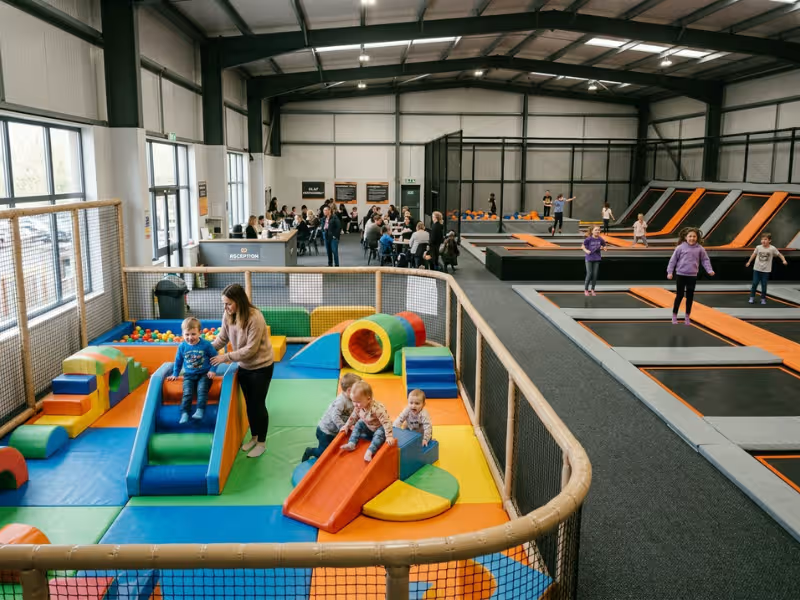
Saturday morning arrives, and your kids are already bouncing off the couch. You search for nearby options. A trampoline park and an indoor playground both pop up, and both promise to wear them out.
A trampoline park fills its floor with wall-to-wall trampolines and open jump zones. An indoor playground offers soft climbers, slides, and ball pits.
I help families figure out which venue fits their child’s stage. Age is the first thing I check, not price or location.
This guide helps you choose by age, weigh safety and personality, and skip a visit that wastes your money.
Why Age Changes the Whole Decision
A trampoline park and an indoor playground can look like two versions of the same outing. They aren’t. The jump court that thrills a 7-year-old can overwhelm a 2-year-old in minutes. When parents ask me which venue to pick, I start with one question: how does your child move right now?
Why the Same Venue Feels Different at Different Ages
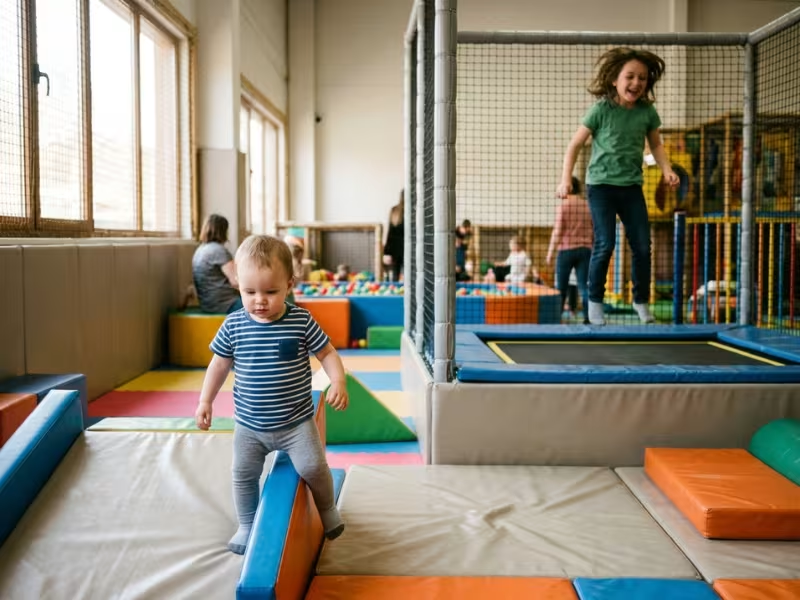
Every bounce on a trampoline sends energy across the mat. When a heavier child jumps nearby, that energy can throw a small child off balance. Older kids adjust. Toddlers usually fall.
Five skills shape how a child handles each space:
- Balance: Many 2-year-olds still wobble on flat floors. A moving mat makes that much harder.
- Body control: School-age kids can stop, turn, and land on purpose. Toddlers mostly tumble.
- Risk awareness: A 7-year-old sees a bigger kid coming and steps aside. A 3-year-old keeps walking.
- Reaction speed: Young children react slowly, so collisions happen before they can brace.
- Noise tolerance: Trampoline parks often play loud music on busy courts. Many toddlers melt down within 20 minutes.
Soft play fits these gaps. Padded floors, low climbers, and enclosed zones forgive the mistakes that a trampoline court punishes. Well-designed indoor playground equipment plays a big role here, because layout, padding, and age-appropriate features all shape how safe the space feels for younger children.
A Simple Rule to Start With
You don’t need a complicated chart to make a smart first call. This rule works for most families:
- Under 3: Choose an indoor playground with a gated toddler zone.
- Ages 3 to 5: Stick with indoor playgrounds for regular visits. Try a trampoline park only during a toddler or little-jumper session, and stay close.
- Ages 6 and up: Trampoline parks start to make real sense. Most kids this age have the control and judgment to enjoy open jump.
Treat this rule as a starting point. A cautious 6-year-old, a fearless 4-year-old, or siblings in different age groups can all shift the answer.
Best Choice by Age Group
Age rules sound simple until you stand at the front desk with a 4-year-old tugging your sleeve. Here’s how I break the choice down by stage, based on how kids actually play and where parents usually run into trouble.
Under 3: Indoor Playground Is Usually the Better Fit
For babies and young toddlers, I pick an indoor playground almost every time. The reason comes down to control.
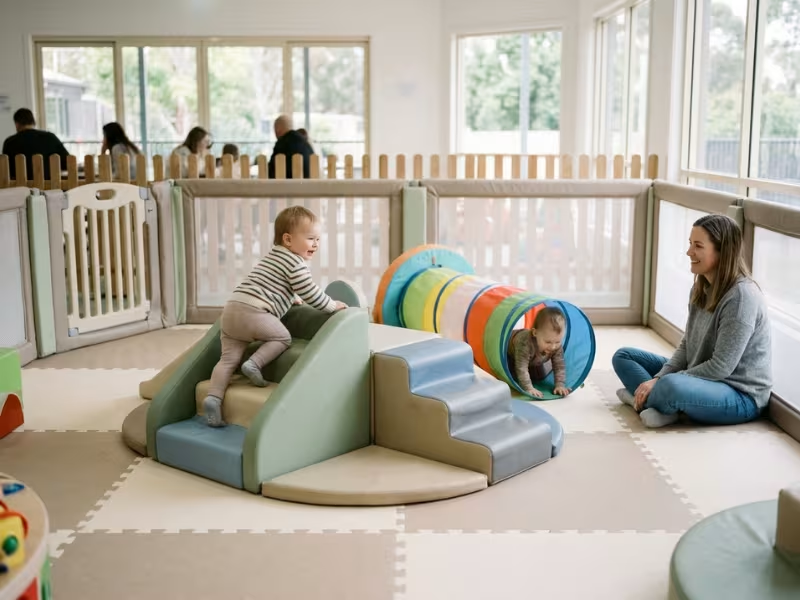
A good soft play area keeps everything low, padded, and enclosed. Your child crawls through a tunnel, climbs two foam steps, and slides down a short ramp. If they tip over, they land on a still mat, not a moving surface.
Supervision gets easier, too. In an enclosed toddler zone, you can see your child from one spot and reach them in a few steps. At a trampoline park, you would need to stand on the court beside them, and many parks don’t allow that during open jump.
One tip matters more than any other at this age: the toddler zone beats the size of the venue. A huge playground with a tiny, open toddler corner serves a 2-year-old worse than a small room built for under-3s. Look for a gate, a posted age cap, and staff who enforce it.
Ages 3 to 5: Indoor Playground Most Days, Trampoline Park Sometimes
Preschoolers sit in the gray zone. They run faster, climb higher, and start asking for bigger thrills. But their balance and judgment still lag behind their confidence.
For regular weekly visits, I still point families to indoor playgrounds. Kids this age can tackle taller climbers and bigger slides, so soft play stays fresh. You also pay less and spend less time on high alert.
A trampoline park can work as a special outing. Many parks run little-jumper sessions on weekday mornings for kids around 5 and under. These sessions keep older kids off the courts, which removes the biggest danger.
Before you book, check four things:
- The age cap. Pick a session that bars older kids, not one that only “recommends” an age.
- Parent access. Many toddler sessions let one adult jump along. Stay on the court with your child.
- Small courts. The best parks set aside smaller trampolines just for young kids.
- Session length. A 60-minute block suits most preschoolers. They tire faster than you expect.
On the court, follow one rule: one child per trampoline square. If two or three kids share a mat, step off and take a break.
Ages 6 to 10: Trampoline Parks Start to Offer More Value
Around age 6, the balance shifts. Most kids now land on purpose, stop when they need to, and spot a bigger jumper coming.
That control lets them enjoy what a trampoline park does best. Jumping builds coordination and leg strength. Kids also play together in ways soft play rarely invites, like trampoline dodgeball or a foam pit challenge with friends.
Boredom starts to creep in at soft play venues. A 7-year-old often clears the whole structure in 15 minutes and starts asking for snacks. Some structures also set height limits that older kids begin to bump against.
Still, sit in on the safety briefing and ask your child to repeat the main rules back to you. Kids in this group often try flips before their skills can handle them.
Ages 10 and Up: Trampoline Park Usually Wins
By 10, most kids have outgrown the indoor playground. The slides feel short, and the ball pit feels babyish.
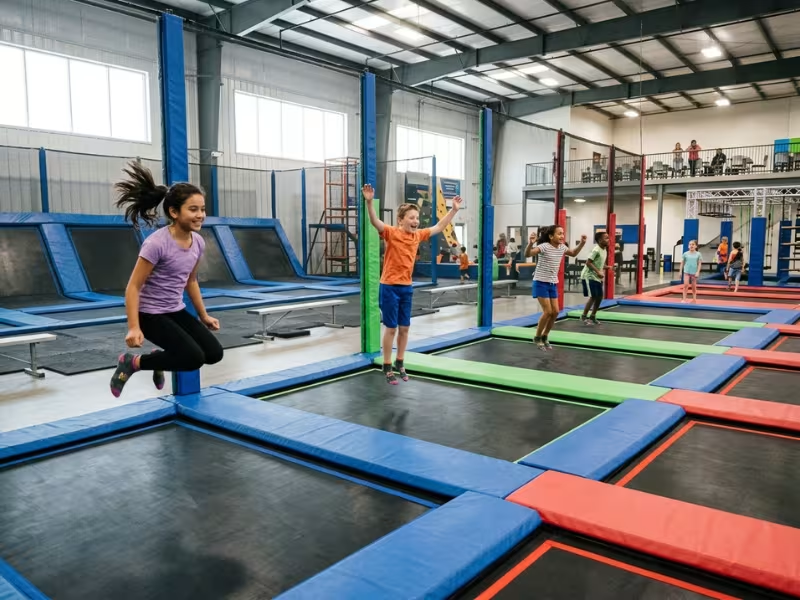
Trampoline parks give older kids a real workout. Many now include ninja courses, climbing walls, slam dunk lanes, and competitive dodgeball. Older kids also follow court rules and take turns without constant reminders, so you can sit at the edge and actually relax.
One caution: some ninja courses and climbing walls set their own height or weight minimums. Check before you buy the add-on pass.
When the “Age Rule” Has Exceptions
Age gives you a strong starting point, but kids break the pattern in both directions. Temperament, size, and who else comes along can matter as much as the number on the birthday cake.
If Your Child Is Cautious, Small, or Easily Overwhelmed
Some 5- and 6-year-olds aren’t ready for open jump yet. That’s normal.
A smaller child weighs less than most jumpers on the court, so every bounce from a bigger kid knocks them around more. Cautious kids also tend to freeze when the court gets busy, which puts them right in the path of others.
Watch for these signs:
- Your child covers their ears in loud places.
- They hang back at birthday parties for the first 20 minutes.
- They still hold your hand on playground stairs.
If two or more sound familiar, stick with an indoor playground a little longer. A confident hour on soft play beats a tearful 10 minutes on a trampoline.
If Your Child Craves Motion and Challenge Early
Other kids climb the bookshelf at 3 and launch off the couch daily. For these 4- and 5-year-olds, a soft play room can feel too tame.
A limited trampoline session can work, but only when every condition lines up:
- A session that keeps older kids off the courts
- Small trampolines set aside for young children
- An adult on the court within arm’s reach
- No flips, no foam pit dives, and no dodgeball
Keep the first visit to 30 to 45 minutes. Tired legs lead to sloppy landings, and sloppy landings lead to sprains.
If You Have Siblings in Different Age Groups
A 2-year-old and an 8-year-old rarely want the same outing. You have three solid options.
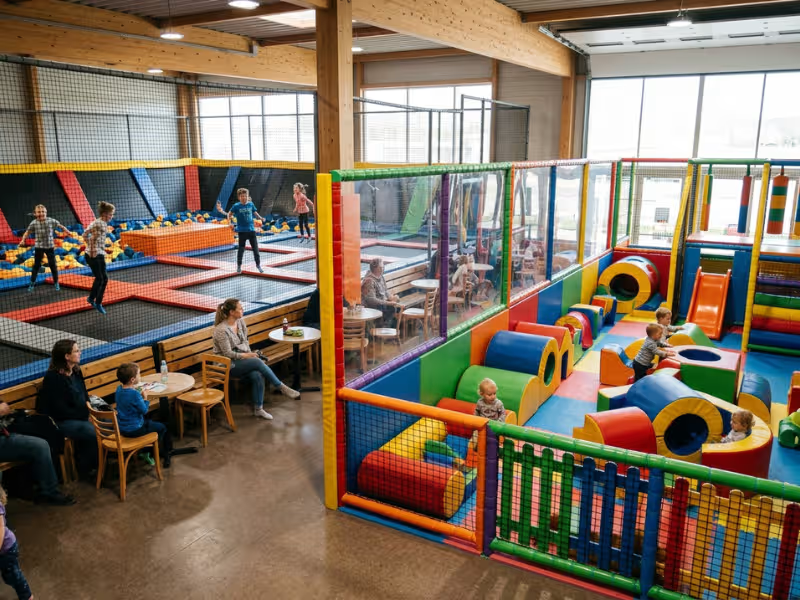
Find a hybrid venue. Some facilities place a gated soft play area next to the trampoline courts. Each child plays in the right zone, and you watch both from one seat. That split setup works best when the venue plans for mixed ages from the start, which is why many operators rely on custom playground equipment to build clearer zones and smoother traffic flow.
Split the trip. One parent takes the older child jumping, and the other heads to soft play with the toddler. Swap next weekend.
Choose for the younger child. If you’re going alone and the venue can’t keep ages apart, the toddler’s safety decides. An older sibling can handle one slightly boring hour. A toddler can’t handle one bad landing.
Safety, Cost, and Parent Experience
Once you know which venue fits your child’s age, three practical questions remain. How risky is it? What will it really cost? And how will you feel after two hours there?
Safety: Where the Real Risks Hide
Trampoline parks carry more risk, and the gap grows the younger your child is. Most injuries I hear about follow the same pattern. Two kids share one mat, the bigger one lands first, and the smaller one gets launched. Sprained ankles, wrist fractures, and head bumps top the list.
Busy hours make it worse. On a Saturday afternoon, one court can hold kids from 5 to 15. That age mix creates the danger, not the trampoline alone.
Indoor playgrounds have milder risks. Kids bump heads in tunnels or collide at the bottom of a slide, but padded floors and low heights keep most falls minor. You can often watch from a bench. At a trampoline park, a young child needs you on the court or right at the edge.
Cost: Look Past the Ticket Price
Indoor playgrounds usually charge $8 to $15 per child for open play, often with no strict time limit. Many let one adult in free.
Trampoline parks sell time. A 60-minute jump pass typically runs $15 to $25. Then the extras pile up:
- Grip socks: Often $3 to $5 a pair. Keep them and reuse them.
- Add-ons: Ninja courses, climbing walls, and arcade cards can add $5 to $15.
- Memberships: Monthly passes around $20 to $40 pay off only if you go three or more times a month.
- Parties: Packages often start near $300 and climb with each extra guest or upgrade.
For one child, a trampoline visit often costs about twice as much as soft play.
Parent Experience: Which One Lets You Breathe?
If you want to sit down today, choose the indoor playground. Most have benches or café tables near the play area, so you can sip a coffee and still watch your child.
Trampoline parks run louder, with pumping music, buzzers, and dozens of jumpers. With kids under 6, you’ll likely spend the session standing, spotting, or jumping alongside them. With kids 8 and up, the picture flips, and you can finally relax at the edge.
A Quick Decision Table for Busy Parents
Find your child’s age in the first column, then read across. If you have kids in two age groups, check both rows and let the younger child’s row guide you when safety feels tight.
|
Child Age |
Better Default Choice |
When the Other Option Can Work |
Main Risk to Watch |
Best For |
|---|---|---|---|---|
|
Under 3 |
Indoor playground with a gated toddler zone |
Rarely; only a toddler-only jump session with a parent on the court |
Bigger kids entering the toddler area |
New walkers, parents who want to sit nearby |
|
Ages 3–5 |
Indoor playground for regular visits |
A little-jumper session with an age cap and small courts |
Shared mats with older jumpers; tired legs |
Weekly energy burns, occasional special outings |
|
Ages 6–10 |
Trampoline park or hybrid venue |
Cautious or small kids may still prefer soft play |
Flips beyond their skill; busy-hour collisions |
Coordination, playing with friends, parties |
|
Ages 10+ |
Trampoline park with ninja courses or climbing walls |
A hybrid venue when a younger sibling comes along |
Add-on height limits; rough dodgeball |
Real workouts, group outings |
Most families switch venues somewhere between ages 5 and 7. Let your child’s confidence on a busy court set the timing, not the birthday alone.
What to Check Before You Book
A quick look at the website or a short phone call can save you a wasted trip. Here’s the checklist I use.
For Trampoline Parks
- Age rules: Many parks set open jump at around 5 or 6, and some add height minimums.
- Session setup: Ask whether toddler sessions turn away older kids and offer separate small courts.
- Adult access: Can you jump beside your child, and does it cost extra?
- Waivers: Sign online the night before. Some parks require a parent or legal guardian, which can trip up grandparents or babysitters.
- Supervision: Ask how many court monitors work and whether they enforce one jumper per mat.
If the staff can’t answer clearly, the park hasn’t earned your money yet.
For Indoor Playgrounds
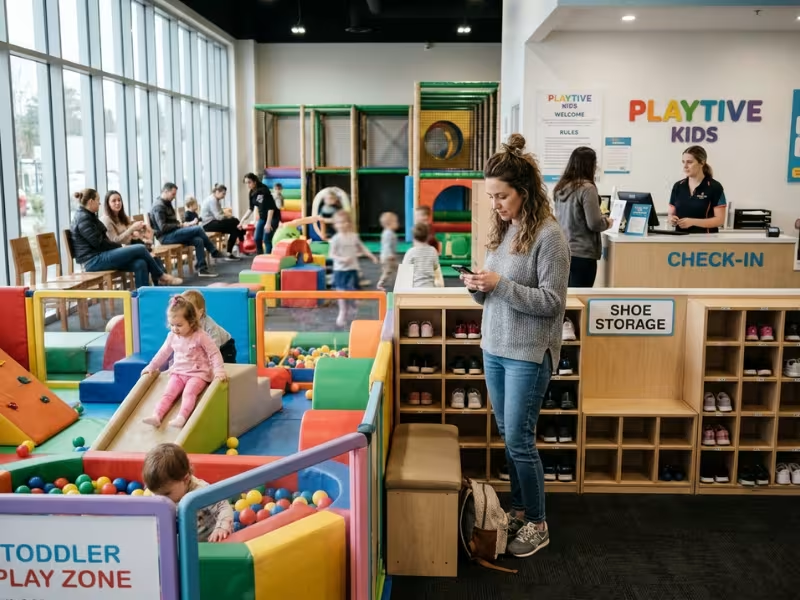
- Toddler zone: Ask about a gate, a posted age cap, and whether staff move older kids out.
- Cleaning: A good answer sounds specific, like “every two hours” or “we pull mouthed toys right away.”
- Height limits: Some structures cap kids at 4 to 4.5 feet, which can sideline a tall 7-year-old.
- Basics: Confirm walk-in rules, adult fees, food policy, and whether seating has a clear view of the play area.
Common Parent Questions
What is the minimum age for trampoline parks?
It depends on the park. Many set open jump at around 5 or 6, with toddler sessions for younger kids, usually on weekday mornings. Rules vary by location, so check before you buy tickets.
Can a 3-year-old go to a trampoline park safely?
Yes, but only under tight conditions. Book a session that keeps older kids off the courts, and stay within arm’s reach. Skip flips, foam pits, and dodgeball, and keep the visit to about 45 minutes.
Are indoor playgrounds worth it for babies under 1?
They can be, if the venue has a gated baby or toddler area. Crawlers love soft ramps, tunnels, and sensory panels, and many venues charge little for non-walkers.
Which is cheaper, a trampoline park or an indoor playground?
The indoor playground usually wins. Open play often costs $8 to $15, while a one-hour jump pass runs $15 to $25 before socks and add-ons.
Are trampoline parks safe for 6-year-olds?
For most 6-year-olds, yes. Go at a quieter time, stick to one jumper per mat, and save flips for later. A small or cautious child may need a few more months.
Are there hybrid facilities with both trampolines and soft play?
Yes, and they suit families with kids of different ages. Look for a clear barrier between zones and a seat where you can watch both.
Let Your Child’s Stage Lead the Way
Start with the simple rule. Under 6, an indoor playground usually fits better. At 6 and up, a trampoline park often starts to feel worth the extra cost.
Age only starts the conversation, though. A cautious 6-year-old may still enjoy soft play more. A fearless 4-year-old may thrive in a quiet little-jumper session. Siblings can change the plan, too.
Before you buy tickets, check the age policy, the toddler session schedule, and how well the venue keeps big kids away from little ones.
Pick one nearby venue tonight and look up its age rules. Then book a weekday morning slot and watch how your child handles it.